



Psora-4

Based on 1 Customer Validation
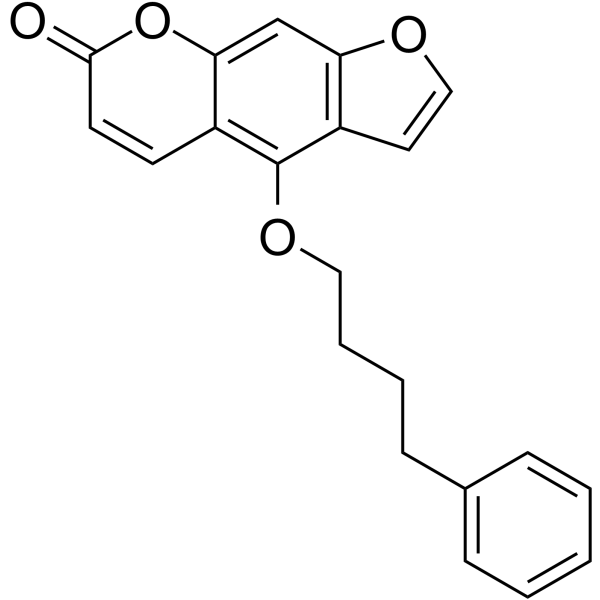
Psora-4 (5-(4-Phenylbutoxy) psoralen) is a selective Kv1.3 blocker (Kd = 3 nM). Psora-4 increases mitochondrial ROS production, activates stress response genes including daf-16 targets and heat shock proteins, reduces triglyceride accumulation, extends lifespan and healthspan in C. elegans, and increases resistance to Paraquat-induced oxidative stress. Psora-4 can be used for research on psoriasis and obesity.
For research use only. We do not sell to patients.
- Purity : 99.7%
- CAS No.: 724709-68-6
- Formula: C21H18O4
- Molecular Weight:334.37
-
Storage:Powder -20°C, 3 years , 4°C, 2 years ; In solvent -80°C, 6 months , -20°C, 1 month

To place orders, for customer services and technical support, please contact: MedChemExpress USA
Tel: 609-228-6898 E-mail: [email protected] [email protected]


-
 Biological Activity
-
Chemical Information
-
Solvent & Solubility
- Protocols
- Purity & Documentation
- References
-
 Help & FAQs


-
HY-10015
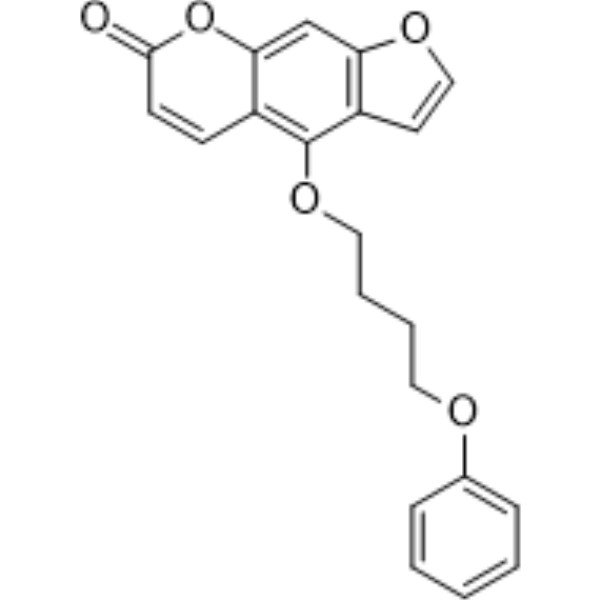
PAP-1Kv1.3 Blocker -

HY-108574
CP 339818 hydrochlorideKv1.3/Kv1.4 Blocker -
HY-13519
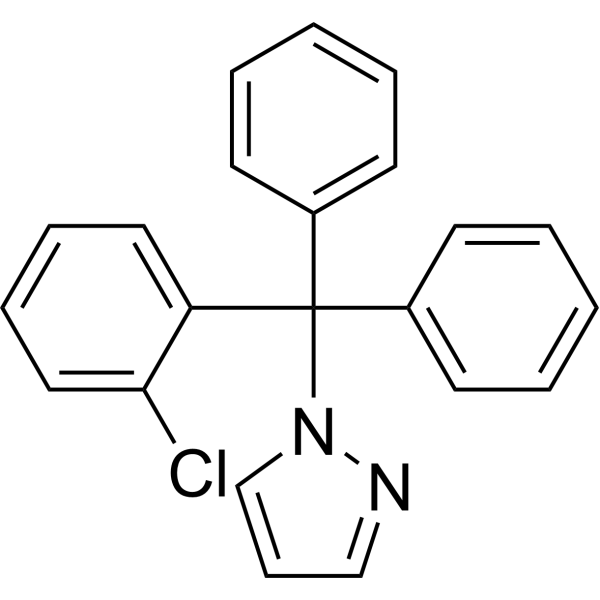
TRAM-34Potassium Channel Inhibitor -

HY-P3507
DalazatideKv1.3 Inhibitor -
HY-108588
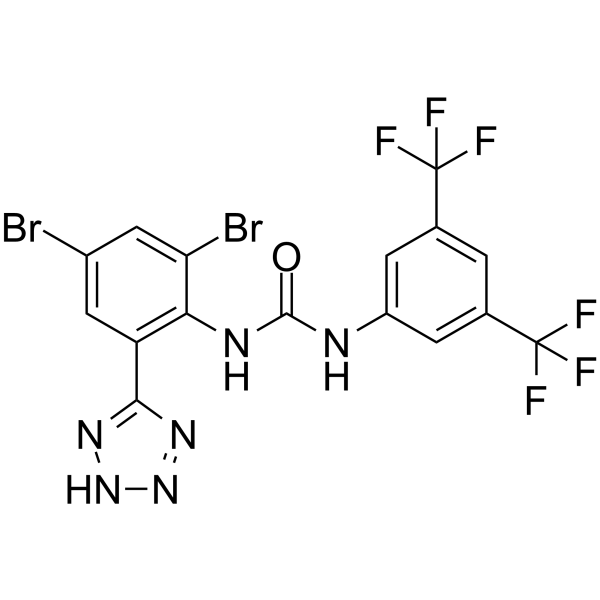
NS5806Potassium Current Activator -
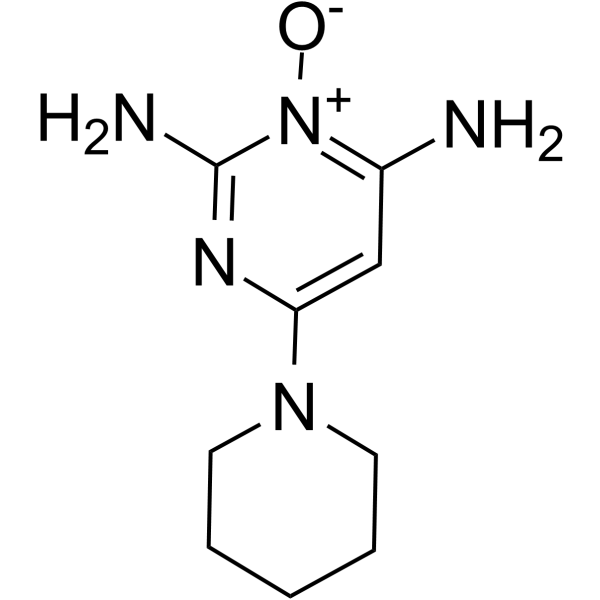
HY-B0112
MinoxidilEndogenous Metabolite -
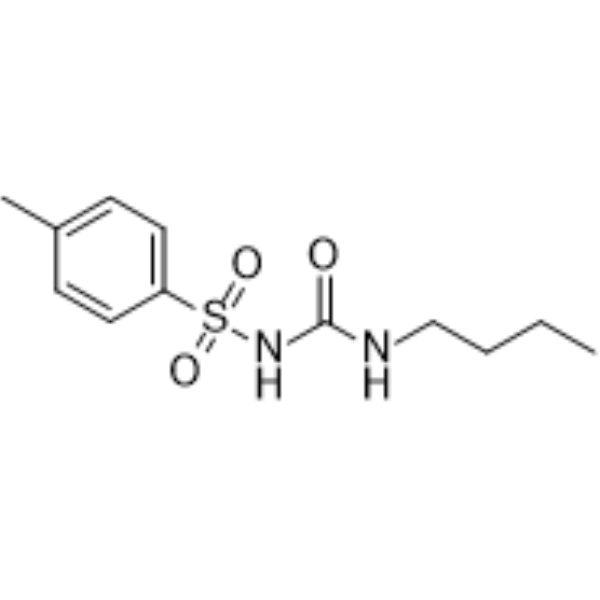
HY-B0401
TolbutamideKATP Inhibitor -

HY-B0401R
Tolbutamide (Standard)KATP Inhibitor -
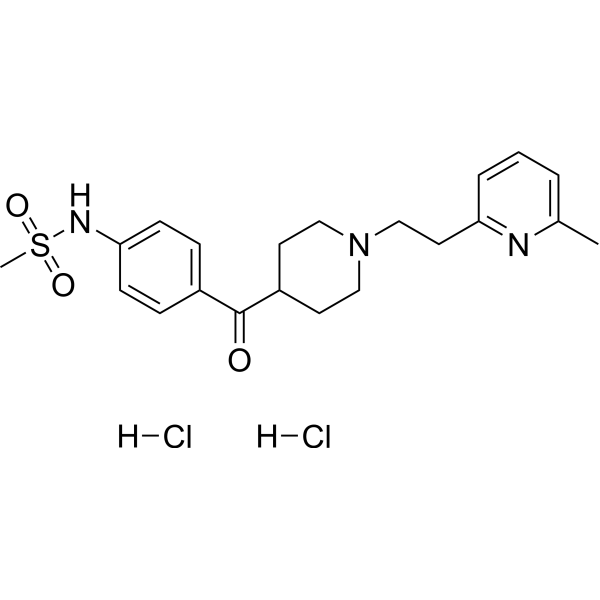
HY-15551
E-4031hERG Channels Blocker -
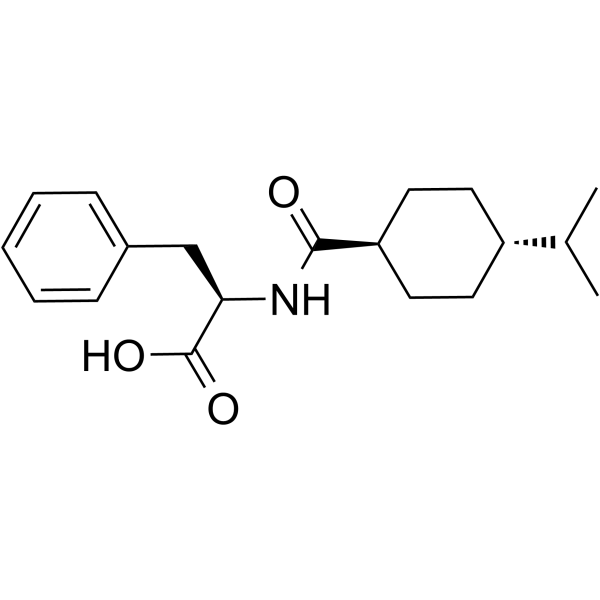
HY-B0422
NateglinideK+ Channel Inhibitor -
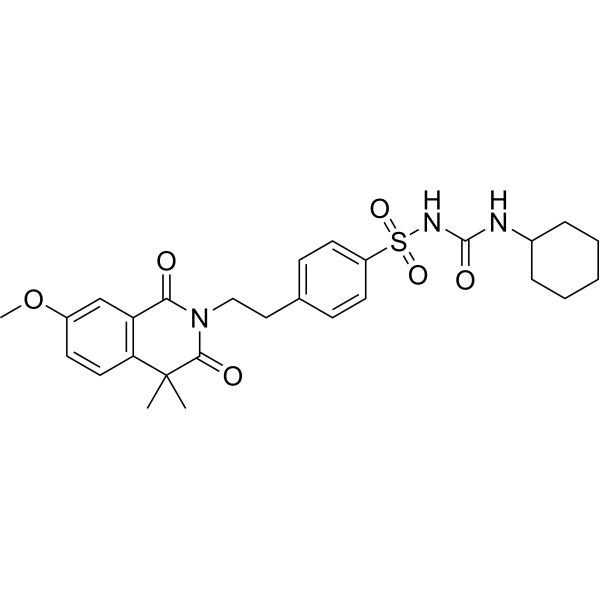
HY-B1114
GliquidoneAnti-Diabetic Drug -
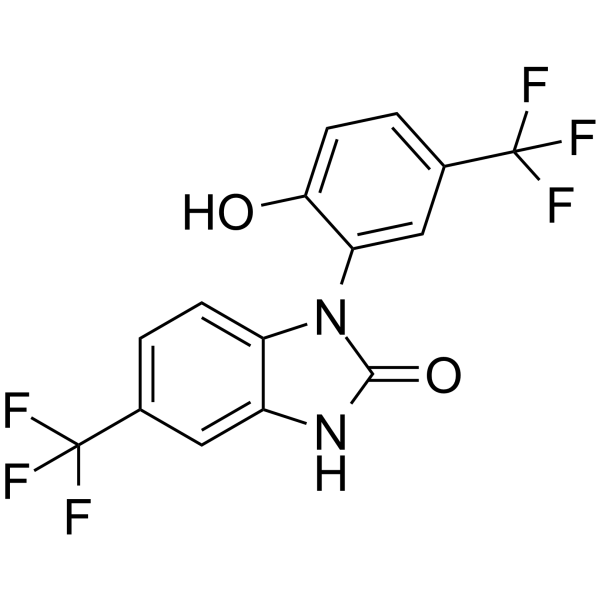
HY-12496
NS-1619BK Channel Opener


Biological Activity
Description
IC50 & Target
[3]|
Kv1.3 3 nM (Kd) |
In Vitro
Psora-4 (100 μM) fails to further extend the lifespan of wild-type N2 C. elegans under caloric restriction conditions, indicating that it acts as a caloric restriction mimetic[4].
MedChemExpress (MCE) has not independently confirmed the accuracy of these methods. They are for reference only.
-
Cell Line:3T3-L1 preadipocytes
-
Concentration:1 µM
-
Incubation Time:0, 12, 24, and 36 h
-
Result:Caused no changes in proliferation compared to untreated cells.


Chemical Information
-
CAS No. 724709-68-6
-
Appearance Solid
-
Molecular Weight 334.37
-
Formula C21H18O4
-
Color White to off-white
-
SMILES
O=C1C=CC2=C(OCCCCC3=CC=CC=C3)C4=C(OC=C4)C=C2O1
-
Synonyms
5-(4-Phenylbutoxy)psoralen
-
Shipping
Room temperature in continental US; may vary elsewhere.
-
Storage
Powder -20°C 3 years 4°C 2 years In solvent -80°C 6 months -20°C 1 month


Solvent & Solubility
In Vitro:
DMSO : 100 mg/mL (299.07 mM; Need ultrasonic; Hygroscopic DMSO has a significant impact on the solubility of product, please use newly opened DMSO)
Please refer to the solubility information to select the appropriate solvent. Once prepared, please aliquot and store the solution to prevent product inactivation from repeated freeze-thaw cycles.
Storage method and period of stock solution: -80°C, 6 months; -20°C, 1 month. When stored at -80°C, please use it within 6 months. When stored at -20°C, please use it within 1 month.
Please refer to the solubility information to select the appropriate solvent. Once prepared, please aliquot and store the solution to prevent product inactivation from repeated freeze-thaw cycles.
Storage method and period of stock solution: -80°C, 6 months; -20°C, 1 month. When stored at -80°C, please use it within 6 months. When stored at -20°C, please use it within 1 month.
Concentration (start) × Volume (start) = Concentration (final) × Volume (final)


Purity & Documentation
-
Data Sheet (277 KB)
-
SDS (394 KB)
- English - EN (394 KB)
- Français - FR (394 KB)
- Deutsch - DE (394 KB)
- Norwegian - NO (394 KB)
- Español - ES (394 KB)
- Swedish - SV (394 KB)
- Italian - IT (394 KB)
- Korean - KR (394 KB)
- Portuguese - PT (394 KB)
-
Handling Instructions (2659 KB)
References


Complete Stock Solution Preparation Table
Please refer to the solubility information to select the appropriate solvent. Once prepared, please aliquot and store the solution to prevent product inactivation from repeated freeze-thaw cycles.
Storage method and period of stock solution: -80°C, 6 months; -20°C, 1 month. When stored at -80°C, please use it within 6 months. When stored at -20°C, please use it within 1 month.
| Optional Solvent | Concentration Solvent Mass | 1 mg | 5 mg | 10 mg | 25 mg |
|---|---|---|---|---|---|
| DMSO | 1 mM | 2.9907 mL | 14.9535 mL | 29.9070 mL | 74.7675 mL |
| 5 mM | 0.5981 mL | 2.9907 mL | 5.9814 mL | 14.9535 mL | |
| 10 mM | 0.2991 mL | 1.4953 mL | 2.9907 mL | 7.4767 mL | |
| 15 mM | 0.1994 mL | 0.9969 mL | 1.9938 mL | 4.9845 mL | |
| 20 mM | 0.1495 mL | 0.7477 mL | 1.4953 mL | 3.7384 mL | |
| 25 mM | 0.1196 mL | 0.5981 mL | 1.1963 mL | 2.9907 mL | |
| 30 mM | 0.0997 mL | 0.4984 mL | 0.9969 mL | 2.4922 mL | |
| 40 mM | 0.0748 mL | 0.3738 mL | 0.7477 mL | 1.8692 mL | |
| 50 mM | 0.0598 mL | 0.2991 mL | 0.5981 mL | 1.4953 mL | |
| 60 mM | 0.0498 mL | 0.2492 mL | 0.4984 mL | 1.2461 mL | |
| 80 mM | 0.0374 mL | 0.1869 mL | 0.3738 mL | 0.9346 mL | |
| 100 mM | 0.0299 mL | 0.1495 mL | 0.2991 mL | 0.7477 mL |


Psora-4 Related Classifications
HY-108583 Related Classifications
 Powered by Bioz