



CY5-N3
Based on 2 publication(s) in Google Scholar
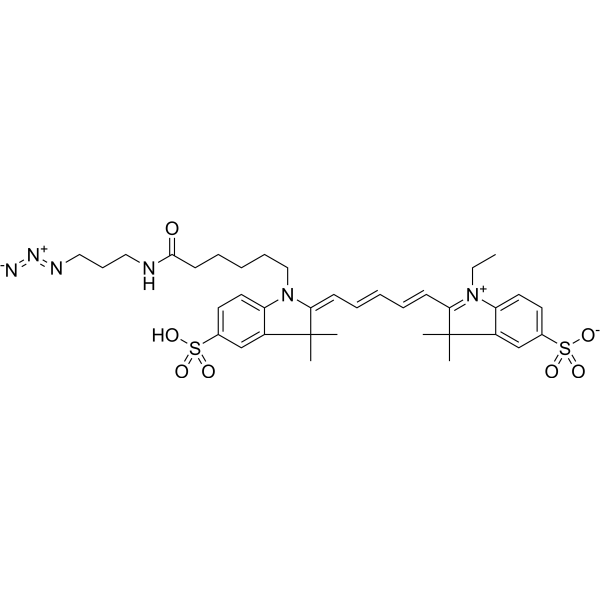
CY5-N3 (Sulfo-Cyanine5-azide) is a Cy5-azide, which is a fluorescent dye (ex/em: 646/662 nm). CY5-N3 is cell membrane permeable and can be used for live cell imaging. CY5-N3 can be used in cell imagine by Click reaction.
商品は「研究用試薬」です。人や動物の医療用・臨床診断用・食品用の製品ではありません。
研究用途以外に使用した場合、当社は一切の責任を負いかねます。
- 純度 : 99.01%
- CAS 番号: 1621101-43-6
- 分子式: C36H46N6O7S2
- 分子量:738.92
-
保管条件:
-20°C, protect from light
* The compound is unstable in solutions, freshly prepared is recommended.

To place orders, for customer services and technical support, please contact: MedChemExpress USA
Tel: 609-228-6898 E-mail: [email protected] [email protected]


-
 生物活性
生物活性
-
化学情報
-
溶剤 & 溶解度
- プロトコル
- 純度とドキュメンテーション
- 参考文献
-
 Help & FAQs


-
HY-B0166A
L-Ascorbic acid sodium saltCalcium Channel Inhibitor -
HY-D1583
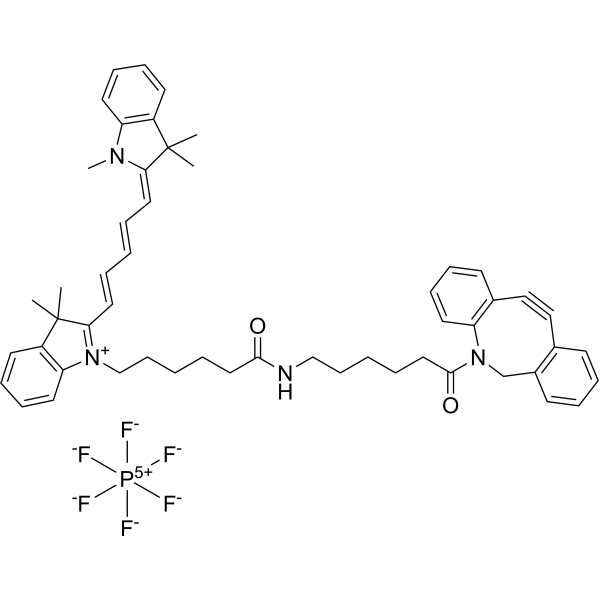
Cyanine5 DBCO hexafluorophosphateAzide Reaction Probe -
HY-50767
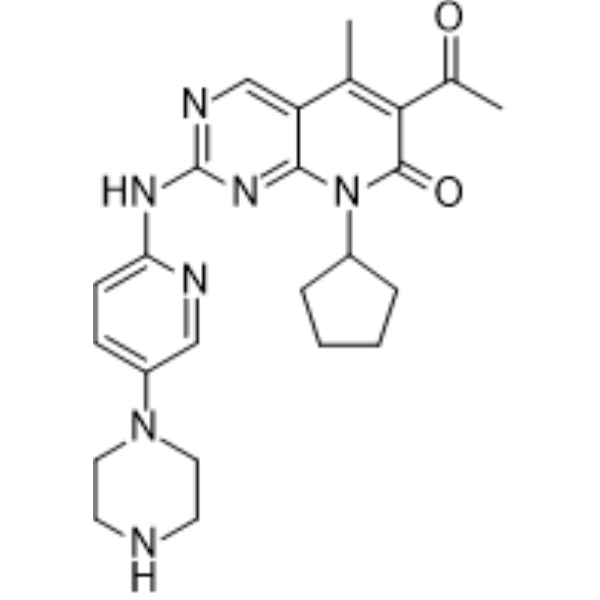
PalbociclibCDK4/6 Inhibitor -
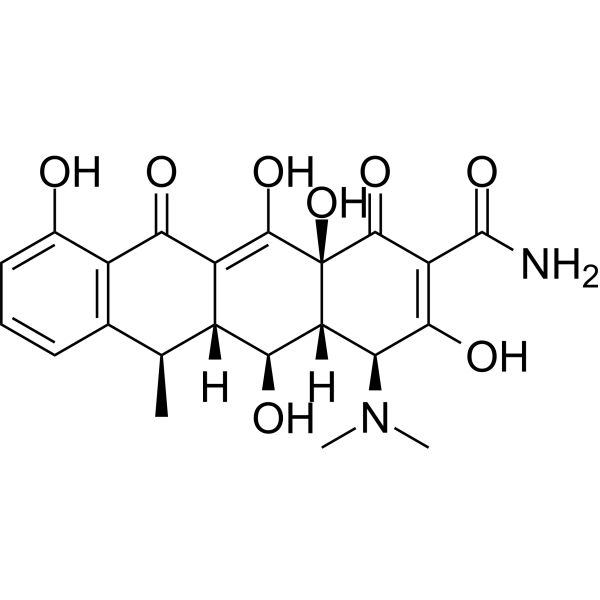
HY-N0565
DoxycyclineMMP Inhibitor -
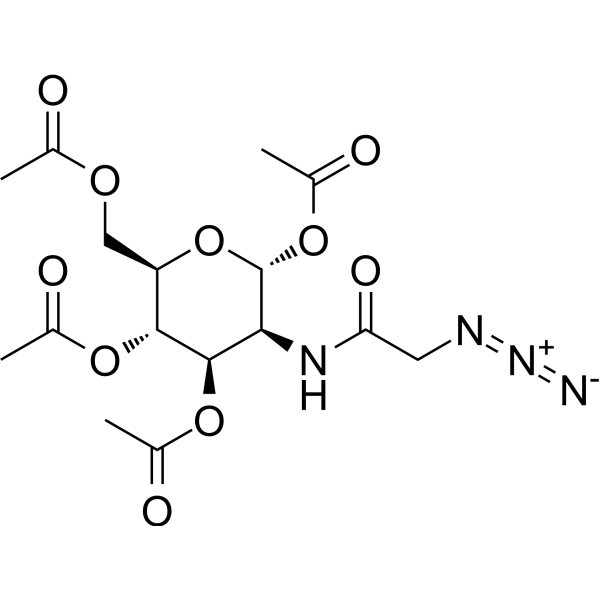
HY-W728531
Ac4ManNAzGlycosylation Labeling Reagent -
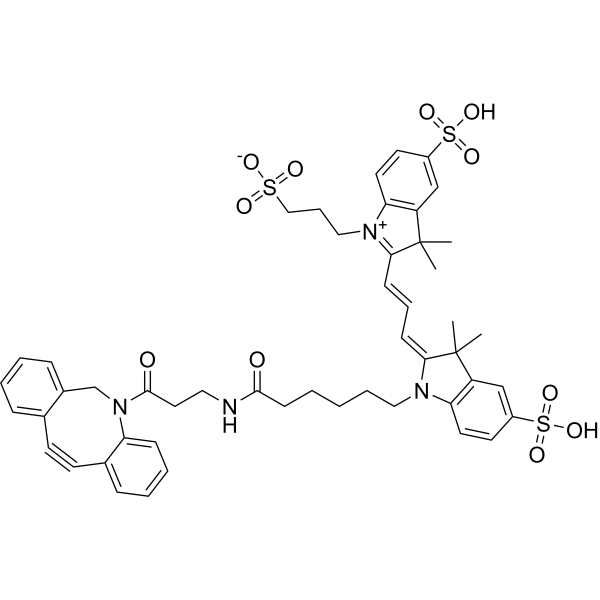
HY-D1069
DBCO-Cy3Orange Fluorescent Dye -
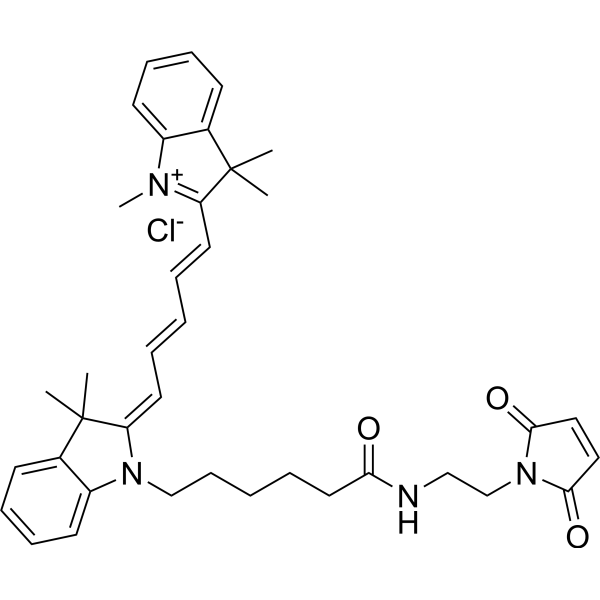
HY-138200
Cy5 maleimideFluorescence Dye -
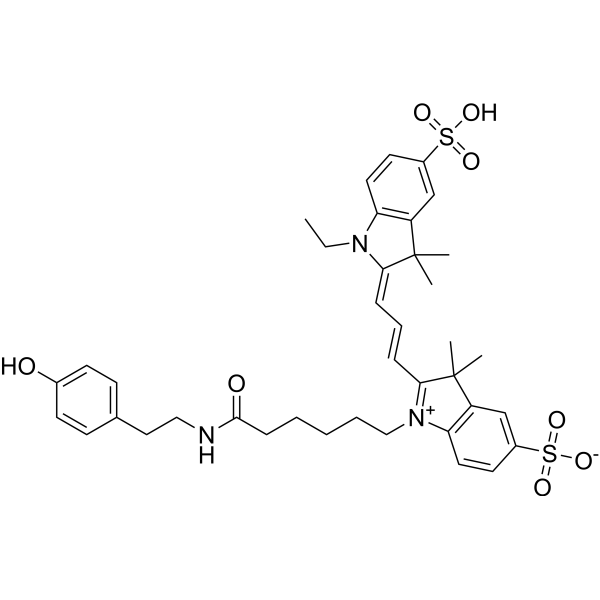
HY-136248
Cyanine 3 TyramideFluorescent Dye -
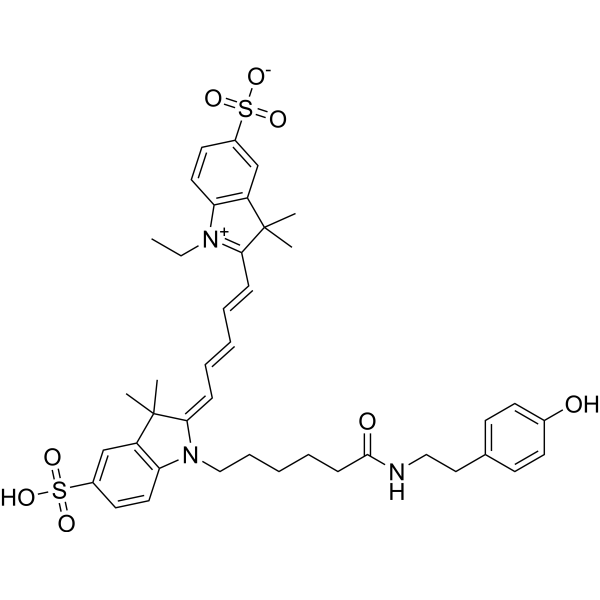
HY-136247
Cyanine 5 TyramideFluorescent Dye -

HY-DY1067
Cy5 maleimide (solution)Fluorescence Dye -
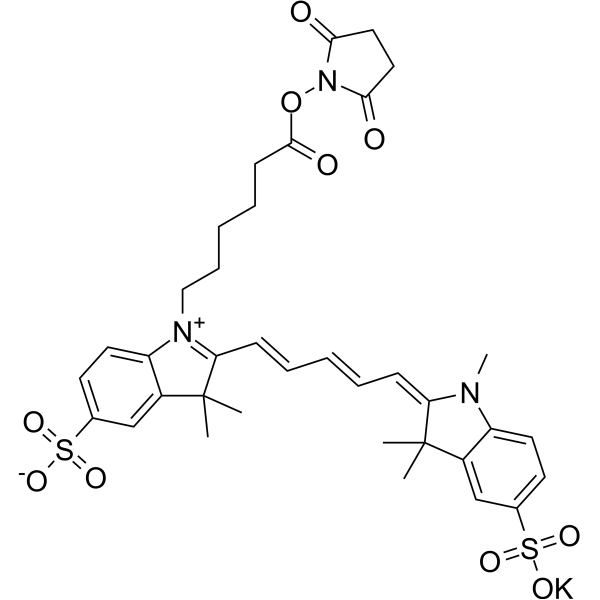
HY-135413A
Sulfo-CY5-NHS ester potassiumReactive Dye
MedChemExpress(MCE)の使用を引用している文献 CY5-N3
More

生物活性
製品説明
体外実験
Guide (The following is our recommended protocol. It is provided as a guide only and should be modified to suit your specific needs).
1.1 Preparation of storage solution[3]
Use anhydrous DMSO to prepare Cy5-N3 stock solution.
1.2 Preparation of working solution
Use preheated serum-free cell culture medium or PBS to dilute the storage solution to prepare a 100 μM Cy5-N3 working solution.
Note: Please adjust the concentration of Cy5-N3 working solution according to the actual situation and prepare it before use.
2 Specific staining steps
1) Incubate Yersinia pseudotuberculosis YPIII (pIB102; pFU95) cells in calcium-deficient LB medium at 26°C for 1 h and then at 37°C for 2 h to induce the T3SS with or without the addition of test compounds.
2) Dilute the bacterial suspension 1:5 with PBS and transfer 50 μL to microfluidic chambers (CellASIC ONIX B04A-03 plates).
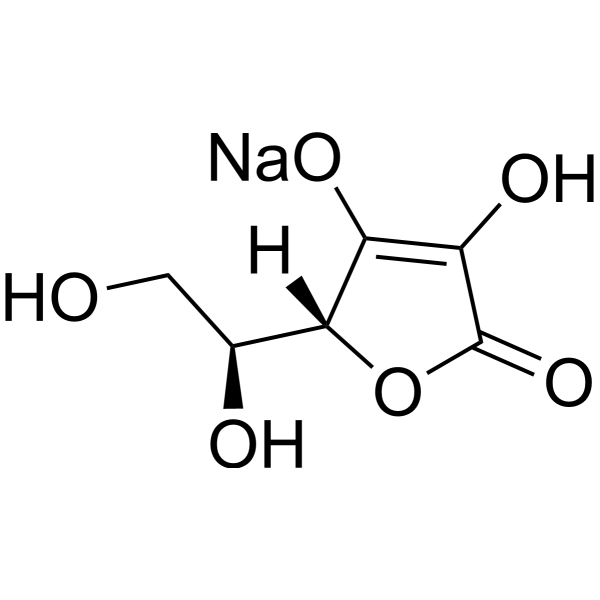
3) Prepare the click reaction mixture: add 0.1 mM CuSO4 (HY-Y1878), 128 μM TBTA (HY-116677), 5 mM Sodium ascorbate (HY-B0166A), and 100 μM Cy5-N3 to PBS.
4) Wash the chambers with PBS at a flow rate of 4 psi for 10 min.
5) Inject the click reaction mixture into the chambers at a pressure of 8 psi for 5 min and then at 4 psi for 60 min to complete the conjugation reaction.
6) Remove excess reagents by washing with PBS at 8 psi for 10 min and 4 psi for 20 min.
7) Analyze the stained bacteria using a confocal spinning disk microscope (far red 647 laser) to detect the fluorescent signal.
MedChemExpress (MCE) has not independently confirmed the accuracy of these methods. They are for reference only. Further protocols information, click here.
Emission (Em)
670


化学情報
-
CAS 番号 1621101-43-6
-
性状 Solid
-
分子量 738.92
-
分子式 C36H46N6O7S2
-
Color Brown to reddish brown
-
SMILES
CC1(C)/C(N(C2=CC=C(S(=O)(O)=O)C=C21)CCCCCC(NCCCN=[N+]=[N-])=O)=C\C=C\C=C\C(C(C)(C3=CC(S(=O)([O-])=O)=CC=C43)C)=[N+]4CC
-
別名
Sulfo-Cyanine5-azide
-
輸送条件
Room temperature in continental US; may vary elsewhere.
-
保管条件
-20°C, protect from light
* The compound is unstable in solutions, freshly prepared is recommended.


Publications (2)
-
Journal Impact Factor
-
Most Recent
-
J Control Release
Precisely targeting of engineered nanovesicles to implanted scaffolds via click chemistry for microenvironment regulation in acute spinal cord injury. [Abstract]2025 Oct 14;388(Pt 1):114321. PMID: 41101695 -


溶剤 & 溶解度
体外:
DMSO : 100 mg/mL (135.33 mM; ultrasonic and warming and heat to 60°C; Hygroscopic DMSO has a significant impact on the solubility of product, please use newly opened DMSO)
H2O : 7.78 mg/mL (10.53 mM; Need ultrasonic)
Please refer to the solubility information to select the appropriate solvent. The compound is unstable in solutions, freshly prepared is recommended.
* Note: If you choose water as the stock solution, please dilute it to the working solution, then filter and sterilize it with a 0.22 μm filter before use.
Please refer to the solubility information to select the appropriate solvent. The compound is unstable in solutions, freshly prepared is recommended.
* Note: If you choose water as the stock solution, please dilute it to the working solution, then filter and sterilize it with a 0.22 μm filter before use.
濃度 (開始) × 体積 (開始) = 濃度 (終了) × 体積 (終了)

プロトコル
-
Directly Induced Neuron Culture
Directly induced neuron culture converts somatic cells, most commonly fibroblasts, into induced neurons without passing through a pluripotent or neural progenitor stage; classic evidence shows that mouse fibroblasts can be converted by Ascl1, Brn2/Pou3f2, and Myt1l, human fibroblasts can be converted by defined neuronal transcription factors, and human fibroblasts can also be converted by miR-9/9-124 with neurogenic or subtype-specifying transcription factors. The readout is acquisition of neuronal identity and function, assessed by neuronal morphology, neuronal markers such as Tuj1/βIII-tubulin, MAP2, synapsin, and subtype markers when relevant, together with functional assays such as action-potential firing, synaptic activity, and electrophysiology.


純度とドキュメンテーション
-
データシート (279 KB)
-
SDS (252 KB)
- English - EN (252 KB)
- Français - FR (252 KB)
- Deutsch - DE (252 KB)
- Norwegian - NO (252 KB)
- Español - ES (252 KB)
- Swedish - SV (252 KB)
- Italian - IT (252 KB)
- Korean - KR (252 KB)
- Portuguese - PT (252 KB)
-
取扱説明書 (2659 KB)
参考文献
[1]. Su Y, et al. Multiplex imaging and cellular target identification of kinase inhibitors via an affinity-based proteome profiling approach. Sci Rep. 2015 Jan 12;5:7724. [Content Brief]
[2]. Lam YY, et al. Systematic investigation of metabolic oligosaccharide engineering efficiency in intestinal cells using a dibenzocyclooctyne-monosaccharide conjugate. Chembiochem. 2023 Mar 16:e202300144. [Content Brief]
[3]. Sundin C, et al. Exploring resveratrol dimers as virulence blocking agents - Attenuation of type III secretion in Yersinia pseudotuberculosis and Pseudomonas aeruginosa. Sci Rep. 2020 Feb 7;10(1):2103. [Content Brief]


Complete Stock Solution Preparation Table
Please refer to the solubility information to select the appropriate solvent. The compound is unstable in solutions, freshly prepared is recommended.
| Optional Solvent | Concentration Solvent Mass | 1 mg | 5 mg | 10 mg | 25 mg |
|---|---|---|---|---|---|
| H2O / DMSO | 1 mM | 1.3533 mL | 6.7666 mL | 13.5333 mL | 33.8332 mL |
| 5 mM | 0.2707 mL | 1.3533 mL | 2.7067 mL | 6.7666 mL | |
| 10 mM | 0.1353 mL | 0.6767 mL | 1.3533 mL | 3.3833 mL | |
| DMSO | 15 mM | 0.0902 mL | 0.4511 mL | 0.9022 mL | 2.2555 mL |
| 20 mM | 0.0677 mL | 0.3383 mL | 0.6767 mL | 1.6917 mL | |
| 25 mM | 0.0541 mL | 0.2707 mL | 0.5413 mL | 1.3533 mL | |
| 30 mM | 0.0451 mL | 0.2256 mL | 0.4511 mL | 1.1278 mL | |
| 40 mM | 0.0338 mL | 0.1692 mL | 0.3383 mL | 0.8458 mL | |
| 50 mM | 0.0271 mL | 0.1353 mL | 0.2707 mL | 0.6767 mL | |
| 60 mM | 0.0226 mL | 0.1128 mL | 0.2256 mL | 0.5639 mL | |
| 80 mM | 0.0169 mL | 0.0846 mL | 0.1692 mL | 0.4229 mL | |
| 100 mM | 0.0135 mL | 0.0677 mL | 0.1353 mL | 0.3383 mL |
* Note: If you choose water as the stock solution, please dilute it to the working solution, then filter and sterilize it with a 0.22 μm filter before use.


CY5-N3 関連分類
HY-D0832 関連分類
 Powered by Bioz