



イプロジオン

Based on 1 Customer Validation
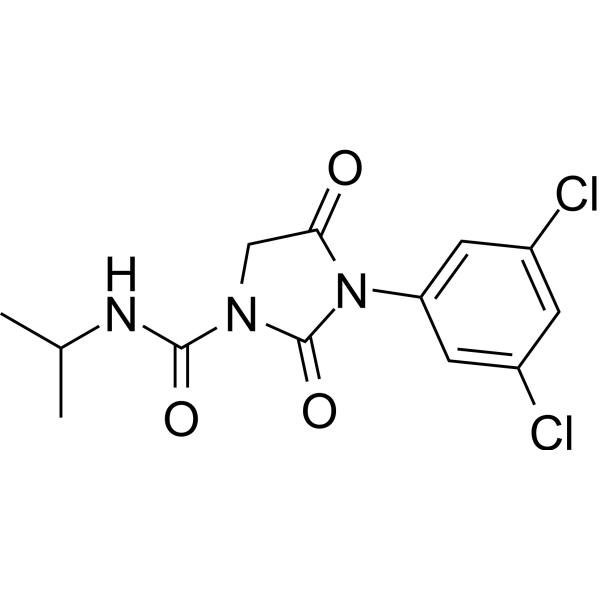
Iprodione is an orally active diformimide fungicide. Iprodione can specifically cause oxidative damage by producing free radicals (ROS). Iprodione is also an antiandrogen agent that delays adolescent development in rats and reduces sexual behavior and reproductive ability in rats.
商品は「研究用試薬」です。人や動物の医療用・臨床診断用・食品用の製品ではありません。
研究用途以外に使用した場合、当社は一切の責任を負いかねます。
- 純度 : 99.25%
- CAS 番号: 36734-19-7
- 分子式: C13H13Cl2N3O3
- 分子量:330.17
-
保管条件:Powder -20°C, 3 years , 4°C, 2 years ; In solvent -80°C, 6 months , -20°C, 1 month

To place orders, for customer services and technical support, please contact: MedChemExpress USA
Tel: 609-228-6898 E-mail: [email protected] [email protected]


-
 生物活性
生物活性
-
化学情報
-
溶剤 & 溶解度
- プロトコル
- 純度とドキュメンテーション
- 参考文献
-
 Help & FAQs


-

HY-B1978R
Iprodione (Standard)Fungicide -
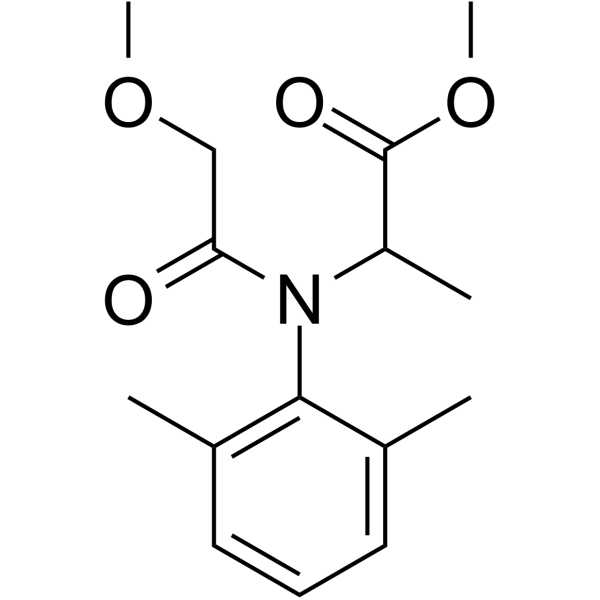
HY-B0843
MetalaxylFungicide -

HY-B0843R
Metalaxyl (Standard)Fungicide -
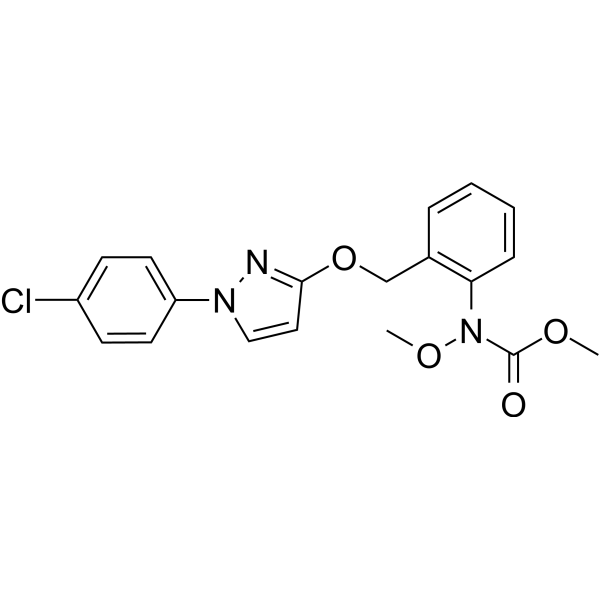
HY-N6626
PyraclostrobinFungicide -
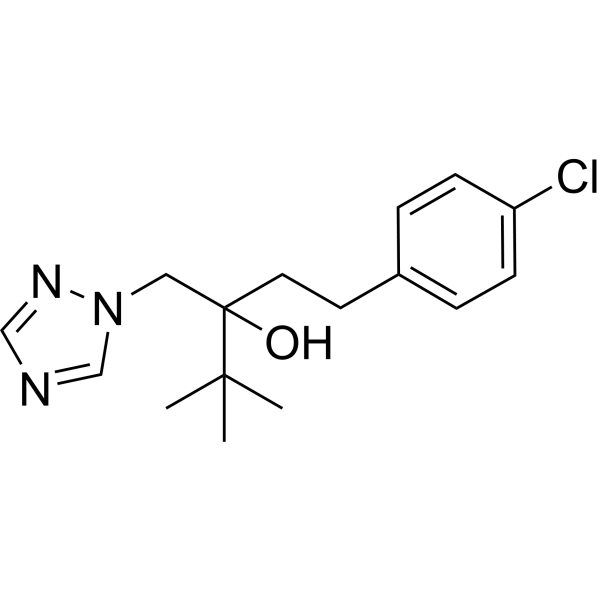
HY-B0852
TebuconazoleCytochrome P450 Inhibitor -
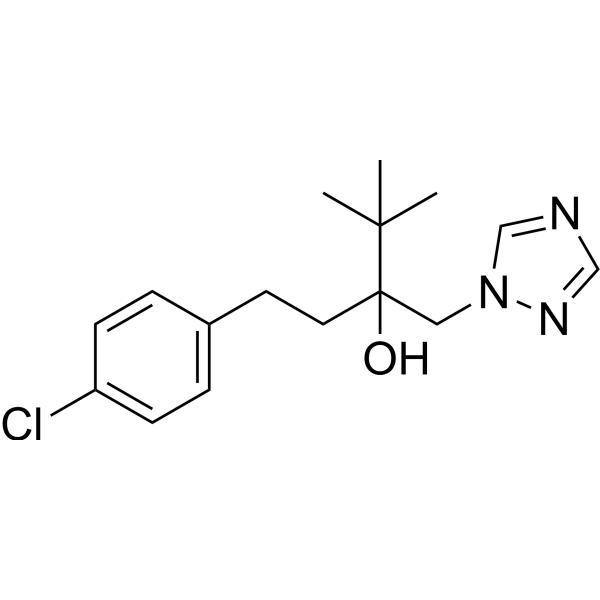
HY-B0852R
Tebuconazole (Standard)Cytochrome P450 Inhibitor -
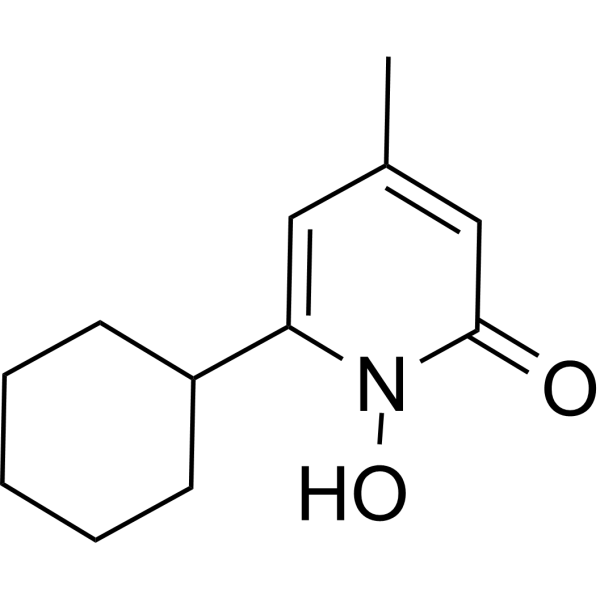
HY-B0450
CiclopiroxAntifungal Agent -
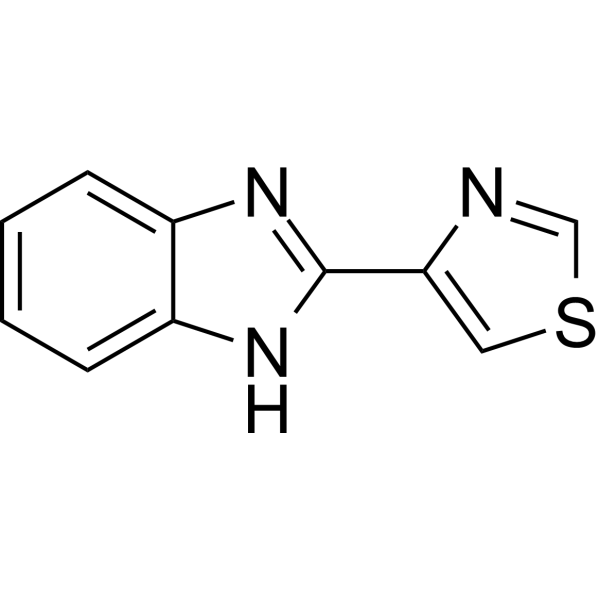
HY-B0263
Thiabendazolefungicide -
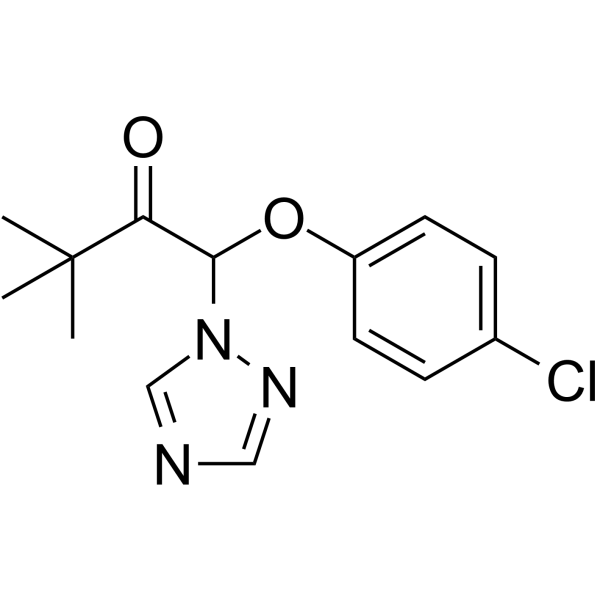
HY-123037
TriadimefonFungicide -
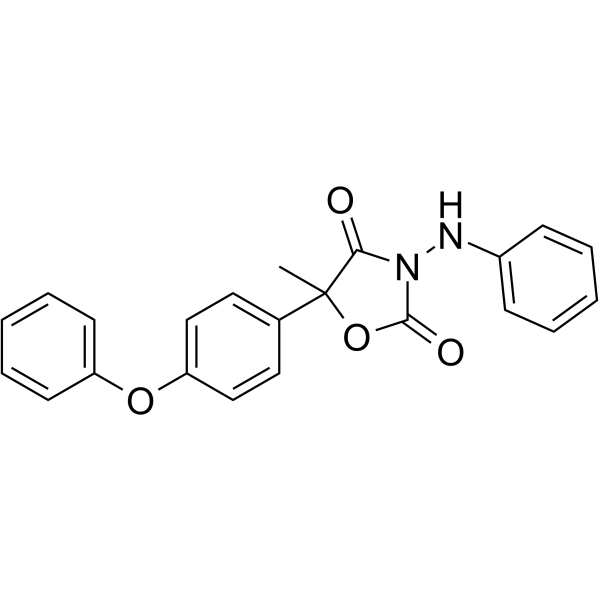
HY-B2008
FamoxadoneFungicide Active -
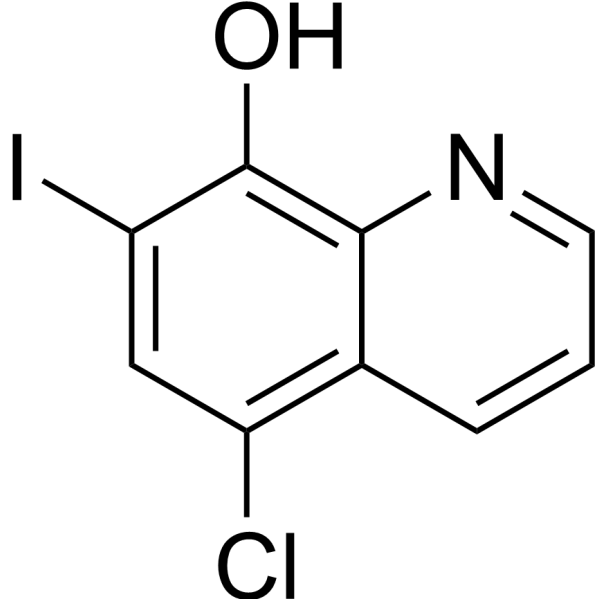
HY-14603
ClioquinolAnti-fungal Agent -
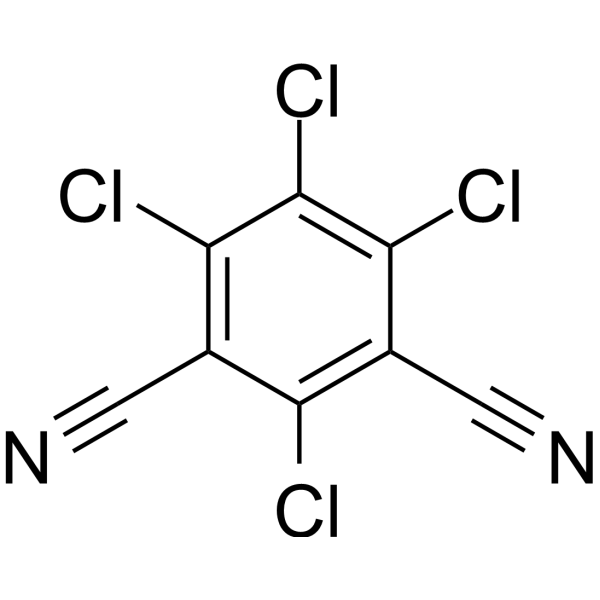
HY-N6625
ChlorothalonilBroad-spectrum foliar fungicide


生物活性
製品説明
体外実験
Iprodione (0.75-3 μM) completely inhibits the mycelial growth of Sclerotinia sclerotiorum at a concentration of 3 μM in liquid and solid media with EC50 values of 0.6 and 0.9 μM, respectively[1].
Iprodione (1.5-50 μM; 1-6 days) inhibits the growth of Botrytis cinerea, (5-50; 24 h) inhibits the synthesis of lipids in Botrytis cinerea[2].
Iprodione (0.3-0.4mM; 24 h) produces oxidative damage by increasing free radicals (ROS) in trout hepatocytes and is not species-selective[3].
MedChemExpress (MCE) has not independently confirmed the accuracy of these methods. They are for reference only.
体内実験
Iprodione (50-200 mg/kg, gavage; Once daily for 30 days) delays pubertal development and inhibits steroidogenesis within the testis in immature male Sprague Dawley rats[5].
MedChemExpress (MCE) has not independently confirmed the accuracy of these methods. They are for reference only.
-
Animal Model:Adult male Sprague Dawley rats model[4]
-
Dosage:200 mg/kg
-
Administration:Oral gavage (p.o.); Once daily for 65 days.
-
Result:Decreased the gonad index, sperm motility percentage and sperm count in mice.
Reduced serum levels of testosterone, LH, FSH, and E2.
Promoted steroidogenic genes downregulation and suppressed SIRT1/TERT/PGC1α pathway.
-
Animal Model:Weanling Sprague Dawley rats model[5]
-
Dosage:50 mg/kg, 100 mg/kg, 200 mg/kg
-
Administration:Gavage (i.g.); Once daily for 30 days
-
Result:Delay PPS at 100 and 200 mg/kg.
Reduced androgen-sensitive seminal vesicle and epididymis weight at 200 mg/kg.
Increased adrenal and liver weight at a dose of 200 mg/kg.
Reduced the production of testosterone and progesterone.


化学情報
-
CAS 番号 36734-19-7
-
性状 Solid
-
分子量 330.17
-
分子式 C13H13Cl2N3O3
-
Color White to off-white
-
SMILES
O=C(N(C(N1C2=CC(Cl)=CC(Cl)=C2)=O)CC1=O)NC(C)C
-
別名
Iprodione
-
輸送条件
Room temperature in continental US; may vary elsewhere.
-
保管条件
Powder -20°C 3 years 4°C 2 years In solvent -80°C 6 months -20°C 1 month


溶剤 & 溶解度
体外:
DMSO : 100 mg/mL (302.87 mM; Need ultrasonic; Hygroscopic DMSO has a significant impact on the solubility of product, please use newly opened DMSO)
Please refer to the solubility information to select the appropriate solvent. Once prepared, please aliquot and store the solution to prevent product inactivation from repeated freeze-thaw cycles.
Storage method and period of stock solution: -80°C, 6 months; -20°C, 1 month. When stored at -80°C, please use it within 6 months. When stored at -20°C, please use it within 1 month.
Please refer to the solubility information to select the appropriate solvent. Once prepared, please aliquot and store the solution to prevent product inactivation from repeated freeze-thaw cycles.
Storage method and period of stock solution: -80°C, 6 months; -20°C, 1 month. When stored at -80°C, please use it within 6 months. When stored at -20°C, please use it within 1 month.
濃度 (開始) × 体積 (開始) = 濃度 (終了) × 体積 (終了)
体内:
Select the appropriate dissolution method based on your experimental animal and administration route.
- For the following dissolution methods, please ensure to first prepare a clear stock solution using an In Vitro approach and then sequentially add co-solvents:
- To ensure reliable experimental results, the clarified stock solution can be appropriately stored based on storage conditions. As for the working solution for In Vivo experiments, it is recommended to prepare freshly and use it on the same day.
- The percentages shown for the solvents indicate their volumetric ratio in the final prepared solution. If precipitation or phase separation occurs during preparation, heat and/or sonication can be used to aid dissolution.
Add each solvent one by one: 10% DMSO 40% PEG300 5% Tween-80 45% Saline
Solubility: ≥ 2.5 mg/mL (7.57 mM); Clear solution
This protocol yields a clear solution of ≥ 2.5 mg/mL (saturation unknown).
Taking 1 mL working solution as an example, add 100 μL DMSO stock solution (25.0 mg/mL) to 400 μL PEG300, and mix evenly; then add 50 μL Tween-80 and mix evenly; then add 450 μL Saline to adjust the volume to 1 mL.
Preparation of Saline: Dissolve 0.9 g sodium chloride in ddH₂O and dilute to 100 mL to obtain a clear Saline solution.
In Vivo Dissolution Calculator
Please enter the basic information of animal experiments:
-
-
-
-
Recommended: Prepare an additional quantity of animals to account for potential losses during experiments.
Please enter your animal formula composition:
-
%DMSO +
Recommended: Keep the proportion of DMSO in working solution below 2% if your animal is weak.
-
%+
-
+%Tween-80 + +
-
%Saline +
The co-solvents required include: DMSO, . All of co-solvents are available by MedChemExpress (MCE). , Tween 80. All of co-solvents are available by MedChemExpress (MCE).
Working solution concentration: 0.22 mg/mL
Method for preparing stock solution: mg drug dissolved in μL DMSO. Stock solution concentration: mg/mL.
1. Take μL DMSO stock solution;
2. Add μL .
μL , mix evenly;
3. Then add μL Tween 80, mix evenly;
4. Then add μL
Please ensure that the stock solution in the first step is dissolved to a clear state, and add co-solvents in sequence. You can use ultrasonic heating (ultrasonic cleaner, recommended frequency 20-40 kHz), vortexing, etc. to assist dissolution.


純度とドキュメンテーション
-
データシート (289 KB)
-
SDS (622 KB)
- English - EN (622 KB)
- Français - FR (622 KB)
- Deutsch - DE (622 KB)
- Norwegian - NO (622 KB)
- Español - ES (622 KB)
- Swedish - SV (622 KB)
- Italian - IT (622 KB)
- Korean - KR (622 KB)
- Portuguese - PT (622 KB)
-
取扱説明書 (2659 KB)
参考文献
[2]. Griffiths RG, et al. Lipid composition of Botrytis cinerea and inhibition of its radiolabelling by the fungicide iprodione. New Phytol. 2003 Oct;160(1):199-207. [Content Brief]
[3]. Radice S, et al. Effect of iprodione, a dicarboximide fungicide, on primary cultured rainbow trout (Oncorhynchus mykiss) hepatocytes. Aquat Toxicol. 2001 Sep;54(1-2):51-8. [Content Brief]
[5]. Blystone CR, et al. Iprodione delays male rat pubertal development, reduces serum testosterone levels, and decreases ex vivo testicular testosterone production. Toxicol Lett. 2007 Nov 1;174(1-3):74-81. [Content Brief]


Complete Stock Solution Preparation Table
Please refer to the solubility information to select the appropriate solvent. Once prepared, please aliquot and store the solution to prevent product inactivation from repeated freeze-thaw cycles.
Storage method and period of stock solution: -80°C, 6 months; -20°C, 1 month. When stored at -80°C, please use it within 6 months. When stored at -20°C, please use it within 1 month.
| Optional Solvent | Concentration Solvent Mass | 1 mg | 5 mg | 10 mg | 25 mg |
|---|---|---|---|---|---|
| DMSO | 1 mM | 3.0287 mL | 15.1437 mL | 30.2874 mL | 75.7186 mL |
| 5 mM | 0.6057 mL | 3.0287 mL | 6.0575 mL | 15.1437 mL | |
| 10 mM | 0.3029 mL | 1.5144 mL | 3.0287 mL | 7.5719 mL | |
| 15 mM | 0.2019 mL | 1.0096 mL | 2.0192 mL | 5.0479 mL | |
| 20 mM | 0.1514 mL | 0.7572 mL | 1.5144 mL | 3.7859 mL | |
| 25 mM | 0.1211 mL | 0.6057 mL | 1.2115 mL | 3.0287 mL | |
| 30 mM | 0.1010 mL | 0.5048 mL | 1.0096 mL | 2.5240 mL | |
| 40 mM | 0.0757 mL | 0.3786 mL | 0.7572 mL | 1.8930 mL | |
| 50 mM | 0.0606 mL | 0.3029 mL | 0.6057 mL | 1.5144 mL | |
| 60 mM | 0.0505 mL | 0.2524 mL | 0.5048 mL | 1.2620 mL | |
| 80 mM | 0.0379 mL | 0.1893 mL | 0.3786 mL | 0.9465 mL | |
| 100 mM | 0.0303 mL | 0.1514 mL | 0.3029 mL | 0.7572 mL |


Iprodione 関連分類
HY-B1978 関連分類
 Powered by Bioz
Keywords
- Iprodione
- 36734-19-7
- Environmental Pollutants
- Androgen Receptor
- Reactive Oxygen Species (ROS)
- Fungal
- Botrytis cinerea
- Sclerotinia sclerotiorum
- Bactericide
- Infection
- Testosterone
- Endocrine disruption
- Chlorpyrifos
- Male reproductive toxicity
- Sexual behavior
- Steroidogenic genes
- SIRT1/TERT/PGC-1α pathway
- Trout liver cells
- ROS
- Oxidative stress
- Inhibitor
- inhibitor
- inhibit