



SR11237
Based on 1 publication(s) in Google Scholar
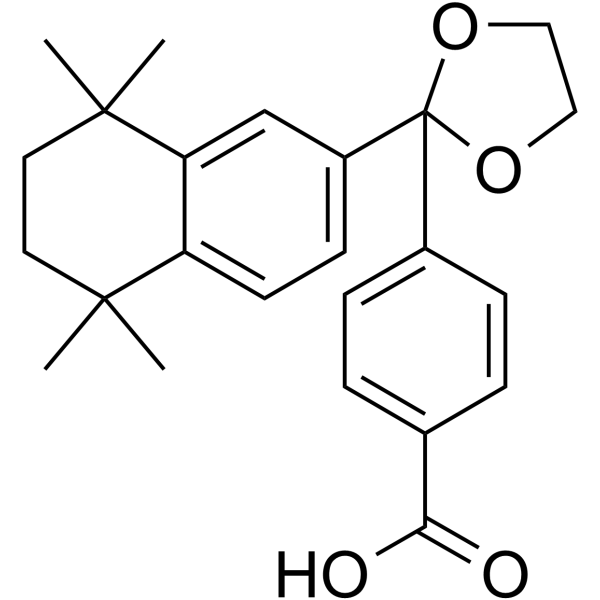
SR11237 (BMS-649) GMP is SR11237 (HY-107413) produced by using GMP guidelines. GMP small molecules works appropriately as an auxiliary reagent for cell therapy manufacture. SR11237 is a RXR activator and lipid metabolism regulator that promotes the differentiation of induced neural stem cells into dopaminergic (TH-positive) neurons. SR11237 induces transcriptional regulation of lipogenic genes and cholesterol transporters, increases glycosaminoglycan release, and elevates total cellular triglyceride levels. SR11237 promotes heterodimerization of RXR with Nurr1, thereby enhancing tyrosine hydroxylase expression and facilitating dopamine release. SR11237 produces a synergistic effect when used in combination with bFGF/EGF. SR11237 is mainly used in studies related to osteoarthritis and Parkinson's disease.
연구목적의 판매만을 진행합니다. 환자를 대상으로 한 판매는 하지 않습니다.
- Purity : 99.99%
- CAS No.: 146670-40-8
- 화학식: C24H28O4
- 분자량:380.48
-
보관:Powder -20°C, 3 years , 4°C, 2 years ; In solvent -80°C, 6 months , -20°C, 1 month

To place orders, for customer services and technical support, please contact: MedChemExpress USA
Tel: 609-228-6898 E-mail: [email protected] [email protected]


-
 Biological Activity
-
Chemical Information
-
용액&용해도
- Protocol
- 순도&문서
- References
-
 Help & FAQs


-
HY-14171
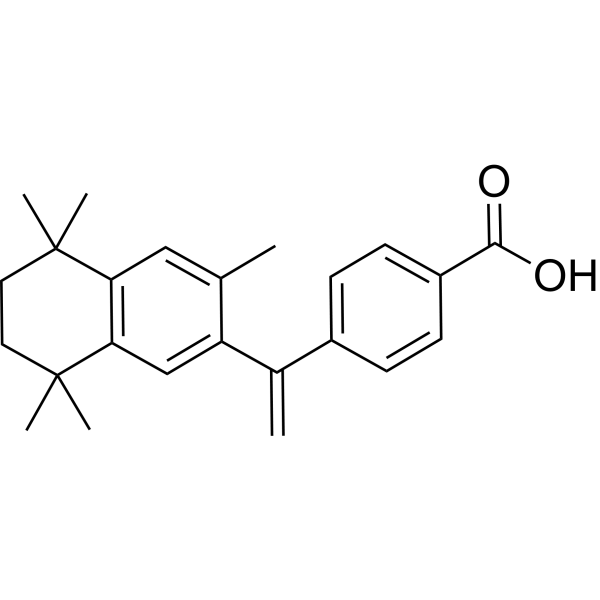
BexaroteneRXR Agonist -
HY-107399
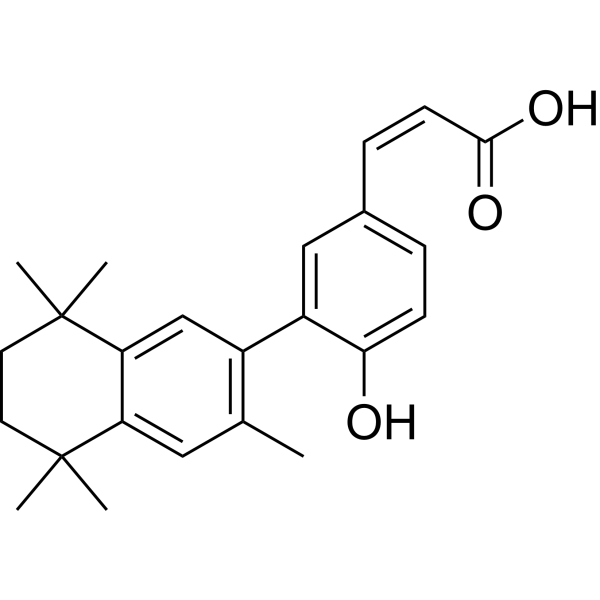
CD3254RXR Agonist -
HY-15340
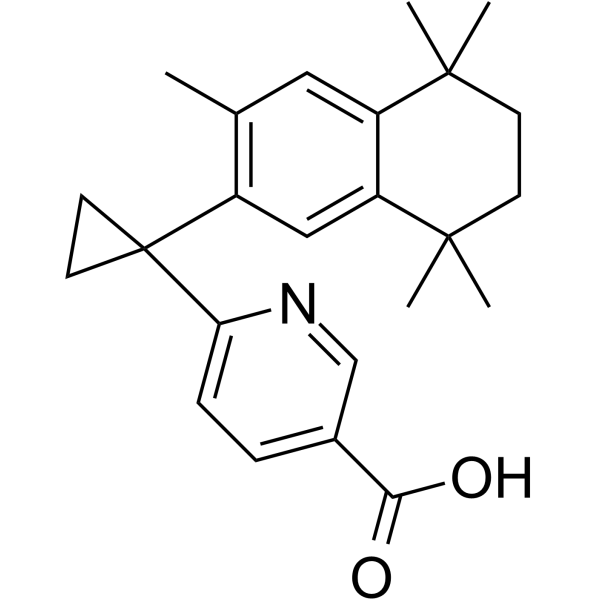
LG100268RXR Agonist -
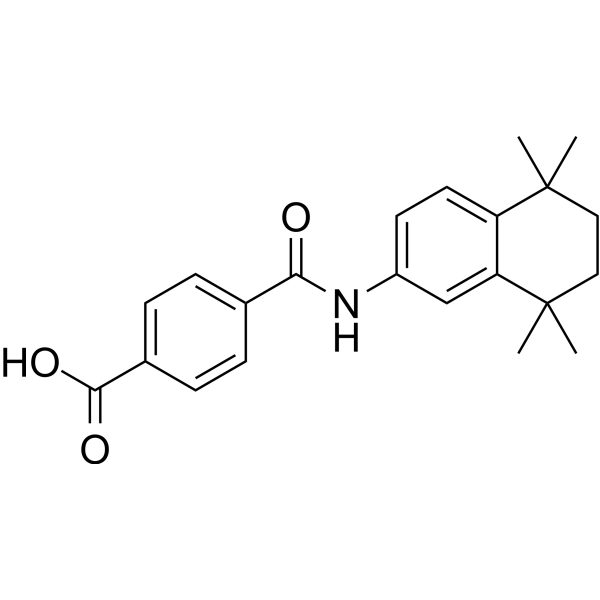
HY-14652
TamibaroteneApoptosis Inducer -
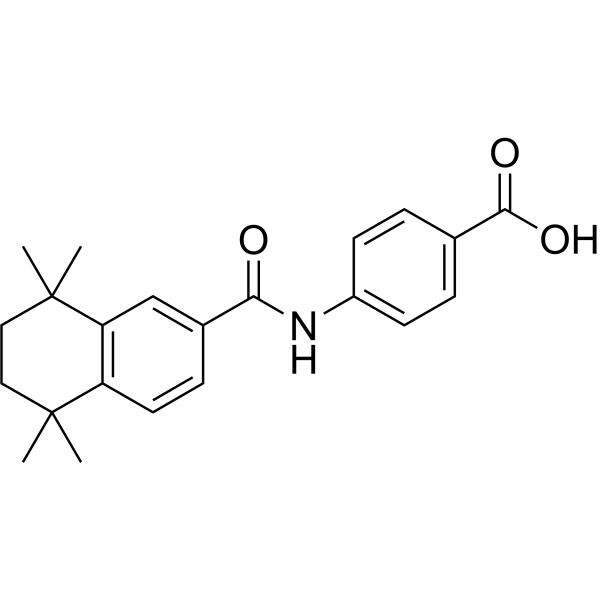
HY-10475
AM580RARα Agonist -
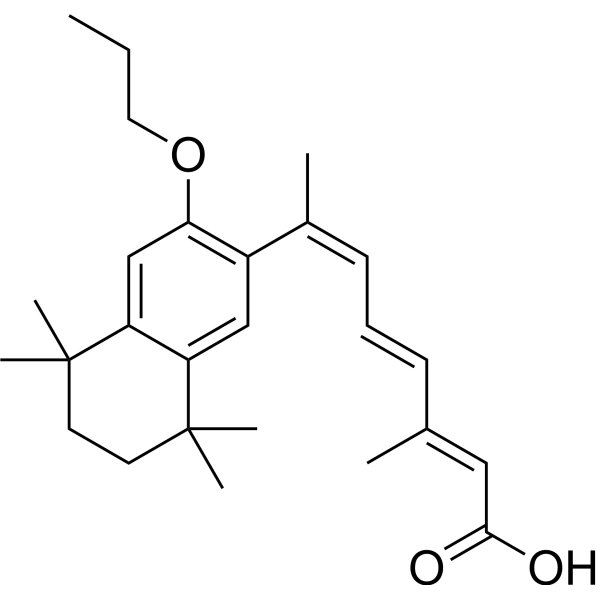
HY-108523
LG100754RXR Modulater -
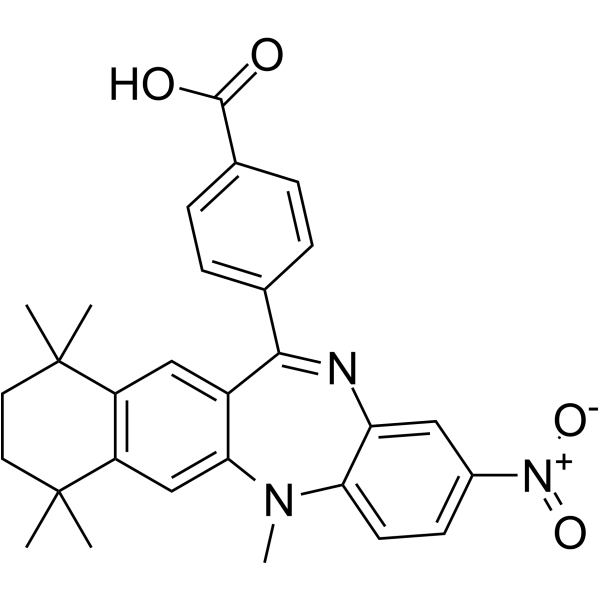
HY-108521
HX531RXR Antagonist -
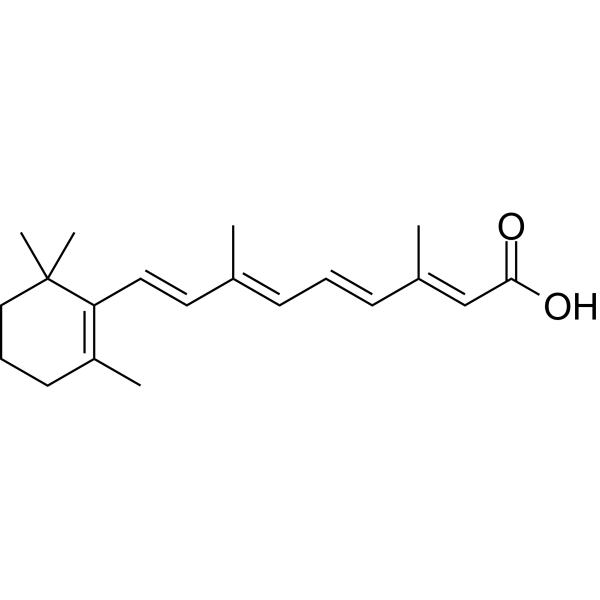
HY-14649
Retinoic acidRAR Agonist -
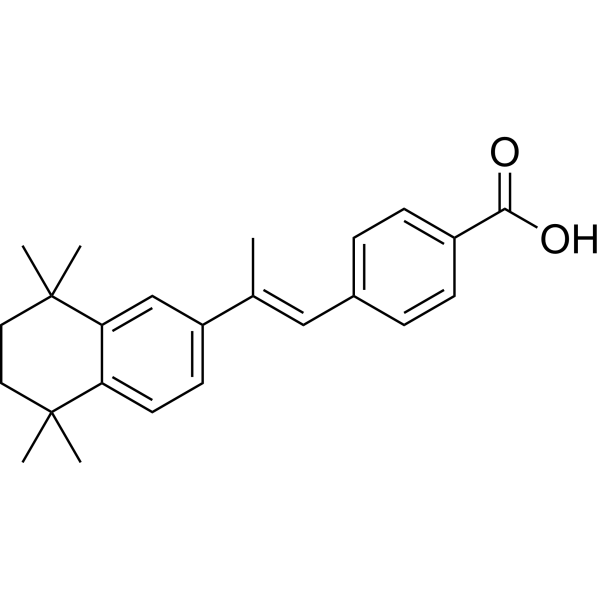
HY-15682
TTNPBApoptosis Inducer -
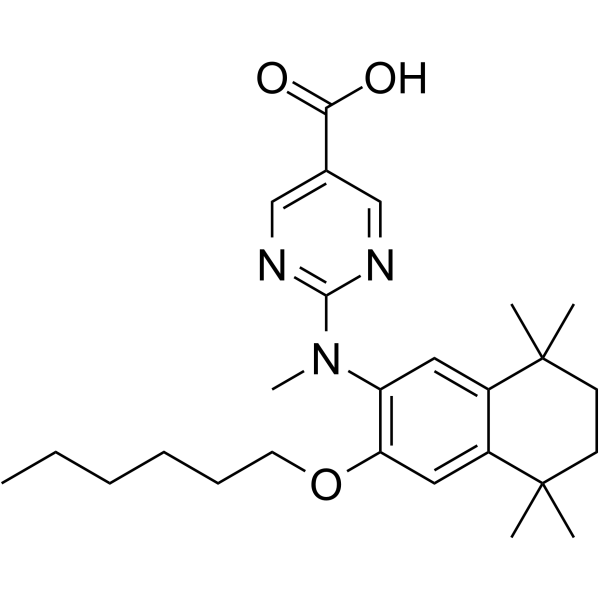
HY-108522
PA452RXR Antagonist -
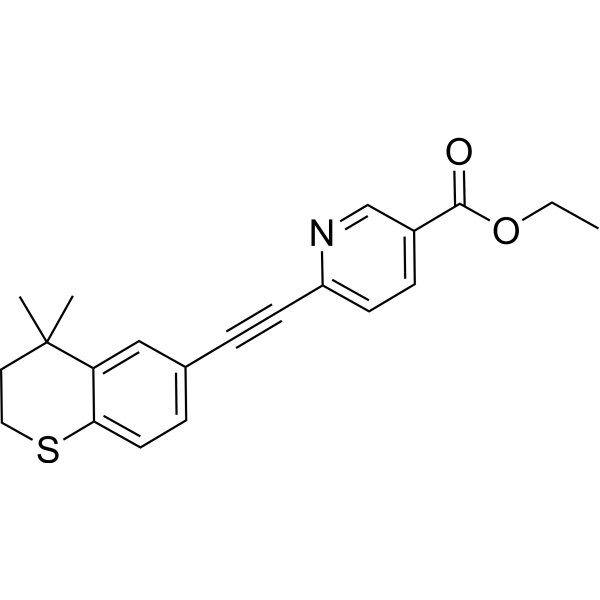
HY-15388
TazaroteneRAR Agonist -
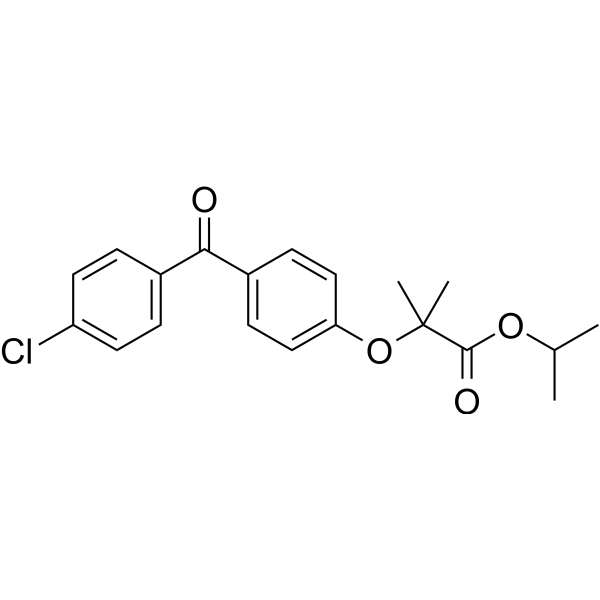
HY-17356
Fenofibrate
Publications Citing Use of MedChemExpress (MCE) SR11237
More

Biological Activity
제품 설명
Cellular Effect
|
Cell Line

|
Type | Value | Description | References |
|---|---|---|---|---|
| Sf9 | IC50 |
12.6 μM
Compound: 13a
|
Inhibition of microsomal fraction of human CYP26B1 expressed in Sf9 cells using 9-cis-RA as substrate preincubated for 5 mins followed by NADPH addition measured after 5 mins by HPLC analysis in presence of rat P450 reductase
Inhibition of microsomal fraction of human CYP26B1 expressed in Sf9 cells using 9-cis-RA as substrate preincubated for 5 mins followed by NADPH addition measured after 5 mins by HPLC analysis in presence of rat P450 reductase
|
[PMID: 26918322] |
| Sf9 | IC50 |
7.8 μM
Compound: 13a
|
Inhibition of microsomal fraction of human CYP26A1 expressed in Sf9 cells using 9-cis-RA as substrate preincubated for 5 mins followed by NADPH addition measured after 1 min by HPLC analysis in presence of rat P450 reductase
Inhibition of microsomal fraction of human CYP26A1 expressed in Sf9 cells using 9-cis-RA as substrate preincubated for 5 mins followed by NADPH addition measured after 1 min by HPLC analysis in presence of rat P450 reductase
|
[PMID: 26918322] |
In Vitro
SR11237 (1 μM; 7 d) promotes the induced differentiation of Nurr1-overexpressing C17.2-c42 neural stem cells co-cultured with primary ventral mesencephalic cells from E16 rats into dopaminergic (TH-positive) neurons, with up to 60% of C17.2-c42 cells exhibiting a dopaminergic phenotype[1].
Combination treatment with SR11237 (1 μM) and bFGF enhances dopamine release from dopamine neurons derived from Nurr1-overexpressing C17.2-c42 neural stem cells co-cultured with type 1 astrocytes from the ventral midbrain of P1 rats[1].
SR11237 (10 μM; 7 d) promotes adipogenic differentiation of human bone marrow mesenchymal stem cells by upregulating the expression of key adipogenic genes including FABP4, LPL, CEBPB and PPARG, as well as increasing lipid accumulation[3].
SR11237 (10 μM; 7 d) retains its adipogenic stimulatory effect in RARβ-knockdown human bone marrow mesenchymal stem cells, indicating that its adipogenic activity is independent of RARβ[3].
SR11237 (10 μM; 7 d) inhibits adipogenic differentiation of human liposarcoma SW872 cells by downregulating the expression of FABP4 and PPARG, whereas it exerts a pro-adipogenic effect in hBMSCs[3].
The inhibitory effect of SR11237 (10 μM; 7 d) on adipogenic differentiation of human liposarcoma SW872 cells is partially mediated by RARβ, as knockdown of RARβ attenuates this inhibitory effect[3].
MedChemExpress (MCE) has not independently confirmed the accuracy of these methods. They are for reference only.
In Vivo
MedChemExpress (MCE) has not independently confirmed the accuracy of these methods. They are for reference only.
-
Animal Model:Sprague-Dawley rats[2]
-
Dosage:25 mg/kg
-
Administration:I.p.; daily from post-natal days 5 to 15
-
Result:Caused disturbed ossification and bone morphology in rats, including premature growth plate closure and infiltration of ossified tissue through the central epiphysis.


Chemical Information
-
CAS No. 146670-40-8
-
Appearance Solid
-
분자량 380.48
-
화학식 C24H28O4
-
Color White to off-white
-
SMILES
CC1(C2=CC(C3(C4=CC=C(C(O)=O)C=C4)OCCO3)=CC=C2C(C)(C)CC1)C
-
Synonyms
BMS-649
-
선적
Room temperature in continental US; may vary elsewhere.
-
보관
Powder -20°C 3 years 4°C 2 years In solvent -80°C 6 months -20°C 1 month


Publications (1)
-
Journal Impact Factor
-
Most Recent


용액&용해도
In Vitro:
DMSO : 5 mg/mL (13.14 mM; ultrasonic and warming and heat to 60°C; Hygroscopic DMSO has a significant impact on the solubility of product, please use newly opened DMSO)
Please refer to the solubility information to select the appropriate solvent. Once prepared, please aliquot and store the solution to prevent product inactivation from repeated freeze-thaw cycles.
Storage method and period of stock solution: -80°C, 6 months; -20°C, 1 month. When stored at -80°C, please use it within 6 months. When stored at -20°C, please use it within 1 month.
Please refer to the solubility information to select the appropriate solvent. Once prepared, please aliquot and store the solution to prevent product inactivation from repeated freeze-thaw cycles.
Storage method and period of stock solution: -80°C, 6 months; -20°C, 1 month. When stored at -80°C, please use it within 6 months. When stored at -20°C, please use it within 1 month.
Concentration (start) × Volume (start) = Concentration (final) × Volume (final)
In Vivo:
Select the appropriate dissolution method based on your experimental animal and administration route.
- For the following dissolution methods, please ensure to first prepare a clear stock solution using an In Vitro approach and then sequentially add co-solvents:
- To ensure reliable experimental results, the clarified stock solution can be appropriately stored based on storage conditions. As for the working solution for In Vivo experiments, it is recommended to prepare freshly and use it on the same day.
- The percentages shown for the solvents indicate their volumetric ratio in the final prepared solution. If precipitation or phase separation occurs during preparation, heat and/or sonication can be used to aid dissolution.
In Vivo Dissolution Calculator
Please enter the basic information of animal experiments:
-
-
-
-
Recommended: Prepare an additional quantity of animals to account for potential losses during experiments.
Please enter your animal formula composition:
-
%DMSO +
Recommended: Keep the proportion of DMSO in working solution below 2% if your animal is weak.
-
%+
-
+%Tween-80 + +
-
%Saline +
The co-solvents required include: DMSO, . All of co-solvents are available by MedChemExpress (MCE). , Tween 80. All of co-solvents are available by MedChemExpress (MCE).
Working solution concentration: 0.22 mg/mL
Method for preparing stock solution: mg drug dissolved in μL DMSO. Stock solution concentration: mg/mL.
1. Take μL DMSO stock solution;
2. Add μL .
μL , mix evenly;
3. Then add μL Tween 80, mix evenly;
4. Then add μL
Please ensure that the stock solution in the first step is dissolved to a clear state, and add co-solvents in sequence. You can use ultrasonic heating (ultrasonic cleaner, recommended frequency 20-40 kHz), vortexing, etc. to assist dissolution.


순도&문서
-
Data Sheet (285 KB)
-
SDS (254 KB)
- English - EN (254 KB)
- Français - FR (254 KB)
- Deutsch - DE (254 KB)
- Norwegian - NO (254 KB)
- Español - ES (254 KB)
- Swedish - SV (254 KB)
- Italian - IT (254 KB)
- Korean - KR (254 KB)
- Portuguese - PT (254 KB)
-
Handling Instructions (2659 KB)
References
[1]. Wagner J, et al. Induction of a midbrain dopaminergic phenotype in Nurr1-overexpressing neural stem cells by type 1 astrocytes. Nat Biotechnol. 1999;17(7):653-659. [Content Brief]
[3]. Cao J, et al. Retinoids Regulate Adipogenesis Involving the TGFβ/SMAD and Wnt/β-Catenin Pathways in Human Bone Marrow Mesenchymal Stem Cells. Int J Mol Sci. 2017;18(4):842. Published 2017 Apr 15. [Content Brief]
[4]. Lenhard JM, et al. The RXR agonist LG100268 causes hepatomegaly, improves glycaemic control and decreases cardiovascular risk and cachexia in diabetic mice suffering from pancreatic beta-cell dysfunction. Diabetologia. 1999;42(5):545-554. [Content Brief]
[5]. Dupuis H, et al. Exposure to the RXR Agonist SR11237 in Early Life Causes Disturbed Skeletal Morphogenesis in a Rat Model. Int J Mol Sci. 2019;20(20):5198. Published 2019 Oct 20. [Content Brief]


Complete Stock Solution Preparation Table
Please refer to the solubility information to select the appropriate solvent. Once prepared, please aliquot and store the solution to prevent product inactivation from repeated freeze-thaw cycles.
Storage method and period of stock solution: -80°C, 6 months; -20°C, 1 month. When stored at -80°C, please use it within 6 months. When stored at -20°C, please use it within 1 month.
| Optional Solvent | Concentration Solvent Mass | 1 mg | 5 mg | 10 mg | 25 mg |
|---|---|---|---|---|---|
| DMSO | 1 mM | 2.6283 mL | 13.1413 mL | 26.2826 mL | 65.7065 mL |
| 5 mM | 0.5257 mL | 2.6283 mL | 5.2565 mL | 13.1413 mL | |
| 10 mM | 0.2628 mL | 1.3141 mL | 2.6283 mL | 6.5706 mL |


SR11237 Related Classifications
HY-107413 Related Classifications
 Powered by Bioz