



L-m-Tyrosine

Based on 1 Customer Validation
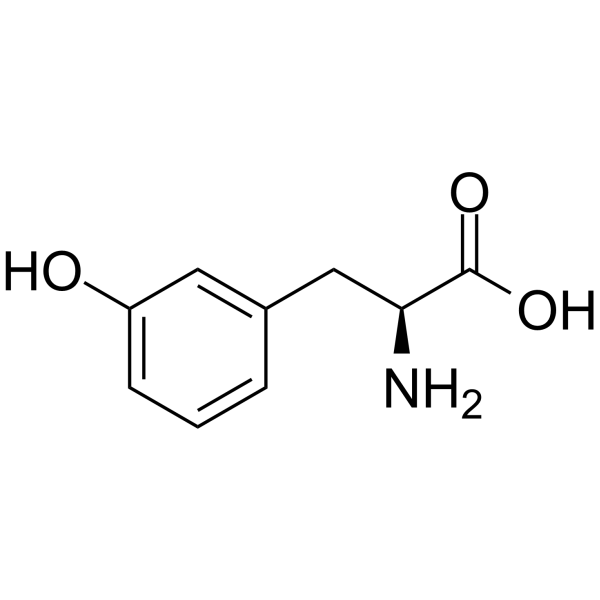
L-m-Tyrosine is an unnatural amino acid. L-m-Tyrosine reduces dopamine, norepinephrine and serotonin in rats. L-m-Tyrosine has potential in the research of Parkinsons disease, Alzheimers disease, and arthritis.
For research use only. We do not sell to patients.
- Purity : 99.94%
- CAS No.: 587-33-7
- Formula: C9H11NO3
- Molecular Weight:181.19
-
Storage:Powder -20°C, 3 years , 4°C, 2 years ; In solvent -80°C, 6 months , -20°C, 1 month

To place orders, for customer services and technical support, please contact: MedChemExpress USA
Tel: 609-228-6898 E-mail: [email protected] [email protected]


-
 Biological Activity
-
Chemical Information
-
Solvent & Solubility
- Protocols
- Purity & Documentation
- References
-
 Help & FAQs


-
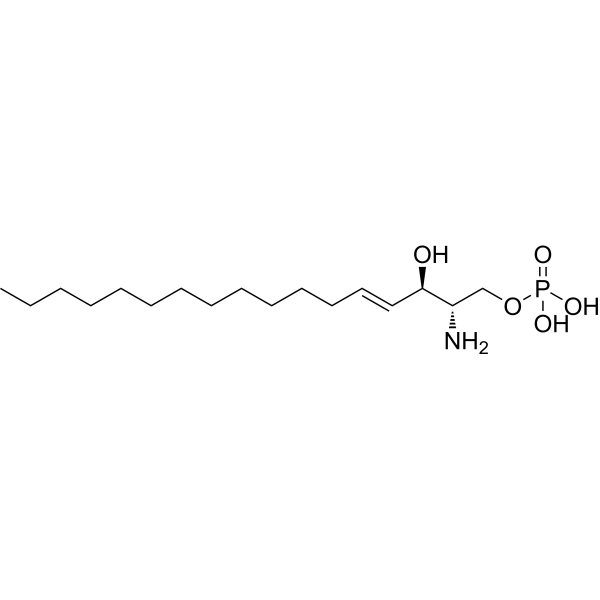
HY-141630
Sphingosine-1-phosphate (d17:1)Ceramide Derivative -

HY-137025
(S)-NIFEChiral Derivatizing Agent -

HY-155253
Sphinganine-1-phosphate (d17:0)Ester Product -
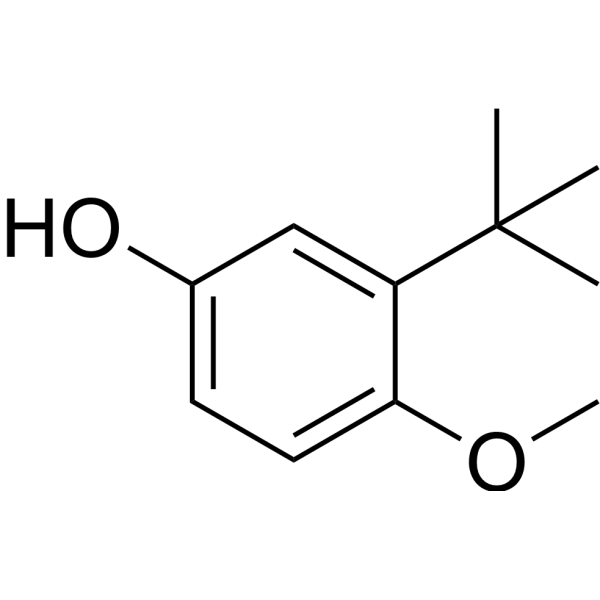
HY-W024365
3-tert-Butyl-4-methoxyphenolPROTAC linker -
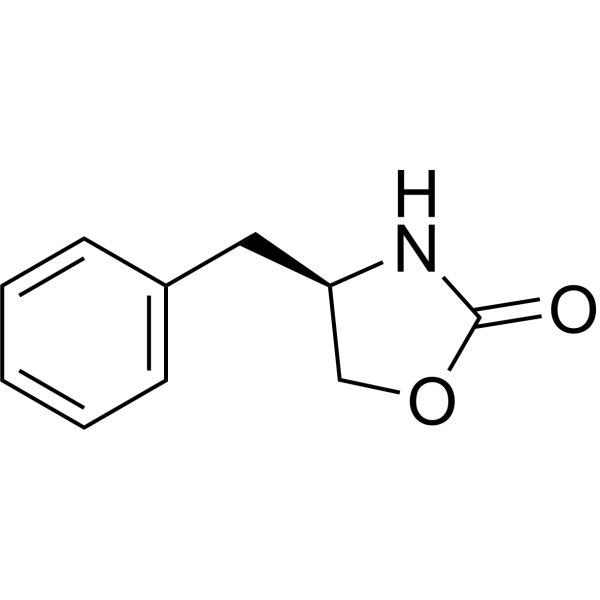
HY-W007664
(R)-4-Benzyl-2-oxazolidinoneAromatase Inhibitor Precursor -
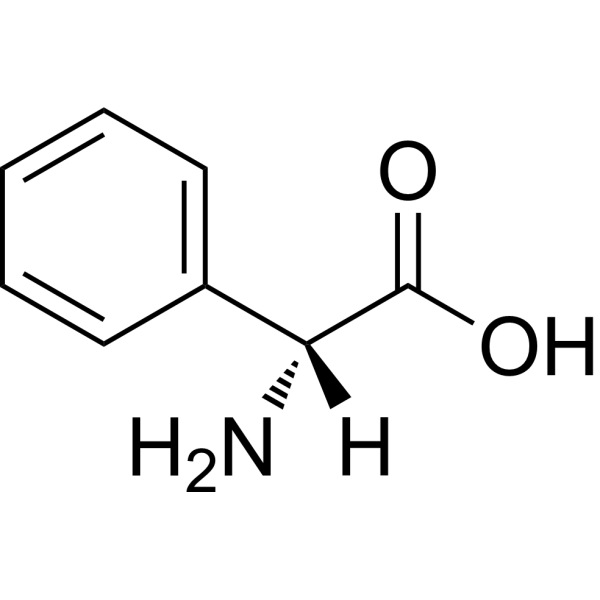
HY-W010249
H-D-Phg-OHAmino Acid Derivative -

HY-W024365R
3-tert-Butyl-4-methoxyphenol (Standard)PROTAC linker -
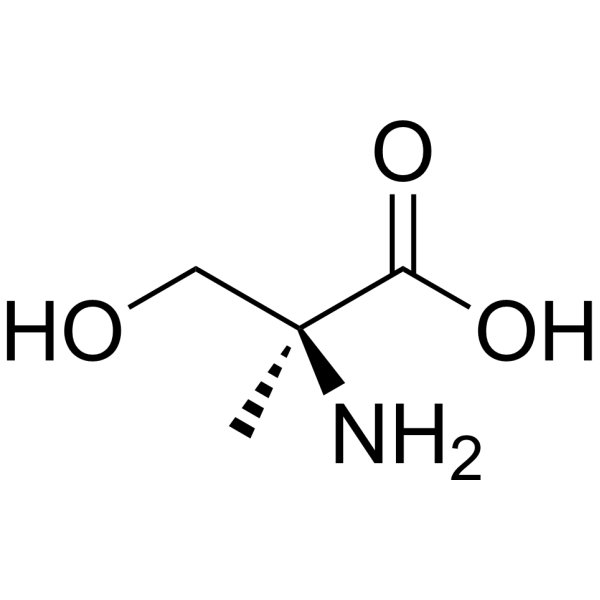
HY-W008467
(S)-2-amino-3-hydroxy-2-methylpropanoic acidAmino Acid Derivative -

HY-W425671
N-Isobutyryl-L-cysteine -

HY-120253
SpirotetramatInsecticide -

HY-W010249R
H-D-Phg-OH (Standard)Amino Acid Derivative -

HY-120253R
Spirotetramat (Standard)Pesticide


Biological Activity
Description
In Vitro
L-m-tyrosine is converted to dopamine by partially purified rat liver phenylalanine hydroxylase and bovine adrenal medullary tyrosine hydroxylase[2].
MedChemExpress (MCE) has not independently confirmed the accuracy of these methods. They are for reference only. Further protocols information, click here.
In Vivo
MedChemExpress (MCE) has not independently confirmed the accuracy of these methods. They are for reference only.


Chemical Information
-
CAS No. 587-33-7
-
Appearance Solid
-
Molecular Weight 181.19
-
Formula C9H11NO3
-
Color Off-white to light yellow
-
SMILES
N[C@H](C(O)=O)CC1=CC(O)=CC=C1
-
Shipping
Room temperature in continental US; may vary elsewhere.
-
Storage
Powder -20°C 3 years 4°C 2 years In solvent -80°C 6 months -20°C 1 month


Solvent & Solubility
In Vitro:
DMSO : < 1 mg/mL (insoluble or slightly soluble)

Protocols
-
Collagen-Induced Arthritis
Collagen-induced arthritis (CIA) is an autoimmune murine model of rheumatoid arthritis in which immunization with type II collagen (CII) emulsified in an adjuvant induces a T cell- and autoantibody-driven inflammatory arthritis characterized by synovial hyperplasia, immune cell infiltration, and joint destruction. The model typically relies on genetically susceptible mouse strains (e. g. , DBA/1) and reproduces key features of human rheumatoid arthritis, including anti-collagen immune responses and progressive joint inflammation. Disease onset generally occurs within ~3-4 weeks after immunization, depending on antigen/adjuvant combinations and protocol variation. The immunopathology is driven by adaptive immune activation against CII, leading to systemic and local joint inflammation mediated by pro-inflammatory cytokines and effector immune cells, making CIA a standard preclinical platform for evaluating immunomodulatory and anti-arthritic interventions.


Purity & Documentation
-
Data Sheet (276 KB)
-
SDS (393 KB)
- English - EN (393 KB)
- Français - FR (393 KB)
- Deutsch - DE (393 KB)
- Norwegian - NO (393 KB)
- Español - ES (393 KB)
- Swedish - SV (393 KB)
- Italian - IT (393 KB)
- Korean - KR (393 KB)
- Portuguese - PT (393 KB)
-
Handling Instructions (2659 KB)
References
[1]. M H Fukami ,et al. Phenylalanine as Substrate for Tyrosine Hydroxylase in Bovine Adrenal Chromaffin Cells. Biochem J. 1990 Jun 1;268(2):525-8. [Content Brief]
[2]. Ishimitsu S, et al. Studies on the formation of 3,4-dihydroxyphenylalanine, m-tyrosine and o-tyrosine from L-phenylalanine by rat liver and adrenal. Chem Pharm Bull (Tokyo). 1988 Jan;36(1):279-85. [Content Brief]
[3]. Smyth RG, et al. Studies on the depletion of brain amines by m-tyrosine. Eur J Pharmacol. 1977 Apr 7;42(3):267-73. [Content Brief]

Calculators
Concentration (start) × Volume (start) = Concentration (final) × Volume (final)


L-m-Tyrosine Related Classifications
HY-W016443 Related Classifications
 Powered by Bioz