



LCS3

Based on 1 Customer Validation
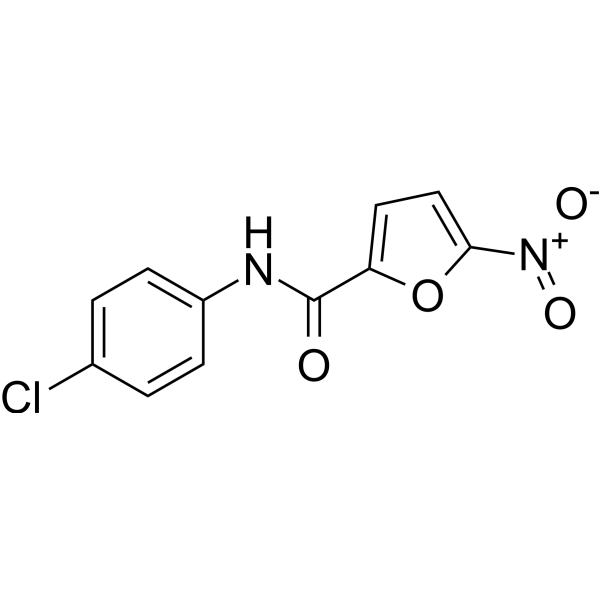
LCS3 is a reversible and uncompetitive glutathione disulfide reductase (GSR) and thioredoxin reductase 1 (TXNRD1) inhibitor (IC50=3.3 µM and 3.8 µM, respectively). LCS3 shows anti-tumor activity, and induces apoptosis. LCS3 can be used in lung adenocarcinoma (LUAD) research.
For research use only. We do not sell to patients.
- Purity : 99.43%
- CAS No.: 109844-92-0
- Formula: C11H7ClN2O4
- Molecular Weight:266.64
-
Storage:Powder -20°C, 3 years , 4°C, 2 years ; In solvent -80°C, 6 months , -20°C, 1 month

To place orders, for customer services and technical support, please contact: MedChemExpress USA
Tel: 609-228-6898 E-mail: [email protected] [email protected]


-
 Biological Activity
-
Chemical Information
-
Solvent & Solubility
- Protocols
- Purity & Documentation
- References
-
 Help & FAQs


-
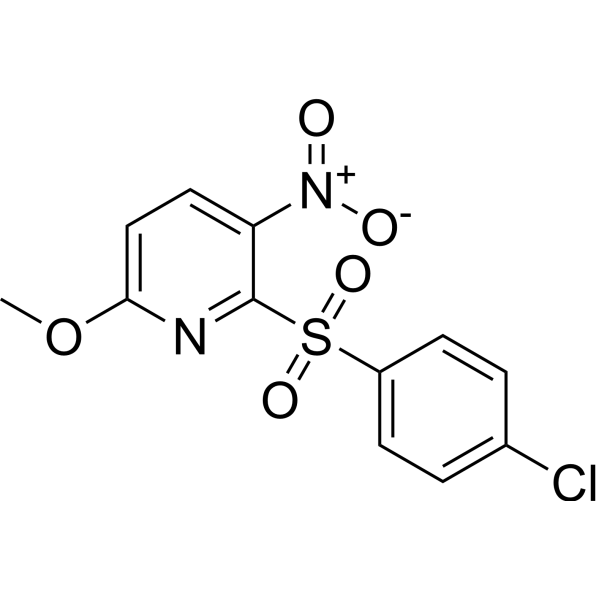
HY-125006
TRi-1TXNRD1 Inhibitor -
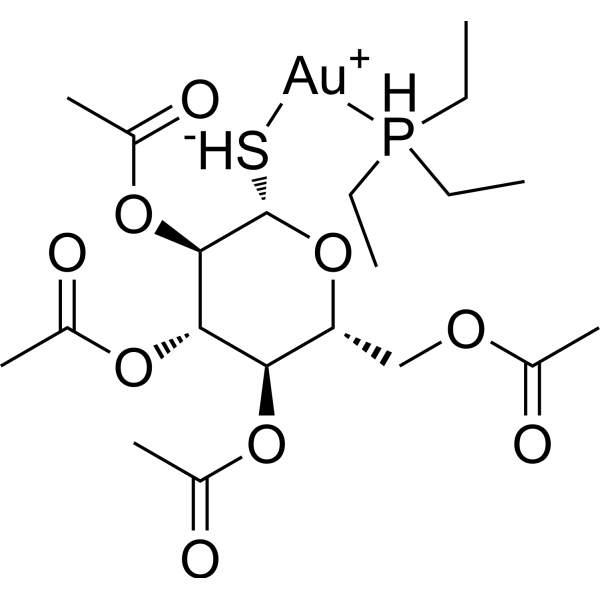
HY-B1123
AuranofinBacterial Inhibitor -
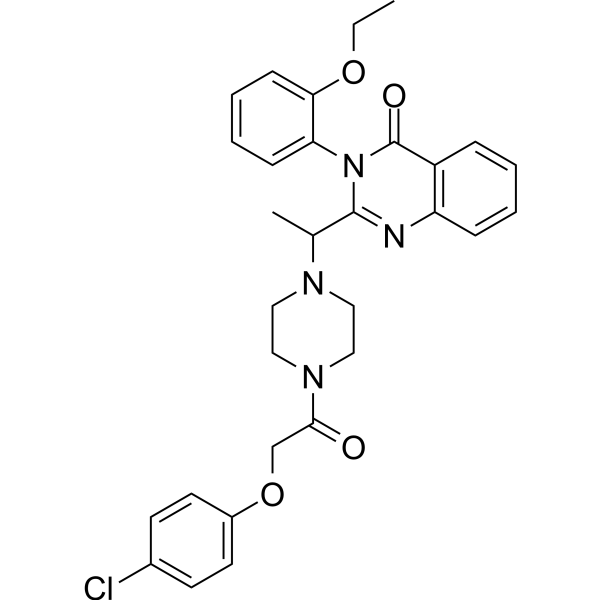
HY-15763
ErastinFerroptosis Inducer -
HY-100218A
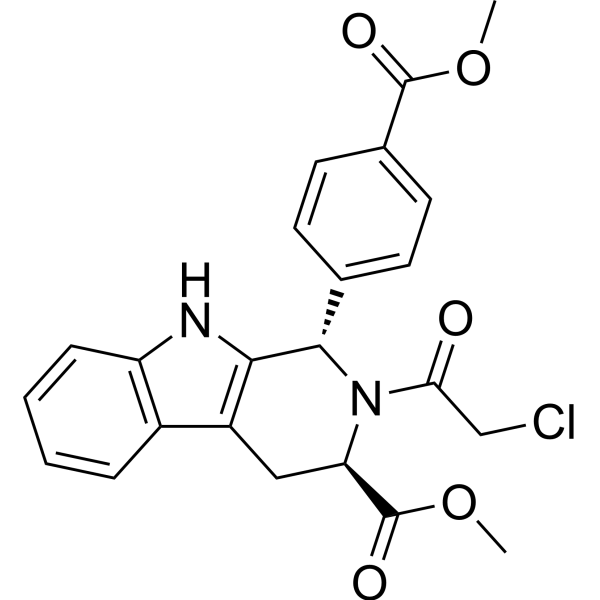
RSL3GPX4 Inhibitor -
HY-50202
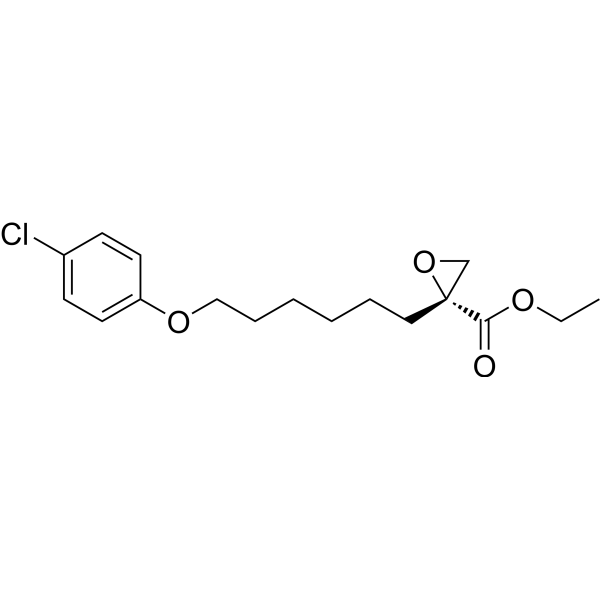
EtomoxirCPT1a Inhibitor -
HY-106376
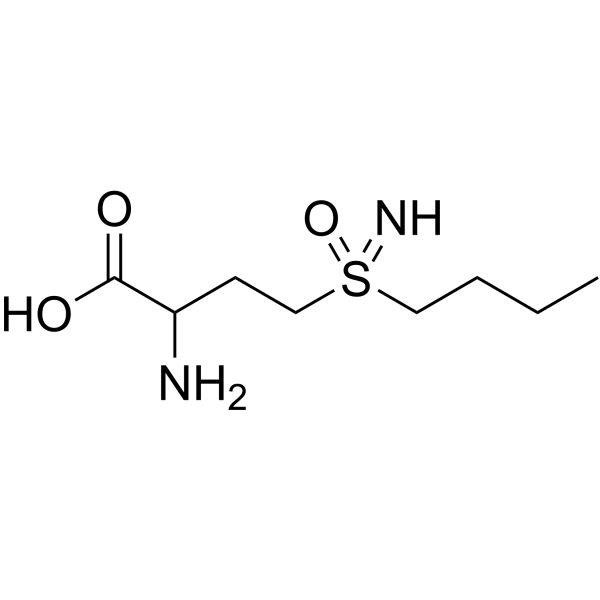
DL-Buthionine-(S,R)-sulfoximineGlutamylcysteine Synthetase Inhibitor -
HY-106376A
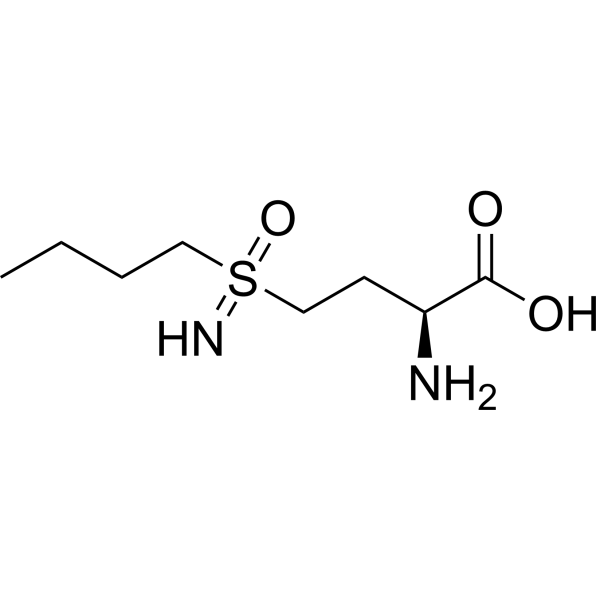
L-Buthionine-(S,R)-sulfoximineG-glutamylcysteine Synthetase Inhibitor -
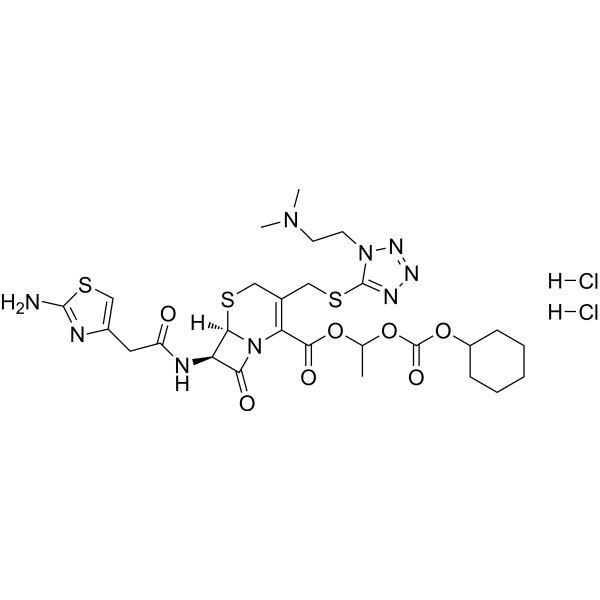
HY-A0110A
Cefotiam hexetil hydrochlorideBacterial Inhibitor -
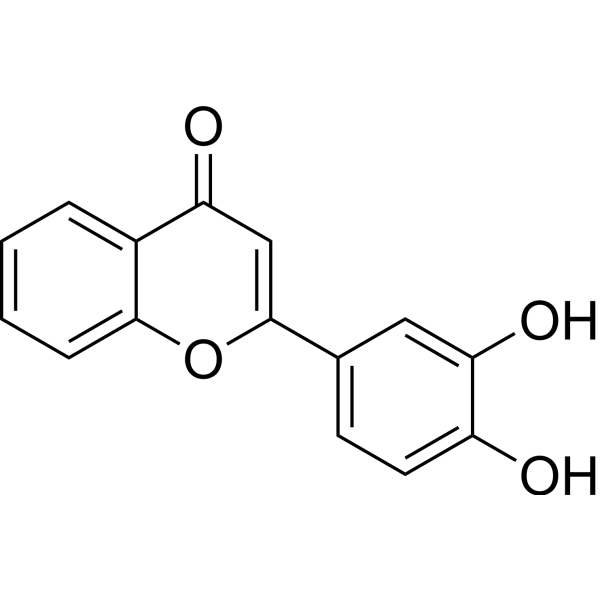
HY-127167
3',4'-DihydroxyflavoneAntioxidant -

HY-A0110AR
Cefotiam hexetil hydrochloride (Standard)Bacterial Inhibitor -
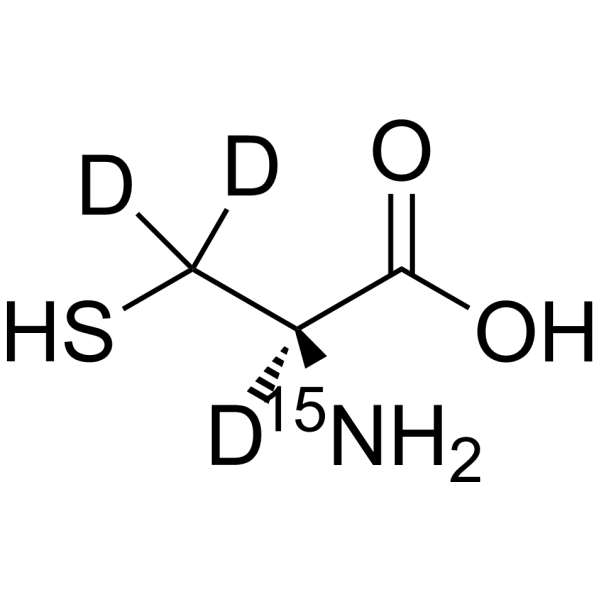
HY-Y0337S7
L-Cysteine-d3,15NStable Isotope -
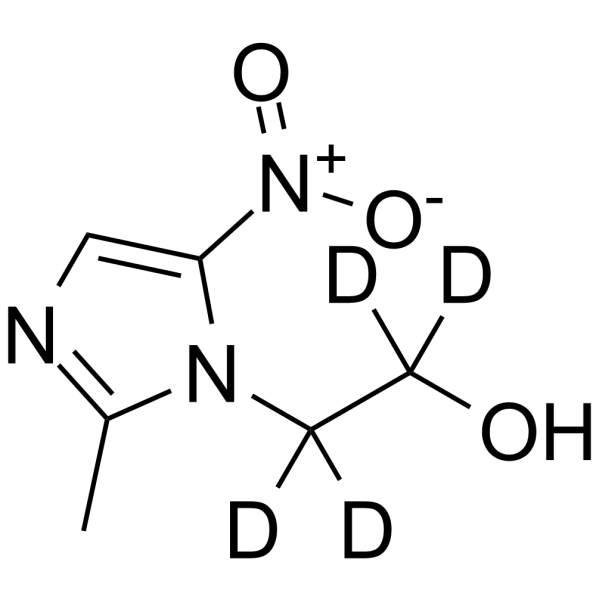
HY-B0318S1
Metronidazole-d4Stable Isotope


Biological Activity
Description
Cellular Effect
|
Cell Line

|
Type | Value | Description | References |
|---|---|---|---|---|
| HCC1806 | IC50 |
5.1 μM
Compound: 2c
|
Cytotoxicity against human HCC1806 cells assessed as reduction in cell viability incubated for 3 days by cell-titer-Glo reagent based assay
Cytotoxicity against human HCC1806 cells assessed as reduction in cell viability incubated for 3 days by cell-titer-Glo reagent based assay
|
[PMID: 26116180] |
| HeLa | EC50 |
>20 μM
Compound: 22i
|
Cytotoxicity against human HeLa cells after 65 hrs by Alamar blue assay
Cytotoxicity against human HeLa cells after 65 hrs by Alamar blue assay
|
[PMID: 23281892] |
| Vero | CC50 |
1.5 μM
Compound: 7
|
Cytotoxicity against African green monkey Vero cells after 48 hrs by MTT assay
Cytotoxicity against African green monkey Vero cells after 48 hrs by MTT assay
|
[PMID: 30600207] |
In Vitro
LCS3 (5 nM-10 µM; 96 h) inhibits lung cancer cell lines, but not non-transformed lung cells[1].
LCS3 (3 µM; 3, 6, and 12 h) induces ROS and NRF2 pathway activation in sensitive lung adenocarcinoma (LUAD) cells[1].
LCS3 (3 µM; 96 h) selectively kills lung adenocarcinoma (LUAD) cell lines, in part through the induction of apoptosis[1].
MedChemExpress (MCE) has not independently confirmed the accuracy of these methods. They are for reference only.
-
Cell Line:Non-small cell lung cancer (NSCLC) cells and non-transformed lung cells
-
Concentration:5 nM-10 µM
-
Incubation Time:96 hours
-
Result:Inhibited the growth of 24/25 NSCLC cell lines at low micromolar concentrations (IC50<5 µM), both of the non-transformed lung cell lines were relatively insensitive (IC50>10 µM).
-
Cell Line:H23 and H1650 cells
-
Concentration:3 µM
-
Incubation Time:3, 6, and 12 hours
-
Result:Responded to LCS3 by accumulating ROS and activating the NRF2 transcription program.
-
Cell Line:lung adenocarcinoma (LUAD) cells
-
Concentration:3 µM
-
Incubation Time:96 hours
-
Result:Increased cleavage of caspase 3, caspase 7 and/or PARP1 in all LCS3-sensitive LUAD cell lines.
-
Cell Line:H23 and H1650 cells
-
Concentration:3 µM
-
Incubation Time:24 hours
-
Result:Increased the protein levels of NRF2 and of the products of selected downstream targets of NRF2 in both cell lines.


Chemical Information
-
CAS No. 109844-92-0
-
Appearance Solid
-
Molecular Weight 266.64
-
Formula C11H7ClN2O4
-
Color Light yellow to yellow
-
SMILES
O=C(C1=CC=C([N+]([O-])=O)O1)NC2=CC=C(Cl)C=C2
-
Shipping
Room temperature in continental US; may vary elsewhere.
-
Storage
Powder -20°C 3 years 4°C 2 years In solvent -80°C 6 months -20°C 1 month


Solvent & Solubility
In Vitro:
DMSO : 125 mg/mL (468.80 mM; ultrasonic and warming and heat to 60°C; Hygroscopic DMSO has a significant impact on the solubility of product, please use newly opened DMSO)
Please refer to the solubility information to select the appropriate solvent. Once prepared, please aliquot and store the solution to prevent product inactivation from repeated freeze-thaw cycles.
Storage method and period of stock solution: -80°C, 6 months; -20°C, 1 month. When stored at -80°C, please use it within 6 months. When stored at -20°C, please use it within 1 month.
Please refer to the solubility information to select the appropriate solvent. Once prepared, please aliquot and store the solution to prevent product inactivation from repeated freeze-thaw cycles.
Storage method and period of stock solution: -80°C, 6 months; -20°C, 1 month. When stored at -80°C, please use it within 6 months. When stored at -20°C, please use it within 1 month.
Concentration (start) × Volume (start) = Concentration (final) × Volume (final)
In Vivo:
Select the appropriate dissolution method based on your experimental animal and administration route.
- For the following dissolution methods, please ensure to first prepare a clear stock solution using an In Vitro approach and then sequentially add co-solvents:
- To ensure reliable experimental results, the clarified stock solution can be appropriately stored based on storage conditions. As for the working solution for In Vivo experiments, it is recommended to prepare freshly and use it on the same day.
- The percentages shown for the solvents indicate their volumetric ratio in the final prepared solution. If precipitation or phase separation occurs during preparation, heat and/or sonication can be used to aid dissolution.
Add each solvent one by one: 10% DMSO 40% PEG300 5% Tween-80 45% Saline
Solubility: ≥ 2.5 mg/mL (9.38 mM); Clear solution
This protocol yields a clear solution of ≥ 2.5 mg/mL (saturation unknown).
Taking 1 mL working solution as an example, add 100 μL DMSO stock solution (25.0 mg/mL) to 400 μL PEG300, and mix evenly; then add 50 μL Tween-80 and mix evenly; then add 450 μL Saline to adjust the volume to 1 mL.
Preparation of Saline: Dissolve 0.9 g sodium chloride in ddH₂O and dilute to 100 mL to obtain a clear Saline solution.
In Vivo Dissolution Calculator
Please enter the basic information of animal experiments:
-
-
-
-
Recommended: Prepare an additional quantity of animals to account for potential losses during experiments.
Please enter your animal formula composition:
-
%DMSO +
Recommended: Keep the proportion of DMSO in working solution below 2% if your animal is weak.
-
%+
-
+%Tween-80 + +
-
%Saline +
The co-solvents required include: DMSO, . All of co-solvents are available by MedChemExpress (MCE). , Tween 80. All of co-solvents are available by MedChemExpress (MCE).
Working solution concentration: 0.22 mg/mL
Method for preparing stock solution: mg drug dissolved in μL DMSO. Stock solution concentration: mg/mL.
1. Take μL DMSO stock solution;
2. Add μL .
μL , mix evenly;
3. Then add μL Tween 80, mix evenly;
4. Then add μL
Please ensure that the stock solution in the first step is dissolved to a clear state, and add co-solvents in sequence. You can use ultrasonic heating (ultrasonic cleaner, recommended frequency 20-40 kHz), vortexing, etc. to assist dissolution.


Purity & Documentation
-
Data Sheet (273 KB)
-
SDS (393 KB)
- English - EN (393 KB)
- Français - FR (393 KB)
- Deutsch - DE (393 KB)
- Norwegian - NO (393 KB)
- Español - ES (393 KB)
- Swedish - SV (393 KB)
- Italian - IT (393 KB)
- Korean - KR (393 KB)
- Portuguese - PT (393 KB)
-
Handling Instructions (2659 KB)
References


Complete Stock Solution Preparation Table
Please refer to the solubility information to select the appropriate solvent. Once prepared, please aliquot and store the solution to prevent product inactivation from repeated freeze-thaw cycles.
Storage method and period of stock solution: -80°C, 6 months; -20°C, 1 month. When stored at -80°C, please use it within 6 months. When stored at -20°C, please use it within 1 month.
| Optional Solvent | Concentration Solvent Mass | 1 mg | 5 mg | 10 mg | 25 mg |
|---|---|---|---|---|---|
| DMSO | 1 mM | 3.7504 mL | 18.7519 mL | 37.5037 mL | 93.7594 mL |
| 5 mM | 0.7501 mL | 3.7504 mL | 7.5007 mL | 18.7519 mL | |
| 10 mM | 0.3750 mL | 1.8752 mL | 3.7504 mL | 9.3759 mL | |
| 15 mM | 0.2500 mL | 1.2501 mL | 2.5002 mL | 6.2506 mL | |
| 20 mM | 0.1875 mL | 0.9376 mL | 1.8752 mL | 4.6880 mL | |
| 25 mM | 0.1500 mL | 0.7501 mL | 1.5001 mL | 3.7504 mL | |
| 30 mM | 0.1250 mL | 0.6251 mL | 1.2501 mL | 3.1253 mL | |
| 40 mM | 0.0938 mL | 0.4688 mL | 0.9376 mL | 2.3440 mL | |
| 50 mM | 0.0750 mL | 0.3750 mL | 0.7501 mL | 1.8752 mL | |
| 60 mM | 0.0625 mL | 0.3125 mL | 0.6251 mL | 1.5627 mL | |
| 80 mM | 0.0469 mL | 0.2344 mL | 0.4688 mL | 1.1720 mL | |
| 100 mM | 0.0375 mL | 0.1875 mL | 0.3750 mL | 0.9376 mL |


LCS3 Related Classifications
HY-147328 Related Classifications
 Powered by Bioz