



LIMK1 inhibitor BMS-4

Based on 1 Customer Validation
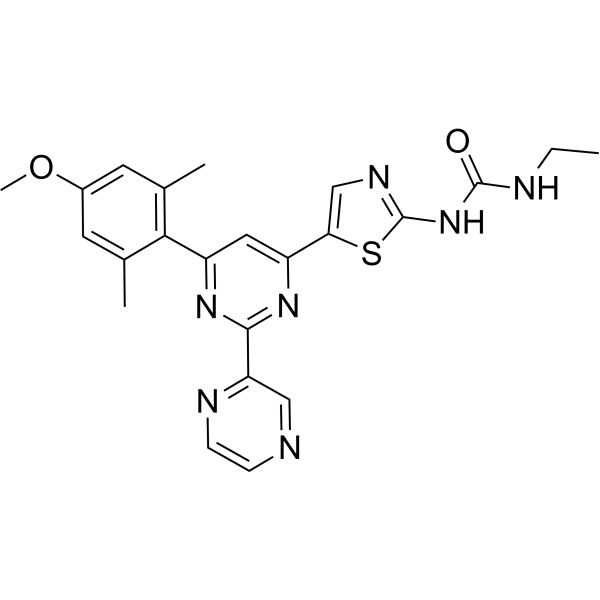
LIMK1 inhibitor BMS-4 is a LIM Kinase (LIMK) inhibitor targeting to LIMK1/2. LIMK1 inhibitor BMS-4 inhibits phosphorylation of cofilin, the LIMK substrate. However, LIMK1 inhibitor BMS-4 is noncytotoxic on A549 cells.
For research use only. We do not sell to patients.
- Purity : 99.1%
- CAS No.: 905298-84-2
- Formula: C23H23N7O2S
- Molecular Weight:461.54
-
Storage:Powder -20°C, 3 years , 4°C, 2 years ; In solvent -80°C, 6 months , -20°C, 1 month

To place orders, for customer services and technical support, please contact: MedChemExpress USA
Tel: 609-228-6898 E-mail: [email protected] [email protected]


-
 Biological Activity
-
Chemical Information
- Protocols
- Purity & Documentation
- References
-
 Help & FAQs


-
HY-18304
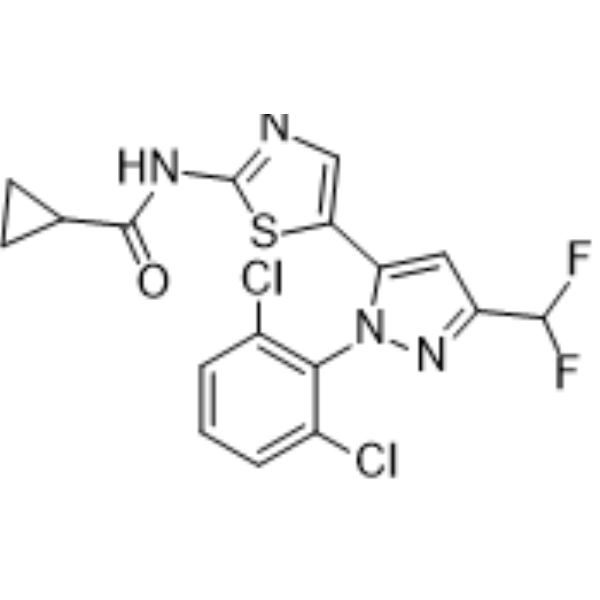
BMS-3LIMK Inhibitor -

HY-12659
LX7101LIM/ROCK/PKA Inhibitor -

HY-122630
TH-257LIMK1/2 Inhibitor -
HY-18305
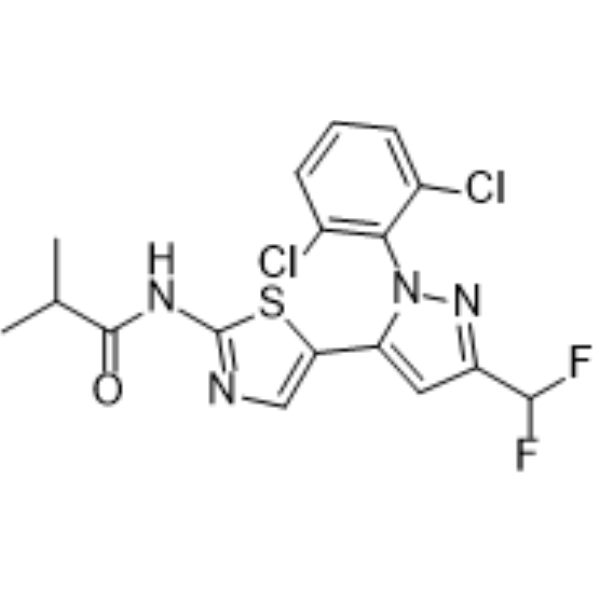
BMS-5LIMK1/2 Inhibitor -
HY-19352
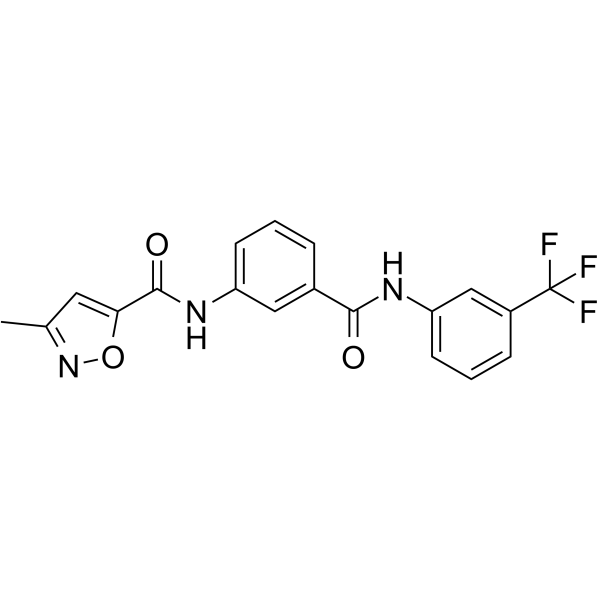
T56-LIMKiLIMK Inhibitor -
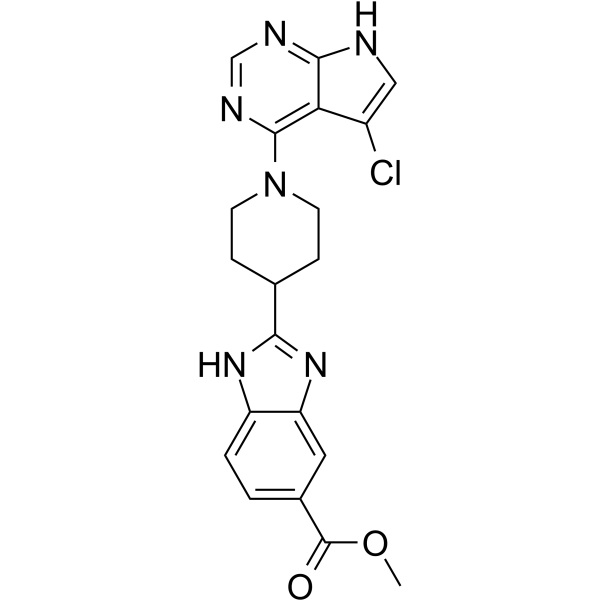
HY-120097
R-10015LIMK Inhibitor -
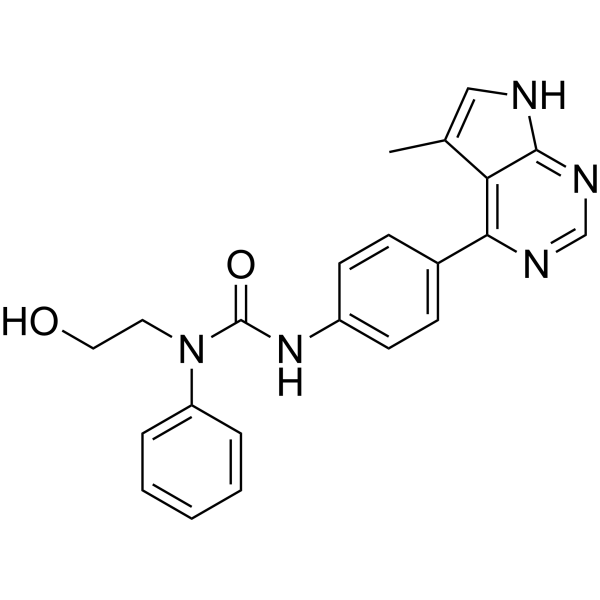
HY-19353
SR7826LIMK1 Inhibitor -
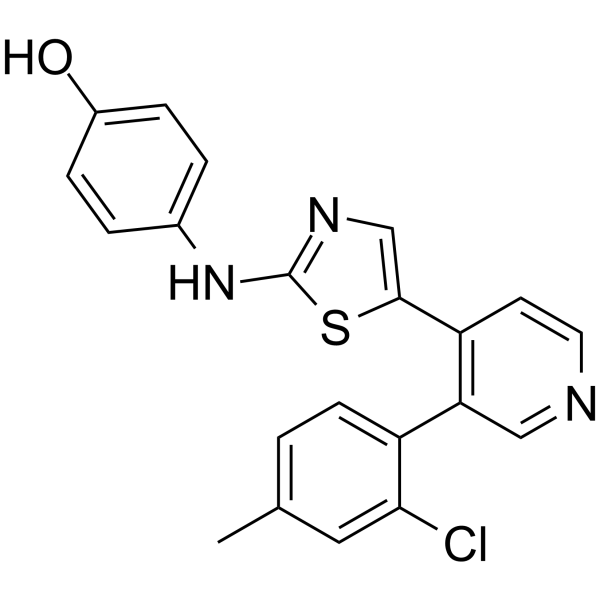
HY-120025
CRT0105950LIMK Inhibitor -
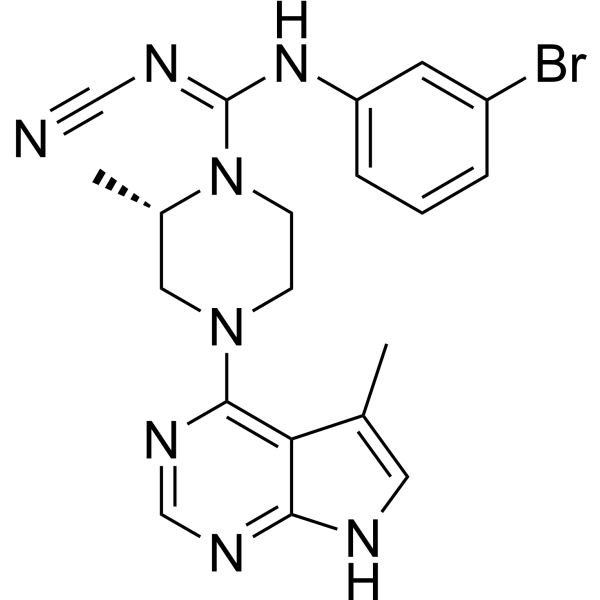
HY-14227
LIMK-IN-1LIMK Inhibitor


Biological Activity
Description
IC50 & Target
[2]|
LIMK1 7.25 (pIC50) |
LIMK2 6.87 (pIC50) |
Cellular Effect
|
Cell Line

|
Type | Value | Description | References |
|---|---|---|---|---|
| HT-1080 | IC50 |
>50 μM
Compound: 31
|
Cytotoxicity against human HT1080 cells assessed as inhibition of thymidine incorporation
Cytotoxicity against human HT1080 cells assessed as inhibition of thymidine incorporation
|
[PMID: 22902653] |
| ZR-75-1 | IC50 |
1 nM
Compound: BMS4
|
Inhibition of LIMK1-catalyzed cofilin phosphorylation in human ZR-75-1 cells
Inhibition of LIMK1-catalyzed cofilin phosphorylation in human ZR-75-1 cells
|
10.1039/C1MD00138H |
In Vitro
LIMK1 inhibitor BMS-4 (compound 4) (0.014-10 μM; 24 h) inhibits LIMKs in vitro without affecting A549 cell survival or proliferation[1].
LIMK1 inhibitor BMS-4 (0.014-1 μM; 2 h) inhibits phosphorylation of the LIMK substrate cofilin in A549 human lung cancer cells[1].
MedChemExpress (MCE) has not independently confirmed the accuracy of these methods. They are for reference only. Further protocols information, click here.


Chemical Information
-
CAS No. 905298-84-2
-
Appearance Solid
-
Molecular Weight 461.54
-
Formula C23H23N7O2S
-
Color White to off-white
-
SMILES
O=C(NCC)NC1=NC=C(C2=CC(C3=C(C)C=C(C=C3C)OC)=NC(C4=NC=CN=C4)=N2)S1
-
Shipping
Room temperature in continental US; may vary elsewhere.
-
Storage
Powder -20°C 3 years 4°C 2 years In solvent -80°C 6 months -20°C 1 month

Protocols
-
Kinase activity and phosphorylation assays
Kinase activity assays measure the ability of kinases to transfer phosphate groups from ATP to specific substrates, while phosphorylation assays detect the presence and levels of phosphorylated proteins. Common methods include radiolabeled ATP incorporation (e. g. ,), ADP release detection via bioluminescence (e. g. ,[3]), enzyme-linked immunosorbent assays (ELISA) for phospho-specific epitopes (e. g. ,[6]), and microtiter-based formats for high-throughput screening (e. g. ,[8]). The ADP-Glo assay quantifies kinase activity by measuring ADP produced during phosphorylation using a luciferase-based system. Radiometric assays involve autoradiography or scintillation counting after incorporation of 32P-labeled ATP into substrate proteins. ELISA-based approaches rely on phospho-specific antibodies to detect activated kinases in cell lysates or purified samples.
-
Western Blot
Western blotting (WB) is a commonly used experimental method in molecular biology, biochemistry, and immunogenetics for identifying and quantifying target proteins. It combines gel electrophoresis with immunoassay, enabling researchers to analyze protein expression, post-translational modifications, and molecular weight.
-
Protocol for Kinase activity and phosphorylation assays
Kinase activity assays measure transfer of phosphate from ATP to a protein or peptide substrate, generating phosphorylated substrate, ADP, or incorporated radiolabeled phosphate as the readout; phosphorylation assays measure site-specific phosphorylation in cells or tissues as a proxy for kinase-pathway activation, inhibition, or substrate regulation. Phosphorylation can be detected by phospho-specific Western blot, immunoprecipitation kinase assay, phospho-immunofluorescence, phospho-flow cytometry, luminescent ADP detection, radiolabeled ATP incorporation, or reporter-based pathway assays, and these readouts can be applied to cancer cells, primary neurons, mouse tumors, organoids, inflammatory macrophages, ferroptosis studies, and mitophagy studies when the kinase target is biologically relevant.


Purity & Documentation
-
Data Sheet (270 KB)
-
SDS (251 KB)
- English - EN (251 KB)
- Français - FR (251 KB)
- Deutsch - DE (251 KB)
- Norwegian - NO (251 KB)
- Español - ES (251 KB)
- Swedish - SV (251 KB)
- Italian - IT (251 KB)
- Korean - KR (251 KB)
- Portuguese - PT (251 KB)
-
Handling Instructions (2659 KB)
References
[1]. Collins R, et al. Comparative Analysis of Small-Molecule LIMK1/2 Inhibitors: Chemical Synthesis, Biochemistry, and Cellular Activity. J Med Chem. 2022 Oct 27;65(20):13705-13713. [Content Brief]
[2]. Ross-Macdonald P, et al. Identification of a nonkinase target mediating cytotoxicity of novel kinase inhibitors. Mol Cancer Ther. 2008 Nov;7(11):3490-8. [Content Brief]

Calculators
Concentration (start) × Volume (start) = Concentration (final) × Volume (final)


LIMK1 inhibitor BMS-4 Related Classifications
HY-128062 Related Classifications
 Powered by Bioz