



Lunsekimig

Based on 1 Customer Validation
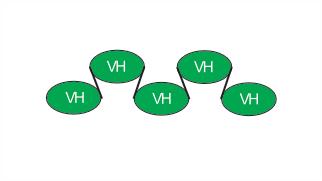
Lunsekimig (SAR443765) is a nanobody composed of 5 VH domains that targets both TSLP and IL-13. Lunsekimig blocks the functional effects of TSLP and IL-13, inhibits related inflammatory signals, and improves lung function associated with type 2 inflammation. Lunsekimig can be used in research on asthma and type 2 inflammation.
For research use only. We do not sell to patients.
- Purity : 99.00%
- CAS No.: 2770858-49-4
- Molecular Weight:69.702 kDa
-
Storage:
Please store the product under the recommended conditions in the Certificate of Analysis.


To place orders, for customer services and technical support, please contact: MedChemExpress USA
Tel: 609-228-6898 E-mail: [email protected] [email protected]


-
 Biological Activity
-
Chemical Information
- Protocols
- Purity & Documentation
- References
-
 Help & FAQs


-

HY-P99397
SonelokimabAnti-IL-17A/F Antibody -

HY-P99796
OzoralizumabAnti-TNFα Antibody -

HY-P99638
GefurulimabAnti-C5/albumin Dual Antibody -
HY-P99366A
Tezepelumab (anti-TSLP)Anti-TSLP Antibody -

HY-P99115
EnvafolimabAnti PD-L1 Antibody -

HY-P99227
Caplacizumab (His Tag)Anti-VWF Nanobody -

HY-P99025
LebrikizumabIL-13 Inhibitor -

HY-P991162
TilrekimigAnti-IL-3/IL-13/TSLP Monoclonal Antibody -

HY-P99947
RimteravimabBivalent VHH-Fc Antibody -

HY-P99550
TozorakimabInterleukin-33 Inhibitor -

HY-P99673
ItepekimabIL-33 mAb -

HY-P99053
TralokinumabIL-13 Inhibitor


Biological Activity
Description
Isotype
VH-VH-VH-VH-VH
Species Reactivity
Human
IC50 & Target
[1]|
IL-13 |
TSLP |
In Vitro
Lunsekimig (SAR443765) inhibits the functional activity of human TSLP and IL-13 in cytokine-specific assays and stimulated human peripheral blood mononuclear cell assay systems[1].
MedChemExpress (MCE) has not independently confirmed the accuracy of these methods. They are for reference only. Further protocols information, click here.
In Vivo
Clinical Trial
| NCT Number | Sponsor | Condition | Start Date |
Phase

|
|---|---|---|---|---|
| NCT01329991 | Plexxikon| | 2011-05 | PHASE1 |
Gene ID
Accession
Conjugated
Unconjugated
Reconsititution
The product can be reconstituted/diluted with sterile PBS or saline.
Format
-
VH-VH-VH-VH-VH
Application
ELISA, FACS, Functional assay
Verified Bioactivity
-
 Loaded IL-13 Protein, Human (HEK293, His, HY-P70568) on NTA biosensor, can bind Lunsekimig with an affinity constant of 2.806E-09 M as determined in BLI assay.
 -
 Loaded Serum Albumin/ALB Protein, Human (Biotinylated, HEK293, His-Avi, HY-P78077) on NTA biosensor, can bind Lunsekimig with an affinity constant of 5.297E-08 M as determined in BLI assay.
 -
 Loaded TSLP Protein, Human (HEK293, His, HY-P70818) on HIS1K biosensor, can bind Lunsekimig with an affinity constant of <1.0E-11 M as determined in BLI assay.


Chemical Information
-
CAS No. 2770858-49-4
-
Appearance Liquid
-
Molecular Weight 69.702 kDa
-
Color Colorless to light yellow
-
Synonyms
SAR443765
-
Shipping
Shipping with dry ice.
-
Formulation
Please refer to the lot-specific COA for specific buffer information.
-
Storage
Please store the product under the recommended conditions in the Certificate of Analysis.

Protocols
-
Research Protocol for Inflammation-related Diseases
The NLRP3 inflammasome is a cytosolic innate immune signaling platform that integrates priming signals and danger-signal activation to promote caspase-1 activation, maturation of IL-1β and IL-18, and gasdermin D-mediated pyroptotic cell death. The core experimental logic is to determine whether inflammatory disease phenotypes are driven by increased NLRP3 expression, ASC-containing inflammasome assembly, caspase-1 cleavage, GSDMD cleavage, and extracellular release of IL-1β/IL-18 rather than by nonspecific cell injury alone. The pathway is strongly linked to inflammation-related disease phenotypes because monosodium urate crystals activate NALP3/NLRP3 inflammasome signaling in gout-like crystal inflammation, cholesterol crystals activate NLRP3 inflammasomes in atherogenesis models, and DSS-induced intestinal inflammation has been reported to involve NLRP3 inflammasome activity. However, experimental colitis studies also show context-dependent protective effects of NLRP3 inflammasome co


Purity & Documentation
-
Data Sheet (257 KB)
-
SDS (251 KB)
- English - EN (251 KB)
- Français - FR (251 KB)
- Deutsch - DE (251 KB)
- Norwegian - NO (251 KB)
- Español - ES (251 KB)
- Swedish - SV (251 KB)
- Italian - IT (251 KB)
- Korean - KR (251 KB)
- Portuguese - PT (251 KB)
-
Inhibitory Antibodies User Guide (603 KB)
References
[1]. Deiteren A, et al. A first-in-human, single and multiple dose study of lunsekimig, a novel anti-TSLP/anti-IL-13 NANOBODY® compound, in healthy volunteers. Clinical and translational science. 2024 Jun;17(6):e13864. [Content Brief]
[2]. Deiteren A, et al. A proof-of-mechanism trial in asthma with lunsekimig, a bispecific NANOBODY molecule. The European respiratory journal. 2025 Apr;65(4):2401461. [Content Brief]

Calculators
Concentration (start) × Volume (start) = Concentration (final) × Volume (final)


Lunsekimig Related Classifications
HY-P990748 Related Classifications
 Powered by Bioz