



Methyl isoeugenol

Based on 1 Customer Validation
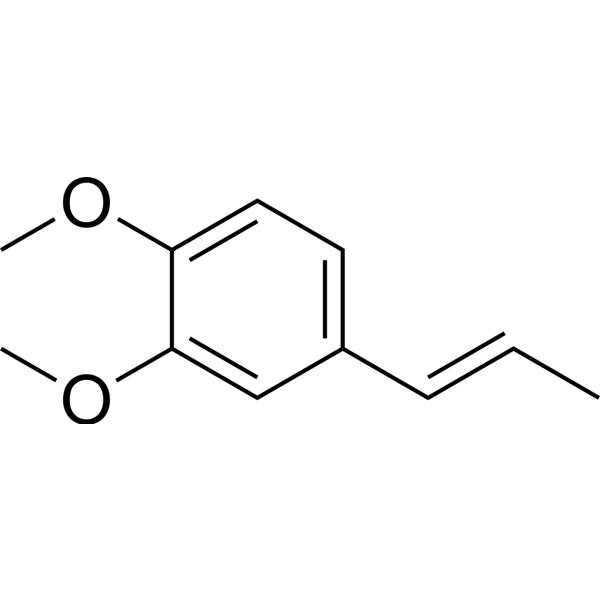
Methyl isoeugenol is an orally active, blood-brain barrier-permeable isoeugenol-type eugenol analog. Methyl isoeugenol promotes the nuclear translocation of Nrf2, upregulates the expressions of HO-1, NQO1 and SOD, and reduces the expression level of MDA. Methyl isoeugenol decreases the nuclear translocation of NF-κB. Methyl isoeugenol inhibits NLRP3 inflammasome-mediated pyroptosis. Methyl isoeugenol reduces cerebral infarction volume and regulates the M1/M2 phenotypic balance of microglia. Methyl isoeugenol can be used for the research of cerebral ischemia-reperfusion injury.
For research use only. We do not sell to patients.
- Purity : 98.11%
- CAS No.: 93-16-3
- Formula: C11H14O2
- Molecular Weight:178.23
-
Storage:Pure form -20°C, 3 years , 4°C, 2 years ; In solvent -80°C, 6 months , -20°C, 1 month

To place orders, for customer services and technical support, please contact: MedChemExpress USA
Tel: 609-228-6898 E-mail: [email protected] [email protected]


-
 Biological Activity
-
Chemical Information
-
Solvent & Solubility
- Protocols
- Purity & Documentation
- References
-
 Help & FAQs


-
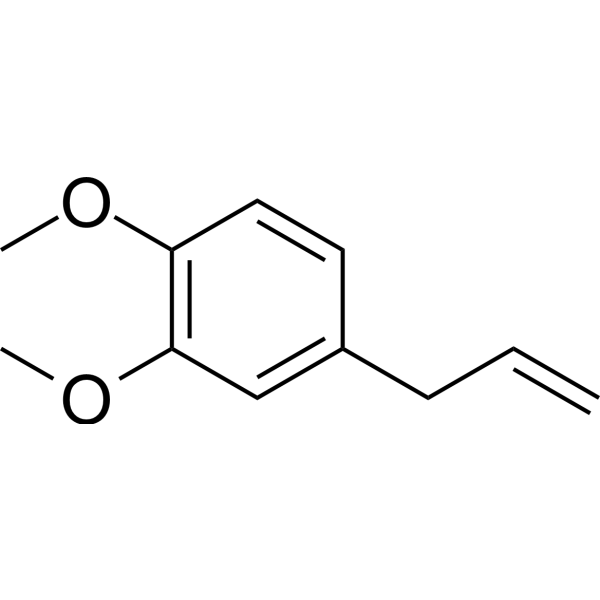
HY-N6996
Methyl EugenolAnti-Insect Agent -
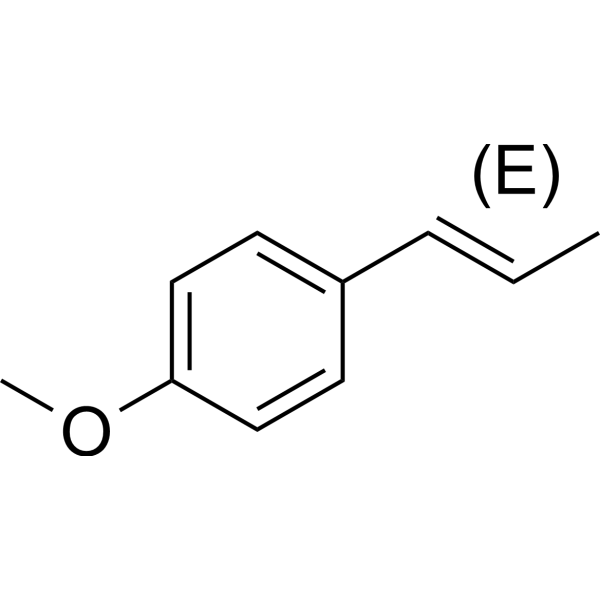
HY-N0367
Trans-AnetholeEndogenous Metabolite -

HY-N0367R
Trans-Anethole (Standard)Endogenous Metabolite -

HY-N2439R
Methyl isoeugenol (Standard)Anxiolytic/Antidepressant Agent -

HY-N6996R
Methyl Eugenol (Standard)Anti-Insect Agent -
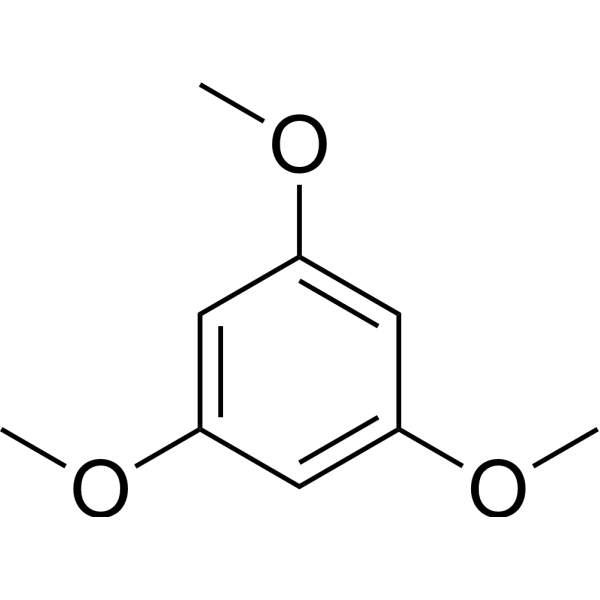
HY-Y0678
1,3,5-TrimethoxybenzeneFree Chlorine/Bromolybdenum Quencher -

HY-Y1207
EthoxybenzeneBiochemical Assay Reagent -
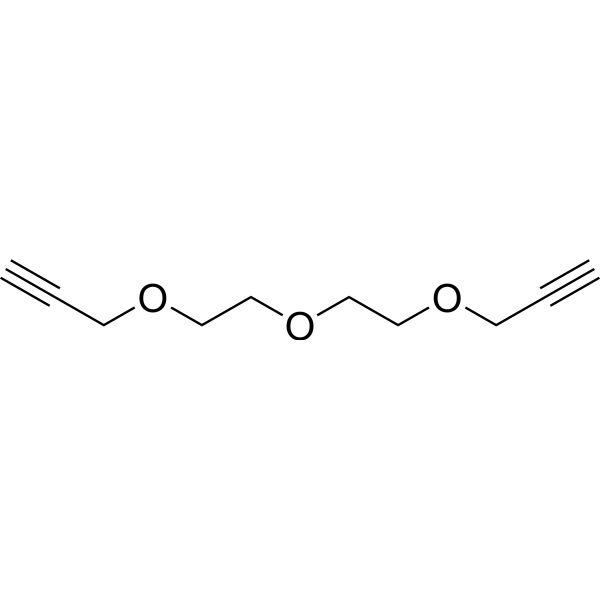
HY-133191
Bis-propargyl-PEG2PROTAC Linker -

HY-115127
3-MethylanisoleMetabolites of Penicillium strains -

HY-W017087
1,2,4-TrimethoxybenzeneNLRP3 Inhibitor -
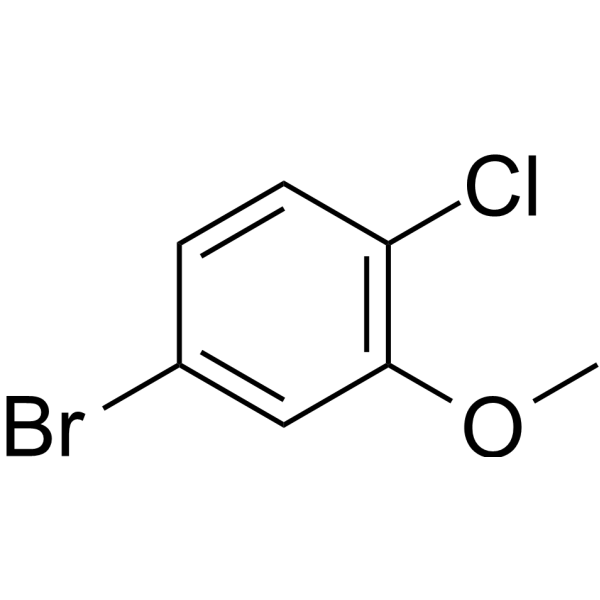
HY-W012416
5-Bromo-2-chloroanisoleBiochemical Reagent -

HY-W017834
2-(Benzyloxy)-1-ethanamineBiochemical Reagent


Biological Activity
Description
Cellular Effect
|
Cell Line

|
Type | Value | Description | References |
|---|---|---|---|---|
| KB | IC50 |
>10 μg/mL
Compound: 32
|
Cytotoxicity against human KB cells after 2 days by sulforhodamine B assay
Cytotoxicity against human KB cells after 2 days by sulforhodamine B assay
|
[PMID: 17067159] |
| KB | IC50 |
>10 μg/mL
Compound: 32
|
Cytotoxicity against multidrug-resistant human KB-VCR cells after 2 days by sulforhodamine B assay
Cytotoxicity against multidrug-resistant human KB-VCR cells after 2 days by sulforhodamine B assay
|
[PMID: 17067159] |
In Vitro
Methyl isoeugenol (0-100 μM; 23.5 h) inhibits the secretion of proinflammatory cytokines, the expression of proinflammatory mediators, and NLRP3 inflammasome-mediated pyroptosis in BV2 microglia induced by LPS (HY-D1056)-ATP (HY-B2176), with the strongest effect observed at the concentration of 100 μM[1].
Methyl isoeugenol (25-100 μM; 23.5 h) inhibits LPS-ATP-induced oxidative stress in BV2 microglia, upregulates the Nrf2 antioxidant signaling pathway, and suppresses the nuclear translocation of NF-κB, with the strongest activity observed at the concentration of 100 μM[1].
MedChemExpress (MCE) has not independently confirmed the accuracy of these methods. They are for reference only. Further protocols information, click here.
In Vivo
MedChemExpress (MCE) has not independently confirmed the accuracy of these methods. They are for reference only.
-
Animal Model:Sprague-Dawley (SD) (male, 260-280 g, induced by 2 hours of middle cerebral artery occlusion followed by 3 days of reperfusion)[1]
-
Dosage:25 mg/kg/day; 50 mg/kg/day; 100 mg/kg/day
-
Administration:p.o.; daily; 3 days
-
Result:Reduced cerebral infarct volume percentage to 29.06 and 33.03 at 50 mg/kg and 100 mg/kg, respectively.
Reduced modified neurological severity scores to 6.80, 5.80, and 5.20 at 25 mg/kg, 50 mg/kg, and 100 mg/kg, respectively.
Reduced serum IL-1β to 9.47 and 7.72, serum TNF-α to 23.48 and 24.13, and brain cortex IL-6 to 261.15 and 260.80 at 50 mg/kg and 100 mg/kg, respectively.
Reduced brain cortex TNF-α to 243.84, reduced M1 microglial markers CD16/32 (0.15) and Iba1 (0.11), reduced NLRP3 inflammasome-related proteins NLRP3 (0.31), cleaved-caspase-1 (0.34), and GSDMD (1.61), and increased nuclear Nrf2 translocation (1.26) at 100 mg/kg vs.
untreated injury controls.
Increased serum SOD activity, decreased serum MDA levels, increased brain cortex SOD activity, and upregulated brain cortex HO-1 protein expression at all doses vs.
untreated injury controls.


Chemical Information
-
CAS No. 93-16-3
-
Appearance Liquid (Density: 1.05 g/cm3)
-
Molecular Weight 178.23
-
Formula C11H14O2
-
Color Colorless to light yellow
-
SMILES
C/C=C/C1=CC=C(OC)C(OC)=C1
-
Structure Classification
-
Shipping
Room temperature in continental US; may vary elsewhere.
-
Storage
Pure form -20°C 3 years 4°C 2 years In solvent -80°C 6 months -20°C 1 month


Solvent & Solubility
In Vitro:
DMSO : 100 mg/mL (561.07 mM; Need ultrasonic; Hygroscopic DMSO has a significant impact on the solubility of product, please use newly opened DMSO)
Please refer to the solubility information to select the appropriate solvent. Once prepared, please aliquot and store the solution to prevent product inactivation from repeated freeze-thaw cycles.
Storage method and period of stock solution: -80°C, 6 months; -20°C, 1 month. When stored at -80°C, please use it within 6 months. When stored at -20°C, please use it within 1 month.
Please refer to the solubility information to select the appropriate solvent. Once prepared, please aliquot and store the solution to prevent product inactivation from repeated freeze-thaw cycles.
Storage method and period of stock solution: -80°C, 6 months; -20°C, 1 month. When stored at -80°C, please use it within 6 months. When stored at -20°C, please use it within 1 month.
Concentration (start) × Volume (start) = Concentration (final) × Volume (final)

Protocols
-
Cytoplasmic-Nuclear Fractionated Protein Extraction
Cytoplasmic-nuclear fractionated protein extraction separates soluble cytoplasmic proteins from nuclear-enriched proteins by mild plasma-membrane permeabilization, differential centrifugation, washing of nuclei, and extraction of nuclear proteins for downstream immunoblotting or related molecular analysis. The readout is the relative abundance of a protein in cytoplasmic and nuclear fractions, commonly assessed by western blotting together with compartment markers such as tubulin or pyruvate kinase for cytoplasm and lamin, nucleoporin, hnRNP, H2AX, or Lamin B for nuclear fractions.
-
RNA extraction experimental
By lysing cells, releasing RNA, and removing impurities such as proteins and DNA, high-purity RNA products are finally obtained. The commonly used traditional method is the guanidine isothiocyanate/phenol/chloroform method (Trizol), which is suitable for a variety of animal materials including animal tissues, microorganisms, cultured cells, etc., and most plant materials.
-
Research Protocol for Inflammation-related Diseases
The NLRP3 inflammasome is a cytosolic innate immune signaling platform that integrates priming signals and danger-signal activation to promote caspase-1 activation, maturation of IL-1β and IL-18, and gasdermin D-mediated pyroptotic cell death. The core experimental logic is to determine whether inflammatory disease phenotypes are driven by increased NLRP3 expression, ASC-containing inflammasome assembly, caspase-1 cleavage, GSDMD cleavage, and extracellular release of IL-1β/IL-18 rather than by nonspecific cell injury alone. The pathway is strongly linked to inflammation-related disease phenotypes because monosodium urate crystals activate NALP3/NLRP3 inflammasome signaling in gout-like crystal inflammation, cholesterol crystals activate NLRP3 inflammasomes in atherogenesis models, and DSS-induced intestinal inflammation has been reported to involve NLRP3 inflammasome activity. However, experimental colitis studies also show context-dependent protective effects of NLRP3 inflammasome co
-
Pyroptosis Solutions
Pyroptosis is a lytic inflammatory cell-death pathway executed by gasdermin pores, most classically through inflammasome-mediated activation of caspase-1, cleavage of gasdermin D, membrane pore formation, LDH release, and secretion of IL-1β and IL-18. The canonical pathway is commonly modeled by priming cells with an inflammatory signal such as LPS to induce pro-IL-1β and inflammasome components, followed by an activation signal such as ATP or nigericin to activate NLRP3, ASC speck formation, caspase-1 cleavage, GSDMD cleavage, cytokine release, and pyroptotic membrane rupture. The non-canonical pathway is triggered when cytosolic LPS activates mouse caspase-11 or human caspase-4/5, leading to GSDMD cleavage and pyroptosis, and this can secondarily activate NLRP3-dependent IL-1β release. Pyroptosis is linked to inflammatory injury, infection, cancer, liver disease, ocular disease, placental inflammation, and other disease phenotypes, but unresolved questions include which gasdermin fam


Purity & Documentation
-
Data Sheet (273 KB)
-
SDS (254 KB)
- English - EN (254 KB)
- Français - FR (254 KB)
- Deutsch - DE (254 KB)
- Norwegian - NO (254 KB)
- Español - ES (254 KB)
- Swedish - SV (254 KB)
- Italian - IT (254 KB)
- Korean - KR (254 KB)
- Portuguese - PT (254 KB)
-
Handling Instructions (2659 KB)
References


Complete Stock Solution Preparation Table
Please refer to the solubility information to select the appropriate solvent. Once prepared, please aliquot and store the solution to prevent product inactivation from repeated freeze-thaw cycles.
Storage method and period of stock solution: -80°C, 6 months; -20°C, 1 month. When stored at -80°C, please use it within 6 months. When stored at -20°C, please use it within 1 month.
| Optional Solvent | Concentration Solvent Mass | 1 mg | 5 mg | 10 mg | 25 mg |
|---|---|---|---|---|---|
| DMSO | 1 mM | 5.6107 mL | 28.0536 mL | 56.1073 mL | 140.2682 mL |
| 5 mM | 1.1221 mL | 5.6107 mL | 11.2215 mL | 28.0536 mL | |
| 10 mM | 0.5611 mL | 2.8054 mL | 5.6107 mL | 14.0268 mL | |
| 15 mM | 0.3740 mL | 1.8702 mL | 3.7405 mL | 9.3512 mL | |
| 20 mM | 0.2805 mL | 1.4027 mL | 2.8054 mL | 7.0134 mL | |
| 25 mM | 0.2244 mL | 1.1221 mL | 2.2443 mL | 5.6107 mL | |
| 30 mM | 0.1870 mL | 0.9351 mL | 1.8702 mL | 4.6756 mL | |
| 40 mM | 0.1403 mL | 0.7013 mL | 1.4027 mL | 3.5067 mL | |
| 50 mM | 0.1122 mL | 0.5611 mL | 1.1221 mL | 2.8054 mL | |
| 60 mM | 0.0935 mL | 0.4676 mL | 0.9351 mL | 2.3378 mL | |
| 80 mM | 0.0701 mL | 0.3507 mL | 0.7013 mL | 1.7534 mL | |
| 100 mM | 0.0561 mL | 0.2805 mL | 0.5611 mL | 1.4027 mL |


Methyl isoeugenol Related Classifications
HY-N2439 Related Classifications
 Powered by Bioz