



Mirikizumab

Based on 1 Customer Validation
Mirikizumab (LY3074828) is a humanized IgG4 monoclonal antibody that targets the p19 subunit of interleukin 23 (IL-23). Mirikizumab binds to human and monkey IL-23 with high affinity, with Kd values of 21 pM and 55 pM, respectively. By inhibiting the binding of IL-23 to IL-23R, Mirikizumab modulates the immune response and holds potential for research in ulcerative colitis and Crohn's disease.
For research use only. We do not sell to patients.
- Purity : 99.88%
- CAS No.: 1884201-71-1
- Molecular Weight:143.74 kDa
-
Storage:
Please store the product under the recommended conditions in the Certificate of Analysis.


To place orders, for customer services and technical support, please contact: MedChemExpress USA
Tel: 609-228-6898 E-mail: [email protected] [email protected]


-
 Biological Activity
-
Chemical Information
- Protocols
- Purity & Documentation
- References
-
 Help & FAQs


-

HY-P99248
RisankizumabIL-23 IgG Monoclonal Antibody -

HY-P9931
GuselkumabIL-23 Neutralizing Antibody -

HY-P9909
Ustekinumab -

HY-P99256
TildrakizumabAnti-IL-23 mAb -

HY-P99053
TralokinumabIL-13 Inhibitor -

HY-P99025
LebrikizumabIL-13 Inhibitor -

HY-P9925
BrodalumabAnti-IL-17R mAb -
HY-P99396
SpesolimabAnti-IL-36R Antibody -

HY-P99486
BriakinumabAnti-IL-12/23p40 Antibody -

HY-P99244
FezakinumabIL-22 Antibody -

HY-P9911
Vedolizumab -

HY-P99410
OrdesekimabAnti-IL-15 Antibody


Biological Activity
Description
Isotype
Human IgG4 kappa
Recommend Isotype Controls
Species Reactivity
Human
IC50 & Target
IL-23A
In Vitro
Mirikizumab (4.4 pM - 800 nM, 48 h) can completely neutralize IL-17A production induced by human and cynomolgus monkey IL-23 in mouse splenocytes, with IC50 values of 82 pM and 120 pM for human and cynomolgus monkey IL-23, respectively[2]. Mirikizumab (0.1 ng/mL - 1 μg/mL, 48 h) can completely inhibit IL-17 secretion induced by anti-CD3/anti-CD28 and IL-23 in two different human peripheral blood mononuclear cell (PBMC) preparations, with IC50 values of 22 μg/mL and 29 μg/mL for these PBMC preparations, respectively[2]. Mirikizumab (50 or 500 ng/mL, 48 h) does not affect IL-12-induced STAT4 phosphorylation in Kit225 and TALL-104 cells[2].
MedChemExpress (MCE) has not independently confirmed the accuracy of these methods. They are for reference only. Further protocols information, click here.
In Vivo
MedChemExpress (MCE) has not independently confirmed the accuracy of these methods. They are for reference only.
-
Animal Model:Acute systemic C57BL/6 mice model
-
Dosage:7.5 mg/kg
-
Administration:Intraperitoneal injection (i.p.), dosing time of 9, 16, 32 h
-
Result:Inhibited human IL-23-induced mouse IL-17A, IL-17F, and keratin-16 mRNA production in an acute systemic mice model.
Clinical Trial
| NCT Number | Sponsor | Condition | Start Date |
Phase

|
|---|---|---|---|---|
| NCT01329991 | Plexxikon| | 2011-05 | PHASE1 |
Gene ID
Accession
Conjugated
Unconjugated
Reconsititution
The product can be reconstituted/diluted with sterile PBS or saline.
Format
-
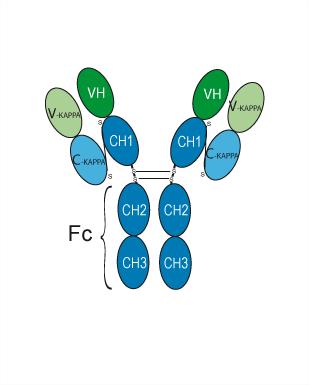
Human IgG4 kappa
Application
ELISA, FACS, Functional assay
Verified Bioactivity
-
 Immobilized Human IL-23 P19/IL23A Protein (mFc Tag) can bind Mirikizumab. The EC50 for this effect is 4.802 ng/mL.


Chemical Information
-
CAS No. 1884201-71-1
-
Appearance Liquid
-
Molecular Weight 143.74 kDa
-
Color Colorless to light yellow
-
SMILES
[Mirikizumab]
-
Synonyms
LY3074828
-
Shipping
Shipping with dry ice.
-
Formulation
Please refer to the lot-specific COA for specific buffer information.
-
Storage
Please store the product under the recommended conditions in the Certificate of Analysis.

Protocols
-
DSS-Induced Colitis
Dextran sulfate sodium (DSS)-induced colitis is generated by administering DSS in mouse drinking water, producing epithelial injury, barrier disruption, weight loss, diarrhea, fecal blood, colon shortening, histologic mucosal damage, and inflammatory mediator changes; the model is mainly used to study acute or chronic intestinal inflammation resembling selected features of ulcerative colitis. DSS injury is interpreted through clinical and tissue readouts rather than a single molecular endpoint: daily body weight, stool consistency, and bleeding are combined into a disease activity index, while colon length, histology, cytokines, myeloperoxidase activity, intestinal permeability, and tight-junction markers provide complementary measures of inflammation and barrier damage.
-
TNBS-Induced Colitis
TNBS-induced colitis is produced by intrarectal delivery of 2,4,6-trinitrobenzene sulfonic acid in ethanol, where ethanol disrupts the mucosal barrier and TNBS haptenates colonic proteins, generating immune-mediated colonic inflammation with weight loss, diarrhea, ulceration, transmural injury, inflammatory-cell infiltration, and cytokine responses. The model is used as an experimental intestinal inflammation model with Crohn’s disease–like features, especially when Th1-type responses, IL-12–dependent inflammation, chronic relapsing inflammation, or fibrosis-related endpoints are studied.


Purity & Documentation
-
Data Sheet (260 KB)
-
SDS (251 KB)
- English - EN (251 KB)
- Français - FR (251 KB)
- Deutsch - DE (251 KB)
- Norwegian - NO (251 KB)
- Español - ES (251 KB)
- Swedish - SV (251 KB)
- Italian - IT (251 KB)
- Korean - KR (251 KB)
- Portuguese - PT (251 KB)
-
Inhibitory Antibodies User Guide (603 KB)
References
[2]. Steere B, et al. Generation and Characterization of Mirikizumab, a Humanized Monoclonal Antibody Targeting the p19 Subunit of IL-23. J Pharmacol Exp Ther. 2023 Nov;387(2):180-187. Steere B, Beidler C, Martin A, Bright S, Kikly K, Benschop RJ. Generation and Characterization of Mirikizumab, a Humanized Monoclonal Antibody Targeting the p19 Subunit of IL-23. J Pharmacol Exp Ther. 2023 Nov;387(2):180-187. [Content Brief]

Calculators
Concentration (start) × Volume (start) = Concentration (final) × Volume (final)


Mirikizumab Related Classifications
HY-P99737 Related Classifications
 Powered by Bioz