



N-Acetyl mesalazine

Based on 1 Customer Validation
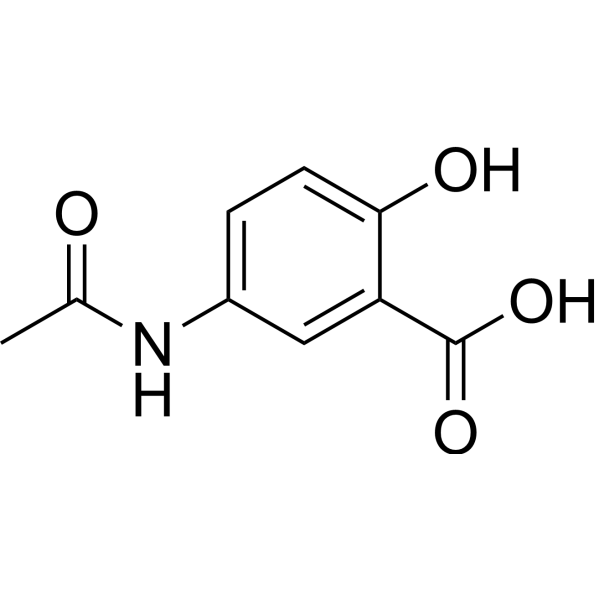
N-Acetyl mesalazine (N-Acetyl-5-aminosalicylic acid) is the primary intestinal metabolite of 5-Aminosalicylic Acid (HY-15027) and serves as a biomarker for evaluating the efficacy of 5-Aminosalicylic Acid (HY-15027). N-Acetyl mesalazine can scavenge free radicals, reduce DNA base hydroxylation, and ameliorate mucosal inflammation. N-Acetyl mesalazine can be used in the study of diseases such as colitis and colon cancer.
For research use only. We do not sell to patients.
- Purity : 99.90%
- CAS No.: 51-59-2
- Formula: C9H9NO4
- Molecular Weight:195.17
-
Storage:
4°C, protect from light
* In solvent : -80°C, 6 months; -20°C, 1 month (protect from light)

To place orders, for customer services and technical support, please contact: MedChemExpress USA
Tel: 609-228-6898 E-mail: [email protected] [email protected]


-
 Biological Activity
-
Chemical Information
-
Solvent & Solubility
- Protocols
- Purity & Documentation
- References
-
 Help & FAQs


-
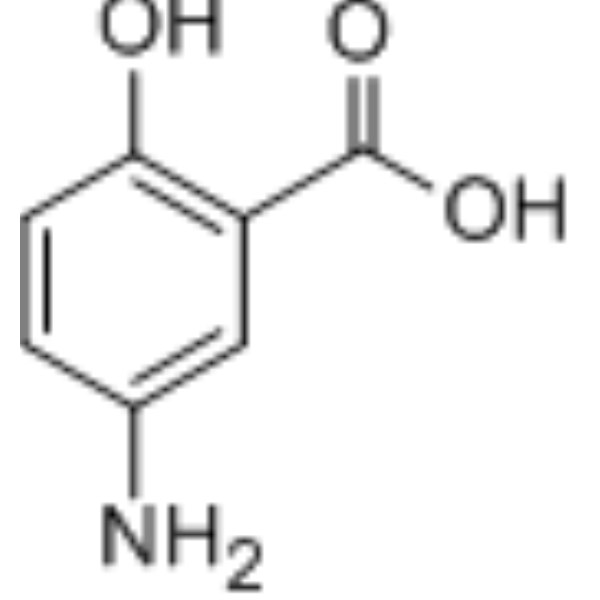
HY-15027
5-Aminosalicylic AcidEndogenous Metabolite -

HY-66008R
N-Acetyl mesalazine (Standard)Standard of N-Acetyl mesalazine -
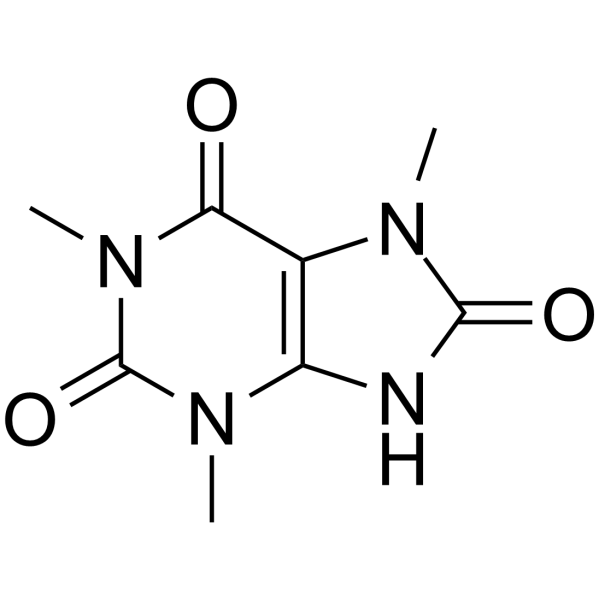
HY-113327
1,3,7-Trimethyluric acidCaffeine Metabolite -

HY-15027R
5-Aminosalicylic Acid (Standard)Endogenous Metabolite -
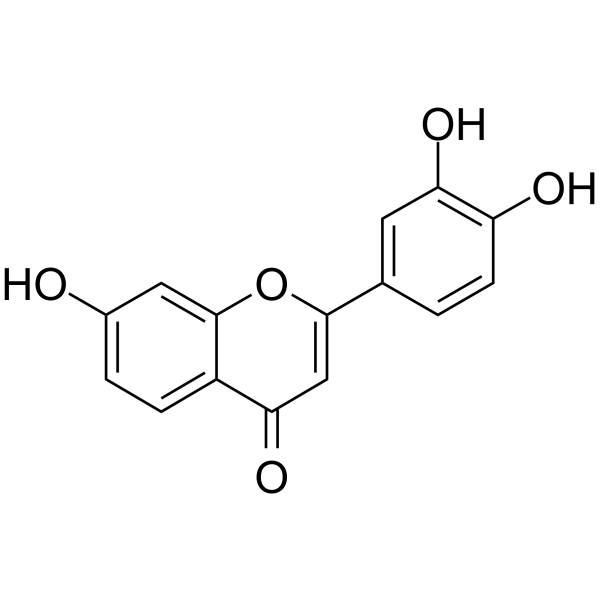
HY-N2736
3′,4′,7-Trihydroxyflavoneflavonoid aglycon compound -
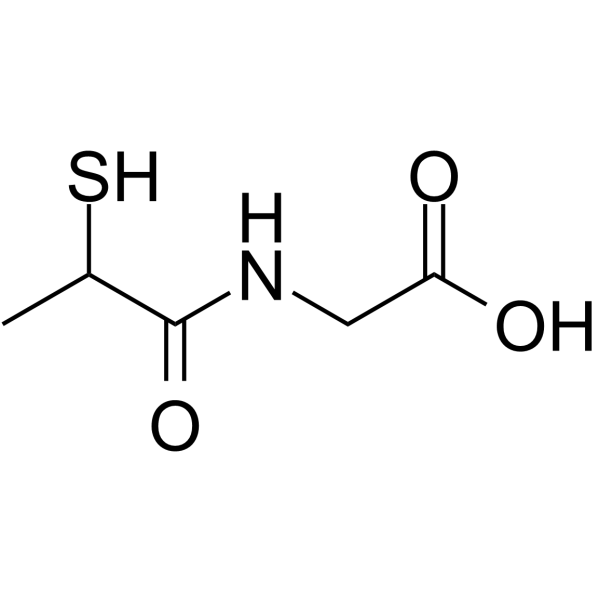
HY-B0373
TioproninAntioxidant -
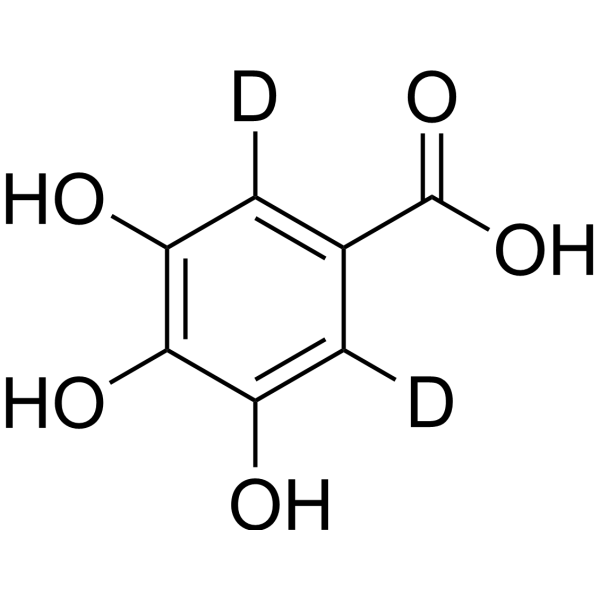
HY-N0523S
Gallic acid-d2Stable Isotope -

HY-W206016
3-Aminosalicylic acidHydroxybenzoic Acid Compound -

HY-113327R
1,3,7-Trimethyluric acid (Standard)Caffeine Metabolite -
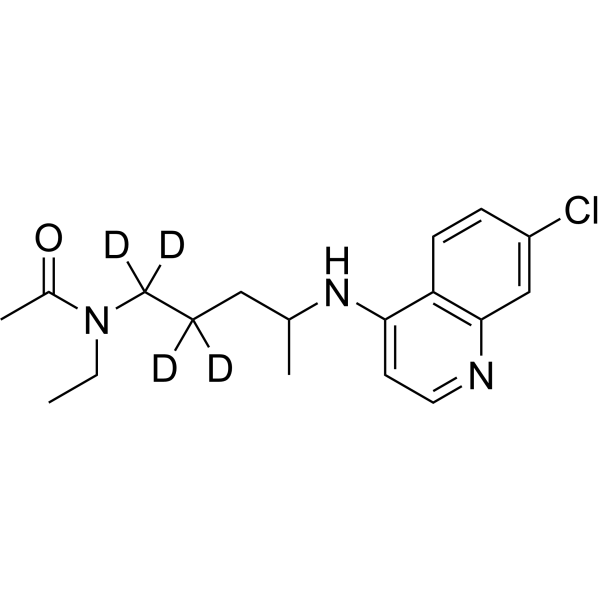
HY-138867S
N-Acetyl(mono)desethylchloroquine-d4Stable Isotope -
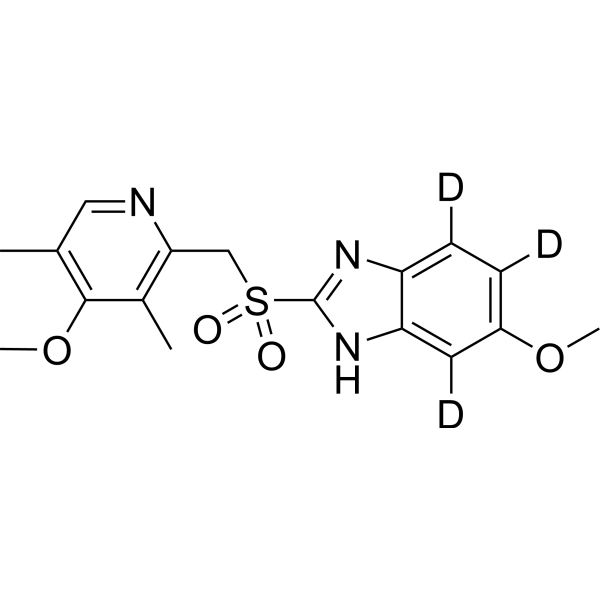
HY-G0007S
Omeprazole sulfone-d3Stable Isotope -

HY-B0373R
Tiopronin (Standard)Antioxidant


Biological Activity
Description
In Vitro
N-Acetyl mesalazine inhibits •OH radical-stimulated DNA base hydroxylation in calf thymus DNA, with IC50 values ranging from 0.04 to 1.3 mM, and has no effect on basal hydroxylation[1].
MedChemExpress (MCE) has not independently confirmed the accuracy of these methods. They are for reference only. Further protocols information, click here.


Chemical Information
-
CAS No. 51-59-2
-
Appearance Solid
-
Molecular Weight 195.17
-
Formula C9H9NO4
-
Color Light brown to brown
-
SMILES
O=C(O)C1=CC(NC(C)=O)=CC=C1O
-
Synonyms
N-Acetyl-5-aminosalicylic acid; N-Acetyl-ASA
-
Shipping
Room temperature in continental US; may vary elsewhere.
-
Storage
4°C, protect from light
* In solvent : -80°C, 6 months; -20°C, 1 month (protect from light)


Solvent & Solubility
In Vitro:
DMSO : 125 mg/mL (640.47 mM; Need ultrasonic; Hygroscopic DMSO has a significant impact on the solubility of product, please use newly opened DMSO)
Please refer to the solubility information to select the appropriate solvent. Once prepared, please aliquot and store the solution to prevent product inactivation from repeated freeze-thaw cycles.
Storage method and period of stock solution: -80°C, 6 months; -20°C, 1 month (protect from light). When stored at -80°C, please use it within 6 months. When stored at -20°C, please use it within 1 month.
Please refer to the solubility information to select the appropriate solvent. Once prepared, please aliquot and store the solution to prevent product inactivation from repeated freeze-thaw cycles.
Storage method and period of stock solution: -80°C, 6 months; -20°C, 1 month (protect from light). When stored at -80°C, please use it within 6 months. When stored at -20°C, please use it within 1 month.
Concentration (start) × Volume (start) = Concentration (final) × Volume (final)

Protocols
-
DSS-Induced Colitis
Dextran sulfate sodium (DSS)-induced colitis is generated by administering DSS in mouse drinking water, producing epithelial injury, barrier disruption, weight loss, diarrhea, fecal blood, colon shortening, histologic mucosal damage, and inflammatory mediator changes; the model is mainly used to study acute or chronic intestinal inflammation resembling selected features of ulcerative colitis. DSS injury is interpreted through clinical and tissue readouts rather than a single molecular endpoint: daily body weight, stool consistency, and bleeding are combined into a disease activity index, while colon length, histology, cytokines, myeloperoxidase activity, intestinal permeability, and tight-junction markers provide complementary measures of inflammation and barrier damage.
-
TNBS-Induced Colitis
TNBS-induced colitis is produced by intrarectal delivery of 2,4,6-trinitrobenzene sulfonic acid in ethanol, where ethanol disrupts the mucosal barrier and TNBS haptenates colonic proteins, generating immune-mediated colonic inflammation with weight loss, diarrhea, ulceration, transmural injury, inflammatory-cell infiltration, and cytokine responses. The model is used as an experimental intestinal inflammation model with Crohn’s disease–like features, especially when Th1-type responses, IL-12–dependent inflammation, chronic relapsing inflammation, or fibrosis-related endpoints are studied.
-
Research Protocol for Inflammation-related Diseases
The NLRP3 inflammasome is a cytosolic innate immune signaling platform that integrates priming signals and danger-signal activation to promote caspase-1 activation, maturation of IL-1β and IL-18, and gasdermin D-mediated pyroptotic cell death. The core experimental logic is to determine whether inflammatory disease phenotypes are driven by increased NLRP3 expression, ASC-containing inflammasome assembly, caspase-1 cleavage, GSDMD cleavage, and extracellular release of IL-1β/IL-18 rather than by nonspecific cell injury alone. The pathway is strongly linked to inflammation-related disease phenotypes because monosodium urate crystals activate NALP3/NLRP3 inflammasome signaling in gout-like crystal inflammation, cholesterol crystals activate NLRP3 inflammasomes in atherogenesis models, and DSS-induced intestinal inflammation has been reported to involve NLRP3 inflammasome activity. However, experimental colitis studies also show context-dependent protective effects of NLRP3 inflammasome co


Purity & Documentation
-
Data Sheet (272 KB)
-
SDS (393 KB)
- English - EN (393 KB)
- Français - FR (393 KB)
- Deutsch - DE (393 KB)
- Norwegian - NO (393 KB)
- Español - ES (393 KB)
- Swedish - SV (393 KB)
- Italian - IT (393 KB)
- Korean - KR (393 KB)
- Portuguese - PT (393 KB)
-
Handling Instructions (2659 KB)
References
[1]. Allgayer H, et al. Modulation of base hydroxylation by bile acids and salicylates in a model of human colonic mucosal DNA: putative implications in colonic cancer. Dig Dis Sci. 1999 Apr;44(4):761-7. [Content Brief]
[2]. Fukuda T, et al. Mucosal concentrations of N-acetyl-5-aminosalicylic acid related to endoscopic activity in ulcerative colitis patients with mesalamine. J Gastroenterol Hepatol. 2020 Nov;35(11):1878-1885. [Content Brief]
[3]. Willoughby CP, et al. The effect of topical N-acetyl-5-aminosalicylic acid in ulcerative colitis. Scand J Gastroenterol. 1980;15(6):715-9. [Content Brief]


Complete Stock Solution Preparation Table
Please refer to the solubility information to select the appropriate solvent. Once prepared, please aliquot and store the solution to prevent product inactivation from repeated freeze-thaw cycles.
Storage method and period of stock solution: -80°C, 6 months; -20°C, 1 month (protect from light). When stored at -80°C, please use it within 6 months. When stored at -20°C, please use it within 1 month.
| Optional Solvent | Concentration Solvent Mass | 1 mg | 5 mg | 10 mg | 25 mg |
|---|---|---|---|---|---|
| DMSO | 1 mM | 5.1237 mL | 25.6187 mL | 51.2374 mL | 128.0935 mL |
| 5 mM | 1.0247 mL | 5.1237 mL | 10.2475 mL | 25.6187 mL | |
| 10 mM | 0.5124 mL | 2.5619 mL | 5.1237 mL | 12.8093 mL | |
| 15 mM | 0.3416 mL | 1.7079 mL | 3.4158 mL | 8.5396 mL | |
| 20 mM | 0.2562 mL | 1.2809 mL | 2.5619 mL | 6.4047 mL | |
| 25 mM | 0.2049 mL | 1.0247 mL | 2.0495 mL | 5.1237 mL | |
| 30 mM | 0.1708 mL | 0.8540 mL | 1.7079 mL | 4.2698 mL | |
| 40 mM | 0.1281 mL | 0.6405 mL | 1.2809 mL | 3.2023 mL | |
| 50 mM | 0.1025 mL | 0.5124 mL | 1.0247 mL | 2.5619 mL | |
| 60 mM | 0.0854 mL | 0.4270 mL | 0.8540 mL | 2.1349 mL | |
| 80 mM | 0.0640 mL | 0.3202 mL | 0.6405 mL | 1.6012 mL | |
| 100 mM | 0.0512 mL | 0.2562 mL | 0.5124 mL | 1.2809 mL |


N-Acetyl mesalazine Related Classifications
HY-66008 Related Classifications
 Powered by Bioz