



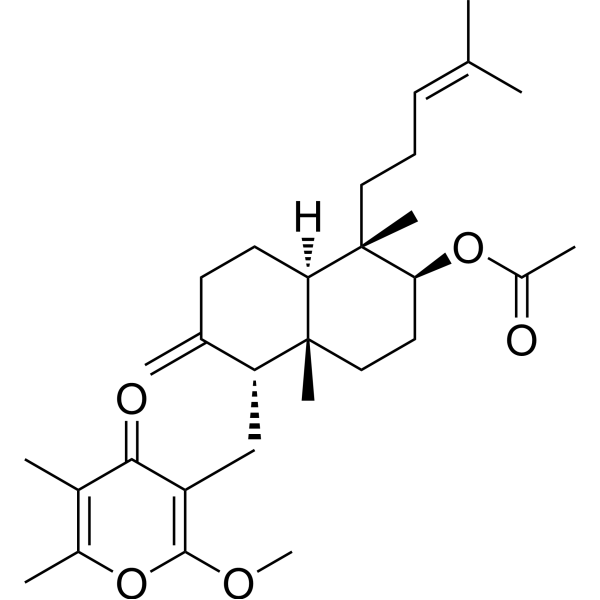
Nalanthalide
Nalanthalide is a voltage-gated potassium channel Kv1.3 blocker (IC50=3.9 µM) and a potential immunosuppressant. Nalanthalide can be used for research on inflammatory immune diseases, such as neuroinflammation.
For research use only. We do not sell to patients.
- CAS No.: 145603-76-5
- Formula: C30H44O5
- Molecular Weight:484.67
-
Storage:
Please store the product under the recommended conditions in the Certificate of Analysis.

To place orders, for customer services and technical support, please contact: MedChemExpress USA
Tel: 609-228-6898 E-mail: [email protected] [email protected]


-
 Biological Activity
-
Chemical Information
- Protocols
- Purity & Documentation
- References
-
 Help & FAQs


-
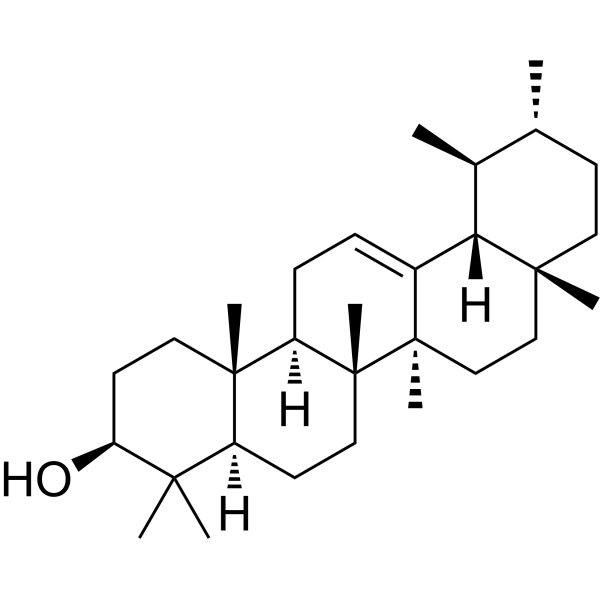
HY-N8423
α-AmyrinPentacyclic Triterpenoid -
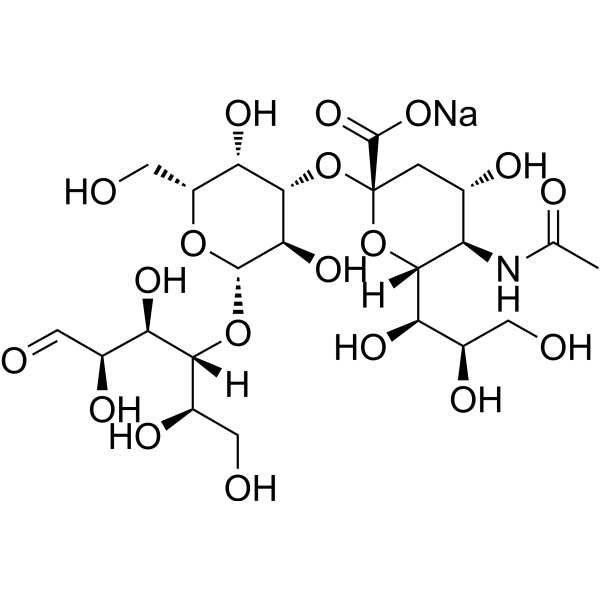
HY-108065A
3'-Sialyllactose sodiumPrebiotic -
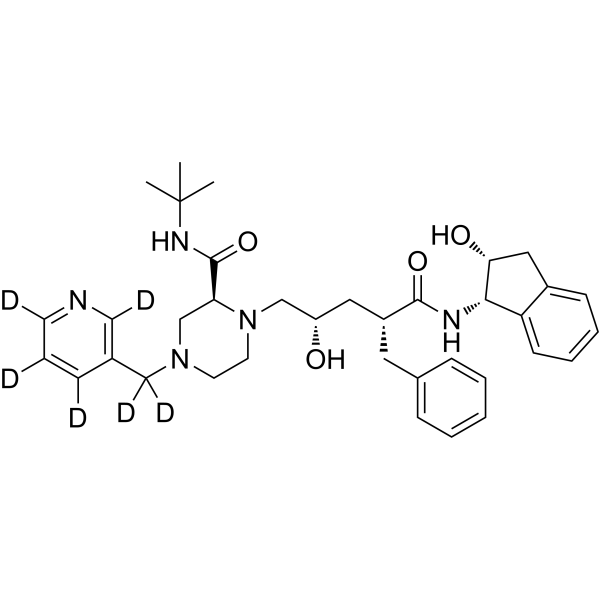
HY-B0689S
Indinavir-d6Stable Isotope -
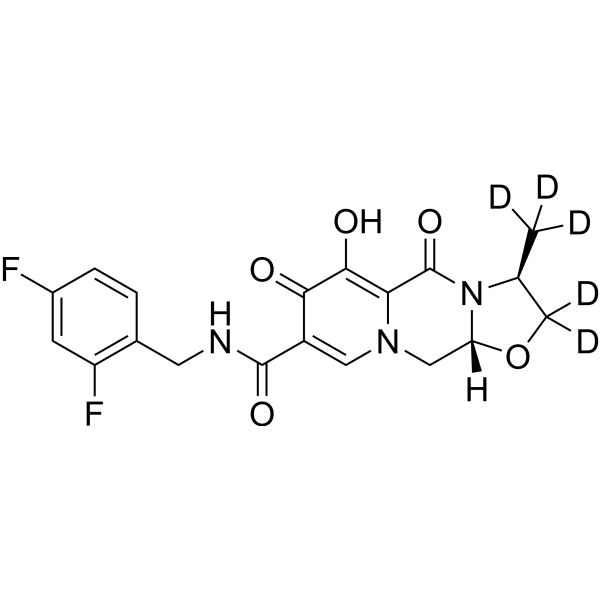
HY-15592S1
Cabotegravir-d5Stable Isotope -

HY-N8423R
α-Amyrin (Standard)Pentacyclic Triterpenoid -
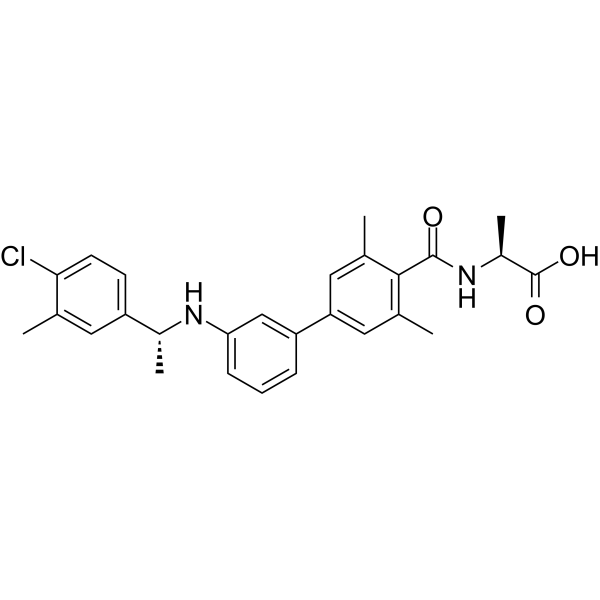
HY-18166
NIBR0213S1P1 Antagonist -

HY-108065AR
3'-Sialyllactose sodium (Standard)Prebiotic -
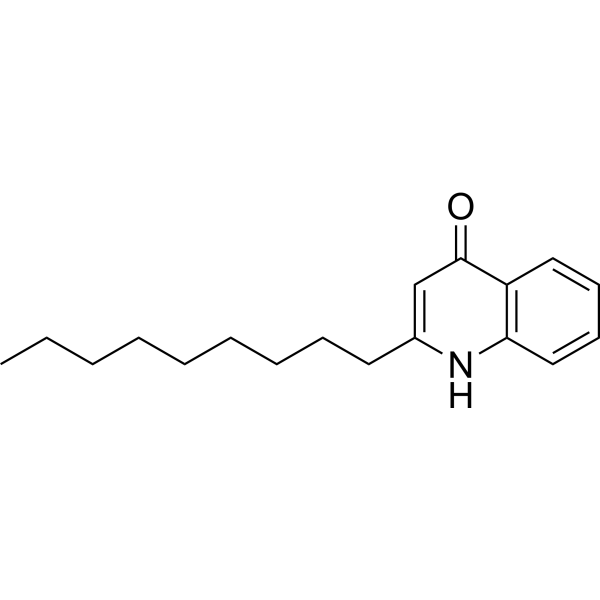
HY-W555382
Pseudane IXHCV Inhibitor -
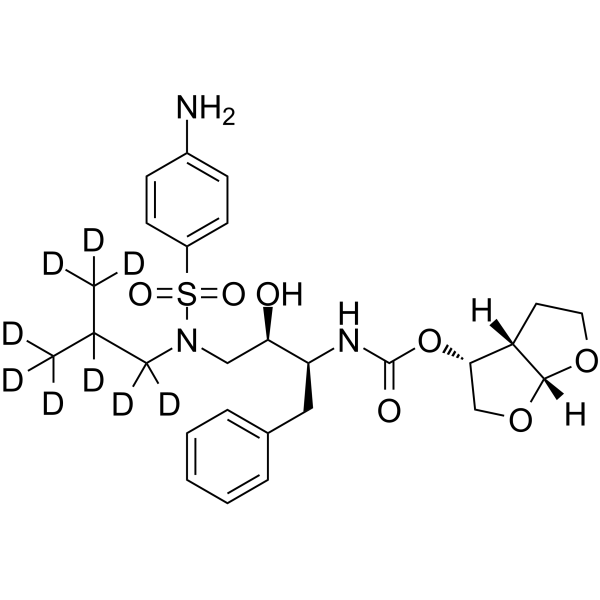
HY-112585
Darunavir-d9Stable Isotope -

HY-104069
S1P1 agonist 1 -
HY-116890
CRTh2 antagonist 4DP2 Receptor Inhibitor -

HY-104069R
S1P1 agonist 1 (Standard)Reference Standard


Biological Activity
Description
IC50 & Target
IC50: 3.9 µM (Kv1.3)[1].
Cellular Effect
|
Cell Line

|
Type | Value | Description | References |
|---|---|---|---|---|
| T-cell | EC50 |
500 nM
Compound: 7
|
Depolarization of human T cells by electrophysiological method
Depolarization of human T cells by electrophysiological method
|
[PMID: 19042133] |


Chemical Information
-
CAS No. 145603-76-5
-
Molecular Weight 484.67
-
Formula C30H44O5
-
SMILES
O=C1C(C[C@@H]2C(CC[C@@]3([H])[C@@](CC/C=C(C)/C)(C)[C@@H](OC(C)=O)CC[C@]23C)=C)=C(OC)OC(C)=C1C
-
Structure Classification
-
Initial Source
Nalanthamala sp.
-
Shipping
Room temperature in continental US; may vary elsewhere.
-
Storage
Please store the product under the recommended conditions in the Certificate of Analysis.

Protocols
-
Cell Cytotoxicity Assay
Cytotoxicity assays are usually based on the assessment of cell membrane damage, which can also be indirectly detected by measuring cell viability. Detection methods include MTT assay, CKK-8 assay, LDH assay and ATP assay, etc.
-
Research Protocol for Neurological Diseases
PINK1/Parkin-mediated mitophagy pathway is a mitochondrial quality-control signaling axis in which mitochondrial depolarization stabilizes PINK1 on damaged mitochondria, activates Parkin recruitment and E3 ubiquitin ligase activity, promotes ubiquitination of outer mitochondrial membrane proteins, recruits selective autophagy adaptors, and drives lysosomal degradation of damaged mitochondria. In neurological disease research, this pathway is experimentally important because neurons, especially dopaminergic neurons, are highly dependent on mitochondrial integrity, and defective mitochondrial turnover can lead to mitochondrial dysfunction, oxidative stress, impaired neuronal survival, α-synuclein accumulation, and neuroinflammatory damage-associated signals. The genetic disease link is strongest in Parkinson’s disease because mutations in PRKN/parkin cause autosomal recessive juvenile parkinsonism, mutations in PINK1 cause hereditary early-onset Parkinson’s disease, and Drosophila studie


Purity & Documentation
References

Calculators
Concentration (start) × Volume (start) = Concentration (final) × Volume (final)


Nalanthalide Related Classifications
HY-N8372 Related Classifications
 Powered by Bioz