



Sulesomab
Sulesomab (IMMU-MN3) is a murine monoclonal antibody fragment of the IgG1 class that binds to Normal Cross-Reactive Antigen-90 present on leukocytes. Sulesomab is cleared into infection nonspecifically through increased capillary membrane permeability.
For research use only. We do not sell to patients.
- CAS No.: 167747-19-5
-
Storage:
Please store the product under the recommended conditions in the Certificate of Analysis.

To place orders, for customer services and technical support, please contact: MedChemExpress USA
Tel: 609-228-6898 E-mail: [email protected] [email protected]


-
 Biological Activity
-
Chemical Information
- Protocols
- Purity & Documentation
- References
-
 Help & FAQs




Biological Activity
Description
Isotype
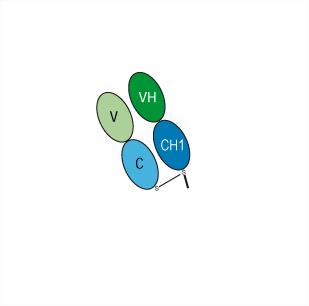
Fab'-G1-nd
Species Reactivity
Human
IC50 & Target
CEACAM6
Gene ID
Accession
Conjugated
Unconjugated
Reconsititution
The product can be reconstituted/diluted with sterile PBS or saline.
Format
-
Fab'-G1-nd
Application
ELISA, FACS, Functional assay


Chemical Information
-
CAS No. 167747-19-5
-
SMILES
[Sulesomab]
-
Formulation
Please refer to the lot-specific COA for specific buffer information.
-
Storage
Please store the product under the recommended conditions in the Certificate of Analysis.


Purity & Documentation
References

Calculators
Concentration (start) × Volume (start) = Concentration (final) × Volume (final)


Sulesomab Related Classifications
HY-P9942 Related Classifications
 Powered by Bioz