



TPP-1

Based on 1 Customer Validation
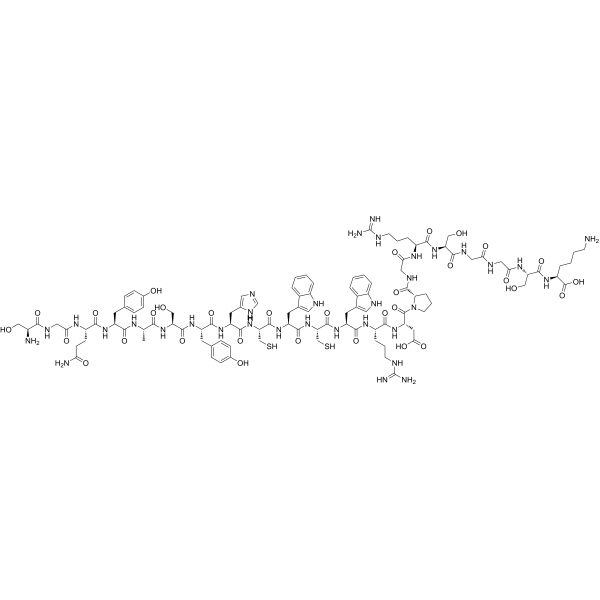
TPP-1 is a potent inhibitor of the PD-1/PD-L1 interaction. TPP-1 binds specifically to PD-L1 with a high affinity (KD=95 nM). TPP-1 inhibits human tumor growth in vivo via reactivating T-cell function.
For research use only. We do not sell to patients.
- Purity : 96.95%
- CAS No.: 2426685-25-6
- Formula: C107H150N34O32S2
- Molecular Weight:2488.67
-
Storage:
Sealed storage, away from moisture and light.
Powder -80°C, 2 years , -20°C, 1 year* In solvent : -80°C, 6 months; -20°C, 1 month (sealed storage, away from moisture and light)

To place orders, for customer services and technical support, please contact: MedChemExpress USA
Tel: 609-228-6898 E-mail: [email protected] [email protected]


-
 Biological Activity
-
Chemical Information
-
Solvent & Solubility
- Protocols
- Purity & Documentation
- References
-
 Help & FAQs


-
HY-P1812
AUNP-12PD-1 Antagonist -
HY-101093
CA-170VISTA/PD-L1 Inhibitor -
HY-134884
INCB086550PD-L1 Inhibitor -
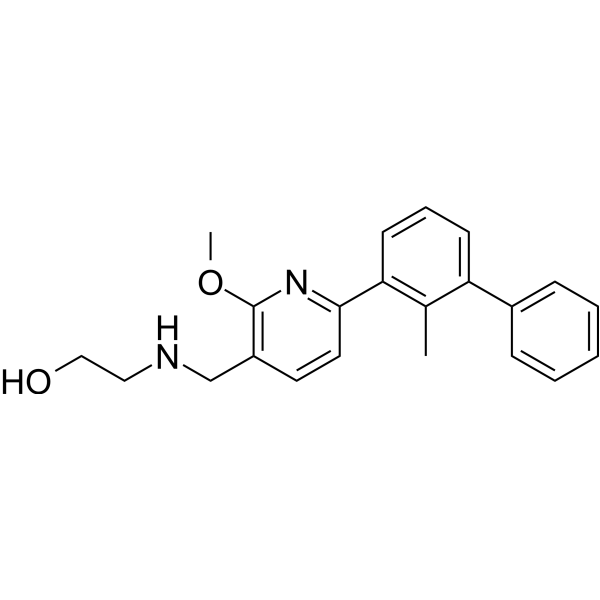
HY-132192
PD-1/PD-L1-IN-9PD-1/PD-L1 Interaction Inhibitor -
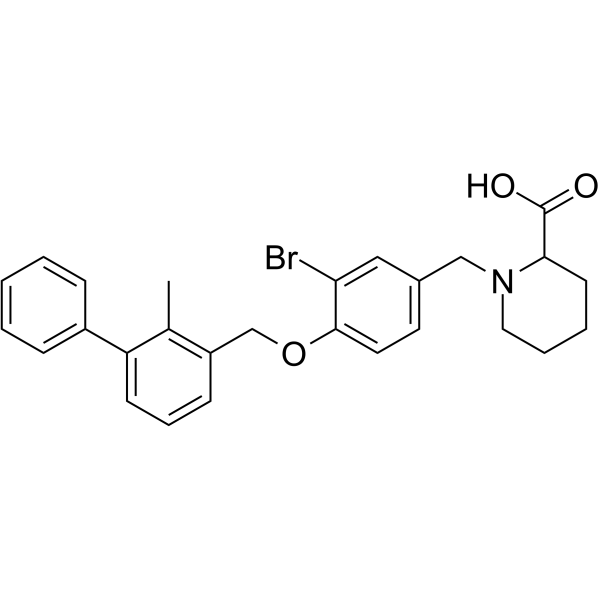
HY-116274
BMS-8PD-1/PD-L1 Inhibitor -
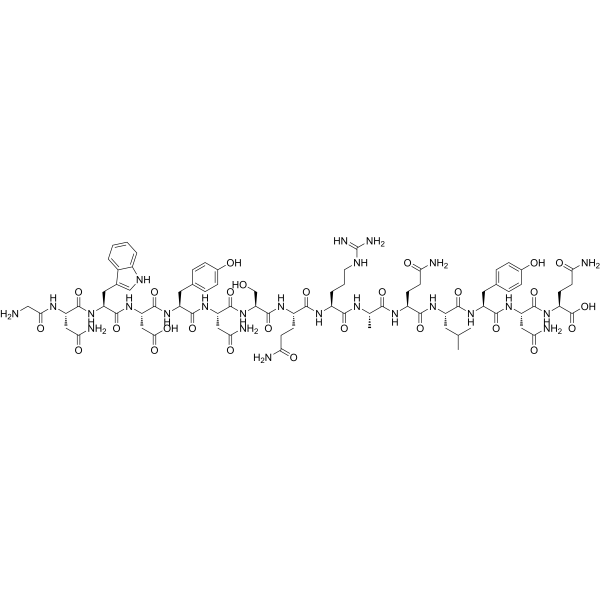
HY-P2477
Human PD-L1 inhibitor IVPD-L1 Inhibitor -
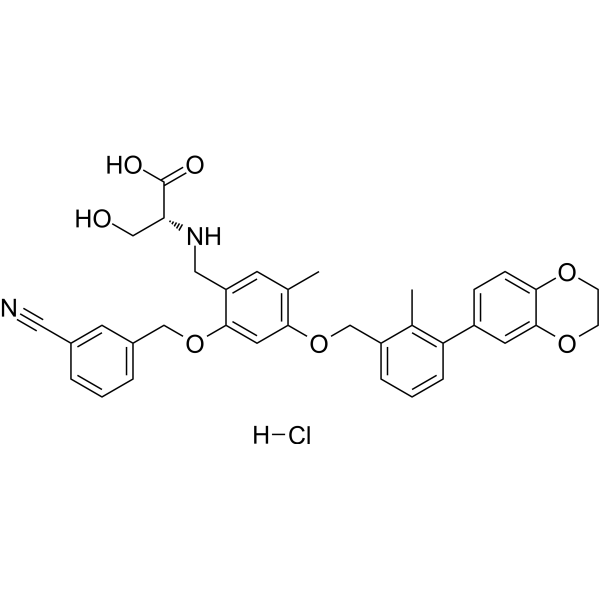
HY-120635
BMS-1001 hydrochloridePD-L1/PD-1 Inhibitor -

HY-P2470
Human PD-L1 inhibitor IIPD-1/PD-L1 Inhibitor -
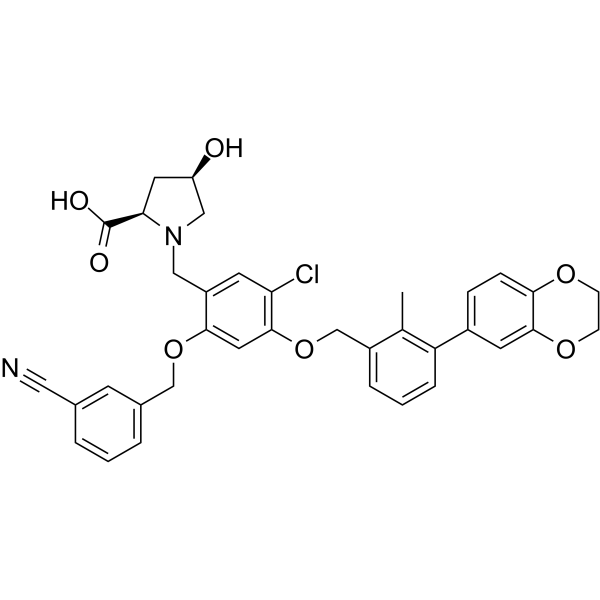
HY-102011
BMS-1166PD-1/PD-L1 Interaction Inhibitor -
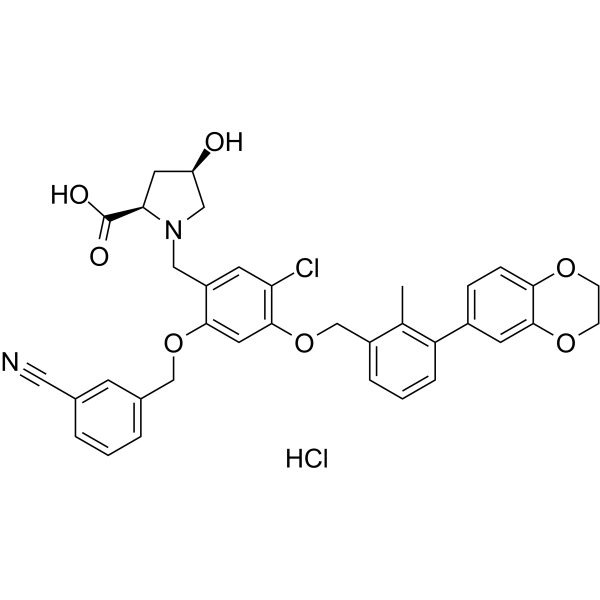
HY-102011A
BMS-1166 hydrochloridePD-1/PD-L1 Interaction Inhibitor -
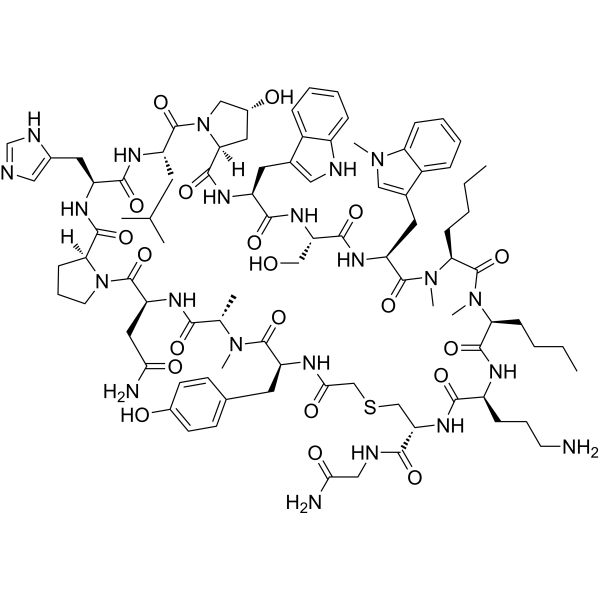
HY-P3440
WL12PD-L1 Binding Peptide -
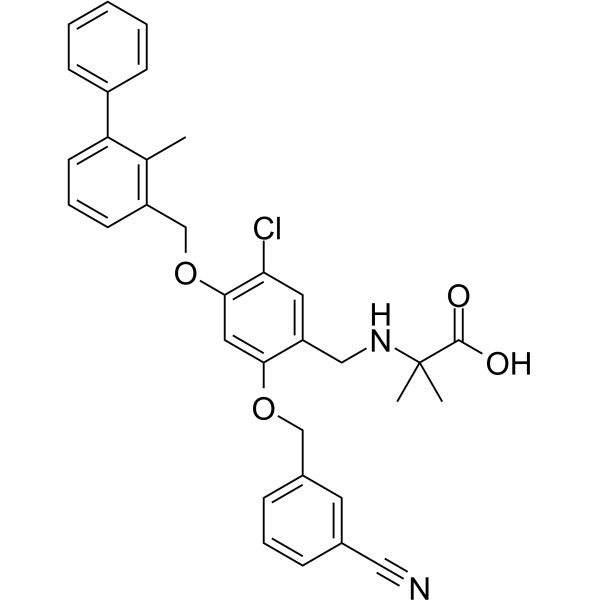
HY-131347
PD-1/PD-L1-IN-NP19PD-1/PD-L1 Inhibitor


Biological Activity
Description
In Vitro
TPP-1 binds to PD-L1 with high affinity and blocks PD-1/PD-L1 interaction. The KD value of PD-L1 with TPP-1 peptide is about 95 nmol/L (around five times less than that with PD-1), The binding site of TPP-1 to PD-L1 is close to the interactive site of PD-1 and PD-L1[1].TPP-1 (4 μM) reactivates T-cell functions, it induces IFNγ release significantly higher than control and SPP-1, and the TPP-1 group shows similar outcomes for cell proliferation[1].
MedChemExpress (MCE) has not independently confirmed the accuracy of these methods. They are for reference only.
In Vivo
MedChemExpress (MCE) has not independently confirmed the accuracy of these methods. They are for reference only.
-
Animal Model:5 to 6-week-old female Balb/c nude mice injected with H460 cells transfected with the plvx-puro/luciferase lentiviral vector[1]
-
Dosage:4 mg/kg
-
Administration:Subcutaneous injection; 4 mg/kg; every other day eight times; 32days
-
Result:Inhibited the tumor growth in a tumor xenograft model via reactivating T-cell function.


Chemical Information
-
CAS No. 2426685-25-6
-
Appearance Solid
-
Molecular Weight 2488.67
-
Formula C107H150N34O32S2
-
Color White to off-white
-
Sequence
Ser-Gly-Gln-Tyr-Ala-Ser-Tyr-His-Cys-Trp-Cys-Trp-Arg-Asp-Pro-Gly-Arg-Ser-Gly-Gly-Ser-Lys
-
Sequence Shortening
SGQYASYHCWCWRDPGRSGGSK
-
Shipping
Room temperature in continental US; may vary elsewhere.
-
Storage
Sealed storage, away from moisture and light
Powder -80°C 2 years -20°C 1 year * In solvent : -80°C, 6 months; -20°C, 1 month (sealed storage, away from moisture and light)


Solvent & Solubility
In Vitro:
DMSO : 80 mg/mL (32.15 mM; Need ultrasonic; Hygroscopic DMSO has a significant impact on the solubility of product, please use newly opened DMSO)
H2O : 50 mg/mL (20.09 mM; Need ultrasonic)
Please refer to the solubility information to select the appropriate solvent. Once prepared, please aliquot and store the solution to prevent product inactivation from repeated freeze-thaw cycles.
Storage method and period of stock solution: -80°C, 6 months; -20°C, 1 month (sealed storage, away from moisture and light). When stored at -80°C, please use it within 6 months. When stored at -20°C, please use it within 1 month.
* Note: If you choose water as the stock solution, please dilute it to the working solution, then filter and sterilize it with a 0.22 μm filter before use.
Please refer to the solubility information to select the appropriate solvent. Once prepared, please aliquot and store the solution to prevent product inactivation from repeated freeze-thaw cycles.
Storage method and period of stock solution: -80°C, 6 months; -20°C, 1 month (sealed storage, away from moisture and light). When stored at -80°C, please use it within 6 months. When stored at -20°C, please use it within 1 month.
* Note: If you choose water as the stock solution, please dilute it to the working solution, then filter and sterilize it with a 0.22 μm filter before use.
Concentration (start) × Volume (start) = Concentration (final) × Volume (final)


Purity & Documentation
-
Data Sheet (278 KB)
-
SDS (254 KB)
- English - EN (254 KB)
- Français - FR (254 KB)
- Deutsch - DE (254 KB)
- Norwegian - NO (254 KB)
- Español - ES (254 KB)
- Swedish - SV (254 KB)
- Italian - IT (254 KB)
- Korean - KR (254 KB)
- Portuguese - PT (254 KB)
-
Handling Instructions (2659 KB)
References


Complete Stock Solution Preparation Table
Please refer to the solubility information to select the appropriate solvent. Once prepared, please aliquot and store the solution to prevent product inactivation from repeated freeze-thaw cycles.
Storage method and period of stock solution: -80°C, 6 months; -20°C, 1 month (sealed storage, away from moisture and light). When stored at -80°C, please use it within 6 months. When stored at -20°C, please use it within 1 month.
| Optional Solvent | Concentration Solvent Mass | 1 mg | 5 mg | 10 mg | 25 mg |
|---|---|---|---|---|---|
| H2O / DMSO | 1 mM | 0.4018 mL | 2.0091 mL | 4.0182 mL | 10.0455 mL |
| 5 mM | 0.0804 mL | 0.4018 mL | 0.8036 mL | 2.0091 mL | |
| 10 mM | 0.0402 mL | 0.2009 mL | 0.4018 mL | 1.0046 mL | |
| 15 mM | 0.0268 mL | 0.1339 mL | 0.2679 mL | 0.6697 mL | |
| 20 mM | 0.0201 mL | 0.1005 mL | 0.2009 mL | 0.5023 mL | |
| DMSO | 25 mM | 0.0161 mL | 0.0804 mL | 0.1607 mL | 0.4018 mL |
| 30 mM | 0.0134 mL | 0.0670 mL | 0.1339 mL | 0.3349 mL |
* Note: If you choose water as the stock solution, please dilute it to the working solution, then filter and sterilize it with a 0.22 μm filter before use.


TPP-1 Related Classifications
HY-P3139 Related Classifications
 Powered by Bioz