



NLRP3-IN-26
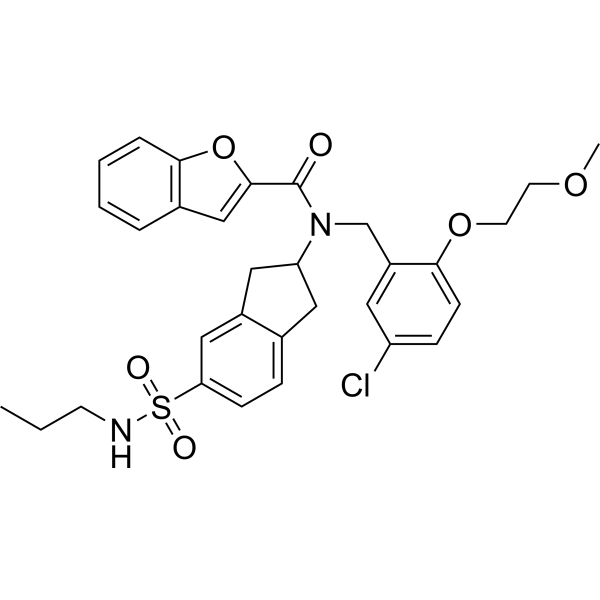
NLRP3-IN-26 (compound 15Z) is a NLRP3 inhibitor with the IC50 of 0.13 μM. NLRP3-IN-26 can be used for DSS-induced colitis model study.
For research use only. We do not sell to patients.
- CAS No.: 2927413-30-5
- Formula: C31H33ClN2O6S
- Molecular Weight:597.12
-
Storage:
Please store the product under the recommended conditions in the Certificate of Analysis.

To place orders, for customer services and technical support, please contact: MedChemExpress USA
Tel: 609-228-6898 E-mail: [email protected] [email protected]


-
 Biological Activity
-
Chemical Information
- Protocols
- Purity & Documentation
- References
-
 Help & FAQs




Biological Activity
Description
Cellular Effect
|
Cell Line

|
Type | Value | Description | References |
|---|---|---|---|---|
| J774.A1 | CC50 |
>30 μM
Compound: 15z, Diastereomeric mixture
|
Cytotoxicity against mouse J774.A1 cells incubated for 24 hrs by resazurin reagent based assay
Cytotoxicity against mouse J774.A1 cells incubated for 24 hrs by resazurin reagent based assay
|
[PMID: 38029358] |
| L02 | CC50 |
>1000 μM
Compound: 15z, Diastereomeric mixture
|
Cytotoxicity against human HL7702 cells incubated for 48 hrs by resazurin reagent based assay
Cytotoxicity against human HL7702 cells incubated for 48 hrs by resazurin reagent based assay
|
[PMID: 38029358] |


Chemical Information
-
CAS No. 2927413-30-5
-
Molecular Weight 597.12
-
Formula C31H33ClN2O6S
-
SMILES
O=C(N(C1CC2=CC=C(S(=O)(NCCC)=O)C=C2C1)CC3=CC(Cl)=CC=C3OCCOC)C4=CC5=C(C=CC=C5)O4
-
Shipping
Room temperature in continental US; may vary elsewhere.
-
Storage
Please store the product under the recommended conditions in the Certificate of Analysis.

Protocols
-
Cell Cytotoxicity Assay
Cytotoxicity assays are usually based on the assessment of cell membrane damage, which can also be indirectly detected by measuring cell viability. Detection methods include MTT assay, CKK-8 assay, LDH assay and ATP assay, etc.
-
DSS-Induced Colitis
Dextran sulfate sodium (DSS)-induced colitis is generated by administering DSS in mouse drinking water, producing epithelial injury, barrier disruption, weight loss, diarrhea, fecal blood, colon shortening, histologic mucosal damage, and inflammatory mediator changes; the model is mainly used to study acute or chronic intestinal inflammation resembling selected features of ulcerative colitis. DSS injury is interpreted through clinical and tissue readouts rather than a single molecular endpoint: daily body weight, stool consistency, and bleeding are combined into a disease activity index, while colon length, histology, cytokines, myeloperoxidase activity, intestinal permeability, and tight-junction markers provide complementary measures of inflammation and barrier damage.
-
TNBS-Induced Colitis
TNBS-induced colitis is produced by intrarectal delivery of 2,4,6-trinitrobenzene sulfonic acid in ethanol, where ethanol disrupts the mucosal barrier and TNBS haptenates colonic proteins, generating immune-mediated colonic inflammation with weight loss, diarrhea, ulceration, transmural injury, inflammatory-cell infiltration, and cytokine responses. The model is used as an experimental intestinal inflammation model with Crohn’s disease–like features, especially when Th1-type responses, IL-12–dependent inflammation, chronic relapsing inflammation, or fibrosis-related endpoints are studied.


Purity & Documentation
References

Calculators
Concentration (start) × Volume (start) = Concentration (final) × Volume (final)


NLRP3-IN-26 Related Classifications
HY-162013 Related Classifications
 Powered by Bioz