



O-Desmethylcarvedilol

Based on 1 Customer Validation
O-Desmethylcarvedilol (Desmethylcarvedilol) is an active metabolite of the non-selective β-adrenergic receptor (β-AR) antagonist Carvedilol (HY-B0006). O-Desmethylcarvedilol inhibits store-overload-induced calcium release in HEK293 cells expressing the ryanodine receptor 2 (RyR2) R4496C (RyR2R4496C) mutation (IC50 = 7.62 µM). O-Desmethylcarvedilol reduces increases in heart rate and prevents decreases in diastolic blood pressure induced by Isoproterenol (HY-B0468) in conscious rabbits (ED50s = 32 and 5 µg/kg, respectively).
For research use only. We do not sell to patients.
- Purity : 97.4%
- CAS No.: 72956-44-6
- Formula: C23H24N2O4
- Molecular Weight:392.45
-
Storage:Powder -20°C, 3 years ; In solvent -80°C, 6 months , -20°C, 1 month


To place orders, for customer services and technical support, please contact: MedChemExpress USA
Tel: 609-228-6898 E-mail: [email protected] [email protected]


-
 Biological Activity
-
Chemical Information
- Protocols
- Purity & Documentation
- References
-
 Help & FAQs


-
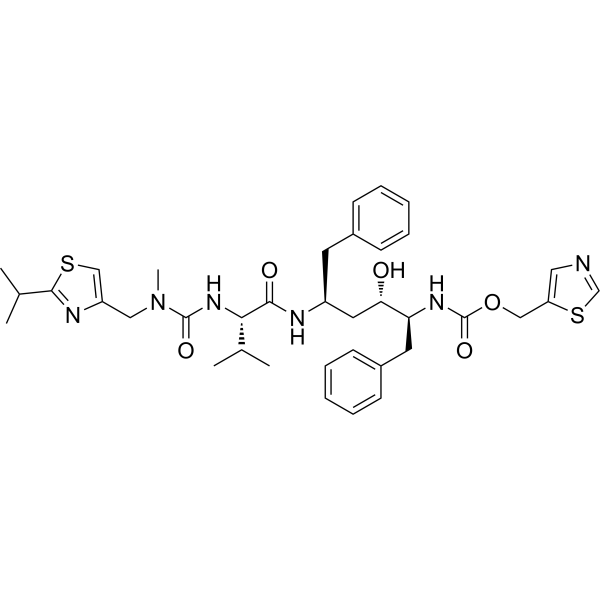
HY-90001
RitonavirHIV Protease Inhibitor -
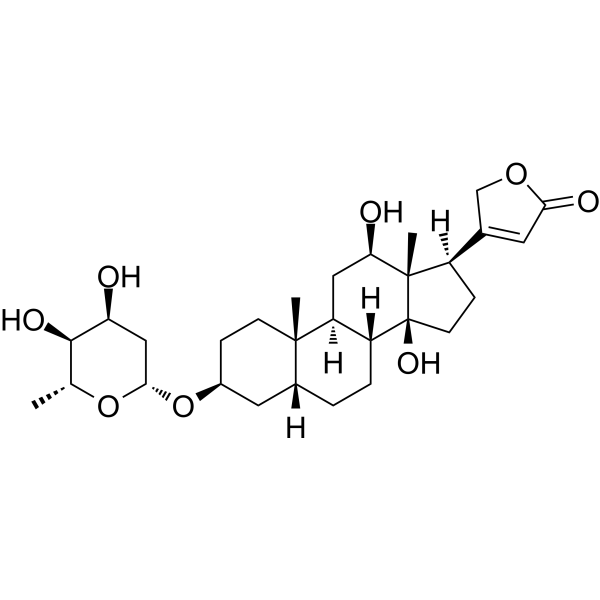
HY-145154
Digoxigenin monodigitoxosideNa, K-ATPase Inhibitor -
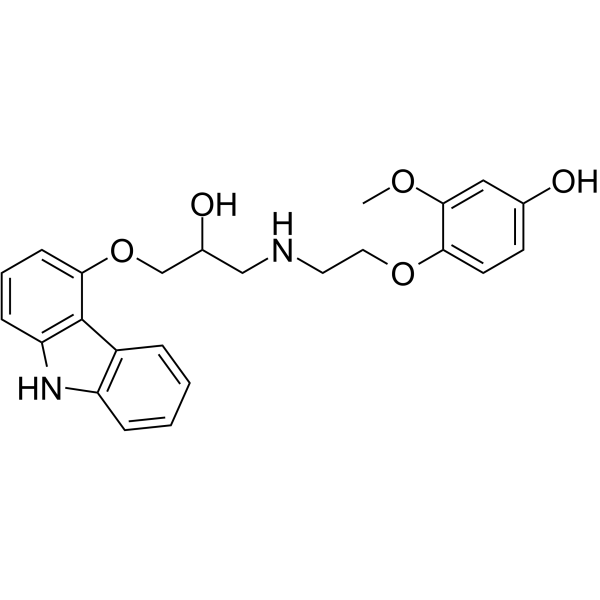
HY-12767
Carvedilol metabolite 4-Hydroxyphenyl CarvedilolCarvedilol Metabolite -
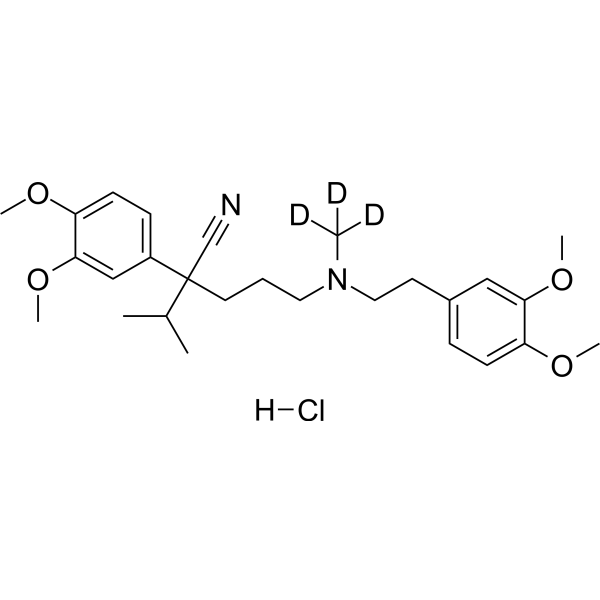
HY-A0064S
Verapamil-d3 hydrochlorideStable Isotope -
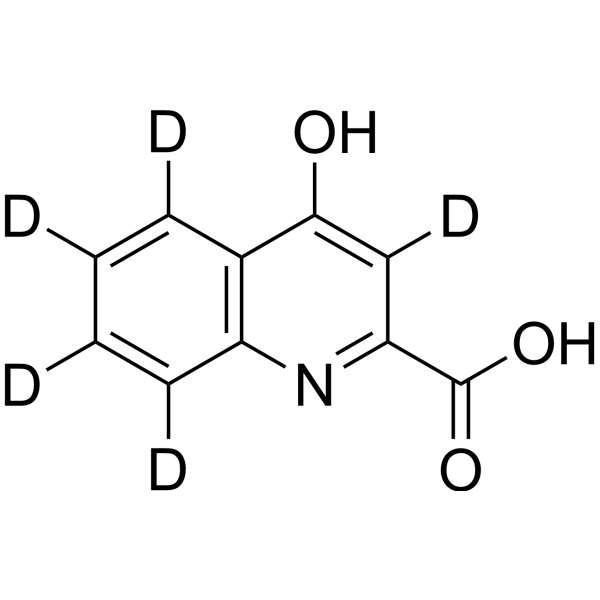
HY-100806S
Kynurenic acid-d5Stable Isotope -
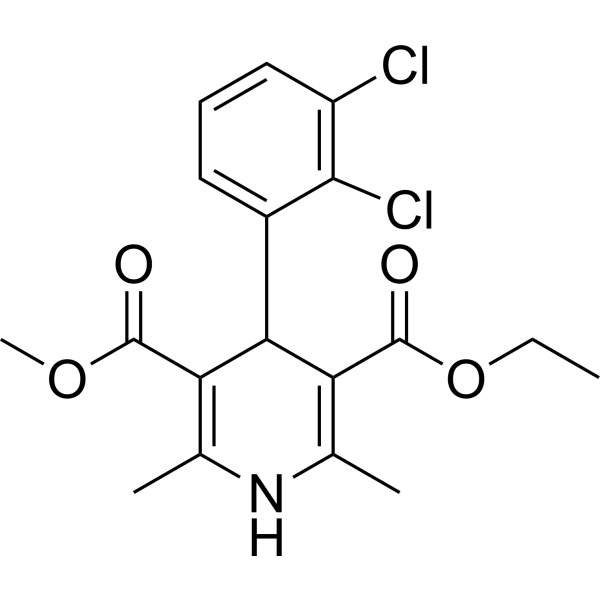
HY-B0309
FelodipineCalcium Channel Antagonist -
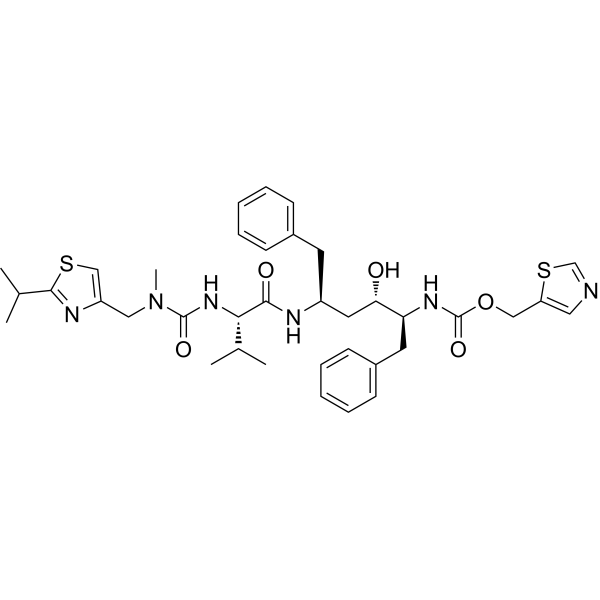
HY-90001R
Ritonavir (Standard)HIV Protease Inhibitor -
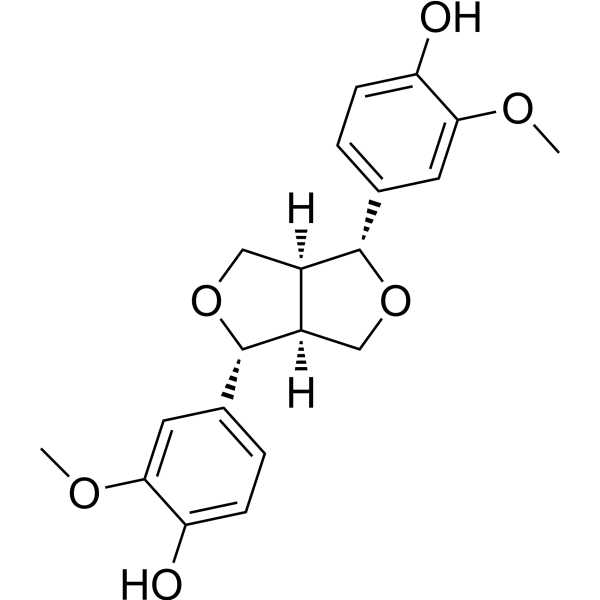
HY-126067
(-)-PinoresinolAnti-inflammatory Agent -

HY-B0309R
Felodipine (Standard)Calcium Channel Antagonist -

HY-Z2493
Aripiprazole N1-oxide -
HY-131486
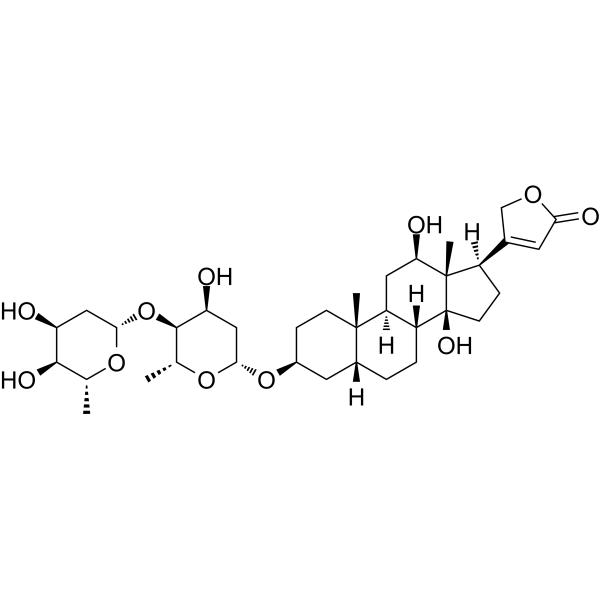
Digoxigenin bisdigitoxosideAnticancer Agent -
HY-17005S
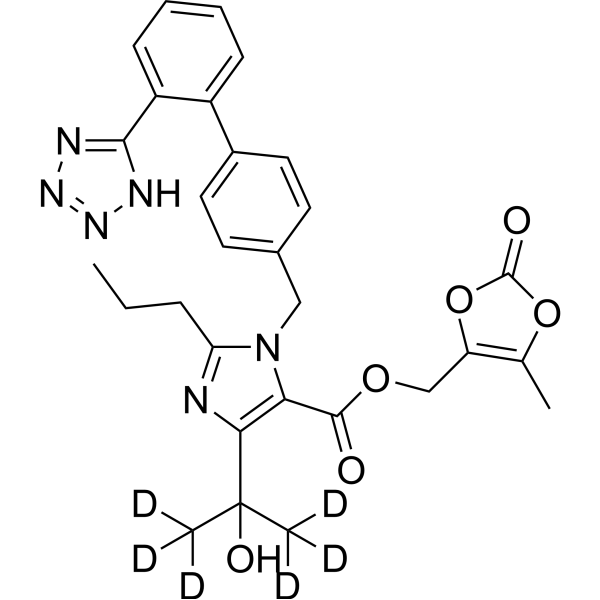
Olmesartan medoxomil-d6Stable Isotope
All Calcium Channel Isoforms
More

Biological Activity
Description
Cellular Effect
|
Cell Line

|
Type | Value | Description | References |
|---|---|---|---|---|
| HEK293 | IC50 |
7.62 μM
Compound: 9
|
Inhibition of RyR2 R4496C mutant (unknown origin)-mediated store-overload induced calcium release expressed in HEK293 cells after 8 to 10 mins by fura-2/AM dye-based fluorescence assay
Inhibition of RyR2 R4496C mutant (unknown origin)-mediated store-overload induced calcium release expressed in HEK293 cells after 8 to 10 mins by fura-2/AM dye-based fluorescence assay
|
[PMID: 24124794] |


Chemical Information
-
CAS No. 72956-44-6
-
Appearance Solid
-
Molecular Weight 392.45
-
Formula C23H24N2O4
-
Color White to off-white
-
SMILES
OC1=C(OCCNCC(COC2=CC=CC3=C2C4=C(C=CC=C4)N3)O)C=CC=C1
-
Synonyms
Desmethylcarvedilol; BM-14242
-
Shipping
Room temperature in continental US; may vary elsewhere.
-
Storage
Powder -20°C 3 years In solvent -80°C 6 months -20°C 1 month

Protocols
-
Cell Cytotoxicity Assay
Cytotoxicity assays are usually based on the assessment of cell membrane damage, which can also be indirectly detected by measuring cell viability. Detection methods include MTT assay, CKK-8 assay, LDH assay and ATP assay, etc.
-
Calcium Spark Assay
Calcium sparks are localized, transient increases in intracellular calcium concentration ([Ca2+]i) that occur in cardiac myocytes and represent elementary events underlying excitation-contraction coupling. These events are generated by the coordinated opening of clusters of ryanodine receptors (RyRs) on the sarcoplasmic reticulum membrane, leading to a brief release of Ca2+ into the cytosol. The detection and analysis of calcium sparks provide insights into the mechanisms of calcium handling and signaling in cardiac cells. Imaging techniques using fluorescent calcium indicators such as Fluo-3 are employed to visualize these subcellular calcium transients with high spatial and temporal resolution. The protocol is based on established methodologies described in primary literature for both experimental measurement and automated analysis of calcium sparks.
-
Genotoxicity/Mutagenicity Study
The bacterial reverse mutation assay detects point mutations that restore amino-acid prototrophy in auxotrophic Salmonella typhimurium or Escherichia coli tester strains; after exposure to a test article, mutagenic activity is read out as an increased number of revertant colonies on minimal agar compared with the vehicle control. The assay uses tester strains with different mutation targets so that base-substitution and frameshift mutagens can be detected, and testing is performed with and without exogenous mammalian metabolic activation because some chemicals require biotransformation to become mutagenic.


Purity & Documentation
-
Data Sheet (269 KB)
-
SDS (393 KB)
- English - EN (393 KB)
- Français - FR (393 KB)
- Deutsch - DE (393 KB)
- Norwegian - NO (393 KB)
- Español - ES (393 KB)
- Swedish - SV (393 KB)
- Italian - IT (393 KB)
- Korean - KR (393 KB)
- Portuguese - PT (393 KB)
-
Handling Instructions (2659 KB)
References
[1]. Chris D Smith, et al. Novel carvedilol analogues that suppress store-overload-induced Ca2+ release. J Med Chem. 2013 Nov 14;56(21):8626-55. [Content Brief]
[2]. K Strein, et al. Pharmacological profile of carvedilol, a compound with β-blocking and vasodilating properties. J Cardiovasc Pharmacol. 1987:10 Suppl 11:S33-41. [Content Brief]

Calculators
Concentration (start) × Volume (start) = Concentration (final) × Volume (final)


O-Desmethylcarvedilol Related Classifications
HY-Z7733 Related Classifications
 Powered by Bioz