



Octocrylene (Standard)

Based on 1 Customer Validation
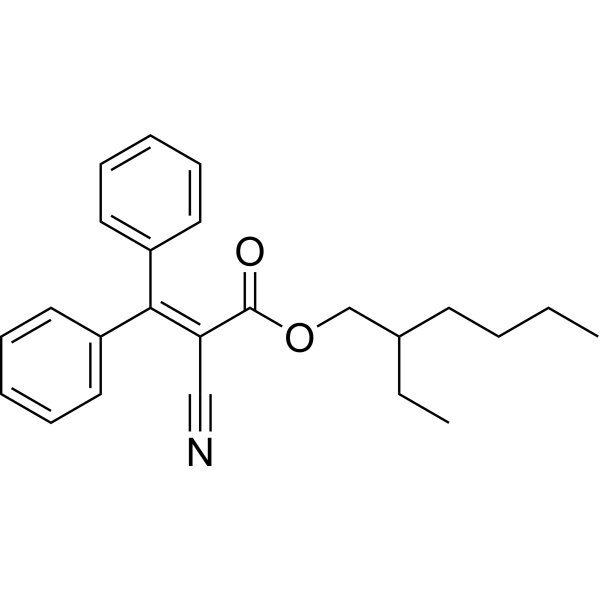
Octocrylene (Standard) is the analytical standard of Octocrylene. This product is intended for research and analytical applications. Octocrylene is an organic ultraviolet (UV) filter which absorbs mainly UVB radiation and short UVA wavelengths. Octocrylene has the potential for using in various cosmetic products to either provide an appropriate sun protection factor in sunscreen products or to protect cosmetic formulations from UV radiation.
For research use only. We do not sell to patients.
- Purity : 98.08%
- CAS No.: 6197-30-4
- Formula: C₂₄H₂₇NO₂
- Molecular Weight:361.48
-
Storage:
Please store the product under the recommended conditions in the Certificate of Analysis.


To place orders, for customer services and technical support, please contact: MedChemExpress USA
Tel: 609-228-6898 E-mail: [email protected] [email protected]


-
 Product Information
-
Chemical Information
- Purity & Documentation
-
 Help & FAQs


-
HY-A0087
OctocryleneOrganic Ultraviolet (UV) Filter -
HY-120388
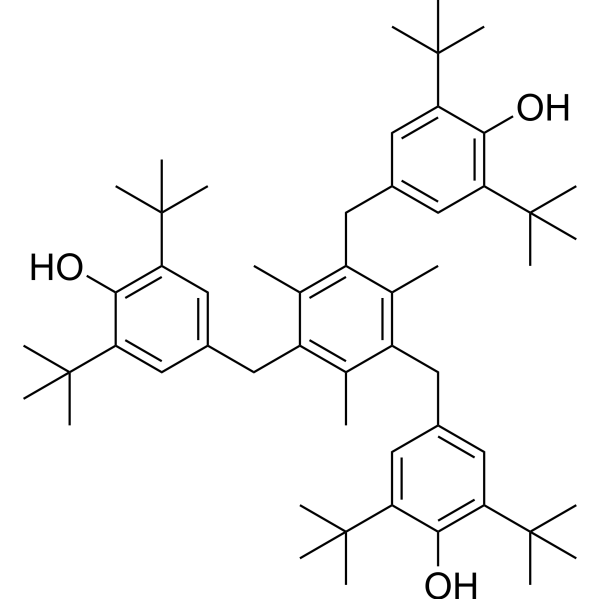
Ionox 330Antioxidant -
HY-B0688
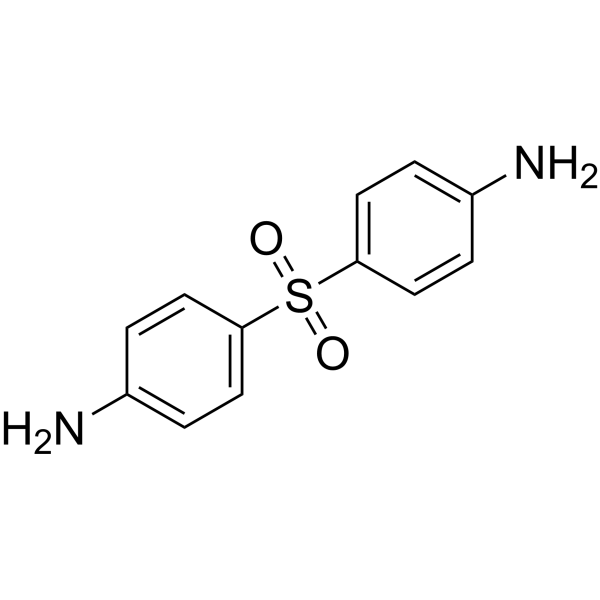
DapsoneSulfonamide Antibiotic -

HY-W009160
OctrizoleUV Screener/Stabilizer -

HY-W099555R
Octadecyl 3-(3,5-di-tert-butyl-4-hydroxyphenyl)propionate (Standard) -
HY-B0897
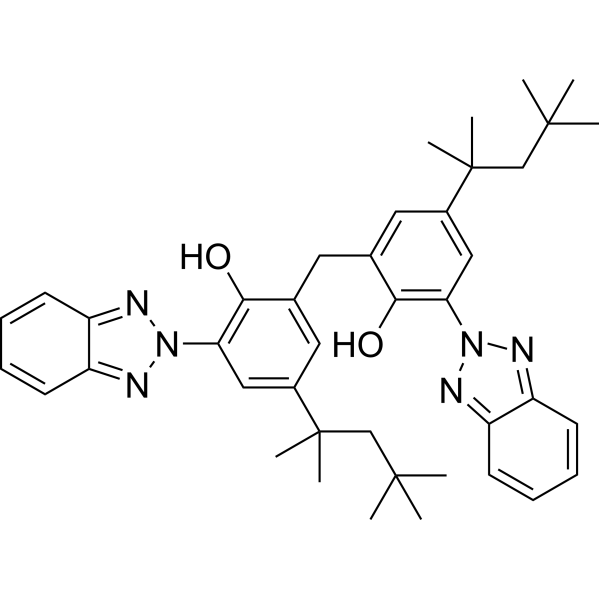
BisoctrizoleUltraviolet Radiation Absorber -

HY-W014223
2,4′-DihydroxybenzophenoneAnti-Inflammatory Agent -

HY-B1712
2-Hydroxy-4-(octyloxy)benzophenoneBiochemical Reagent -
HY-B0929
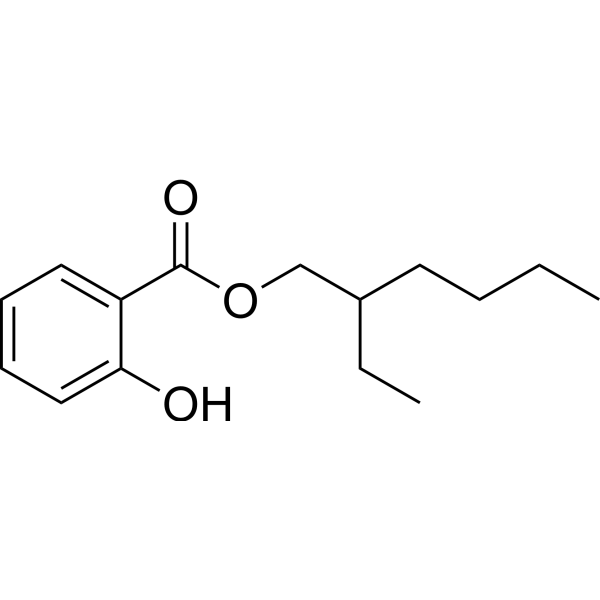
OctisalateUltraviolet Radiation Absorber -

HY-W010653
Antioxidant 1010Antioxidant Agent -

HY-W015837
PhthalonitrilePhthalocyanine Precursor -

HY-B0688R
Dapsone (Standard)Sulfonamide Antibiotic


Product Information
Information
Application
The compound is the grade of analytical standard, which is the reference standard supplied assay. It is commonly used in qualitative, quantitative and methodological research experiments in HPLC, GC and MS.


Chemical Information
-
CAS No. 6197-30-4
-
Appearance Oil
-
Molecular Weight 361.48
-
Formula C₂₄H₂₇NO₂
-
Color Light yellow to yellow
-
SMILES
O=C(OCC(CC)CCCC)/C(C#N)=C(C1=CC=CC=C1)\C2=CC=CC=C2
-
Shipping
Room temperature in continental US; may vary elsewhere.
-
Storage
Please store the product under the recommended conditions in the Certificate of Analysis.


Purity & Documentation
-
SDS (458 KB)
- English - EN (458 KB)
- Français - FR (458 KB)
- Deutsch - DE (458 KB)
- Norwegian - NO (458 KB)
- Español - ES (458 KB)
- Swedish - SV (458 KB)
- Italian - IT (458 KB)
- Korean - KR (458 KB)
- Portuguese - PT (458 KB)
-
Handling Instructions (2659 KB)
References
[1]. E Berardesca, et al. Review of the safety of octocrylene used as an ultraviolet filter in cosmetics. J Eur Acad Dermatol Venereol. 2019 Nov;33 Suppl 7:25-33. [Content Brief]
[3]. Meng Q, et al. Toxic effects of octocrylene on zebrafish larvae and liver cell line (ZFL)[J]. Aquatic Toxicology, 2021, 236: 105843. [Content Brief]
[4]. Ko H, et al. Sunscreen filter octocrylene is a potential obesogen by acting as a PPARγ partial agonist[J]. Toxicology letters, 2022, 355: 141-149. [Content Brief]
[5]. de Groot A C, et al. Contact and photocontact allergy to octocrylene: a review[J]. Contact dermatitis, 2014, 70(4): 193-204. [Content Brief]

Calculators
Concentration (start) × Volume (start) = Concentration (final) × Volume (final)


Octocrylene (Standard) Related Classifications
HY-A0087R Related Classifications
 Powered by Bioz