



Ofatumumab

Based on 1 Customer Validation
Ofatumumab is a fully human anti-CD20 monoclonal antibody that induces antibody-dependent cell-mediated cytotoxicity (ADCC) and complement-dependent cytotoxicity (CDC) in CD20-expressing B lymphocytes. Ofatumumab has strong lytic activity against CD20-positive B lymphocytes and eliminates CD20-positive tumor cells through ADCC and CDC. Ofatumumab is particularly effective against drug-resistant cells with low CD20 expression and can be applied to the research of chronic lymphocytic leukemia (CLL).
For research use only. We do not sell to patients.
- Purity : 99.54%
- CAS No.: 679818-59-8
- Molecular Weight:145.94 kDa
-
Storage:
Please store the product under the recommended conditions in the Certificate of Analysis.


To place orders, for customer services and technical support, please contact: MedChemExpress USA
Tel: 609-228-6898 E-mail: [email protected] [email protected]


-
 Biological Activity
-
Chemical Information
- Protocols
- Purity & Documentation
- References
-
 Help & FAQs


-

HY-P9913
RituximabCD20 Inhibitor -

HY-P9910
Obinutuzumab (FUT8-KO)Anti-CD20 Antibody -

HY-P9960
OcrelizumabAnti-CD20 Antibody -
HY-P9913A
Rituximab (anti-CD20)CD20 Inhibitor -

HY-P99538
UblituximabAnti-CD20 Antibody -

HY-P99024
GlofitamabT-Cell-Engaging Bispecific Antibody -

HY-P99931
EpcoritamabAnti-CD3/CD20 Antibody -

HY-P9902
PembrolizumabPD-1 Inhibitor -

HY-P99038
OdronextamabCD20/CD3 Inhibitor -

HY-P99001
Human IgG1 kappa, Isotype ControlIgG1κ Isotype Control -

HY-P9903
NivolumabPD-1 Inhibitor -

HY-P9917
TocilizumabIL-6R Neutralizing Antibody


Biological Activity
Description
Isotype
Human IgG1 kappa
Recommend Isotype Controls
Species Reactivity
Human
IC50 & Target
CD20/MS4A1
In Vitro
Ofatumumab (10 μg/mL; 6 h) significantly induces cell lysis in a complement-dependent cytotoxicity (CDC) assay of mantle cell lymphoma (MCL) cell lines, with an effect superior to that of Rituximab (HY-P9913), and is still active against resistant cells with low CD20 expression or high complement inhibitory protein (CD55/CD59) expression[1].
Ofatumumab (10 μg/mL; 24-72 h) has direct killing of B-cell lymphoma cell lines, with an inhibitory effect similar to that of Rituximab[1].
MedChemExpress (MCE) has not independently confirmed the accuracy of these methods. They are for reference only. Further protocols information, click here.
-
Cell Line:Mantle cell lymphoma (MCL) cell lines (Granta, HBL-2, Jeko-1, Mino, Rec-1, Z-138)
-
Concentration:10 μg/mL
-
Incubation Time:6 h
-
Result:Cell Lysis : Induced higher CDC-mediated lysis compared to rituximab in all tested cell lines except Granta, with significant differences in Mino, Rec-1, and Jeko-1 cells. For example, in Mino cells, achieved 65% lysis vs. 35% with rituximab.
Resistance Mechanisms : Cells with high CD55/CD59 expression (e.g., Raji-4RH) showed reduced rituximab-induced lysis, but Ofatumumab maintained efficacy, indicating less dependency on CD20 density.
-
Cell Line:B-cell lymphoma cell lines (Mino, Rec-1, HBL-2, Raji, RL)
-
Concentration:10 μg/mL
-
Incubation Time:24, 48, 72 h
-
Result:Cell Viability : Both antibodies caused time-dependent viability reduction, with Ofatumumab showing comparable activity to rituximab across most cell lines.
A significant difference was observed in Mino cells at 72 h, where Ofatumumab reduced viability to 30% vs. 45% with Rituximab.
Direct Cytotoxicity : Flow cytometry and immunofluorescence revealed no significant differences in apoptosis or cell cycle arrest between the two antibodies, suggesting minimal direct cytotoxic effects beyond immune-mediated lysis.
In Vivo
MedChemExpress (MCE) has not independently confirmed the accuracy of these methods. They are for reference only.
-
Animal Model:Female SCID mice (6-8 weeks old, ~20 g) + subcutaneous xenograft model of human mantle cell lymphoma (Z-138 cells)[1]
-
Dosage:10 mg/kg (dissolved in sterile saline)
-
Administration:Intravenous injection via tail vein; 4 doses on days 0, 3, 7, and 10 post-tumor engraftment
-
Result:Significantly delayed early tumor progression compared to rituximab. Tumor volume in the ofatumumab group remained smaller than 500 mm3 for over 80 days, whereas the rituximab group showed progressive growth exceeding 2000 mm3 by day 120.
Resulted a median survival time of >90 days in the ofatumumab group (median not reached by study end), compared to 127 days in the Rituximab group.
Reduced tumor cellularity and increased apoptotic cells in of Atumumab-treated mice, with no evidence of treatment-related organ toxicity.
Clinical Trial
| NCT Number | Sponsor | Condition | Start Date |
Phase

|
|---|---|---|---|---|
| NCT01329991 | Plexxikon| | 2011-05 | PHASE1 |
Gene ID
Accession
Conjugated
Unconjugated
Reconsititution
The product can be reconstituted/diluted with sterile PBS or saline.
Format
-
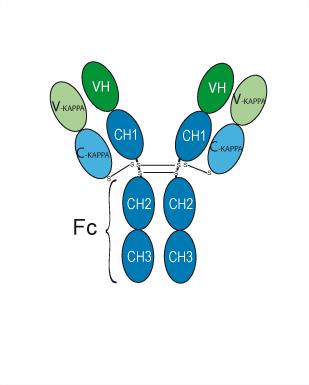
Human IgG1 kappa
Application
ELISA, FACS, Functional assay
Verified Bioactivity
-
 Ofatumumab has a significant ADCP effect on Raji cells in a dose-dependent manner.The EC50 for this effect is 24.00 and 25.15 ng/mL.


Chemical Information
-
CAS No. 679818-59-8
-
Appearance Liquid
-
Molecular Weight 145.94 kDa
-
Color Colorless to light yellow
-
SMILES
[Ofatumumab]
-
Synonyms
GSK1841157; OMB-157
-
Shipping
Shipping with dry ice.
-
Formulation
Please refer to the lot-specific COA for specific buffer information.
-
Storage
Please store the product under the recommended conditions in the Certificate of Analysis.

Protocols
-
RNA extraction experimental
By lysing cells, releasing RNA, and removing impurities such as proteins and DNA, high-purity RNA products are finally obtained. The commonly used traditional method is the guanidine isothiocyanate/phenol/chloroform method (Trizol), which is suitable for a variety of animal materials including animal tissues, microorganisms, cultured cells, etc., and most plant materials.
-
Cell Cytotoxicity Assay
Cytotoxicity assays are usually based on the assessment of cell membrane damage, which can also be indirectly detected by measuring cell viability. Detection methods include MTT assay, CKK-8 assay, LDH assay and ATP assay, etc.
-
Mammalian live/dead viability and cytotoxicity staining
Live/dead viability and cytotoxicity staining assays are based on the simultaneous detection of intracellular esterase activity in metabolically active (viable) cells and membrane integrity loss in non-viable cells. In commonly used dual-staining approaches, membrane-permeant fluorogenic substrates are converted by intracellular esterases into fluorescent products in live cells, while impermeant DNA-binding dyes selectively enter cells with compromised plasma membranes and label nucleic acids in dead or dying cells, enabling discrimination between viable and non-viable populations by fluorescence microscopy or flow cytometry.
-
Cell Viability Determination by MTT Colorimetric Assay
The following protocol uses the MTT colorimetric assay as a classic literature-established method for assessing cell viability/metabolic activity in cultured mammalian cells. MTT[3-(4,5-dimethylthiazol-2-yl)-2,5-diphenyltetrazolium bromide] is reduced by metabolically active cells to a colored formazan product; the amount of formazan is quantified spectrophotometrically and provides an indirect measure of metabolically active viable cells. Importantly, MTT reduction reflects cellular oxidoreductase/metabolic activity rather than an absolute direct count of living cells, so changes in cellular metabolism can alter the signal independently of cell number.


Purity & Documentation
-
Data Sheet (263 KB)
-
SDS (251 KB)
- English - EN (251 KB)
- Français - FR (251 KB)
- Deutsch - DE (251 KB)
- Norwegian - NO (251 KB)
- Español - ES (251 KB)
- Swedish - SV (251 KB)
- Italian - IT (251 KB)
- Korean - KR (251 KB)
- Portuguese - PT (251 KB)
-
Inhibitory Antibodies User Guide (603 KB)
References
[1]. Barth MJ, et al. Ofatumumab Exhibits Enhanced In Vitro and In Vivo Activity Compared to Rituximab in Preclinical Models of Mantle Cell Lymphoma. Clin Cancer Res. 2015 Oct 1;21(19):4391-7. [Content Brief]
[2]. Barth MJ, et al. Ofatumumab demonstrates activity against rituximab-sensitive and -resistant cell lines, lymphoma xenografts and primary tumour cells from patients with B-cell lymphoma. Br J Haematol. 2012 Feb;156(4):490-8. [Content Brief]
[3]. Sanford M, et al. Ofatumumab. Drugs. 2010;70(8):1013-1019. [Content Brief]

Calculators
Concentration (start) × Volume (start) = Concentration (final) × Volume (final)


Ofatumumab Related Classifications
HY-P9961 Related Classifications
 Powered by Bioz