



ON1231320
Based on 3 publication(s) in Google Scholar
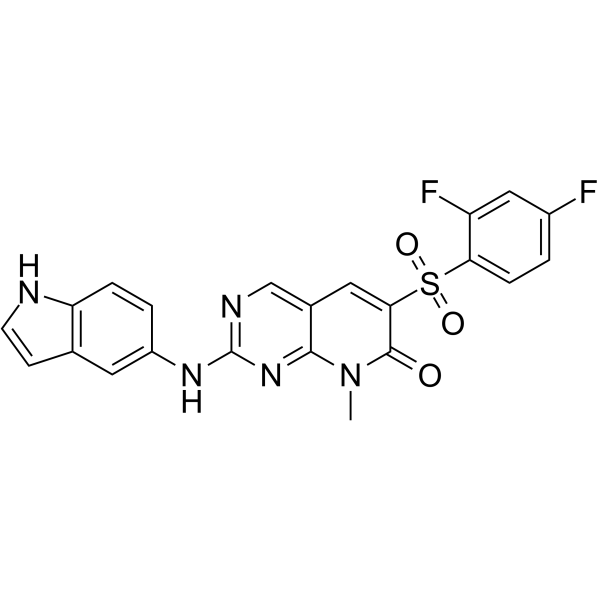
ON1231320 is a highly specific polo like kinase 2 (PLK2) inhibitor with an IC50 of 0.31 μM. ON1231320 blocks tumor cell cycle progression in the G2/M phase in mitosis, causing apoptotic cell death. ON1231320, an arylsulfonyl pyrido-pyrimidinone, has antitumor activity.
For research use only. We do not sell to patients.
- Purity : 99.90%
- CAS No.: 1312471-39-8
- Formula: C22H15F2N5O3S
- Molecular Weight:467.45
-
Storage:Powder -20°C, 3 years , 4°C, 2 years ; In solvent -80°C, 6 months , -20°C, 1 month

To place orders, for customer services and technical support, please contact: MedChemExpress USA
Tel: 609-228-6898 E-mail: [email protected] [email protected]


-
 Biological Activity
-
Chemical Information
-
Solvent & Solubility
- Protocols
- Purity & Documentation
- References
-
 Help & FAQs


-
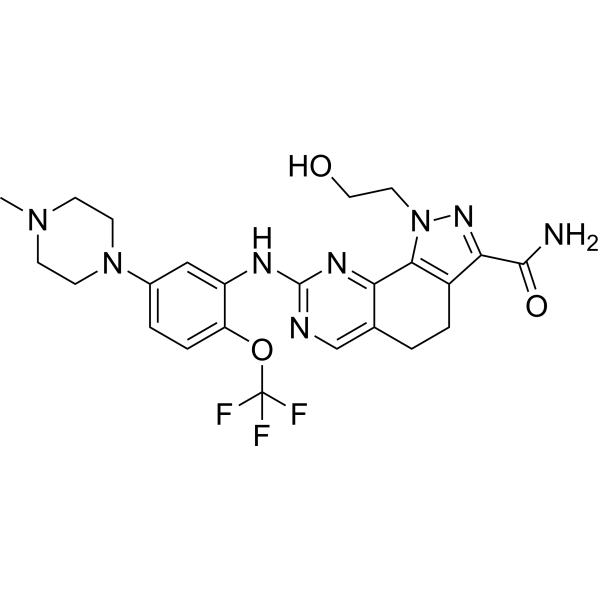
HY-15828
OnvansertibPLK1 Inhibitor -
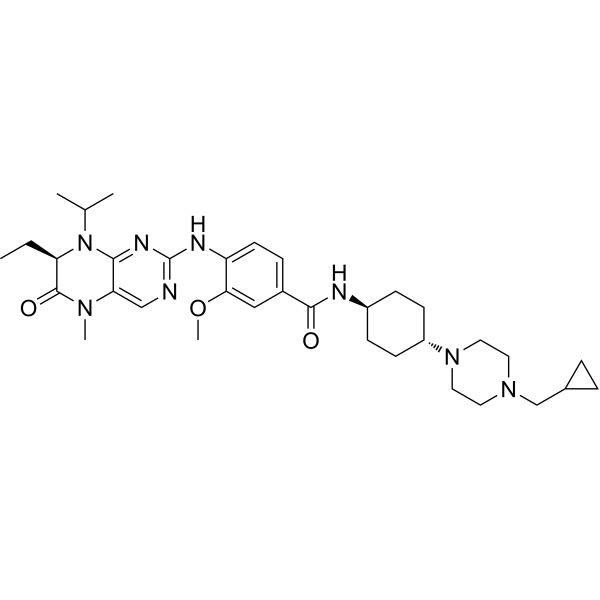
HY-12137
VolasertibPLK1 Inhibitor -
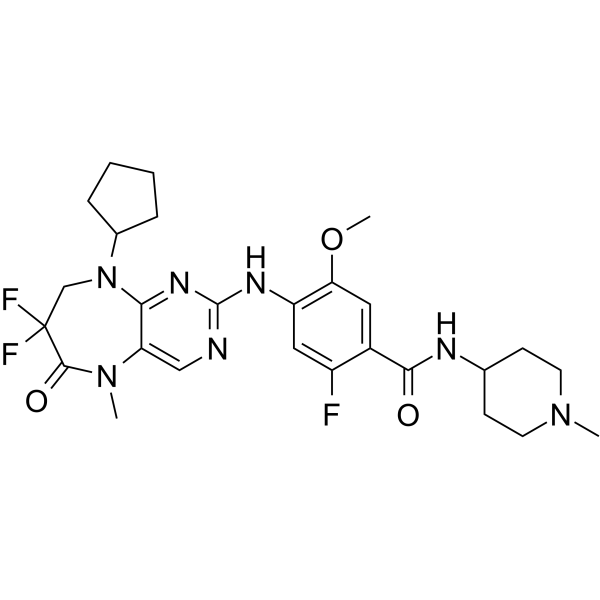
HY-15160
TAK-960PLK1 Inhibitor -
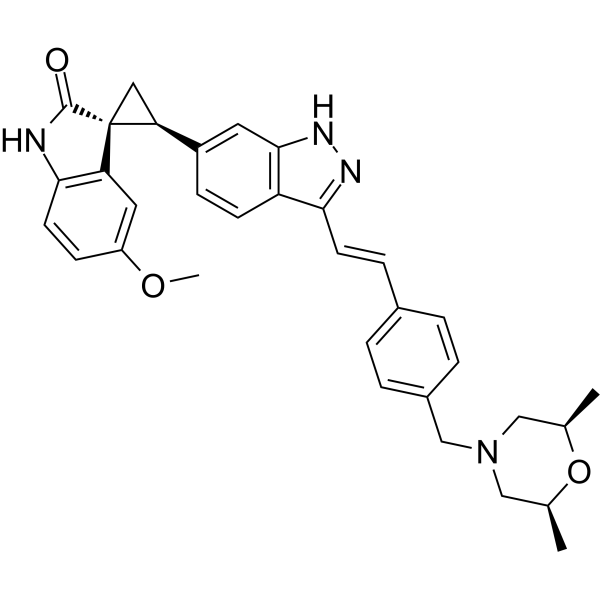
HY-12300
OcifisertibPLK4 Inhibitor -
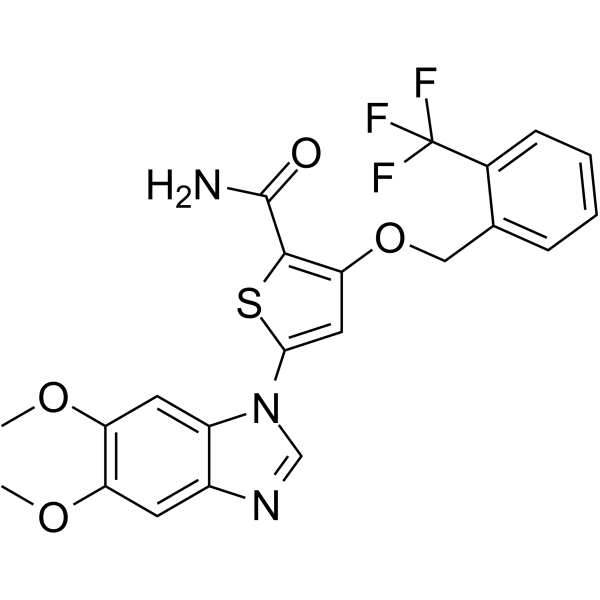
HY-11003
GW843682XPLK Inhibitor -
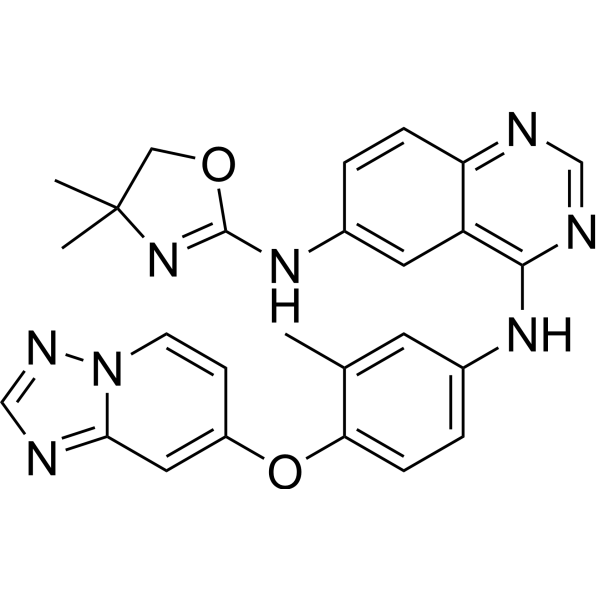
HY-16069
TucatinibHER2 Inhibitor -
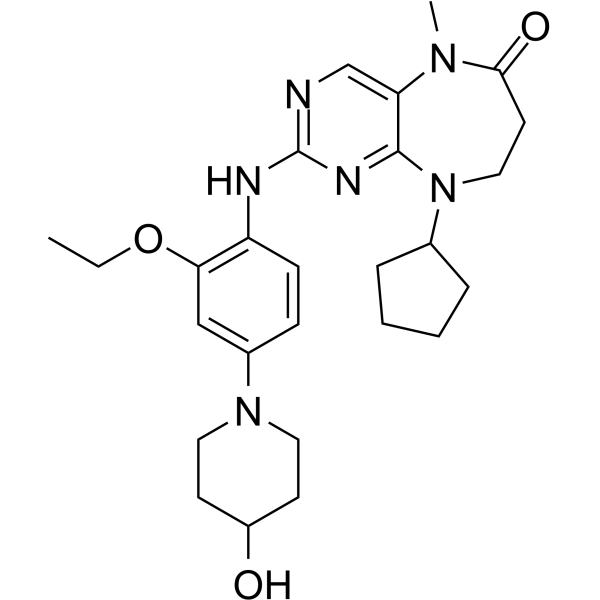
HY-13994
Mps1-IN-2Mps1/Plk1 Inhibitor -
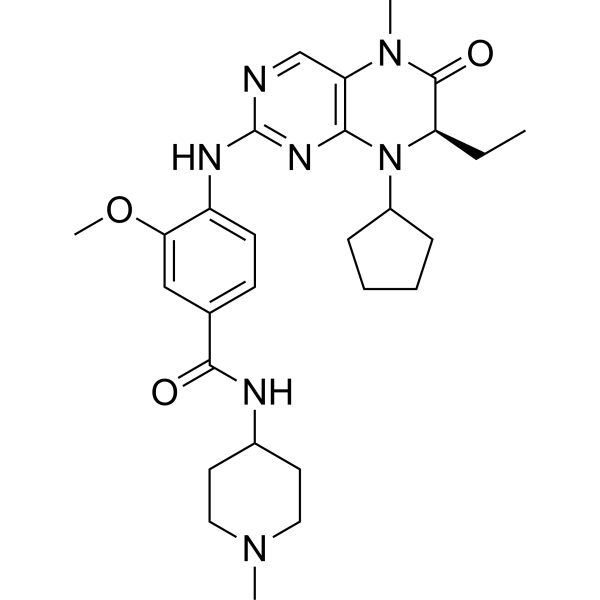
HY-50698
BI 2536PLK1 Inhibitor -
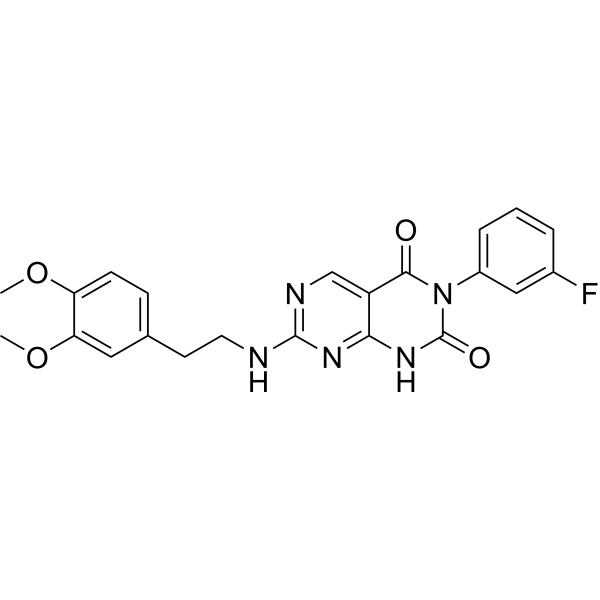
HY-122727
STL127705Ku 70/80 Heterodimer Protein Inhibitor -
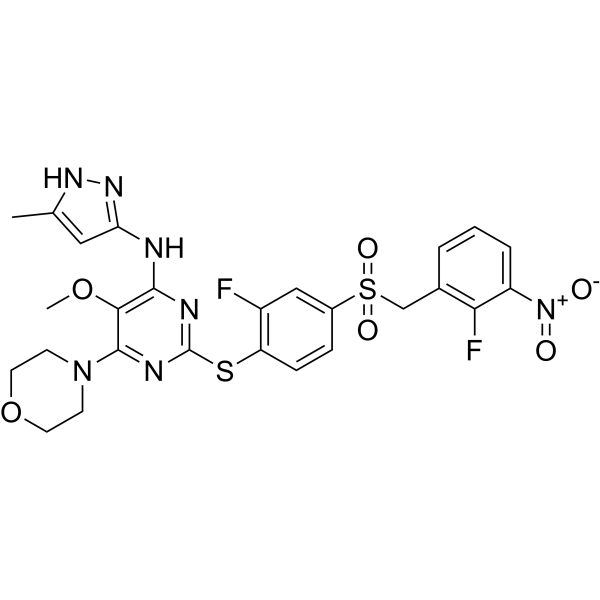
HY-18682
CentrinonePLK4 Inhibitor -
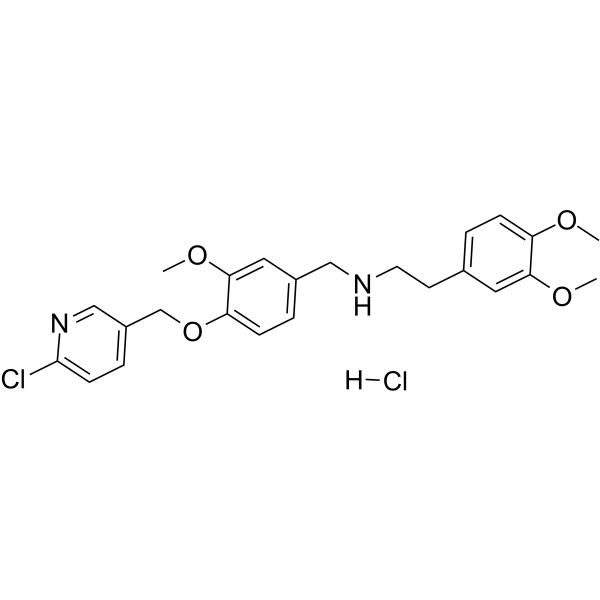
HY-15158
SBE13 HydrochloridePlk1 Inhibitor -
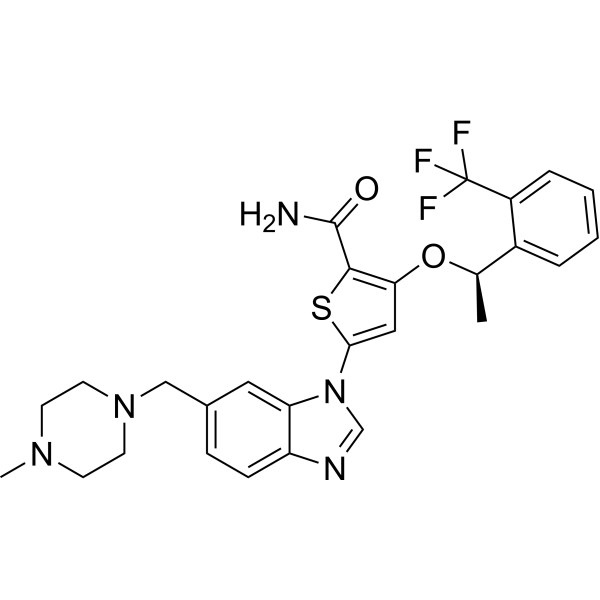
HY-50877
GSK461364PLK1 Inhibitor
Publications Citing Use of MedChemExpress (MCE) ON1231320
More Customer Validation & Images

-
Cell Proliferation/Viability Assay

-
Cell Migration/Invasion Assay

-
Flow Cytometry


Biological Activity
Description
IC50 & Target
[1]|
PLK2 0.31 μM (IC50) |
PLK1 >10 μM (IC50) |
PLK3 >10 μM (IC50) |
PLK4 >10 μM (IC50) |
Cellular Effect
|
Cell Line

|
Type | Value | Description | References |
|---|---|---|---|---|
| 5637 | GI50 |
0.125 μM
Compound: 7ao; ON1231320
|
Growth inhibition of human 5637 cells after 72 hrs by trypan blue assay
Growth inhibition of human 5637 cells after 72 hrs by trypan blue assay
|
[PMID: 26762835] |
| A-431 | GI50 |
0.03 μM
Compound: 7ao; ON1231320
|
Growth inhibition of human A431 cells after 72 hrs by trypan blue assay
Growth inhibition of human A431 cells after 72 hrs by trypan blue assay
|
[PMID: 26762835] |
| A549 | GI50 |
0.075 μM
Compound: 7ao; ON1231320
|
Growth inhibition of human A549 cells after 72 hrs by trypan blue assay
Growth inhibition of human A549 cells after 72 hrs by trypan blue assay
|
[PMID: 26762835] |
| ASPC1 | GI50 |
0.3 μM
Compound: 7ao; ON1231320
|
Growth inhibition of human AsPC1 cells after 72 hrs by trypan blue assay
Growth inhibition of human AsPC1 cells after 72 hrs by trypan blue assay
|
[PMID: 26762835] |
| Bel-7402 | GI50 |
0.05 μM
Compound: 7ao; ON1231320
|
Growth inhibition of human Bel7402 cells after 72 hrs by trypan blue assay
Growth inhibition of human Bel7402 cells after 72 hrs by trypan blue assay
|
[PMID: 26762835] |
| BT-474 | GI50 |
0.1 μM
Compound: 7ao; ON1231320
|
Growth inhibition of human BT474 cells after 72 hrs by trypan blue assay
Growth inhibition of human BT474 cells after 72 hrs by trypan blue assay
|
[PMID: 26762835] |
| BT-549 | GI50 |
0.25 μM
Compound: 7ao; ON1231320
|
Growth inhibition of human BT549 cells after 72 hrs by trypan blue assay
Growth inhibition of human BT549 cells after 72 hrs by trypan blue assay
|
[PMID: 26762835] |
| BXPC-3 | GI50 |
0.075 μM
Compound: 7ao; ON1231320
|
Growth inhibition of human BxPC3 cells after 72 hrs by trypan blue assay
Growth inhibition of human BxPC3 cells after 72 hrs by trypan blue assay
|
[PMID: 26762835] |
| CAPAN-1 | GI50 |
0.075 μM
Compound: 7ao; ON1231320
|
Growth inhibition of human Capan1 cells after 72 hrs by trypan blue assay
Growth inhibition of human Capan1 cells after 72 hrs by trypan blue assay
|
[PMID: 26762835] |
| CCRF-CEM | GI50 |
0.05 μM
Compound: 7ao; ON1231320
|
Growth inhibition of human CEM cells after 72 hrs by trypan blue assay
Growth inhibition of human CEM cells after 72 hrs by trypan blue assay
|
[PMID: 26762835] |
| COLO 205 | GI50 |
0.075 μM
Compound: 7ao; ON1231320
|
Growth inhibition of human COLO205 cells after 72 hrs by trypan blue assay
Growth inhibition of human COLO205 cells after 72 hrs by trypan blue assay
|
[PMID: 26762835] |
| Daudi | GI50 |
0.075 μM
Compound: 7ao; ON1231320
|
Growth inhibition of human Daudi cells after 72 hrs by trypan blue assay
Growth inhibition of human Daudi cells after 72 hrs by trypan blue assay
|
[PMID: 26762835] |
| DU-145 | IC50 |
0.075 μM
Compound: 7ao; ON1231320
|
Growth inhibition of human DU145 cells after 72 hrs by trypan blue assay
Growth inhibition of human DU145 cells after 72 hrs by trypan blue assay
|
[PMID: 26762835] |
| Granta-519 | GI50 |
0.04 μM
Compound: 7ao; ON1231320
|
Growth inhibition of human GRANTA-519 cells after 72 hrs by trypan blue assay
Growth inhibition of human GRANTA-519 cells after 72 hrs by trypan blue assay
|
[PMID: 26762835] |
| HCC1806 | GI50 |
0.1 μM
Compound: 7ao; ON1231320
|
Growth inhibition of human HCC1806 cells after 72 hrs by trypan blue assay
Growth inhibition of human HCC1806 cells after 72 hrs by trypan blue assay
|
[PMID: 26762835] |
| HCT-116 | GI50 |
0.15 μM
Compound: 7ao; ON1231320
|
Growth inhibition of human HCT116 cells after 72 hrs by trypan blue assay
Growth inhibition of human HCT116 cells after 72 hrs by trypan blue assay
|
[PMID: 26762835] |
| HeLa | GI50 |
0.05 μM
Compound: 7ao; ON1231320
|
Growth inhibition of human HeLa cells after 72 hrs by trypan blue assay
Growth inhibition of human HeLa cells after 72 hrs by trypan blue assay
|
[PMID: 26762835] |
| HepG2 | GI50 |
0.5 μM
Compound: 7ao; ON1231320
|
Growth inhibition of human HepG2 cells after 72 hrs by trypan blue assay
Growth inhibition of human HepG2 cells after 72 hrs by trypan blue assay
|
[PMID: 26762835] |
| HFL1 | GI50 |
>2 μM
Compound: 7ao; ON1231320
|
Growth inhibition of human HFL1 cells after 72 hrs by trypan blue assay
Growth inhibition of human HFL1 cells after 72 hrs by trypan blue assay
|
[PMID: 26762835] |
| HL-60 | GI50 |
0.125 μM
Compound: 7ao; ON1231320
|
Growth inhibition of human HL60 cells after 72 hrs by trypan blue assay
Growth inhibition of human HL60 cells after 72 hrs by trypan blue assay
|
[PMID: 26762835] |
| Jurkat | GI50 |
0.025 μM
Compound: 7ao; ON1231320
|
Growth inhibition of human Jurkat cells after 72 hrs by trypan blue assay
Growth inhibition of human Jurkat cells after 72 hrs by trypan blue assay
|
[PMID: 26762835] |
| K562 | IC50 |
0.075 μM
Compound: 7ao; ON1231320
|
Growth inhibition of human K562 cells after 72 hrs by trypan blue assay
Growth inhibition of human K562 cells after 72 hrs by trypan blue assay
|
[PMID: 26762835] |
| LNCaP | GI50 |
0.04 μM
Compound: 7ao; ON1231320
|
Growth inhibition of human LNCAP cells after 72 hrs by trypan blue assay
Growth inhibition of human LNCAP cells after 72 hrs by trypan blue assay
|
[PMID: 26762835] |
| MCF7 | GI50 |
0.075 μM
Compound: 7ao; ON1231320
|
Growth inhibition of human MCF7 cells after 72 hrs by trypan blue assay
Growth inhibition of human MCF7 cells after 72 hrs by trypan blue assay
|
[PMID: 26762835] |
| MDA-MB-436 | GI50 |
0.15 μM
Compound: 7ao; ON1231320
|
Growth inhibition of human MDA-MB-436 cells after 72 hrs by trypan blue assay
Growth inhibition of human MDA-MB-436 cells after 72 hrs by trypan blue assay
|
[PMID: 26762835] |
| MDA-MB-453 | GI50 |
0.075 μM
Compound: 7ao; ON1231320
|
Growth inhibition of human MDA-MB-453 cells after 72 hrs by trypan blue assay
Growth inhibition of human MDA-MB-453 cells after 72 hrs by trypan blue assay
|
[PMID: 26762835] |
| MIA PaCa-2 | GI50 |
0.075 μM
Compound: 7ao; ON1231320
|
Growth inhibition of human MIAPaCa2 cells after 72 hrs by trypan blue assay
Growth inhibition of human MIAPaCa2 cells after 72 hrs by trypan blue assay
|
[PMID: 26762835] |
| NCI-H1650 | GI50 |
0.2 μM
Compound: 7ao; ON1231320
|
Growth inhibition of human NCI-H1650 cells after 72 hrs by trypan blue assay
Growth inhibition of human NCI-H1650 cells after 72 hrs by trypan blue assay
|
[PMID: 26762835] |
| NCI-H1734 | GI50 |
0.15 μM
Compound: 7ao; ON1231320
|
Growth inhibition of human NCI-H1734 cells after 72 hrs by trypan blue assay
Growth inhibition of human NCI-H1734 cells after 72 hrs by trypan blue assay
|
[PMID: 26762835] |
| NCI-H1975 | GI50 |
0.075 μM
Compound: 7ao; ON1231320
|
Growth inhibition of human NCI-H1975 cells after 72 hrs by trypan blue assay
Growth inhibition of human NCI-H1975 cells after 72 hrs by trypan blue assay
|
[PMID: 26762835] |
| NCI-H23 | GI50 |
0.2 μM
Compound: 7ao; ON1231320
|
Growth inhibition of human H23 cells after 72 hrs by trypan blue assay
Growth inhibition of human H23 cells after 72 hrs by trypan blue assay
|
[PMID: 26762835] |
| NCI-H292 | GI50 |
0.15 μM
Compound: 7ao; ON1231320
|
Growth inhibition of human NCI-H292 cells after 72 hrs by trypan blue assay
Growth inhibition of human NCI-H292 cells after 72 hrs by trypan blue assay
|
[PMID: 26762835] |
| NCI-H460 | GI50 |
0.1 μM
Compound: 7ao; ON1231320
|
Growth inhibition of human H460 cells after 72 hrs by trypan blue assay
Growth inhibition of human H460 cells after 72 hrs by trypan blue assay
|
[PMID: 26762835] |
| Panc1005 | GI50 |
0.4 μM
Compound: 7ao; ON1231320
|
Growth inhibition of human Panc 10.05 cells after 72 hrs by trypan blue assay
Growth inhibition of human Panc 10.05 cells after 72 hrs by trypan blue assay
|
[PMID: 26762835] |
| PC-3 | GI50 |
0.15 μM
Compound: 7ao; ON1231320
|
Growth inhibition of human PC3 cells after 72 hrs by trypan blue assay
Growth inhibition of human PC3 cells after 72 hrs by trypan blue assay
|
[PMID: 26762835] |
| PLC-PRF-5 | GI50 |
0.75 μM
Compound: 7ao; ON1231320
|
Growth inhibition of human PLC/PRF/5 cells after 72 hrs by trypan blue assay
Growth inhibition of human PLC/PRF/5 cells after 72 hrs by trypan blue assay
|
[PMID: 26762835] |
| Raji | GI50 |
0.05 μM
Compound: 7ao; ON1231320
|
Growth inhibition of human Raji cells after 72 hrs by trypan blue assay
Growth inhibition of human Raji cells after 72 hrs by trypan blue assay
|
[PMID: 26762835] |
| RT-4 | GI50 |
0.5 μM
Compound: 7ao; ON1231320
|
Growth inhibition of human RT4 cells after 72 hrs by trypan blue assay
Growth inhibition of human RT4 cells after 72 hrs by trypan blue assay
|
[PMID: 26762835] |
| SK-HEP1 | GI50 |
0.1 μM
Compound: 7ao; ON1231320
|
Growth inhibition of human SKHEP1 cells after 72 hrs by trypan blue assay
Growth inhibition of human SKHEP1 cells after 72 hrs by trypan blue assay
|
[PMID: 26762835] |
| SK-MEL-28 | GI50 |
0.2 μM
Compound: 7ao; ON1231320
|
Growth inhibition of human SK-MEL-28 cells after 72 hrs by trypan blue assay
Growth inhibition of human SK-MEL-28 cells after 72 hrs by trypan blue assay
|
[PMID: 26762835] |
| SK-OV-3 | GI50 |
0.075 μM
Compound: 7ao; ON1231320
|
Growth inhibition of human SKOV3 cells after 72 hrs by trypan blue assay
Growth inhibition of human SKOV3 cells after 72 hrs by trypan blue assay
|
[PMID: 26762835] |
| SNU-398 | GI50 |
0.15 μM
Compound: 7ao; ON1231320
|
Growth inhibition of human SNU398 cells after 72 hrs by trypan blue assay
Growth inhibition of human SNU398 cells after 72 hrs by trypan blue assay
|
[PMID: 26762835] |
| SNU-449 | GI50 |
0.4 μM
Compound: 7ao; ON1231320
|
Growth inhibition of human SNU449 cells after 72 hrs by trypan blue assay
Growth inhibition of human SNU449 cells after 72 hrs by trypan blue assay
|
[PMID: 26762835] |
| SNU-475 | GI50 |
7.5 μM
Compound: 7ao; ON1231320
|
Growth inhibition of human SNU475 cells after 72 hrs by trypan blue assay
Growth inhibition of human SNU475 cells after 72 hrs by trypan blue assay
|
[PMID: 26762835] |
| SU.86.86 | GI50 |
0.4 μM
Compound: 7ao; ON1231320
|
Growth inhibition of human SU8686 cells after 72 hrs by trypan blue assay
Growth inhibition of human SU8686 cells after 72 hrs by trypan blue assay
|
[PMID: 26762835] |
| SW780 | GI50 |
0.15 μM
Compound: 7ao; ON1231320
|
Growth inhibition of human SW780 cells after 72 hrs by trypan blue assay
Growth inhibition of human SW780 cells after 72 hrs by trypan blue assay
|
[PMID: 26762835] |
| T-24 | GI50 |
0.15 μM
Compound: 7ao; ON1231320
|
Growth inhibition of human T24 cells after 72 hrs by trypan blue assay
Growth inhibition of human T24 cells after 72 hrs by trypan blue assay
|
[PMID: 26762835] |
| TCC-SUP | GI50 |
0.25 μM
Compound: 7ao; ON1231320
|
Growth inhibition of human TCCSUP cells after 72 hrs by trypan blue assay
Growth inhibition of human TCCSUP cells after 72 hrs by trypan blue assay
|
[PMID: 26762835] |
| U2OS | GI50 |
0.035 μM
Compound: 7ao; ON1231320
|
Growth inhibition of human U2OS cells after 72 hrs by trypan blue assay
Growth inhibition of human U2OS cells after 72 hrs by trypan blue assay
|
[PMID: 26762835] |
| U-87MG ATCC | GI50 |
0.02 μM
Compound: 7ao; ON1231320
|
Growth inhibition of human U87 cells after 72 hrs by trypan blue assay
Growth inhibition of human U87 cells after 72 hrs by trypan blue assay
|
[PMID: 26762835] |
| U-937 | GI50 |
0.125 μM
Compound: 7ao; ON1231320
|
Growth inhibition of human U937 cells after 72 hrs by trypan blue assay
Growth inhibition of human U937 cells after 72 hrs by trypan blue assay
|
[PMID: 26762835] |
| UMUC3 | GI50 |
0.3 μM
Compound: 7ao; ON1231320
|
Growth inhibition of human UM-UC-3 cells after 72 hrs by trypan blue assay
Growth inhibition of human UM-UC-3 cells after 72 hrs by trypan blue assay
|
[PMID: 26762835] |
| WI-38 | GI50 |
>5 μM
Compound: 7ao; ON1231320
|
Growth inhibition of human WI38 cells after 72 hrs by trypan blue assay
Growth inhibition of human WI38 cells after 72 hrs by trypan blue assay
|
[PMID: 26762835] |
| Z-138 | GI50 |
0.2 μM
Compound: 7ao; ON1231320
|
Growth inhibition of human Z138 cells after 72 hrs by trypan blue assay
Growth inhibition of human Z138 cells after 72 hrs by trypan blue assay
|
[PMID: 26762835] |
In Vitro
ON1231320 (Compound 7ao) has no inhibitory activity against PLK1, PLK3 and PLK4 (all IC50>10 μM)[1].
ON1231320 (0-5 μM; 24 hours) activates programmed cell death in human tumor cells[1].
ON1231320 inhibits cell proliferation in 16 tumor cell lines (DU145, MCF-7, BT474, SK-OV-3, MIA-PaCa-2, SK-MEL-28, A549, U87, COLO-205, HELA, H1975, RAJI, U205, K562, GRANTA-519; IC50= 0.035-0.2 μM)[1].
ON1231320 does not appreciably inhibit tubulin polymerization[1]. ON1231320 does not affect normal human fibroblasts[2].
MedChemExpress (MCE) has not independently confirmed the accuracy of these methods. They are for reference only. Further protocols information, click here.
-
Cell Line:U2OS cells
-
Concentration:0-5 µM
-
Incubation Time:24 hours
-
Result:Increased the activity of Caspases 3/7 in a dose-dependent manner.
Induced apoptosis.
In Vivo
MedChemExpress (MCE) has not independently confirmed the accuracy of these methods. They are for reference only.
-
Animal Model:6-8 week old NCR nu/nu female mice with MDAMB-231 triple negative breast cancer cells[1]
-
Dosage:75 mg/kg
-
Administration:IP; alternate days (Q2D) for 20 days
-
Result:Resulted in significant inhibition of tumor growth (86.5%)


Chemical Information
-
CAS No. 1312471-39-8
-
Appearance Solid
-
Molecular Weight 467.45
-
Formula C22H15F2N5O3S
-
Color Light yellow to green yellow
-
SMILES
O=C1C(S(=O)(C2=CC=C(F)C=C2F)=O)=CC3=CN=C(NC4=CC5=C(NC=C5)C=C4)N=C3N1C
-
Shipping
Room temperature in continental US; may vary elsewhere.
-
Storage
Powder -20°C 3 years 4°C 2 years In solvent -80°C 6 months -20°C 1 month


Publications (3)
-
Journal Impact Factor
-
Most Recent
-
Comput Struct Biotechnol J
A deep tabular data learning model predicting cisplatin sensitivity identifies BCL2L1 dependency in cancer. [Abstract]2023 Jan 16:21:956-964. PMID: 36733702 -
Transl Cancer Res
Integrative analysis of polo-like kinase family identifies a prognostic signature and validates PLK2 as a therapeutic target in glioma. [Abstract]2025 Oct 31;14(10):6348-6363. PMID: 41234853
ON1231320 purchased from MedChemExpress. Usage Cited in: Transl Cancer Res. 2025 Oct 31;14(10):6348-6363. [Abstract]
CCK-8 assay showing that ON1231320 inhibits the proliferation of U251MG cells in a time- and dose-dependent manner.
ON1231320 purchased from MedChemExpress. Usage Cited in: Transl Cancer Res. 2025 Oct 31;14(10):6348-6363. [Abstract]
Wound healing experiments showed that, observed under an inverted microscope at 100x magnification, the migration ability of U251MG cells decreased after 24 hours of treatment with ON1231320.
ON1231320 purchased from MedChemExpress. Usage Cited in: Transl Cancer Res. 2025 Oct 31;14(10):6348-6363. [Abstract]
Flow cytometry analysis showed that after treatment with 100 nM ON1231320 for 24 hours, the DNA content of U251MG cells increased and the proportion of cells in the G2/M phase increased.
-


Solvent & Solubility
In Vitro:
DMSO : 50 mg/mL (106.96 mM; Need ultrasonic; Hygroscopic DMSO has a significant impact on the solubility of product, please use newly opened DMSO)
Please refer to the solubility information to select the appropriate solvent. Once prepared, please aliquot and store the solution to prevent product inactivation from repeated freeze-thaw cycles.
Storage method and period of stock solution: -80°C, 6 months; -20°C, 1 month. When stored at -80°C, please use it within 6 months. When stored at -20°C, please use it within 1 month.
Please refer to the solubility information to select the appropriate solvent. Once prepared, please aliquot and store the solution to prevent product inactivation from repeated freeze-thaw cycles.
Storage method and period of stock solution: -80°C, 6 months; -20°C, 1 month. When stored at -80°C, please use it within 6 months. When stored at -20°C, please use it within 1 month.
Concentration (start) × Volume (start) = Concentration (final) × Volume (final)
In Vivo:
Select the appropriate dissolution method based on your experimental animal and administration route.
- For the following dissolution methods, please ensure to first prepare a clear stock solution using an In Vitro approach and then sequentially add co-solvents:
- To ensure reliable experimental results, the clarified stock solution can be appropriately stored based on storage conditions. As for the working solution for In Vivo experiments, it is recommended to prepare freshly and use it on the same day.
- The percentages shown for the solvents indicate their volumetric ratio in the final prepared solution. If precipitation or phase separation occurs during preparation, heat and/or sonication can be used to aid dissolution.
Add each solvent one by one: 10% DMSO 90% (20% SBE-β-CD in Saline)
Solubility: 2.5 mg/mL (5.35 mM); Suspended solution; Need ultrasonic
This protocol yields a suspended solution of 2.5 mg/mL. Suspended solution can be used for oral and intraperitoneal injection.
Taking 1 mL working solution as an example, add 100 μL DMSO stock solution (25.0 mg/mL) to 900 μL 20% SBE-β-CD in Saline, and mix evenly.
Preparation of 20% SBE-β-CD in Saline (4°C, storage for one week): 2 g SBE-β-CD powder is dissolved in 10 mL Saline, completely dissolve until clear.
In Vivo Dissolution Calculator
Please enter the basic information of animal experiments:
-
-
-
-
Recommended: Prepare an additional quantity of animals to account for potential losses during experiments.
Please enter your animal formula composition:
-
%DMSO +
Recommended: Keep the proportion of DMSO in working solution below 2% if your animal is weak.
-
%+
-
+%Tween-80 + +
-
%Saline +
The co-solvents required include: DMSO, . All of co-solvents are available by MedChemExpress (MCE). , Tween 80. All of co-solvents are available by MedChemExpress (MCE).
Working solution concentration: 0.22 mg/mL
Method for preparing stock solution: mg drug dissolved in μL DMSO. Stock solution concentration: mg/mL.
1. Take μL DMSO stock solution;
2. Add μL .
μL , mix evenly;
3. Then add μL Tween 80, mix evenly;
4. Then add μL
Please ensure that the stock solution in the first step is dissolved to a clear state, and add co-solvents in sequence. You can use ultrasonic heating (ultrasonic cleaner, recommended frequency 20-40 kHz), vortexing, etc. to assist dissolution.

Protocols
-
Apoptosis
Apoptosis, also called programmed cell death, is generally characterized by distinct morphological characteristics.
-
Cell Cytotoxicity Assay
Cytotoxicity assays are usually based on the assessment of cell membrane damage, which can also be indirectly detected by measuring cell viability. Detection methods include MTT assay, CKK-8 assay, LDH assay and ATP assay, etc.
-
Flow cytometric DNA-content cell-cycle staining
Flow cytometric DNA-content cell-cycle staining measures the fluorescence intensity of DNA-bound fluorochromes in single cells or nuclei to estimate DNA content distributions, allowing assignment of populations to G0/G1, S, and G2/M phases by DNA histogram deconvolution. Propidium iodide (PI) intercalates into DNA, and PI fluorescence is proportional to cellular DNA content when staining is performed under conditions that make DNA accessible and minimize non-DNA signal. Cells with G2/M DNA content are expected to show approximately twice the fluorescence intensity of G0/G1 cells, while S-phase cells occupy intermediate fluorescence values. PI-based DNA-content analysis can also detect cells with fractional DNA content, often reported as sub-G1, when DNA fragmentation and extraction during staining reduce retained DNA signal in apoptotic cells. DAPI is an alternative DNA fluorochrome for univariate DNA-content analysis, while bivariate approaches combining DNA content with proliferation
-
Mammalian live/dead viability and cytotoxicity staining
Live/dead viability and cytotoxicity staining assays are based on the simultaneous detection of intracellular esterase activity in metabolically active (viable) cells and membrane integrity loss in non-viable cells. In commonly used dual-staining approaches, membrane-permeant fluorogenic substrates are converted by intracellular esterases into fluorescent products in live cells, while impermeant DNA-binding dyes selectively enter cells with compromised plasma membranes and label nucleic acids in dead or dying cells, enabling discrimination between viable and non-viable populations by fluorescence microscopy or flow cytometry.
-
BrdU Incorporation Assay
Bromodeoxyuridine (BrdU) incorporation assay is based on the principle that BrdU, a thymidine analog, is incorporated into newly synthesized DNA during the S phase of the cell cycle, thereby serving as a marker of DNA replication and cellular proliferation. Incorporated BrdU can be detected using anti-BrdU antibodies following DNA denaturation, enabling visualization or quantification of proliferating cells through immunochemical detection methods such as immunofluorescence or immunohistochemistry.
-
Apoptosis Solutions
Apoptosis is a regulated, generally non-lytic cell-death pathway that removes unwanted, damaged, infected, or abnormal cells through coordinated morphological changes, caspase activation, DNA fragmentation, and membrane remodeling. The intrinsic apoptosis pathway is controlled mainly by mitochondrial outer membrane permeabilization, BCL-2 family proteins, cytochrome c release, apoptosome formation, caspase-9 activation, and downstream executioner caspase-3/7 activation. The extrinsic apoptosis pathway is initiated by death receptors such as Fas, TNFR, and TRAIL receptors, which recruit adaptor proteins and activate caspase-8 before engaging executioner caspases or mitochondrial amplification through BID cleavage. Apoptosis is linked to many phenotypes, including cancer cell killing, tissue homeostasis, immune regulation, neurodegeneration, infection response, and treatment-induced cytotoxicity; unresolved questions include how apoptosis interacts with necroptosis, pyroptosis, ferroptos
-
Protocol for Cell Cycle
Cell-cycle analysis by flow cytometry measures DNA content in single cells to estimate the fraction of cells in G0/G1, S, and G2/M phases. Propidium iodide intercalates into DNA, and after RNA removal with RNase, fluorescence intensity reflects cellular DNA content: 2N cells are assigned to G0/G1, cells between 2N and 4N to S phase, and 4N cells to G2/M. DNA-content analysis alone cannot reliably separate G0 from G1 or G2 from M. Ki-67 can distinguish quiescent G0 cells from cycling cells, EdU or BrdU incorporation marks active DNA synthesis in S phase, and phospho-histone H3 staining identifies mitotic cells within the 4N population.
-
Subcutaneous Cell-Line-Derived Xenograft
Subcutaneous cell-line-derived xenograft (CDX) models are established by implanting cultured human cancer cell lines into immunodeficient mice, where the injected cells form localized tumors that can be monitored in vivo as a measure of tumorigenic potential, growth kinetics, and treatment response. These models are widely used in oncology research because they allow reproducible tumor formation and enable comparative assessment of tumor growth between different cell lines or genetic manipulations in a controlled in vivo microenvironment. Subcutaneous implantation of cancer cells in immunodeficient mice is a standard approach for evaluating tumor growth behavior and therapeutic response across multiple cancer types, including prostate, esophageal, pancreatic, and colon cancer models.


Purity & Documentation
-
Data Sheet (276 KB)
-
SDS (251 KB)
- English - EN (251 KB)
- Français - FR (251 KB)
- Deutsch - DE (251 KB)
- Norwegian - NO (251 KB)
- Español - ES (251 KB)
- Swedish - SV (251 KB)
- Italian - IT (251 KB)
- Korean - KR (251 KB)
- Portuguese - PT (251 KB)
-
Handling Instructions (2659 KB)
References


Complete Stock Solution Preparation Table
Please refer to the solubility information to select the appropriate solvent. Once prepared, please aliquot and store the solution to prevent product inactivation from repeated freeze-thaw cycles.
Storage method and period of stock solution: -80°C, 6 months; -20°C, 1 month. When stored at -80°C, please use it within 6 months. When stored at -20°C, please use it within 1 month.
| Optional Solvent | Concentration Solvent Mass | 1 mg | 5 mg | 10 mg | 25 mg |
|---|---|---|---|---|---|
| DMSO | 1 mM | 2.1393 mL | 10.6963 mL | 21.3927 mL | 53.4817 mL |
| 5 mM | 0.4279 mL | 2.1393 mL | 4.2785 mL | 10.6963 mL | |
| 10 mM | 0.2139 mL | 1.0696 mL | 2.1393 mL | 5.3482 mL | |
| 15 mM | 0.1426 mL | 0.7131 mL | 1.4262 mL | 3.5654 mL | |
| 20 mM | 0.1070 mL | 0.5348 mL | 1.0696 mL | 2.6741 mL | |
| 25 mM | 0.0856 mL | 0.4279 mL | 0.8557 mL | 2.1393 mL | |
| 30 mM | 0.0713 mL | 0.3565 mL | 0.7131 mL | 1.7827 mL | |
| 40 mM | 0.0535 mL | 0.2674 mL | 0.5348 mL | 1.3370 mL | |
| 50 mM | 0.0428 mL | 0.2139 mL | 0.4279 mL | 1.0696 mL | |
| 60 mM | 0.0357 mL | 0.1783 mL | 0.3565 mL | 0.8914 mL | |
| 80 mM | 0.0267 mL | 0.1337 mL | 0.2674 mL | 0.6685 mL | |
| 100 mM | 0.0214 mL | 0.1070 mL | 0.2139 mL | 0.5348 mL |


ON1231320 Related Classifications
HY-100789 Related Classifications
 Powered by Bioz