



Parstatin(mouse)
Parstatin(mouse), a cell-penetrating PAR-1 thrombin receptor agonist peptide, is a potent inhibitor of angiogenesis.
For research use only. We do not sell to patients.
- CAS No.: 1065756-01-5
- Formula: C189H326N58O57S3
- Molecular Weight:4419.16
-
Storage:
Please store the product under the recommended conditions in the Certificate of Analysis.

To place orders, for customer services and technical support, please contact: MedChemExpress USA
Tel: 609-228-6898 E-mail: [email protected] [email protected]


-
 Biological Activity
-
Chemical Information
-
Solvent & Solubility
- Protocols
- Purity & Documentation
- References
-
 Help & FAQs


-
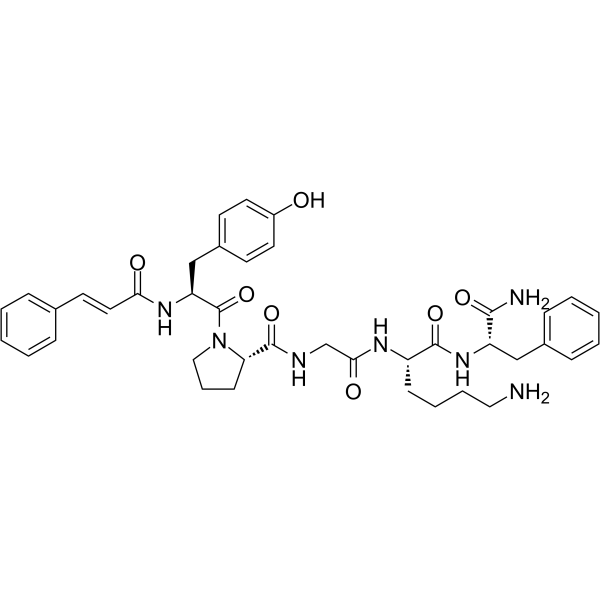
HY-P1263
tcY-NH2PAR4 Antagonist -
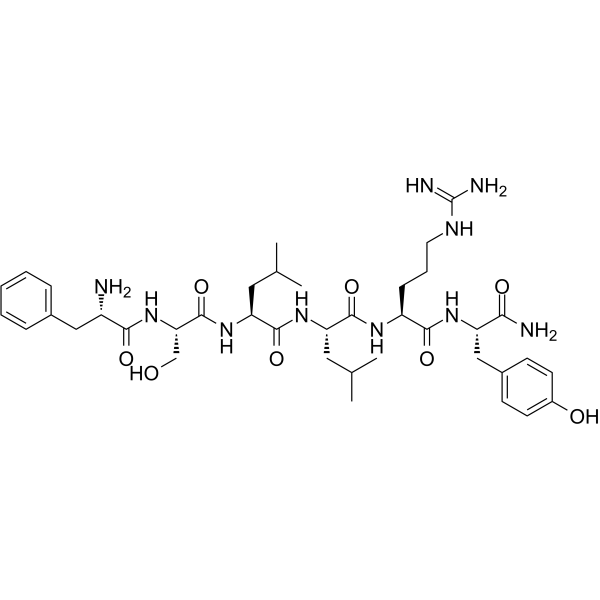
HY-P1260
FSLLRY-NH2PAR2 Inhibitor -
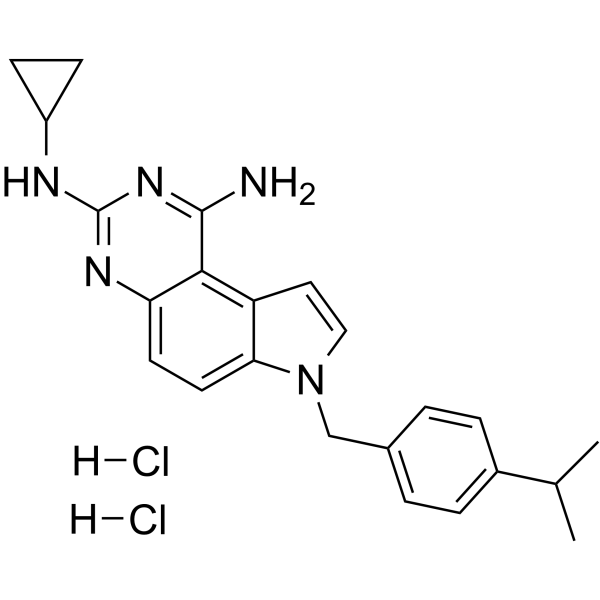
HY-14994
SCH79797 dihydrochloridePAR1 Antagonist -
HY-P1262
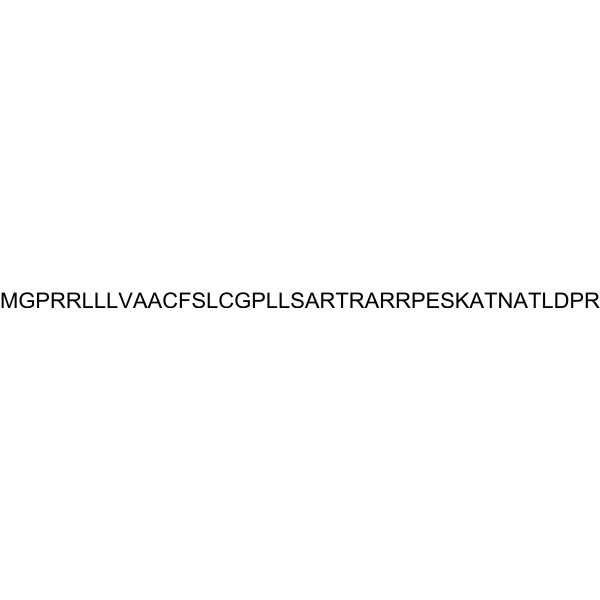
Parstatin(human)PAR-1 Agonist -
HY-105999
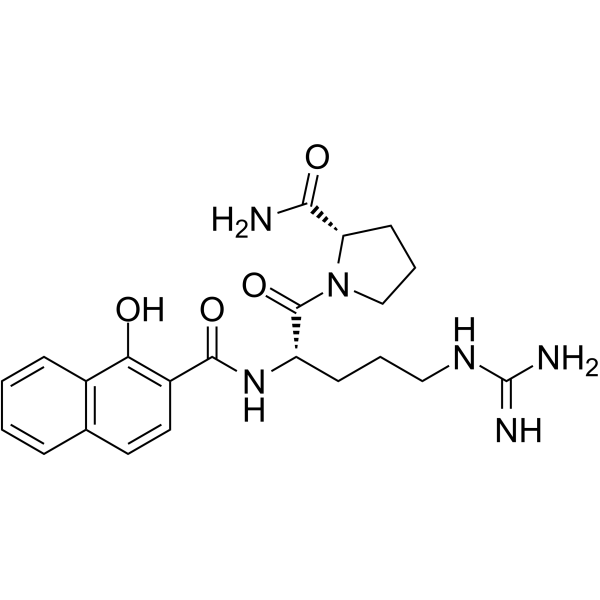
APC 366Mast Cell Tryptase Inhibitor -

HY-14994R
SCH79797 dihydrochloride (Standard)PAR1 Antagonist -
HY-108554
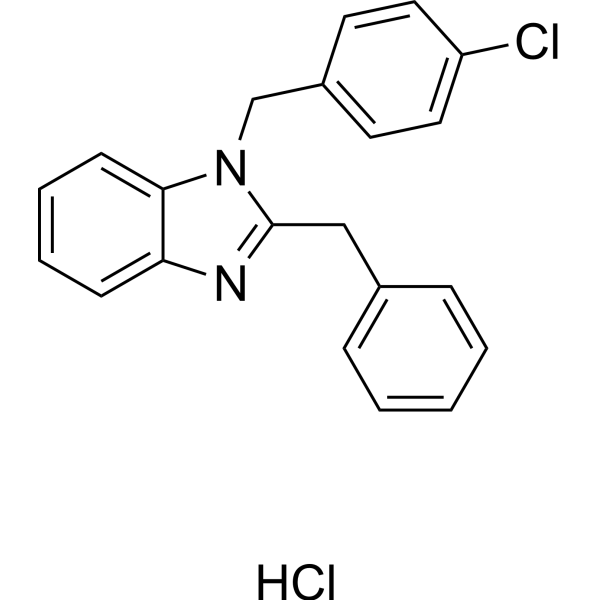
Q94 hydrochloridePAR1 Antagonist -
HY-108555
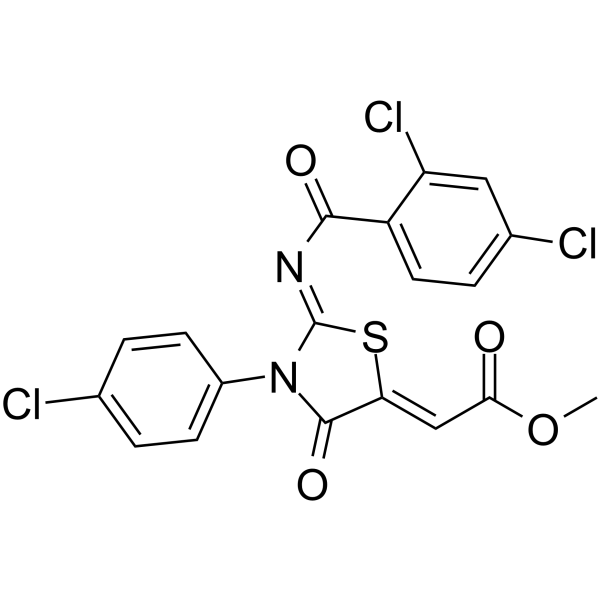
FR-171113PAR1 Antagonist -
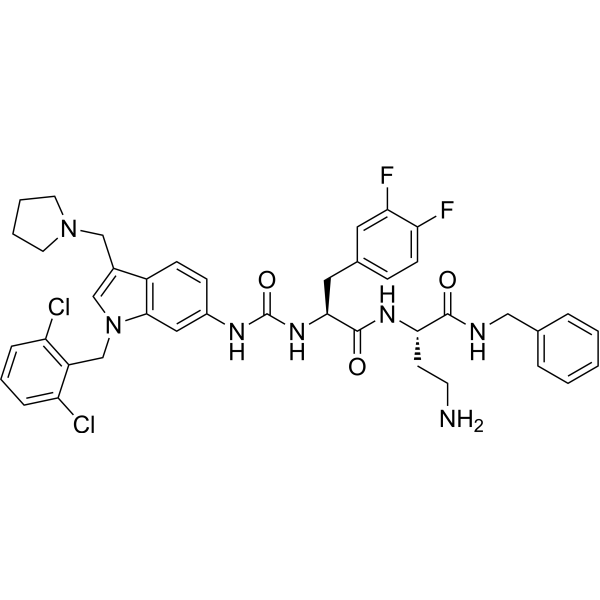
HY-108556
RWJ-56110PAR-1 Inhibitor


Biological Activity
Description
In Vitro
Parstatin (0-10 µM) increases recovery of LVDP in a concentration-dependent manner. The optimal concentration was 1 µM which produced a 23% recovery of LVDP[2].
MedChemExpress (MCE) has not independently confirmed the accuracy of these methods. They are for reference only. Further protocols information, click here.
In Vivo
MedChemExpress (MCE) has not independently confirmed the accuracy of these methods. They are for reference only.
-
Animal Model:Male Sprague–Dawley rats at 8 weeks of age (250-300 g)[1].
-
Dosage:1-25 µg/kg.
-
Administration:IV injected 15 min prior to ischaemia.
-
Result:A significant decrease in infarct size was detected with the 5-15 µg/kg doses with 10 µg/kg as the optimal dose. These hearts had an infarct size of 46 ± 3% of the area at risk, which is a 26% reduction in infarct size compared with the control.


Chemical Information
-
CAS No. 1065756-01-5
-
Molecular Weight 4419.16
-
Formula C189H326N58O57S3
-
Sequence Shortening
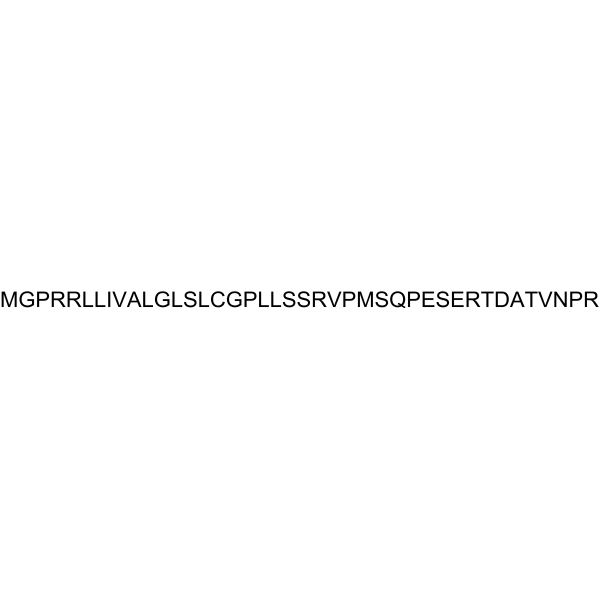
MGPRRLLIVALGLSLCGPLLSSRVPMSQPESERTDATVNPR
-
Shipping
Room temperature in continental US; may vary elsewhere.
-
Storage
Please store the product under the recommended conditions in the Certificate of Analysis.


Solvent & Solubility
In Vitro
H2O
Peptide Solubility and Storage Guidelines:
1. Calculate the length of the peptide.
2. Calculate the overall charge of the entire peptide according to the following table:
| Contents | Assign value | |
|---|---|---|
| Acidic amino acid | Asp (D), Glu (E), and the C-terminal -COOH. | -1 |
| Basic amino acid | Arg (R), Lys (K), His (H), and the N-terminal -NH2 | +1 |
| Neutral amino acid | Gly (G), Ala (A), Leu (L), Ile (I), Val (V), Cys (C), Met (M), Thr (T), Ser (S), Phe (F), Tyr (Y), Trp (W), Pro (P), Asn (N), Gln (Q) | 0 |
3. Recommended solution:
| Overall charge of peptide | Details |
|---|---|
| Negative (<0) |
1. Try to dissolve the peptide in water first. 2. If water fails, add NH4OH (<50 μL). 3. If the peptide still does not dissolve, add DMSO (50-100 μL) to solubilize the peptide. |
| Positive (>0) |
1. Try to dissolve the peptide in water first. 2. If water fails, try dissolving the peptide in a 10%-30% acetic acid solution. 3. If the peptide still does not dissolve, try dissolving the peptide in a small amount of DMSO. |
| Zero (=0) |
1. Try to dissolve the peptide in organic solvent (acetonitrile, methanol, etc.) first. 2. For very hydrophobic peptides, try dissolving the peptide in a small amount of DMSO, and then dilute the solution with water to the desired concentration. |

Protocols
-
Human pluripotent stem cell endothelial-cell differentiation
Human pluripotent stem cell endothelial differentiation is based on stepwise developmental patterning: early activation of WNT/GSK3β inhibition promotes mesodermal or vascular progenitor entry, followed by endothelial specification using VEGF-related signaling, BMP4, FGF2, Notch modulation, or cAMP depending on the published protocol. Endothelial differentiation is read out by acquisition of CD31, CD34, VE-cadherin/CD144, KDR/VEGFR2, vWF, Tie2, NOS3, acetylated LDL uptake, tube/network formation, barrier function, and in vivo vessel-forming capacity where tested.
-
Vascular/Branching Fractal Analysis
Vascular/branching fractal analysis quantifies the geometric complexity of vessel trees or vascular networks from segmented 2D images, commonly by converting vessels into binary and/or skeletonized maps and estimating fractal dimension using box-counting or related approaches. Fractal dimension is interpreted as an image-derived readout of vascular branching complexity, space filling, or density, and has been applied to retinal photographs, fluorescein angiography, OCT angiography, capillary perfusion maps, and in vitro Matrigel angiogenesis networks. The assay readout is generated from vessel-positive pixels after image preprocessing, vessel segmentation, binarization, and optional skeletonization; reported outputs include fractal dimension, vessel density, branchpoint density, endpoint density, vessel length density, tortuosity, and generation-based branching metrics when VESGEN-style analysis is used. The biological interpretation is limited to quantitative vascular patterning and s
-
Endothelial Tube Formation Assay
Endothelial tube formation assay evaluates the ability of endothelial cells to attach, migrate, align, and organize into capillary-like networks when cultured on gelled basement membrane extract or Matrigel; the readout is the morphology and quantity of tube-like networks, which reflects an in vitro endothelial morphogenesis step related to angiogenesis. Basement membrane extract/Matrigel provides laminin-rich extracellular matrix cues that support endothelial differentiation into capillary-like structures, but it can contain biologically active growth factors, so growth-factor-reduced matrix is preferred when testing defined angiogenic stimulators or inhibitors.
-
Endothelial Cell Migration/Angiogenic Sprouting Assay
Endothelial cell migration and angiogenic sprouting assays are in vitro (and partially ex vivo-adapted) functional models that quantify the ability of endothelial cells to undergo coordinated migration, extracellular matrix invasion, and multicellular organization into capillary-like sprouts in response to pro-angiogenic stimuli such as VEGF, bFGF, or conditioned microenvironments. These assays are used to model early angiogenic events including tip-cell formation, directional migration, and lumen-like sprout extension, which collectively reflect angiogenic activation and vascular morphogenesis processes observed in vivo.


Purity & Documentation
References
[1]. Panagiota Zania, et al. Parstatin, the Cleaved Peptide on Proteinase-Activated Receptor 1 Activation, Is a Potent Inhibitor of Angiogenesis. J Pharmacol Exp Ther. 2009 Feb;328(2):378-89. [Content Brief]
[2]. Jennifer L Strande, et al. Parstatin: A Cryptic Peptide Involved in Cardioprotection After Ischaemia and Reperfusion Injury. Cardiovasc Res. 2009 Jul 15;83(2):325-34. [Content Brief]

Calculators
Concentration (start) × Volume (start) = Concentration (final) × Volume (final)


Parstatin(mouse) Related Classifications
HY-P1261 Related Classifications
 Powered by Bioz