



PD1-PDL1-IN 2
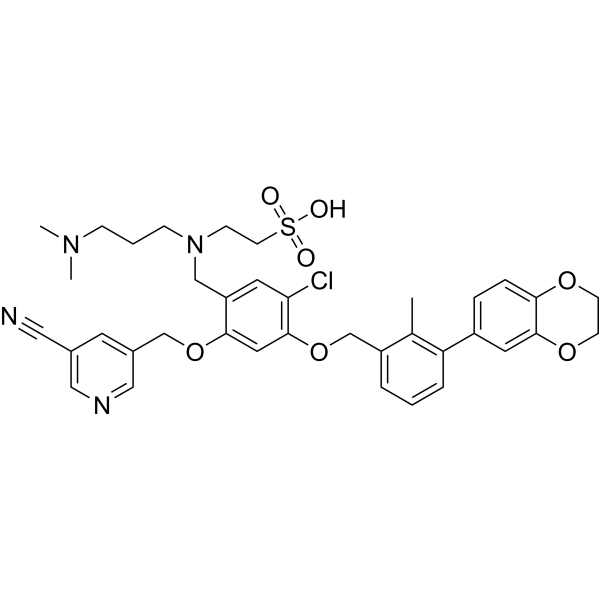
PD1-PDL1-IN 2 (ZE132) is a potent and selective PD-1/PD-L1 inhibitor, which has robust anti-tumour activity in vivo. PD1-PDL1-IN 2 promotes cytotoxic T-cell tumour infiltration and induces IL-2 expression. In addition, PD1-PDL1-IN 2 elicits strong inhibitory effects on the mRNA expression of TGF-β.
For research use only. We do not sell to patients.
- CAS No.: 2566710-63-0
- Formula: C37H41ClN4O7S
- Molecular Weight:721.26
-
Storage:
Please store the product under the recommended conditions in the Certificate of Analysis.

To place orders, for customer services and technical support, please contact: MedChemExpress USA
Tel: 609-228-6898 E-mail: [email protected] [email protected]


-
 Biological Activity
-
Chemical Information
- Protocols
- Purity & Documentation
- References
-
 Help & FAQs




Biological Activity
Description


Chemical Information
-
CAS No. 2566710-63-0
-
Molecular Weight 721.26
-
Formula C37H41ClN4O7S
-
SMILES
N#CC1=CN=CC(COC2=CC(OCC3=CC=CC(C4=CC=C5OCCOC5=C4)=C3C)=C(C=C2CN(CCS(=O)(O)=O)CCCN(C)C)Cl)=C1
-
Shipping
Room temperature in continental US; may vary elsewhere.
-
Storage
Please store the product under the recommended conditions in the Certificate of Analysis.

Protocols
-
RT-PCR
Reverse transcription technology uses RNA as a template to synthesize DNA. RT-PCR is simple, specific and sensitive, and can be used to detect gene expression levels and expression differences in cells; detect RNA virus content; clone cDNA sequences of specific genes.
-
RNA extraction experimental
By lysing cells, releasing RNA, and removing impurities such as proteins and DNA, high-purity RNA products are finally obtained. The commonly used traditional method is the guanidine isothiocyanate/phenol/chloroform method (Trizol), which is suitable for a variety of animal materials including animal tissues, microorganisms, cultured cells, etc., and most plant materials.
-
Real Time qPCR (Q-PCR)
Real-time quantitative PCR (qPCR) quantifies an amplifiable nucleic-acid target by monitoring fluorescence during PCR cycling rather than measuring product only after amplification. The increase in fluorescence tracks accumulation of PCR product, and the quantification cycle (Cq; historically also Ct/CP) is related to the initial amount of target: samples containing more starting target generally reach the defined fluorescence threshold in fewer cycles.
-
Cell Viability Determination by MTT Colorimetric Assay
The following protocol uses the MTT colorimetric assay as a classic literature-established method for assessing cell viability/metabolic activity in cultured mammalian cells. MTT[3-(4,5-dimethylthiazol-2-yl)-2,5-diphenyltetrazolium bromide] is reduced by metabolically active cells to a colored formazan product; the amount of formazan is quantified spectrophotometrically and provides an indirect measure of metabolically active viable cells. Importantly, MTT reduction reflects cellular oxidoreductase/metabolic activity rather than an absolute direct count of living cells, so changes in cellular metabolism can alter the signal independently of cell number.


Purity & Documentation
References

Calculators
Concentration (start) × Volume (start) = Concentration (final) × Volume (final)


PD1-PDL1-IN 2 Related Classifications
HY-157569 Related Classifications
 Powered by Bioz