



KGF-2/FGF-10 Protein, Mouse
Based on 5 publication(s) in Google Scholar
KGF-2/FGF-10 Protein, Mouse is a paracrine signaling molecule and is involved in the branching of morphogenesis in multiple organs such as the lungs, skin, ear and salivary glands.
- Species: Mouse
- Source: E. coli
-
Storage:Stored at -20°C for 2 years from date of receipt. After reconstitution, it is stable at 4°C for 1 week or -20°C for longer (with carrier protein). It is recommended to freeze aliquots at -20°C or -80°C for extended storage.


To place orders, for customer services and technical support, please contact: MedChemExpress USA
Tel: 609-228-6898 E-mail: [email protected] [email protected]


-
 Biological Activity
-
Technical Parameters
-
Product Properties
- Documentation
- References
- Help & FAQs


-
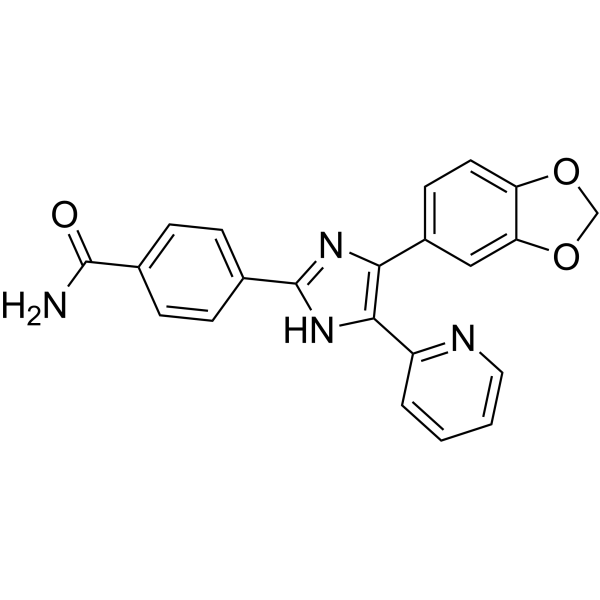
HY-10431
SB-431542TGF-β Receptor Kinase Inhibitor -

HY-P7067
EGF Protein, Mouse -
HY-P7176
KGF/FGF-7 Protein, Mouse -
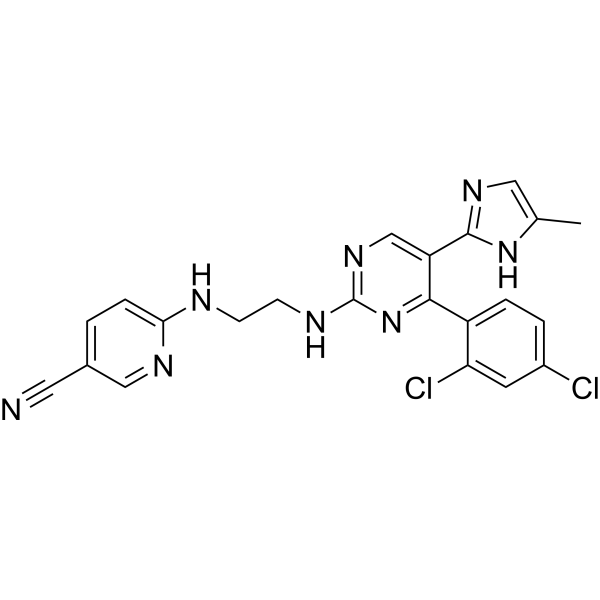
HY-10182
LaduviglusibGSK-3 Inhibitor -
HY-P7086
Noggin Protein, Mouse (CHO) -
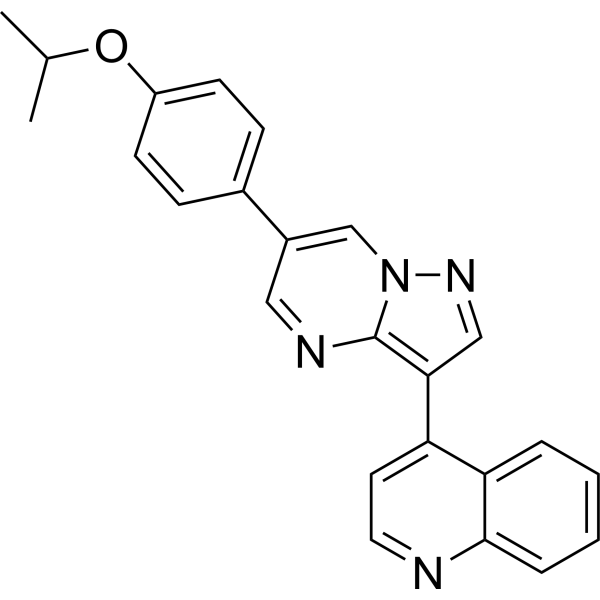
HY-12273
DMH-1BMP Inhibitor -
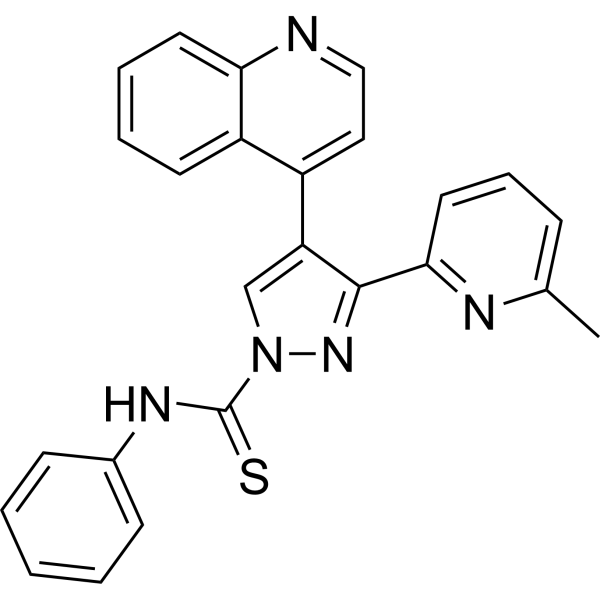
HY-10432
A 83-01ALK4/5/7 Inhibitor -
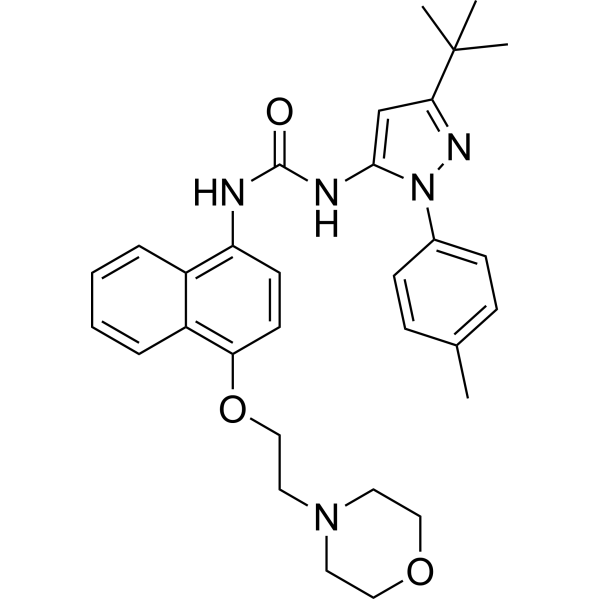
HY-10320
Doramapimodp38 MAPK Inhibitor -
HY-P7109
EGF Protein, Human -
HY-P76012
RSPO1/R-spondin-1 Protein, Mouse (CHO, His) -
HY-P7073
IL-1 beta Protein, Mouse -
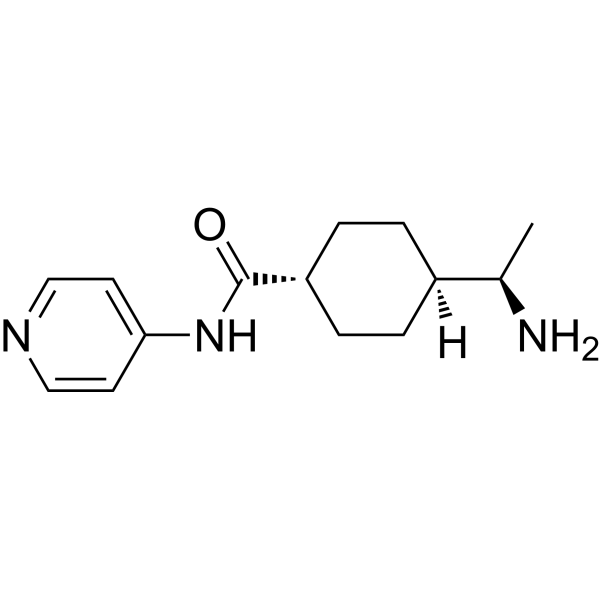
HY-10071
Y-27632ROCK Inhibitor


Biological Activity
Description
KGF-2/FGF-10 Protein, Mouse is a paracrine signaling molecule and is involved in the branching of morphogenesis in multiple organs such as the lungs, skin, ear and salivary glands.
Background
Mature mouse Fibroblast Growth Factor-10 (FGF10) shares 94% and 100% amino acid sequence identity with human and rat FGF10, respectively. The mitogenic and chemotactic properties of FGF10 are critical in many tissues during embryogenesis. FGF10 induces signaling through FGF R2 (IIIb) also contributes to the progression of pancreatic cancer[1]. FGF10 is a paracrine signaling molecule and is involved in the branching of morphogenesis in multiple organs such as the lungs, skin, ear and salivary glands[2].
Verified Bioactivity
Measured in a cell proliferation assay using 4MBr-5 rhesus monkey epithelial cells. The ED50 this effect is <85 ng/mL, corresponding to a specific activity is >1.0 × 10⁴ units/mg.
MCE Validation Data
-
Purity - SDS-PAGE
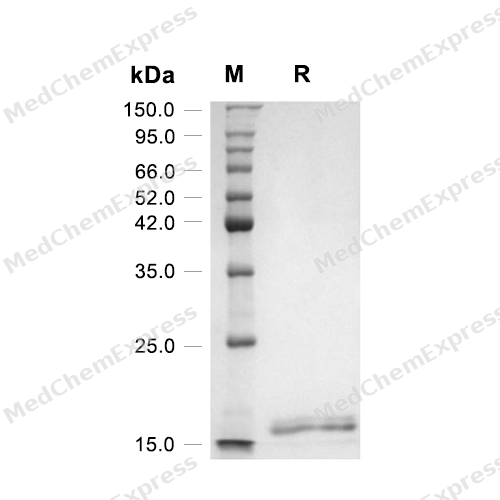
Purity - SDS-PAGE
-
Bioactivity - Cell-Based Assay
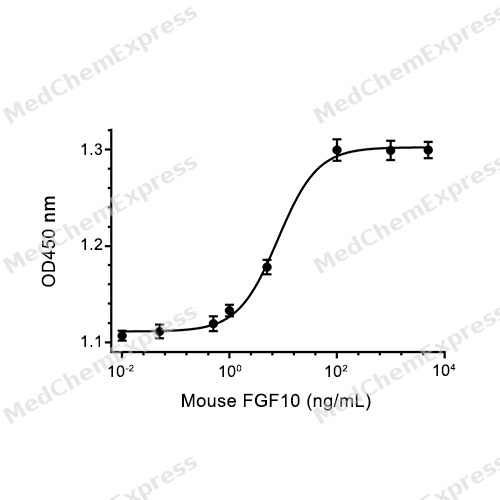
Bioactivity - Cell-Based Assay


Publications (5)
-
Journal Impact Factor
-
Most Recent
-
J Adv Res
Physical exercise mitigates amyloid beta-driven muscle degeneration in Alzheimer's disease. [Abstract]2026 Jun 21:S2090-1232(26)00500-X. PMID: 42324021 -
Environ Int
Dynamic non-coding RNA biomarker reveals lung injury and repair induced by polystyrene nanoplastics. [Abstract]2025 Jan:195:109266. PMID: 39824028 -
-
Respir Res
Impaired AT2 to AT1 cell transition in PM2.5-induced mouse model of chronic obstructive pulmonary disease. [Abstract]2022 Mar 25;23(1):70. PMID: 35337337 -
Int J Stem Cells
2022 Nov 30;15(4):347-358. PMID: 35769056


Technical Parameters
-
Species Mouse
-
Source E. coli
-
Tag Tag Free
-
Accession
O35565 (S62-T209)
-
Molecular Construction
-
N-term
-
FGF-10 (S62-T209)
Accession # O35565 -
C-term
-
-
Protein Length
Partial
-
Synonyms
FGF10; Produced By Fibroblasts Of Urinary Bladder Lamina Propria; Fibroblast Growth Factor 10; Fibroblast Growth Factor; Keratinocyte Growth Factor 2; LADD3; FGF-10; FGF
-
AA Sequence
SSAGRHVRSYNHLQGDVRWRRLFSFTKYFLTIEKNGKVSGTKNEDCPYSVLEITSVEIGVVAVKAINSNYYLAMNKKGKLYGSKEFNNDCKLKERIEENGYNTYASFNWQHNGRQMYVALNGKGAPRRGQKTRRKNTSAHFLPMTIQT
-
Predicted Molecular Mass
17 kDa
-
Molecular Weight
Approximately 17 kDa, based on SDS-PAGE under reducing conditions.
-
Purity
≥ 95%, as determined by reducing SDS-PAGE.


Product Properties
Lyophilized powder
1.Lyophilized from a 0.22 μm filtered solution of PBS.
2.Lyophilized from a 0.22 μm filtered solution of 20 mM PB, 800 mM NaCl, pH 7.4.
3.Lyophilized from a 0.22 μm filtered solution of 20 mM PB, 150 mM NaCl, pH 7.4.
4.Lyophilized from a 0.22 μm filtered solution of PBS, pH 7.4, 8% trehalose.
Please refer to the lot-specific COA for specific buffer information.
<0.2 EU/μg, determined by LAL method.
It is not recommended to reconstitute to a concentration less than 100 μg/mL in ddH2O. For long term storage it is recommended to add a carrier protein (0.1% BSA, 5% HSA, 10% FBS or 5% Trehalose).
Stored at -20°C for 2 years from date of receipt. After reconstitution, it is stable at 4°C for 1 week or -20°C for longer (with carrier protein). It is recommended to freeze aliquots at -20°C or -80°C for extended storage.
Room temperature in continental US; may vary elsewhere.


Documentation
-
Data Sheet (262 KB)
-
SDS (252 KB)
- English - EN (252 KB)
- Français - FR (252 KB)
- Deutsch - DE (252 KB)
- Norwegian - NO (252 KB)
- Español - ES (252 KB)
- Swedish - SV (252 KB)
- Italian - IT (252 KB)
- Korean - KR (252 KB)
- Portuguese - PT (252 KB)
-
Handling Instructions (2659 KB)


References

Calculators
Concentration (start) × Volume (start) = Concentration (final) × Volume (final)


 Powered by Bioz

