



RSPO1/R-spondin-1 Protein, Human (HEK293, His)
Based on 1 publication(s) in Google Scholar
RSPO1/R-spondin-1 is a secreted glycoprotein. RSPO1/R-spondin-1 binds to LGR4/5/6 receptors and ZNRF3/E3 ubiquitin ligases, inhibits Wnt receptor degradation, stabilizes β-catenin and promotes its nuclear translocation, and activates target gene transcription. RSPO1/R-spondin-1, Human promotes intestinal organoid survival, induces pancreatic β-cell proliferation to improve diabetes, enhances osteogenic differentiation of mesenchymal stem cells to treat osteoporosis, and inhibits bone erosion in arthritis models. RSPO1/R-spondin-1 Protein, Human (HEK293, His) is a recombinant RSPO1/R-spondin-1 protein expressed by HEK293 with a C-His tag.
- Species: Human
- Source: HEK293
-
Storage:Stored at -20°C for 2 years from date of receipt. After reconstitution, it is stable at 4°C for 1 week or -20°C for longer (with carrier protein). It is recommended to freeze aliquots at -20°C or -80°C for extended storage.


To place orders, for customer services and technical support, please contact: MedChemExpress USA
Tel: 609-228-6898 E-mail: [email protected] [email protected]


-
 Biological Activity
-
Technical Parameters
-
Product Properties
- Documentation
- References
- Help & FAQs


-

HY-P70558
Noggin Protein, Human (HEK293) -
HY-10432
A 83-01ALK4/5/7 Inhibitor -
HY-10071
Y-27632ROCK Inhibitor -
HY-P7109
EGF Protein, Human -
HY-P7048
KGF-2/FGF-10 Protein, Human (169a.a) -
HY-101952
Prostaglandin E2Prostaglandin Receptor Agonist -
HY-P7051A
Noggin Protein, Human (CHO) -
HY-B0150
NicotinamideSIRT Inhibitor -
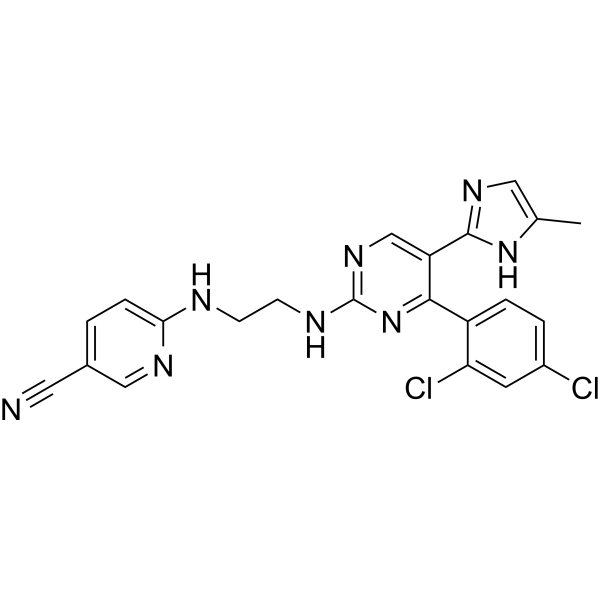
HY-10182
LaduviglusibGSK-3 Inhibitor -
HY-P70453B
Wnt3a Surrogate Protein, Human (HEK293, Fc) -
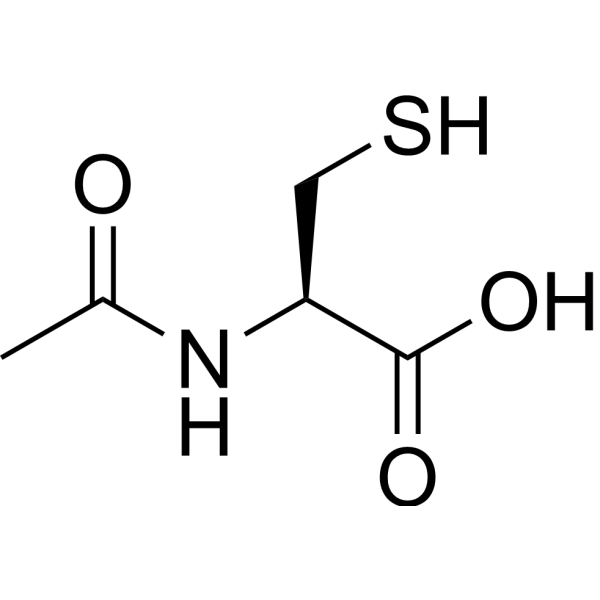
HY-B0215
AcetylcysteineMucolytic Agent -
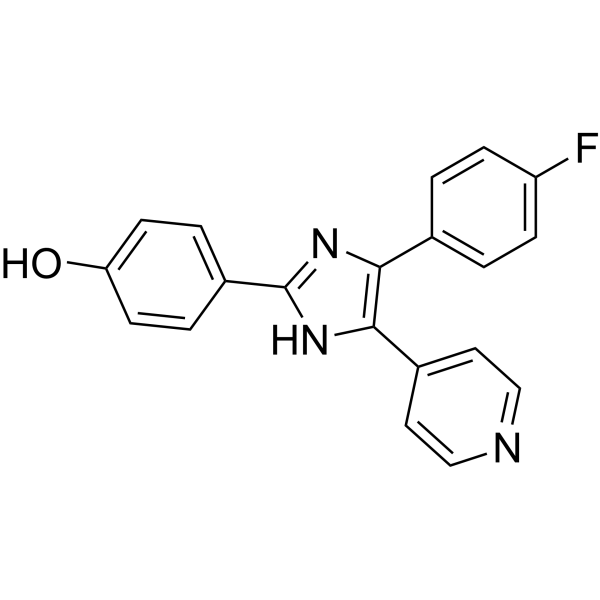
HY-10295
SB 202190p38 MAPK Inhibitor


Biological Activity
Description
RSPO1/R-spondin-1 is a secreted glycoprotein. RSPO1/R-spondin-1 binds to LGR4/5/6 receptors and ZNRF3/E3 ubiquitin ligases, inhibits Wnt receptor degradation, stabilizes β-catenin and promotes its nuclear translocation, and activates target gene transcription. RSPO1/R-spondin-1, Human promotes intestinal organoid survival, induces pancreatic β-cell proliferation to improve diabetes, enhances osteogenic differentiation of mesenchymal stem cells to treat osteoporosis, and inhibits bone erosion in arthritis models. RSPO1/R-spondin-1 Protein, Human (HEK293, His) is a recombinant RSPO1/R-spondin-1 protein expressed by HEK293 with a C-His tag.
Background
RSPO1/R-spondin-1 belongs to the R-spondin family (including 4 members, RSPO 1-4)[2][4]. RSPO1/R-spondin-1 is a secreted glycoprotein. RSPO1/R-spondin-1 binds to LGR4/5/6 receptors and ZNRF3/E3 ubiquitin ligase, inhibits Wnt receptor degradation, stabilizes β-catenin and promotes its nuclear translocation, and activates target gene transcription[2][4][7]. RSPO1/R-spondin-1 is expressed in intestinal epithelium, pancreatic acini, bone mesenchyme, joint osteoblasts and other tissues[1][5][6][7]. RSPO1/R-spondin-1, Human is highly homologous to RSPO1 in mouse, rat and other species in terms of amino acid sequence and function (such as activating Wnt signaling and promoting tissue regeneration)[5][6]. RSPO1/R-spondin-1, Human is composed of 263 amino acids, contains N-glycosylation modification (such as Asn137 site), and sugar chain structures include sialic acid, N-acetylglucosamine, etc.[4]. RSPO1/R-spondin-1, Human promotes the survival of intestinal organoids, induces pancreatic β-cell proliferation to improve diabetes, enhances the osteogenic differentiation of mesenchymal stem cells to treat osteoporosis, and inhibits bone erosion in arthritis models[2][5][6][7].
In Vitro
RSPO1/R-spondin-1, Human (500 ng/mL) increases size and survival in mouse intestinal organoid unit (OU) culture and activates the Wnt/β-catenin pathway[2].
RSPO1/R-spondin-1, Human (1 μg/mL) induces expansion of human pancreatic organoids (hPOs) and maintains a ductal cell phenotype[3].
RSPO1/R-spondin-1, Human (400 nM; 24 h) promotes proliferation of pancreatic β cells in MIN6 mice in a dose-dependent manner[5].
RSPO1/R-spondin-1, Human (100 ng/mL) enhances Wnt signaling (β-catenin nuclear accumulation) and induces alkaline phosphatase and osteoprotegerin (OPG) expression in mouse C2C12 mesenchymal cells and primary osteoblasts[7].
In Vivo
RSPO1/R-spondin-1, Human (0.8 mg/kg; i.p.; 80 days) maintains normoglycemia and improves glucose tolerance in Streptozotocin (HY-13753)-induced diabetic mice[5].
RSPO1/R-spondin-1, Human (3.3 μg/g; i.p.; daily; 7 days) increases bone mineralization deposition rate and promotes osteoblast differentiation in aging model mice (Terc-/-, Wrn-/-Terc-/-)[6].
Verified Bioactivity
1.R-Spondin-1 enhances BMP-2-mediated differentiation of MC3T3-E1 cells. The expected ED50 is 0.5-3 μg/mL.
2.Measured by its ability to induce Topflash reporter activity in HEK293T human embryonic kidney cells. The ED50 for this effect is 1-10 ng/mL
MCE Validation Data
-
Purity - SDS-PAGE
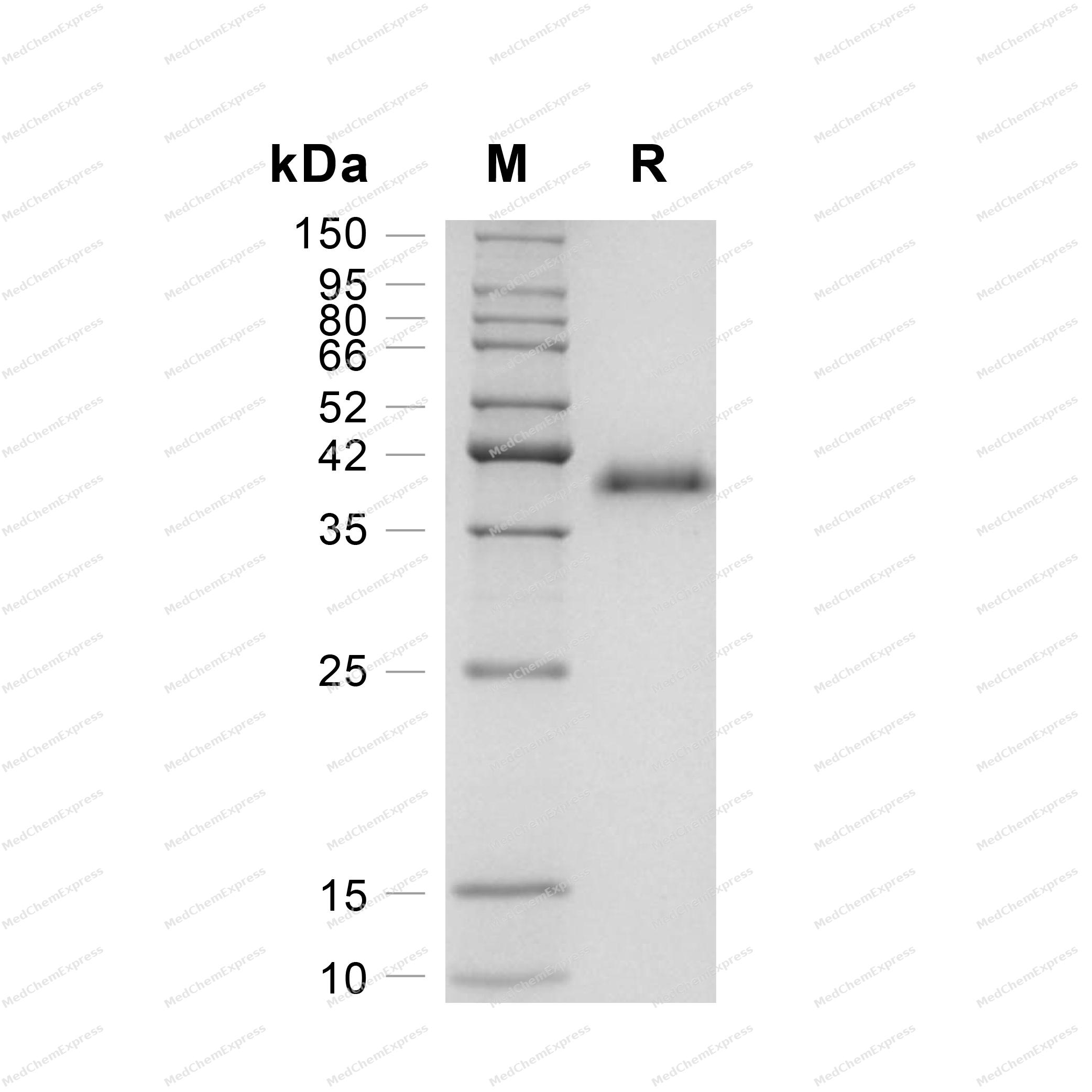
Purity - SDS-PAGE
-
Bioactivity - Cell-Based Assay
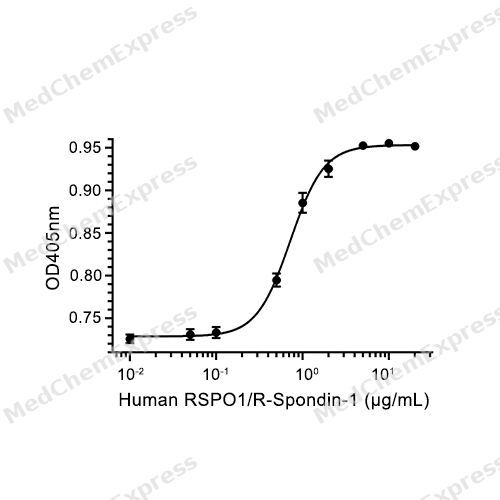
Bioactivity - Cell-Based Assay


Publications (1)
-
Journal Impact Factor
-
Most Recent
-
Fundam Res
Droplet-engineered organoids recapitulate parental tissue transcriptome with inter-organoid homogeneity and inter-tumor cell heterogeneity. [Abstract]2022 Jun 3;4(6):1506-1514. PMID: 39734523


Technical Parameters
-
Species Human
-
Source HEK293
-
Tag C-6*His
-
Accession
Q2MKA7-1 (S21-A263)
-
Molecular Construction
-
N-term
-
RSPO1 (S21-A263)
Accession # Q2MKA7-1 -
6*His
-
C-term
-
-
Protein Length
Full Length of Isoform-1
-
Synonyms
RSPO1; R-Spondin Homolog (Xenopus Laevis); R-Spondin 1; R-Spondin Homolog; Roof Plate-Specific Spondin-1; CRISTIN3; R-Spondin-1; HRspo1; FLJ40906; RSPO; RSPONDIN
-
AA Sequence
SRGIKGKRQRRISAEGSQACAKGCELCSEVNGCLKCSPKLFILLERNDIRQVGVCLPSCPPGYFDARNPDMNKCIKCKIEHCEACFSHNFCTKCKEGLYLHKGRCYPACPEGSSAANGTMECSSPAQCEMSEWSPWGPCSKKQQLCGFRRGSEERTRRVLHAPVGDHAACSDTKETRRCTVRRVPCPEGQKRRKGGQGRRENANRNLARKESKEAGAGSRRRKGQQQQQQQGTVGPLTSAGPA
-
Predicted Molecular Mass
27.8 kDa
-
Molecular Weight
Approximately 38-42 kDa, based on SDS-PAGE under reducing conditions, due to the glycosylation.
-
Glycosylation
Yes
-
Purity
≥ 95%, as determined by reducing SDS-PAGE.


Product Properties
Lyophilized powder
1.Lyophilized from a 0.2 μm filtered solution of PBS, pH 7.4.
2.Lyophilized from a 0.2 μm filtered solution of 20 mM PB, 150 mM NaCl, pH 7.8.
3.Lyophilized from a 0.2 μm filtered solution of PBS, 8% trehalose, pH 7.4.
4.Lyophilized from a 0.22 μm filtered solution of PBS, 4% Mannitol, pH 7.4.
Please refer to the lot-specific COA for specific buffer information.
<1 EU/μg determined by LAL method.
It is not recommended to reconstitute to a concentration less than 100 μg/mL in ddH2O. For long term storage it is recommended to add a carrier protein (0.1% BSA, 5% HSA, 10% FBS or 5% Trehalose).
Stored at -20°C for 2 years from date of receipt. After reconstitution, it is stable at 4°C for 1 week or -20°C for longer (with carrier protein). It is recommended to freeze aliquots at -20°C or -80°C for extended storage.
Room temperature in continental US; may vary elsewhere.


Documentation
-
Data Sheet (266 KB)
-
SDS (252 KB)
- English - EN (252 KB)
- Français - FR (252 KB)
- Deutsch - DE (252 KB)
- Norwegian - NO (252 KB)
- Español - ES (252 KB)
- Swedish - SV (252 KB)
- Italian - IT (252 KB)
- Korean - KR (252 KB)
- Portuguese - PT (252 KB)
-
Handling Instructions (2659 KB)


References
[1]. Qu M, et al. Establishment of intestinal organoid cultures modeling injury-associated epithelial regeneration. Cell Res. 2021 Mar;31(3):259-271. [Content Brief]
[2]. Levin G, et al. R-Spondin 1 (RSPO1) Increases Mouse Intestinal Organoid Unit Size and Survival in vitro and Improves Tissue-Engineered Small Intestine Formation in vivo. Front Bioeng Biotechnol. 2020 Jun 5;8:476. [Content Brief]
[3]. Dossena M, et al. Standardized GMP-compliant scalable production of human pancreas organoids. Stem Cell Res Ther. 2020 Mar 4;11(1):94. [Content Brief]
[4]. Levin G, et al. Production, purification and characterization of recombinant human R-spondin1 (RSPO1) protein stably expressed in human HEK293 cells. BMC Biotechnol. 2020 Jan 20;20(1):5. [Content Brief]
[5]. Silvano S, et al. RSPO1, a potent inducer of pancreatic β cell neogenesis. Cell Rep Med. 2025 May 20;6(5):102126. [Content Brief]
[6]. Wang H, et al. R-Spondin 1 promotes vibration-induced bone formation in mouse models of osteoporosis. J Mol Med (Berl). 2013 Dec;91(12):1421-9. [Content Brief]
[7]. Krönke G, et al. R-spondin 1 protects against inflammatory bone damage during murine arthritis by modulating the Wnt pathway. Arthritis Rheum. 2010 Aug;62(8):2303-12. [Content Brief]

Calculators
Concentration (start) × Volume (start) = Concentration (final) × Volume (final)


 Powered by Bioz

