



Wnt3a Protein, Mouse (His)
Based on 5 publication(s) in Google Scholar
Wnt-3a protein is a Frizzled receptor ligand that activates TCF/LEF transcription factors in the canonical Wnt pathway, which is critical for embryonic mesoderm development, somite formation, neural tube morphogenesis, and stem cell self-renewal in vitro. Formation of a 1:1 complex with AFM ensures prolonged biological activity and may represent its physiological form. Wnt3a Protein, Mouse (His) is the recombinant mouse-derived Wnt3a, expressed by E. coli, with N-10*His labeled tag.
- Species: Mouse
- Source: E. coli
-
Storage:Stored at -20°C for 2 years from date of receipt. After reconstitution, it is stable at 4°C for 1 week or -20°C for longer (with carrier protein). It is recommended to freeze aliquots at -20°C or -80°C for extended storage.


To place orders, for customer services and technical support, please contact: MedChemExpress USA
Tel: 609-228-6898 E-mail: [email protected] [email protected]


-
 Biological Activity
-
Technical Parameters
-
Product Properties
- Documentation
- Help & FAQs


-

HY-P76012
RSPO1/R-spondin-1 Protein, Mouse (CHO, His) -
HY-P7067
EGF Protein, Mouse -
HY-P7086
Noggin Protein, Mouse (CHO) -
HY-P70785
Noggin Protein, Mouse (HEK293, His) -
HY-P7170
KGF-2/FGF-10 Protein, Mouse -
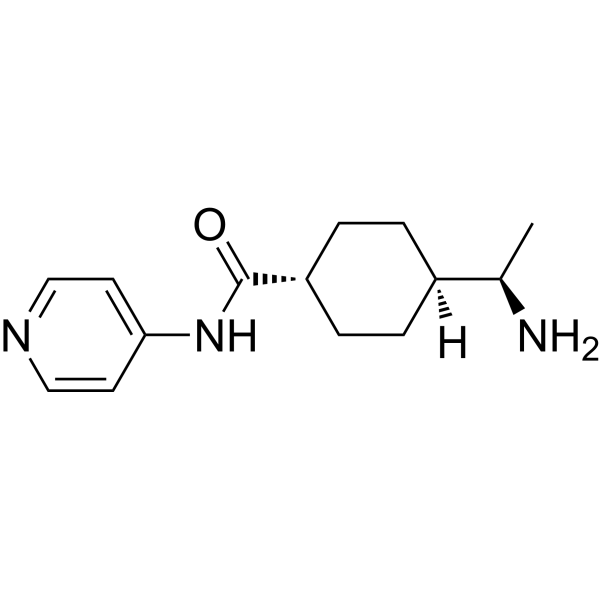
HY-10071
Y-27632ROCK Inhibitor -
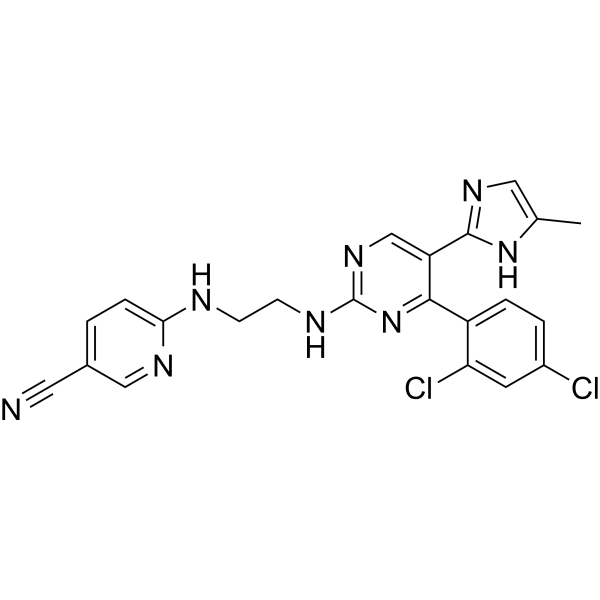
HY-10182
LaduviglusibGSK-3 Inhibitor -
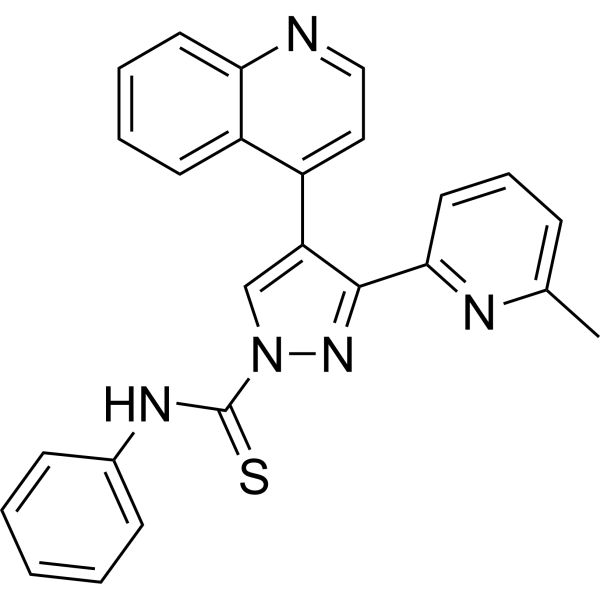
HY-10432
A 83-01ALK4/5/7 Inhibitor -
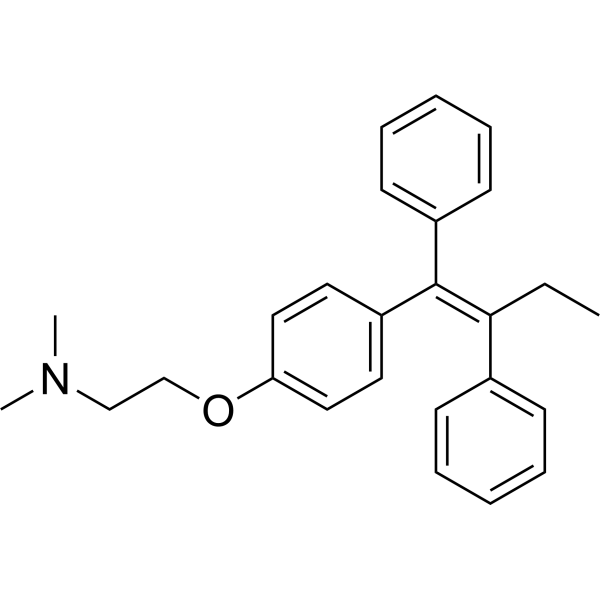
HY-13757A
TamoxifenEstrogen Receptor Modulator -
HY-P7066
FGF-2 Protein, Mouse (145a.a) -
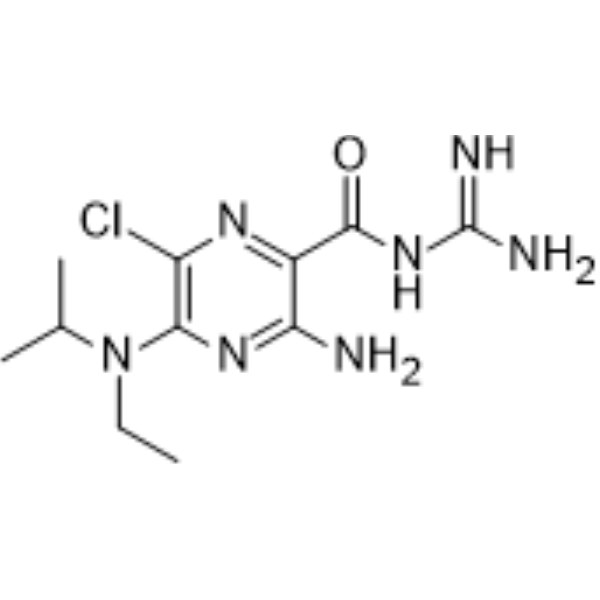
HY-101840
EIPATRPP3 Channel Inhibitor -
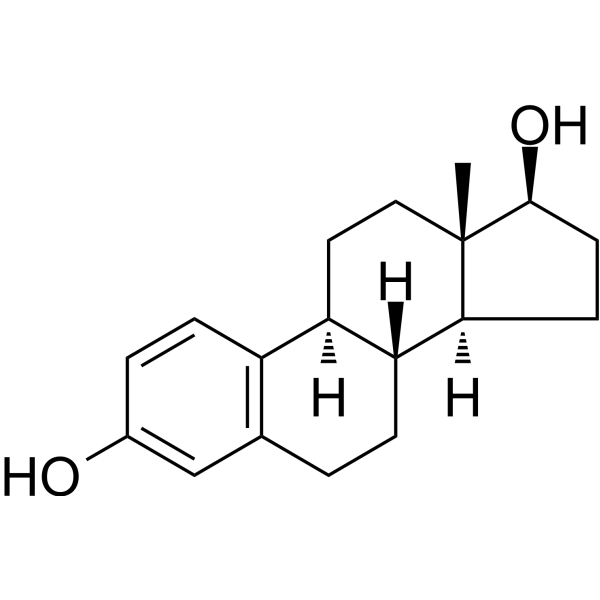
HY-B0141
EstradiolHuman Endogenous Metabolite


Biological Activity
Description
Wnt-3a protein is a Frizzled receptor ligand that activates TCF/LEF transcription factors in the canonical Wnt pathway, which is critical for embryonic mesoderm development, somite formation, neural tube morphogenesis, and stem cell self-renewal in vitro. Formation of a 1:1 complex with AFM ensures prolonged biological activity and may represent its physiological form. Wnt3a Protein, Mouse (His) is the recombinant mouse-derived Wnt3a, expressed by E. coli, with N-10*His labeled tag.
Background
The Wnt-3a protein functions as a ligand for members of the frizzled family of seven transmembrane receptors, likely operating in the canonical Wnt signaling pathway, leading to the activation of transcription factors of the TCF/LEF family. It is crucial for normal embryonic mesoderm development, the formation of caudal somites, and the morphogenesis of the developing neural tube. Wnt-3a plays a key role in mediating the self-renewal of stem cells at the base of intestinal crypts in vitro. Additionally, the protein forms a soluble 1:1 complex with AFM, preventing oligomerization and ensuring prolonged biological activity; this complex may represent the physiological form in body fluids. As a homooligomer, Wnt-3a is disulfide-linked, leading to inactivation. It interacts with APCDD1, WLS, LRP6, PORCN, glypican GPC3, and PKD1, highlighting its involvement in diverse signaling and developmental processes.
Verified Bioactivity
1. Measured by its ability to induce alkaline phosphatase production by MC3T3-E1 mouse preosteoblast cells. The ED50 for this effect is 3.463 ng/mL.
2. Measured by its binding ability in a functional ELISA. Immobilized LRP-5, Human at 2 μg/mL (100 μL/well) can bind Biotinylated Mouse Wnt3a. The ED50 for this effect is ≤6.017 ng/mL.
3. Measured by its binding ability in a functional ELISA. Immobilized Mouse Wnt3a at 2 µg/mL (100 µL/well) can bind Human LRP-6. The ED50 for this effect is 1.0-10.0 ng/mL.
MCE Validation Data
-
Purity - SDS-PAGE
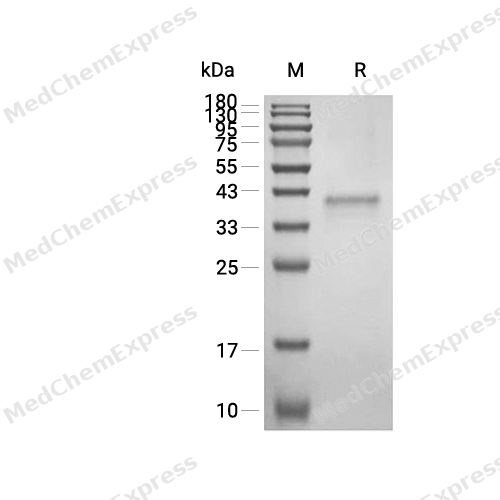
Purity - SDS-PAGE
-
Bioactivity - Cell-Based Assay
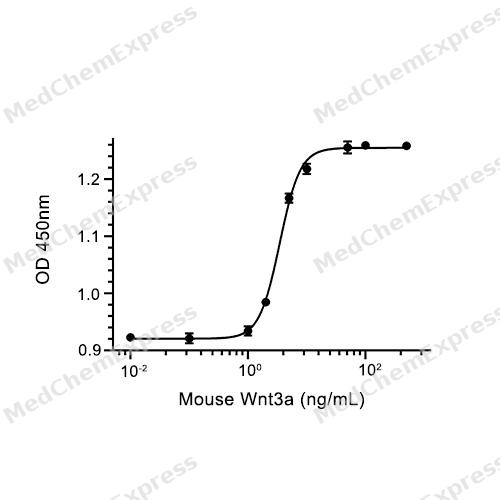
Bioactivity - Cell-Based Assay


Publications (5)
-
Journal Impact Factor
-
Most Recent
-
Sci Adv
A spatially organized Cd24a+/ Pax9+ stem cell core governs postnatal tooth establishment. [Abstract]2025 Jun 6;11(23):eadu5653. PMID: 40479070 -
CNS Neurosci Ther
Impaired WNT3/IGF-1 Signaling in Dorsal Dentate Gyrus Contributes to Chronic Pain-Related Cognitive Impairment. [Abstract]2025 Dec;31(12):e70714. PMID: 41414737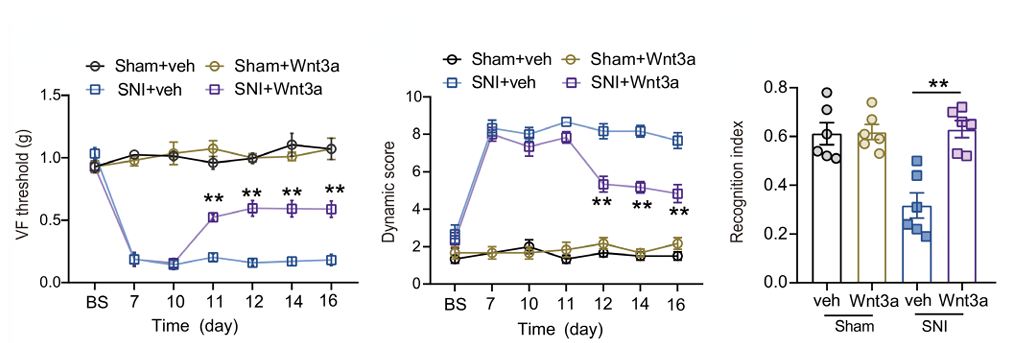
Wnt3a Protein, Mouse (His) purchased from MedChemExpress. Usage Cited in: CNS Neurosci Ther. 2025 Dec;31(12):e70714. [Abstract]
The effect of intrahippocampal administration of recombinant WNT3a (200 ng/μl in 0.3 μL, on day 10 after SNI or sham operation, and then daily for 4 days) in the contralateral dorsal DG on 50% paw withdrawal threshold, dynamic score, and novel object recognition index (n = 5–6/group, Mann–Whitney nonparametric test) was evaluated.
Wnt3a Protein, Mouse (His) purchased from MedChemExpress. Usage Cited in: CNS Neurosci Ther. 2025 Dec;31(12):e70714. [Abstract]
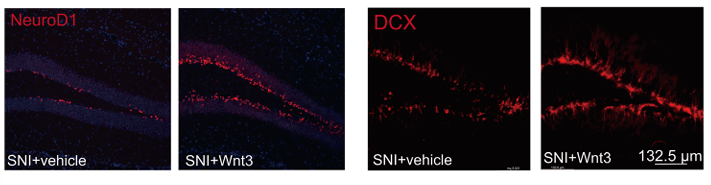
WNT3a treatment in SNI mice enhanced the expression of NeuroD1 and DCX. WNT3a (200 ng/μl in 0.3 μL) was administered on day 10 after SNI or sham operation and then daily for 4 days.
Wnt3a Protein, Mouse (His) purchased from MedChemExpress. Usage Cited in: CNS Neurosci Ther. 2025 Dec;31(12):e70714. [Abstract]
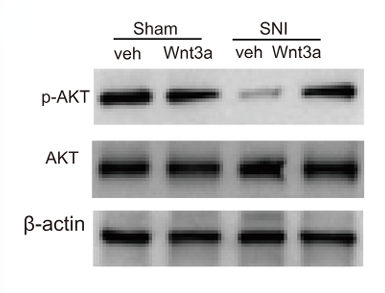
WNT3a treatment in SNI mice enhanced the expression of NeuroD1 and DCX. Western blotting showed that WNT3a treatment in SNI mice enhanced the expression of p-AKT, but not total AKT.
Wnt3a Protein, Mouse (His) purchased from MedChemExpress. Usage Cited in: CNS Neurosci Ther. 2025 Dec;31(12):e70714. [Abstract]
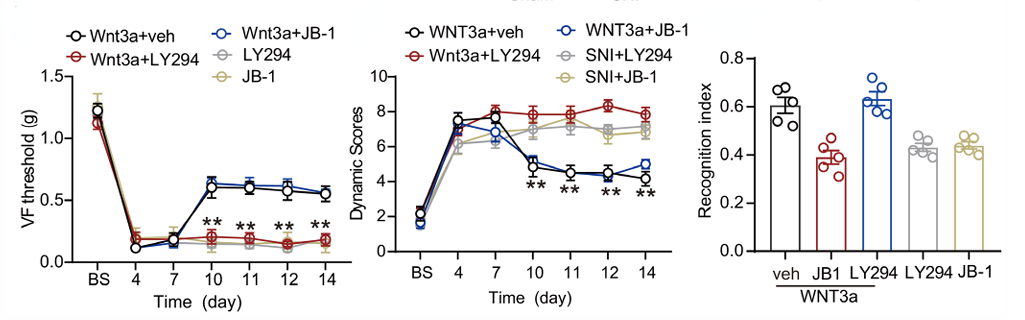
WNT3a treatment in SNI mice enhanced the expression of NeuroD1 and DCX. LY294002, but not JB-1, completely abolished the effects of WNT3a on the 50% paw withdrawal threshold, dynamic score, and novel object recognition index.
-
J Gerontol A Biol Sci Med Sci
2026 Jun 2:glag145. PMID: 42226012 -
J Inflamm Res
Wnt3a Inhibits Inflammatory Responses and Improves Survival in Immortalised Schwann Cells. [Abstract]2025 Dec 18:18:17715-17730. PMID: 41439129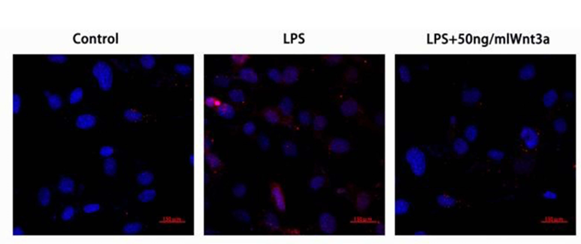
Wnt3a Protein, Mouse (His) purchased from MedChemExpress. Usage Cited in: J Inflamm Res. 2025 Dec 18:18:17715-17730. [Abstract]
Wnt3a inhibited apoptosis and promoted proliferation and migration in iSCs under inflammatory conditions. TUNEL assay, microscope magnification 100x, scale bar 150μm;
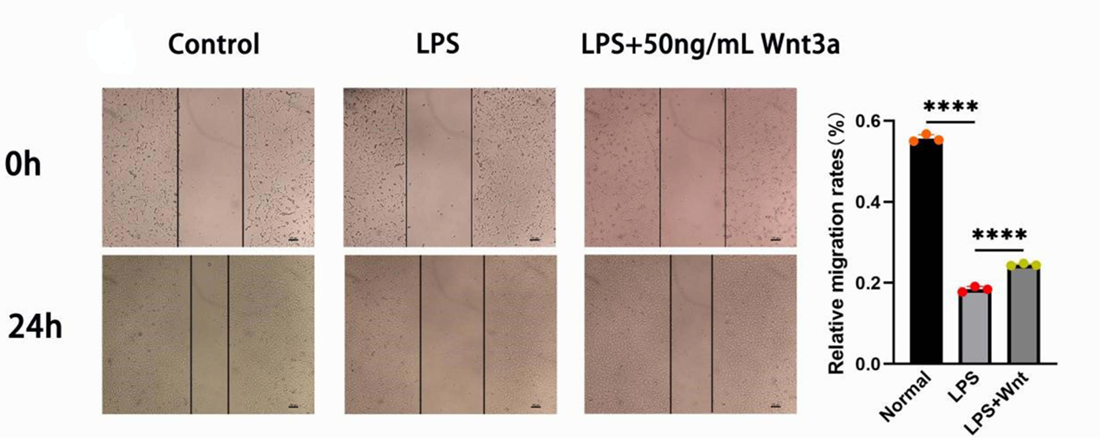
Wnt3a Protein, Mouse (His) purchased from MedChemExpress. Usage Cited in: J Inflamm Res. 2025 Dec 18:18:17715-17730. [Abstract]
Wound healing assay and quantitative analysis of the results were conducted.
-
IUBMB Life
DYRK1A Overexpression Drives Muscle Wasting by Impeding Myogenesis via a USP7-Axin1-β-Catenin Regulatory Axis in Mice. [Abstract]2025 Sep;77(9):e70061. PMID: 40970570


Technical Parameters
-
Species Mouse
-
Source E. coli
-
Tag N-10*His
-
Accession
P27467 (S19-K352)
-
Gene ID22416
-
Protein Length
Full Length of Mature Protein
-
Synonyms
WNT3A; Wnt Family Member 3A; Wingless-Type MMTV Integration Site Family, Member 3A; Protein Wnt-3a
-
AA Sequence
SYPIWWSLAVGPQYSSLSTQPILCASIPGLVPKQLRFCRNYVEIMPSVAEGVKAGIQECQHQFRGRRWNCTTVSNSLAIFGPVLDKATRESAFVHAIASAGVAFAVTRSCAEGSAAICGCSSRLQGSPGEGWKWGGCSEDIEFGGMVSREFADARENRPDARSAMNRHNNEAGRQAIASHMHLKCKCHGLSGSCEVKTCWWSQPDFRTIGDFLKDKYDSASEMVVEKHRESRGWVETLRPRYTYFKVPTERDLVYYEASPNFCEPNPETGSFGTRDRTCNVSSHGIDGCDLLCCGRGHNARTERRREKCHCVFHWCCYVSCQECTRVYDVHTCK
-
Predicted Molecular Mass
40.9 kDa
-
Molecular Weight
Approximately 39 kDa, based on SDS-PAGE under reducing conditions.
-
Purity
≥ 90%, as determined by reducing SDS-PAGE.


Product Properties
Lyophilized powder
Lyophilized from a 0.22 μm filtered solution of PBS, 6% trehalose, pH 7.4.
<1 EU/μg, determined by LAL method.
It is not recommended to reconstitute to a concentration less than 100 μg/mL in ddH2O.
Stored at -20°C for 2 years from date of receipt. After reconstitution, it is stable at 4°C for 1 week or -20°C for longer (with carrier protein). It is recommended to freeze aliquots at -20°C or -80°C for extended storage.
Room temperature in continental US; may vary elsewhere.


Documentation
-
Data Sheet (237 KB)
-
SDS (252 KB)
- English - EN (252 KB)
- Français - FR (252 KB)
- Deutsch - DE (252 KB)
- Norwegian - NO (252 KB)
- Español - ES (252 KB)
- Swedish - SV (252 KB)
- Italian - IT (252 KB)
- Korean - KR (252 KB)
- Portuguese - PT (252 KB)
-
Handling Instructions (2659 KB)

Calculators
Concentration (start) × Volume (start) = Concentration (final) × Volume (final)


 Powered by Bioz

