



Furanose
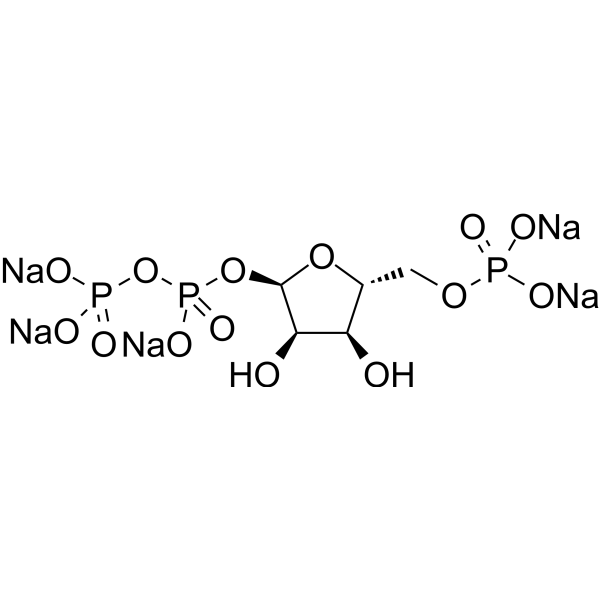
- 分子式: C5H8Na5O14P3
- 分子量: 499.98
Phosphoribosyl pyrophosphate (PRPP) pentasodium is an important metabolite required in the biosynthesis of purine and pyrimidine nucleotides, the amino acids histidine and tryptophan, and the cofactors NAD and NADP.
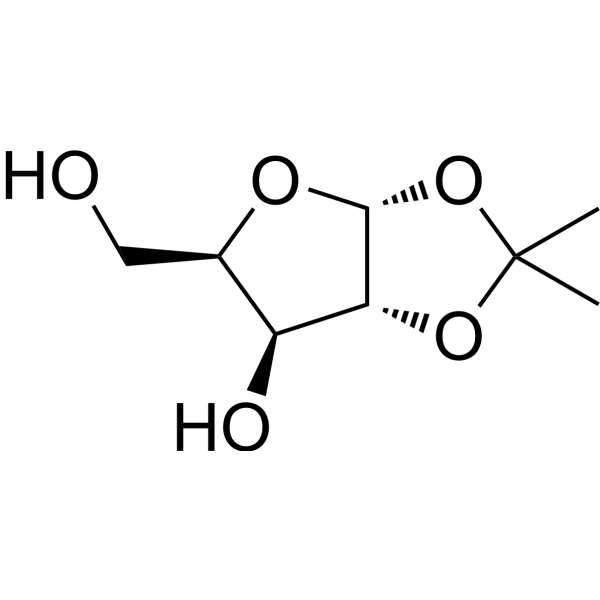
- 分子式: C8H14O5
- 分子量: 190.19
1,2-O-Isopropylidene-alpha-D-xylofuranose is a derivative of D-xylose (HY-N0537). 1,2-O-isopropylidene-α-D-xylofuranose can be used in the asymmetric alkylation of Benzaldehyde with Diethylzinc.
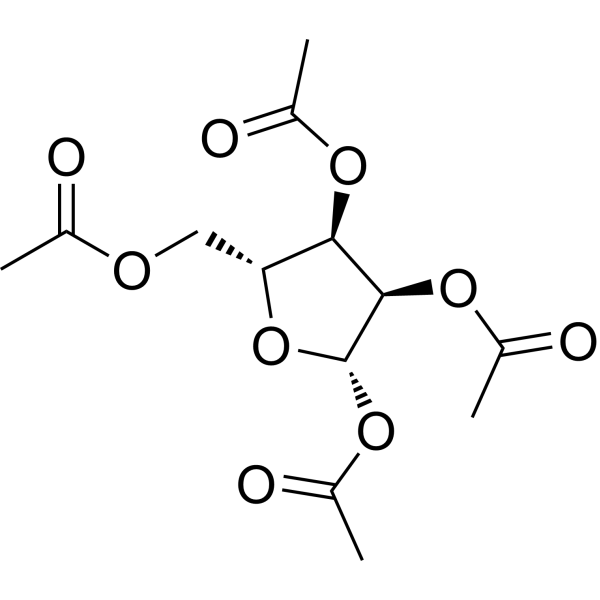
- 分子式: C13H18O9
- 分子量: 318.28
Beta-D-Ribofuranose 1,2,3,5-tetraacetate is a biochemical reagent that can be used as a biological material or organic compound for life science related research.
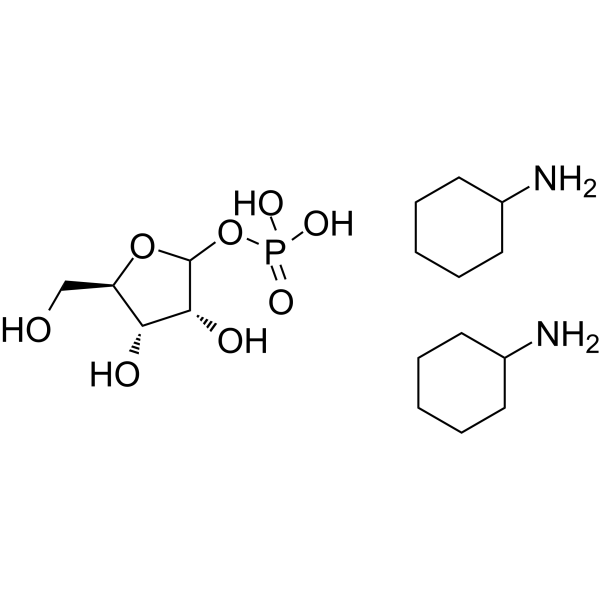
- 分子式: C17H37N2O8P
- 分子量: 428.46
D-Ribofuranose1-dihydrogenphosphate dicyclohexanamine, also known as ribose 1-phosphate, is the material for the synthesis of 5-fluorouracil (FUra) by uridine phosphorylase.

- 分子式: C12H20O6
- 分子量: 260.29
Diacetone-D-glucose (D-Glucose diacetonide) is a sugar-derived secondary alcohol that serves as an important pharmaceutical intermediate for the synthesis of other active compounds.

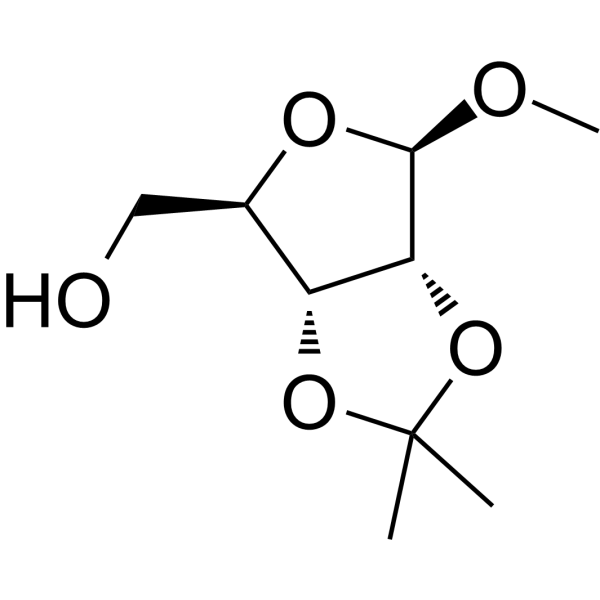
- 分子式: C6H12O5
- 分子量: 164.16
Methyl β-D-ribofuranoside is a class of biochemical reagents used in glycobiology research. Glycobiology studies the structure, synthesis, biology, and evolution of sugars. It involves carbohydrate chemistry, enzymology of glycan formation and degradation, protein-glycan recognition, and the role of glycans in biological systems. This field is closely related to basic research, biomedicine, and biotechnology.

- 分子式: C9H16O6
- 分子量: 220.22
1,2-O-Isopropylidene-alpha-d-glucofuranose (Mono-acetone glucose) is a biochemical reagent that can be used as a biological material or organic compound for life science related research.
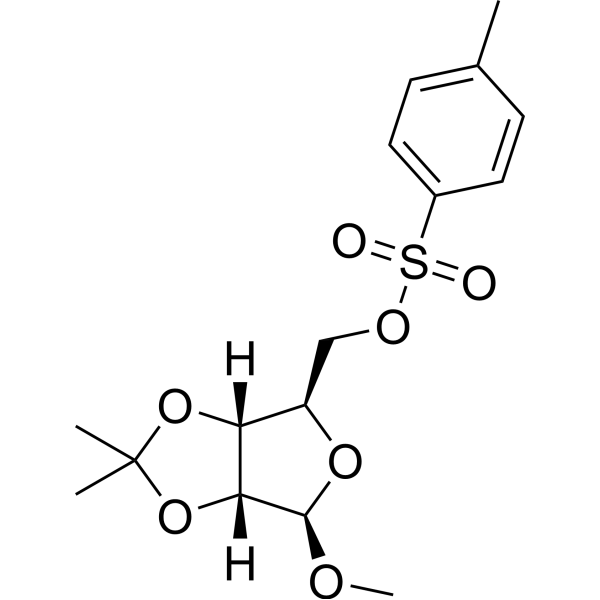
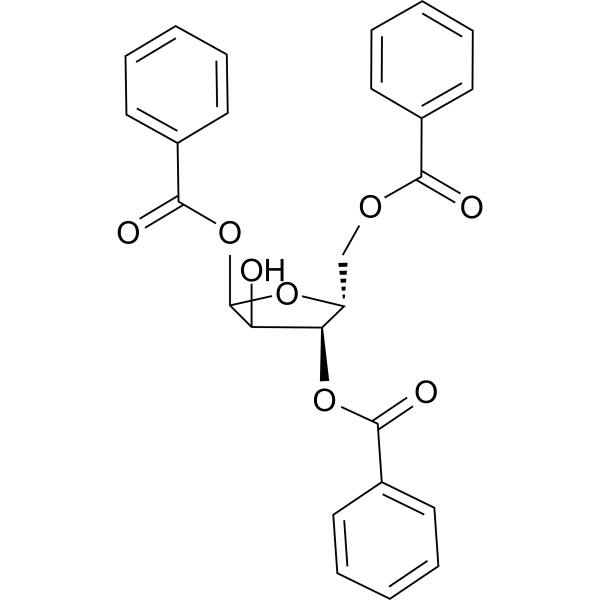
- 分子式: C26H22O8
- 分子量: 462.45
1,3,5-Tri-O-benzoyl-a-D-ribofuranose is a purine nucleoside analog. Purine nucleoside analogs have broad antitumor activity targeting indolent lymphoid malignancies. Anticancer mechanisms in this process rely on inhibition of DNA synthesis, induction of apoptosis, etc.
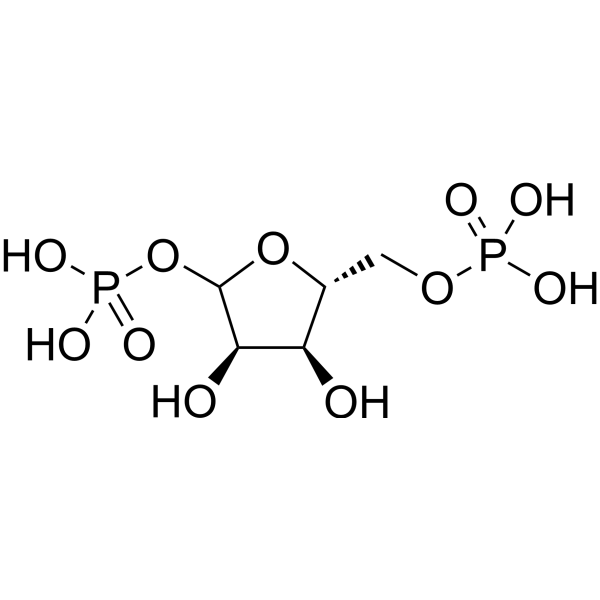
- 分子式: C5H12O11P2
- 分子量: 310.09
D-Ribose 1,5-diphosphate (R15P) is a metabolic intermediate and enzyme substrate. Purified Tk-E2b2 converts D-Ribose 1,5-diphosphate into Ribulose-1,5-bisphosphate, with a specific activity of 32.3 μmol min-1 mg-1[1].

- 分子式: C12H20O6
- 分子量: 260.29
1,2:5,6-Bis-O-(1-methylethylidene)-α-D-allofuranose is a derivative of allofuranose. 1,2:5,6-Bis-O-(1-methylethylidene)-α-D-allofuranose is an intermediate in the synthesis of carbohydrate compounds.


- 分子式: C28H24O9
- 分子量: 504.48
1-O-Acetyl-2,3,5-tri-O-benzoyl-D-ribofuranose is a biochemical reagent that can be used as a biological material or organic compound for life science related research. 1-O-acetyl-2,3,5-tri-O-benzoyl-D-ribofuranose reacts with trimethylsilylacetylene in the presence of EtAlCl2 to afford 1-deoxy-1-trimethylsilylalkynyl-D-ribofuranose.
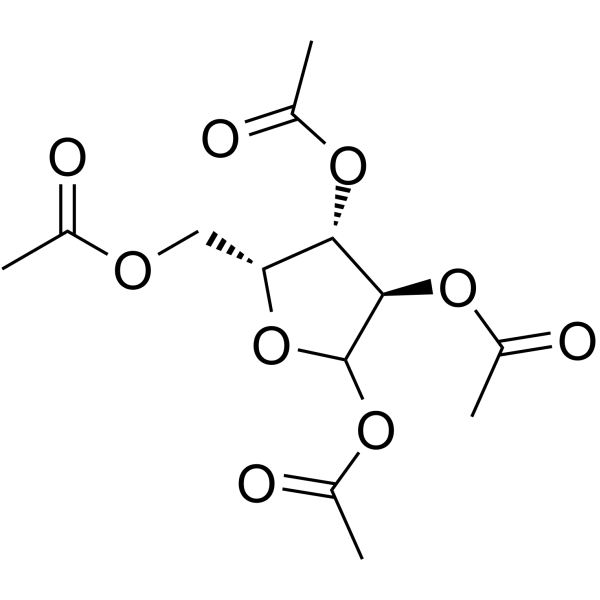
- 分子式: C13H18O9
- 分子量: 318.28
D-Xylofuranose, 1,2,3,5-tetraacetate is the raw material for nucleotides synthesis.

- 分子式: C20H24O5
- 分子量: 344.40
Methyl 3,5-di-O-benzyl-D-ribofuranoside is a sugar derivative. Methyl 3,5-di-O-benzyl-D-ribofuranoside increases mitochondrial oxygen consumption.

- 分子式: C21H20O7
- 分子量: 384.38
1-acetyl-2-deoxy-3, 5-di-O-Benzoylribofuranose is a class of biochemical reagents used in glycobiology research. Glycobiology studies the structure, synthesis, biology, and evolution of sugars. It deals with carbohydrate chemistry, glycan formation and degradation enzymology, protein-glycan recognition, and the role of glycans in biological systems. The field is closely related to basic research, biomedicine and biotechnology.

- 分子式: C20H20O6
- 分子量: 356.37
1-Methoxy-2-deoxy-3,5-di-O-benzoylribofuranose is a kind of biochemical reagent.

- 分子式: C19H26O8S
- 分子量: 414.47
1,2:5,6-Di-O-isopropylidene-3-O-p-toluenesulfonyl-α-D-allofuranose is a class of biochemical reagents used in glycobiology research. Glycobiology studies the structure, synthesis, biology, and evolution of sugars. It involves carbohydrate chemistry, enzymology of glycan formation and degradation, protein-glycan recognition, and the role of glycans in biological systems. This field is closely related to basic research, biomedicine, and biotechnology.

- 分子式: C30H32O7
- 分子量: 504.57
3-Acetyl-1,2-O-isopropylidene-6-O-trityl-α-D-galactofuranose is a class of biochemical reagents used in glycobiology research. Glycobiology studies the structure, synthesis, biology, and evolution of sugars. It involves carbohydrate chemistry, enzymology of glycan formation and degradation, protein-glycan recognition, and the role of glycans in biological systems. This field is closely related to basic research, biomedicine, and biotechnology.



