



BQ-788
Based on 16 publication(s) in Google Scholar
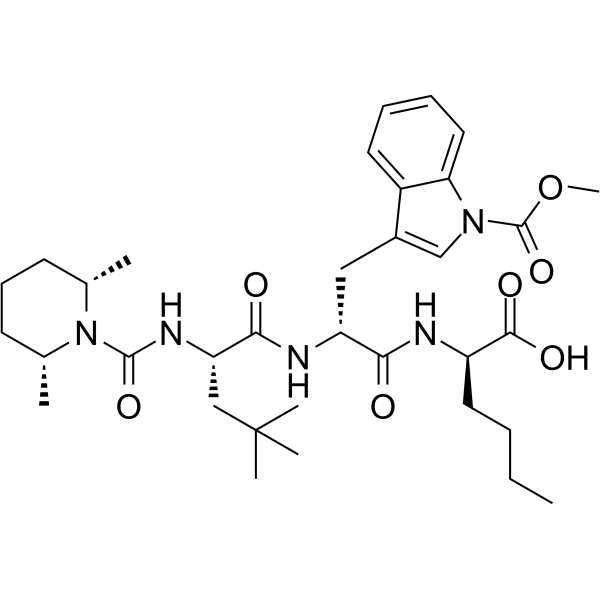
BQ-788 is a potent, selective ETB receptor antagonist with IC50 of 1.2 nM for inhibition of ET-1 binding to human Girardi heart cells, poorly inhibiting the binding to ETA receptors in human neuroblastoma cell line SK-N-MC cells with IC50 of 1300 nM.
For research use only. We do not sell to patients.
- Purity : 99.70%
- CAS No.: 173326-37-9
- Formula: C34H51N5O7
- Molecular Weight:641.80
-
Storage:
-20°C, sealed storage, away from moisture
* In solvent : -80°C, 6 months; -20°C, 1 month (sealed storage, away from moisture)

To place orders, for customer services and technical support, please contact: MedChemExpress USA
Tel: 609-228-6898 E-mail: [email protected] [email protected]


-
 Biological Activity
-
Chemical Information
-
Solvent & Solubility
- Purity & Documentation
- References
-
 Help & FAQs


-
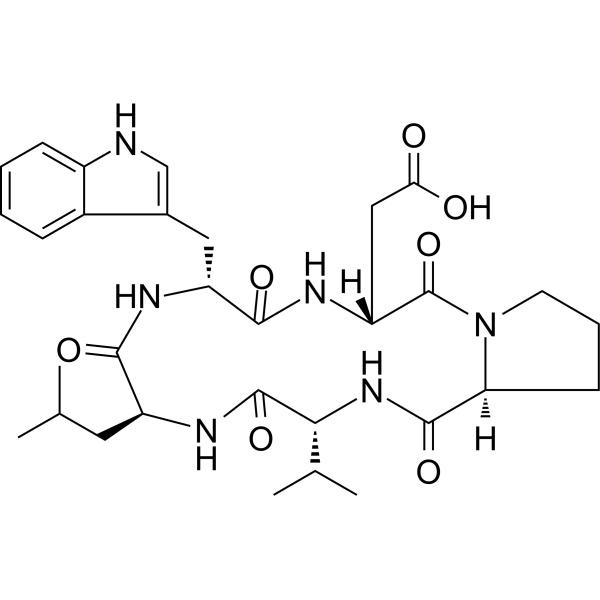
HY-12378
BQ-123ETA Receptor Antagonist -
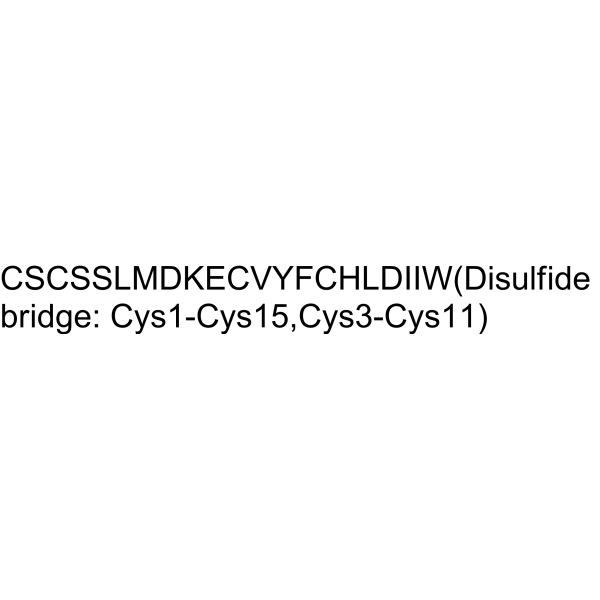
HY-P0202
Endothelin 1 (swine, human)Vasoconstrictor -
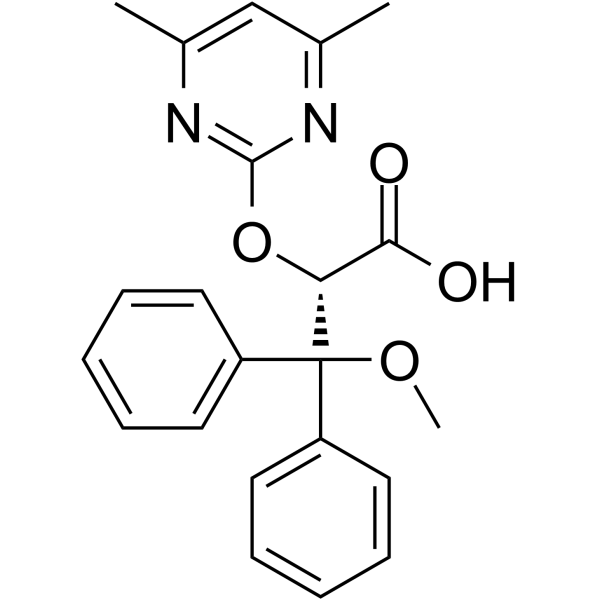
HY-13209
Ambrisentan -
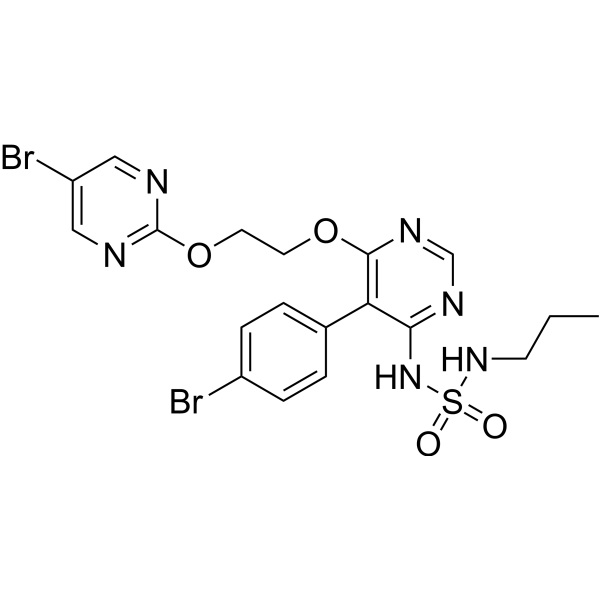
HY-14184
MacitentanETA/ETB Antagonist -
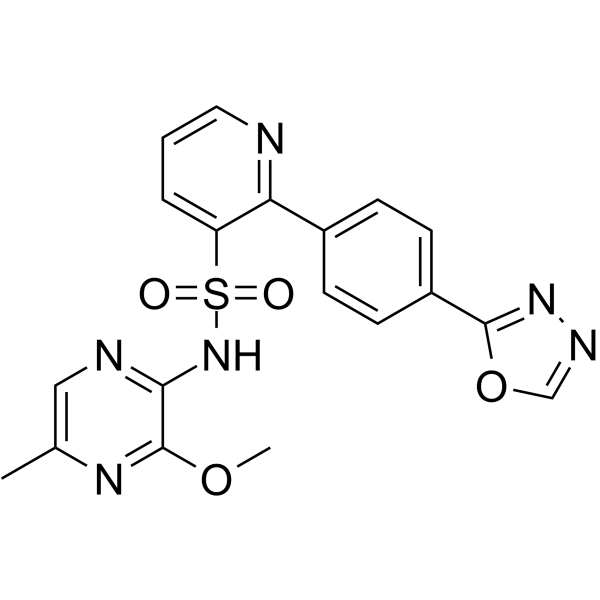
HY-10088
ZibotentanETA Receptor Antagonist -
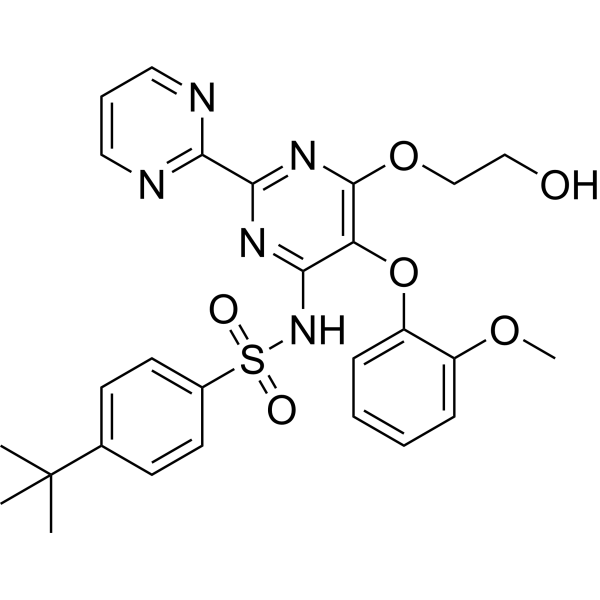
HY-A0013
BosentanET-1 Inhibtior -
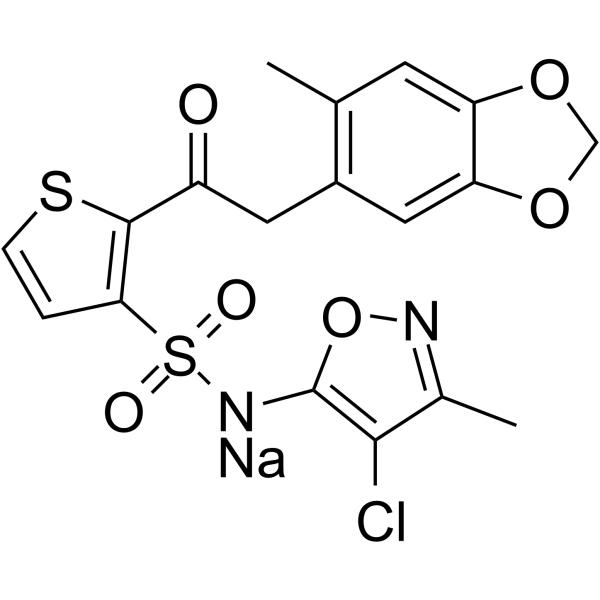
HY-11103
Sitaxsentan sodiumEndothelin A Receptor Antagonist -
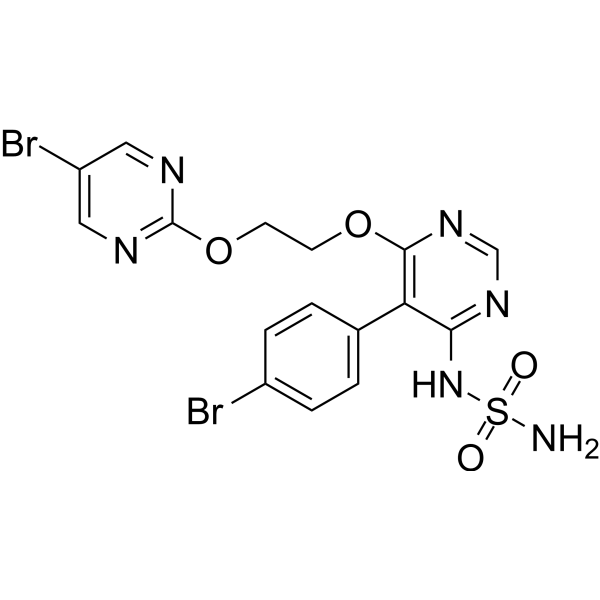
HY-15895
AprocitentanEndothelin Receptor Antagonist -
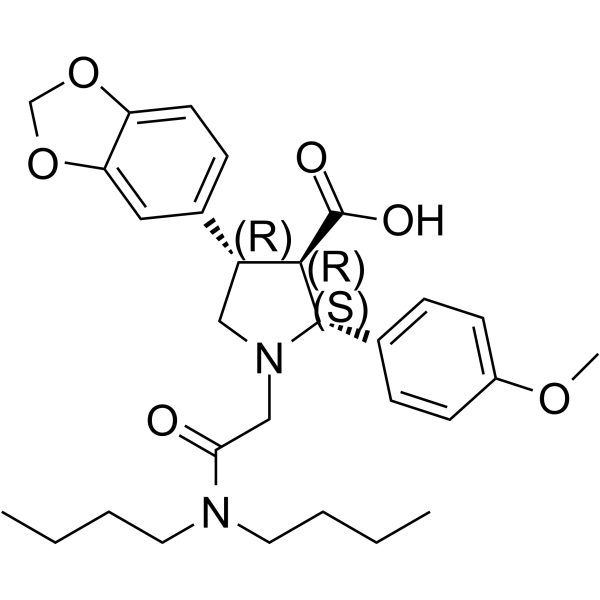
HY-15403
AtrasentanEndothelin Receptor Antagonist -
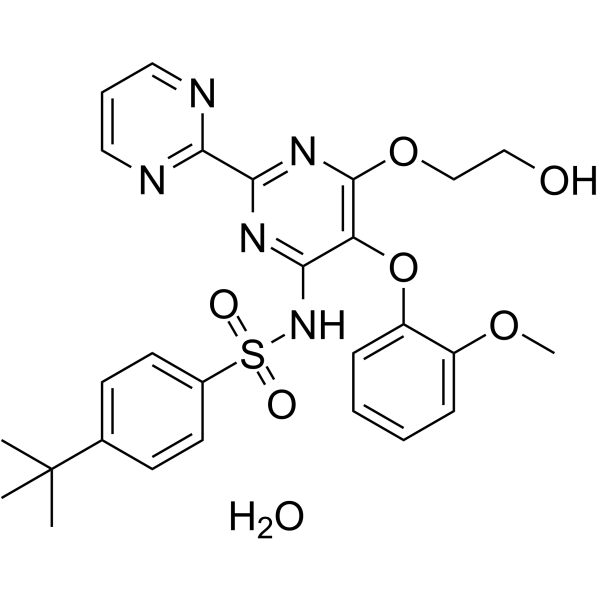
HY-A0013A
Bosentan hydrateET1 Receptor Antagonist -

HY-16465
IRL-1620ETB Agonist -
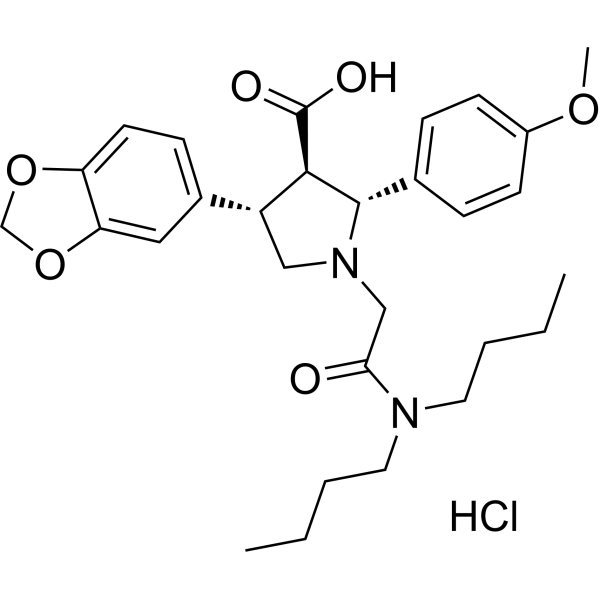
HY-15403A
Atrasentan hydrochlorideETA Receptor Antagonist
Publications Citing Use of MedChemExpress (MCE) BQ-788
More- J Exp Clin Cancer Res. 2025 Feb 21;44(1):64. [Abstract]
- Cell Death Dis. 2026 Jan 16;17(1):45. [Abstract]
- J Orthop Translat. 2026 Feb 18:57:101048. [Abstract]
- Neurotherapeutics. 2021 Oct;18(4):2664-2681. [Abstract]
- Environ Pollut. 2016 Nov:218:487-496. [Abstract]
- Environ Pollut. 2016 Feb:209:11-20. [Abstract]
- Biochem Pharmacol. 2026 Aug;250(Pt 2):118027. [Abstract]
- J Neuroimmune Pharmacol. 2024 Apr 13;19(1):13. [Abstract]
- Cells. 2021 Nov 8;10(11):3072. [Abstract]
- Int Immunopharmacol. 2026 Jun 15:179:116624. [Abstract]
- Toxicol Sci. 2016 Jan;149(1):213-26. [Abstract]
- Brain Pathol. 2026 Jan 14:e70067. [Abstract]
- PLoS Pathog. 2020 Oct 19;16(10):e1008947. [Abstract]
- BMC Cancer. 2018 Feb 6;18(1):154. [Abstract]
- bioRxiv. 2026 Sep 23:2026.09.17.752506. [Abstract]
- Environ Sci Pollut Res Int. 2018 May;25(15):14713-14725. [Abstract]
 Customer Validation & Images

-
WB
-
RT-PCR

-
Cell Imaging/Staining

-
Cell Imaging/Staining

-
WB


Biological Activity
Description
IC50 & Target
|
ETB |
In Vitro
BQ-788 potently and competitively inhibits 125I-labeled ET-1 binding to ETB receptors in human Girrardi heart cells (hGH) with an IC50 of 1.2 nM, but only poorly inhibits the binding to ETA receptors in human neuro-blastoma cell line SK-N-MC cells (IC50, 1300 nM). BQ-788 shows no agonistic activity up to 10 μM and competitively inhibits thevasoconstriction induced by an ETB-selective agonist (pA2, 8.4). BQ-788 also inhibits several bioactivities of ET-1, such as bronchoconstriction, cell proliferation, and clearance of perfused ET-1[1].
MedChemExpress (MCE) has not independently confirmed the accuracy of these methods. They are for reference only.
In Vivo
MedChemExpress (MCE) has not independently confirmed the accuracy of these methods. They are for reference only.


Chemical Information
-
CAS No. 173326-37-9
-
Appearance Solid
-
Molecular Weight 641.80
-
Formula C34H51N5O7
-
Color White to off-white
-
SMILES
CCCC[C@H](C(O)=O)NC([C@@H](CC1=CN(C(OC)=O)C2=CC=CC=C12)NC([C@H](CC(C)(C)C)NC(N3[C@H](C)CCC[C@@H]3C)=O)=O)=O
-
Shipping
Room temperature in continental US; may vary elsewhere.
-
Storage
-20°C, sealed storage, away from moisture
* In solvent : -80°C, 6 months; -20°C, 1 month (sealed storage, away from moisture)


Publications (16)
-
Journal Impact Factor
-
Most Recent
-
J Exp Clin Cancer Res
The extracellular matrix protein type I collagen and fibronectin are regulated by β-arrestin-1/endothelin axis in human ovarian fibroblasts. [Abstract]2025 Feb 21;44(1):64. PMID: 39985042
BQ-788 purchased from MedChemExpress. Usage Cited in: J Exp Clin Cancer Res. 2025 Feb 21;44(1):64. [Abstract]
BQ-788 (1 μM; 12, 24 h) marked blockade of the ET-1-mediated up-regulation of Col1 and FN in human primary ovarian fibroblasts (HOFs).

BQ-788 purchased from MedChemExpress. Usage Cited in: J Exp Clin Cancer Res. 2025 Feb 21;44(1):64. [Abstract]
BQ-788 (1 μM; 24 h) decreased the protein expression of Col1 and FN in cancer-associated fibroblasts (CAFs).
-
Cell Death Dis
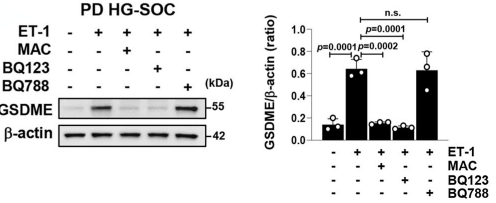
Nuclear gasdermin E drives endothelin-1-induced metastatic progression independently of the pyroptosis. [Abstract]2026 Jan 16;17(1):45. PMID: 41545335
BQ-788 purchased from MedChemExpress. Usage Cited in: Cell Death Dis. 2026 Jan 16;17(1):45. [Abstract]
BQ-788 (1 μM; 30 min before the stimulation with ET-1) showed no effect for the protein expression of gsdme in PD HG-SOC cells.
-
J Orthop Translat
Endothelin-1/endothelin B receptor signalling mediates Prx1+ skeletal stem cells senescence: A driver of osteoporotic bone loss. [Abstract]2026 Feb 18:57:101048. PMID: 41757294
BQ-788 purchased from MedChemExpress. Usage Cited in: J Orthop Translat. 2026 Feb 18:57:101048. [Abstract]
BQ-788 (2 μM; 24 h; 30 min before the stimulation with ET-1) decreased the ET-1 induced p16 mRNA expression in MSCs.
BQ-788 purchased from MedChemExpress. Usage Cited in: J Orthop Translat. 2026 Feb 18:57:101048. [Abstract]
BQ-788 (2 μM; 24 h; 30 min before the stimulation with ET-1) decreased ET-1-induced senescence in MSCs.
BQ-788 purchased from MedChemExpress. Usage Cited in: J Orthop Translat. 2026 Feb 18:57:101048. [Abstract]
BQ-788 (2 μM; 24 h; 30 min before the stimulation with ET-1) decreased ET-1-induced mitochondrial superoxide in MSCs.
-
Neurotherapeutics
Crosstalk Among NLRP3 Inflammasome, ETBR Signaling, and miRNAs in Stress-Induced Depression-Like Behavior: a Modulatory Role for SGLT2 Inhibitors. [Abstract]2021 Oct;18(4):2664-2681. PMID: 34664178 -
Environ Pollut
Airborne fine particulate matter alters the expression of endothelin receptors in rat coronary arteries. [Abstract]2016 Nov:218:487-496. PMID: 27461751 -
Environ Pollut
Airborne fine particulate matter induces an upregulation of endothelin receptors on rat bronchi. [Abstract]2016 Feb:209:11-20. PMID: 26618262 -
Biochem Pharmacol
Bosentan confers cardioprotection against cisplatin toxicity: Involvement of β-arrestin-linked ETA receptor signaling. [Abstract]2026 Aug;250(Pt 2):118027. PMID: 42069228 -
J Neuroimmune Pharmacol
Endothelin-1-mediated Brainstem Glial Activation Produces Asthmatic Airway Vagal Hypertonia Via Enhanced ATP-P2X4 Receptor Signaling in Sprague-Dawley Rats. [Abstract]2024 Apr 13;19(1):13. PMID: 38613591 -
Cells
2021 Nov 8;10(11):3072. PMID: 34831300 -
Int Immunopharmacol
TRPM7 inhibition alleviates acute gouty arthritis in mice by suppressing M1 polarization through the EDN1/EDNRB axis. [Abstract]2026 Jun 15:179:116624. PMID: 42000473 -
Toxicol Sci
The Role of MAPK Pathways in Airborne Fine Particulate Matter-Induced Upregulation of Endothelin Receptors in Rat Basilar Arteries. [Abstract]2016 Jan;149(1):213-26. PMID: 26496744 -
Brain Pathol
Endothelial Netrin-4 regulates oligodendrocyte precursor cell proliferation and differentiation via ET-1 signaling in preterm white matter injury. [Abstract]2026 Jan 14:e70067. PMID: 41536029 -
PLoS Pathog
Endothelin receptors promote schistosomiasis-induced hepatic fibrosis via splenic B cells. [Abstract]2020 Oct 19;16(10):e1008947. PMID: 33075079 -
BMC Cancer
Overexpression of endothelin B receptor in glioblastoma: a prognostic marker and therapeutic target?. [Abstract]2018 Feb 6;18(1):154. PMID: 29409474 -
bioRxiv
Lymphatic ERG Governs Junctional Plasticity and Fluid Clearance via an EDNRB Signaling Axis in Pulmonary Fibrosis. [Abstract]2026 Sep 23:2026.09.17.752506. PMID: 42818166 -
Environ Sci Pollut Res Int
Up-regulation of contractile endothelin receptors by airborne fine particulate matter in rat mesenteric arteries via activation of MAPK pathway. [Abstract]2018 May;25(15):14713-14725. PMID: 29536419


Solvent & Solubility
In Vitro:
DMSO : 100 mg/mL (155.81 mM; Need ultrasonic; Hygroscopic DMSO has a significant impact on the solubility of product, please use newly opened DMSO)
Please refer to the solubility information to select the appropriate solvent. Once prepared, please aliquot and store the solution to prevent product inactivation from repeated freeze-thaw cycles.
Storage method and period of stock solution: -80°C, 6 months; -20°C, 1 month (sealed storage, away from moisture). When stored at -80°C, please use it within 6 months. When stored at -20°C, please use it within 1 month.
Please refer to the solubility information to select the appropriate solvent. Once prepared, please aliquot and store the solution to prevent product inactivation from repeated freeze-thaw cycles.
Storage method and period of stock solution: -80°C, 6 months; -20°C, 1 month (sealed storage, away from moisture). When stored at -80°C, please use it within 6 months. When stored at -20°C, please use it within 1 month.
Concentration (start) × Volume (start) = Concentration (final) × Volume (final)
In Vivo:
Select the appropriate dissolution method based on your experimental animal and administration route.
- For the following dissolution methods, please ensure to first prepare a clear stock solution using an In Vitro approach and then sequentially add co-solvents:
- To ensure reliable experimental results, the clarified stock solution can be appropriately stored based on storage conditions. As for the working solution for In Vivo experiments, it is recommended to prepare freshly and use it on the same day.
- The percentages shown for the solvents indicate their volumetric ratio in the final prepared solution. If precipitation or phase separation occurs during preparation, heat and/or sonication can be used to aid dissolution.
In Vivo Dissolution Calculator
Please enter the basic information of animal experiments:
-
-
-
-
Recommended: Prepare an additional quantity of animals to account for potential losses during experiments.
Please enter your animal formula composition:
-
%DMSO +
Recommended: Keep the proportion of DMSO in working solution below 2% if your animal is weak.
-
%+
-
+%Tween-80 + +
-
%Saline +
The co-solvents required include: DMSO, . All of co-solvents are available by MedChemExpress (MCE). , Tween 80. All of co-solvents are available by MedChemExpress (MCE).
Working solution concentration: 0.22 mg/mL
Method for preparing stock solution: mg drug dissolved in μL DMSO. Stock solution concentration: mg/mL. * In solvent : -80°C, 6 months; -20°C, 1 month (sealed storage, away from moisture)
1. Take μL DMSO stock solution;
2. Add μL .
μL , mix evenly;
3. Then add μL Tween 80, mix evenly;
4. Then add μL
Please ensure that the stock solution in the first step is dissolved to a clear state, and add co-solvents in sequence. You can use ultrasonic heating (ultrasonic cleaner, recommended frequency 20-40 kHz), vortexing, etc. to assist dissolution.


Purity & Documentation
-
Data Sheet (280 KB)
-
SDS (393 KB)
- English - EN (393 KB)
- Français - FR (393 KB)
- Deutsch - DE (393 KB)
- Norwegian - NO (393 KB)
- Español - ES (393 KB)
- Swedish - SV (393 KB)
- Italian - IT (393 KB)
- Korean - KR (393 KB)
- Portuguese - PT (393 KB)
-
Handling Instructions (2659 KB)
References
[1]. Okada M, et al. BQ-788, a selective endothelin ET(B) receptor antagonist. Cardiovasc Drug Rev. 2002 Winter;20(1):53-66. [Content Brief]
[2]. Sargent CA, et al. Effect of endothelin antagonists with or without BQ 788 on ET-1 responses in pithed rats. J Cardiovasc Pharmacol. 1995;26 Suppl 3:S216-8. [Content Brief]
[3]. Fattori V, et al. Differential regulation of oxidative stress and cytokine production by endothelin ETA and ETB receptors in superoxide anion-induced inflammation and pain in mice. J Drug Target. 2016 Oct 5:1-27 [Content Brief]


Complete Stock Solution Preparation Table
Please refer to the solubility information to select the appropriate solvent. Once prepared, please aliquot and store the solution to prevent product inactivation from repeated freeze-thaw cycles.
Storage method and period of stock solution: -80°C, 6 months; -20°C, 1 month (sealed storage, away from moisture). When stored at -80°C, please use it within 6 months. When stored at -20°C, please use it within 1 month.
| Optional Solvent | Concentration Solvent Mass | 1 mg | 5 mg | 10 mg | 25 mg |
|---|---|---|---|---|---|
| DMSO | 1 mM | 1.5581 mL | 7.7906 mL | 15.5812 mL | 38.9529 mL |
| 5 mM | 0.3116 mL | 1.5581 mL | 3.1162 mL | 7.7906 mL | |
| 10 mM | 0.1558 mL | 0.7791 mL | 1.5581 mL | 3.8953 mL | |
| 15 mM | 0.1039 mL | 0.5194 mL | 1.0387 mL | 2.5969 mL | |
| 20 mM | 0.0779 mL | 0.3895 mL | 0.7791 mL | 1.9476 mL | |
| 25 mM | 0.0623 mL | 0.3116 mL | 0.6232 mL | 1.5581 mL | |
| 30 mM | 0.0519 mL | 0.2597 mL | 0.5194 mL | 1.2984 mL | |
| 40 mM | 0.0390 mL | 0.1948 mL | 0.3895 mL | 0.9738 mL | |
| 50 mM | 0.0312 mL | 0.1558 mL | 0.3116 mL | 0.7791 mL | |
| 60 mM | 0.0260 mL | 0.1298 mL | 0.2597 mL | 0.6492 mL | |
| 80 mM | 0.0195 mL | 0.0974 mL | 0.1948 mL | 0.4869 mL | |
| 100 mM | 0.0156 mL | 0.0779 mL | 0.1558 mL | 0.3895 mL |


BQ-788 Related Classifications
HY-15894A Related Classifications
 Powered by Bioz