



IDE 2

Based on 1 Customer Validation
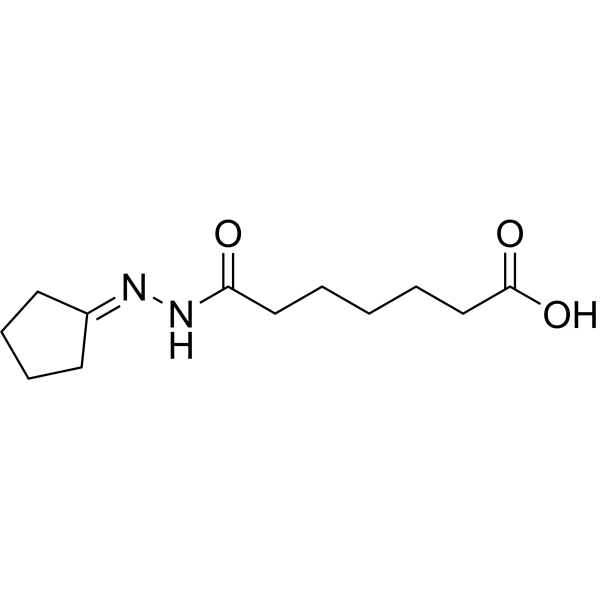
IDE 2 is a cell-permeable inducer of definitive endoderm differentiation that induces the differentiation of mouse and human embryonic stem cells into definitive endoderm. IDE2 activates the TGF‑β/Nodal signaling pathway, induces Smad2 phosphorylation, and increases Sox17 and FoxA2 expression. Endoderm induced by IDE 2 integrates into the developing gut tube, expresses gut tube markers, and differentiates into pancreatic progenitor cells. IDE 2 can be used for research related to directed endoderm differentiation of embryonic stem cells.
For research use only. We do not sell to patients.
- Purity : 99.0%
- CAS No.: 1136466-93-7
- Formula: C12H20N2O3
- Molecular Weight:240.30
-
Storage:Powder -20°C, 3 years ; In solvent -80°C, 6 months , -20°C, 1 month

To place orders, for customer services and technical support, please contact: MedChemExpress USA
Tel: 609-228-6898 E-mail: [email protected] [email protected]


-
 Biological Activity
-
Chemical Information
-
Solvent & Solubility
- Protocols
- Purity & Documentation
- References
-
 Help & FAQs


-
HY-100533
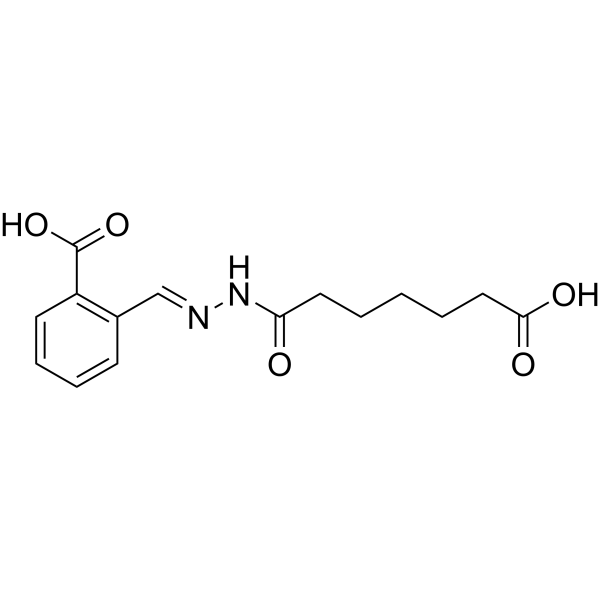
IDE1Definitive Endoderm 1 Inducer -
HY-15371
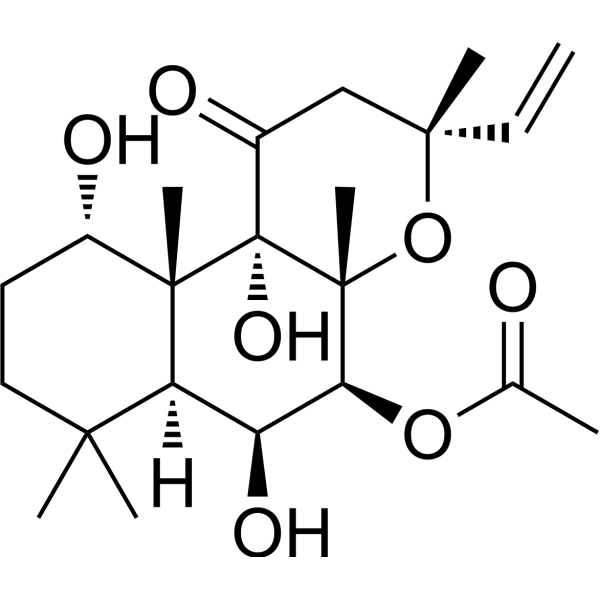
ForskolinAdenylate Cyclase Activator -
HY-13418A
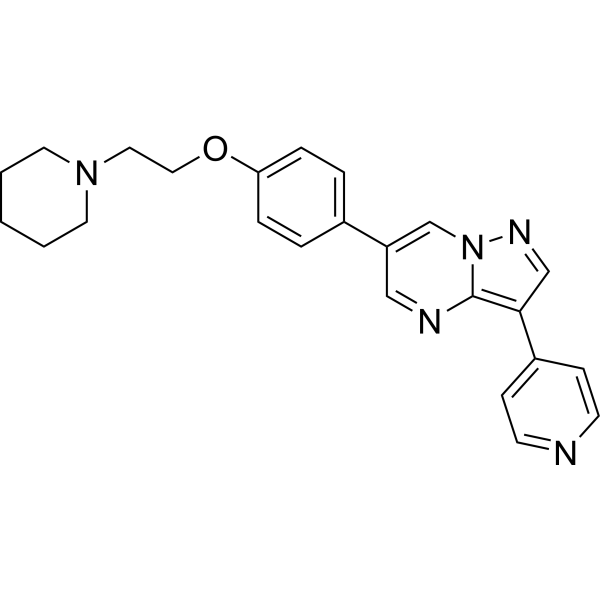
DorsomorphinAMPK Inhibitor -
HY-13013
SIS3Smad3 Inhibitor -
HY-12323
ISX-9Neural Stem Cell Differentiation Inducer -
HY-13027
DAPTγ-secretase Inhibitor -
HY-16268
KartogeninChondroprotective Agent -
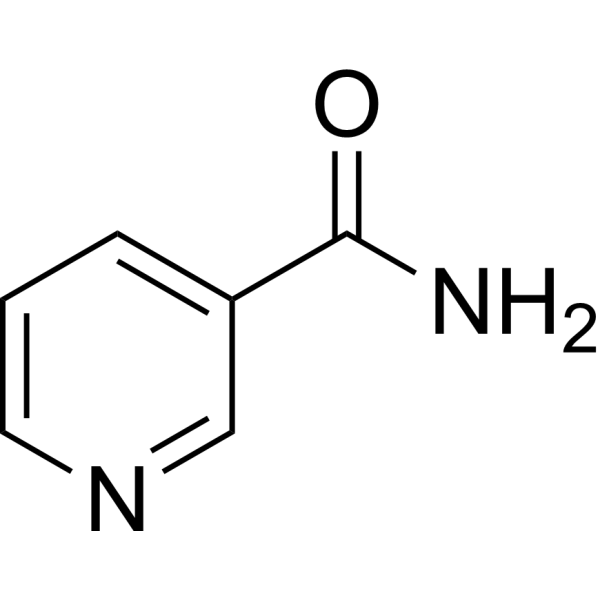
HY-B0150
NicotinamideSIRT Inhibitor -
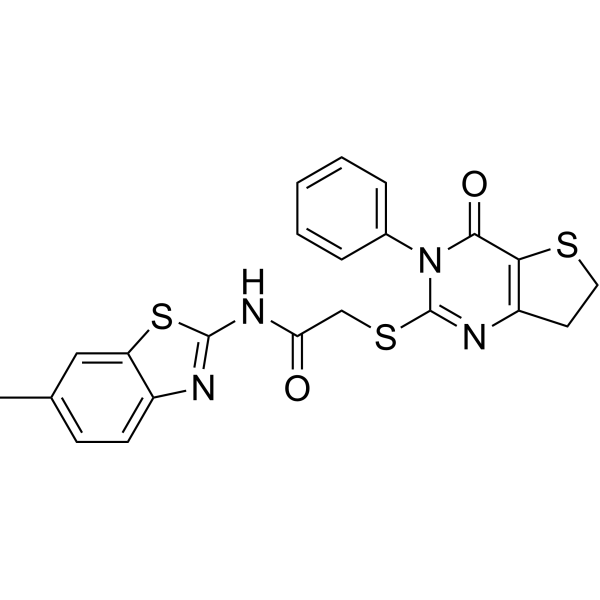
HY-13912
IWP-2Wnt Production Inhibitor -
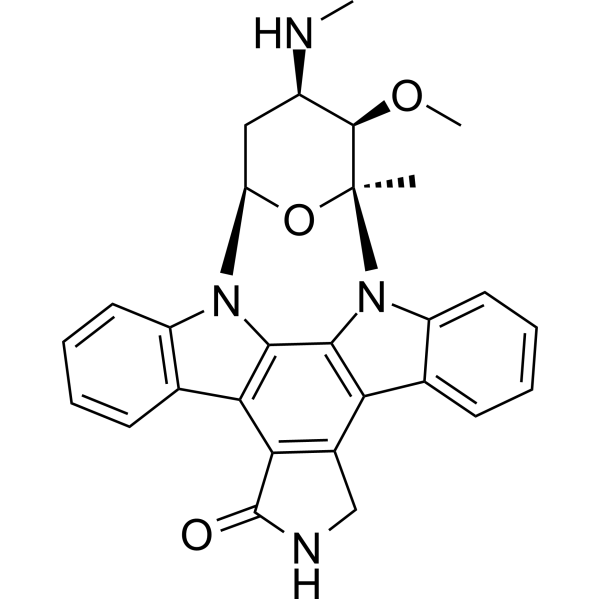
HY-15141
StaurosporinePKC/PKA Inhibitor -
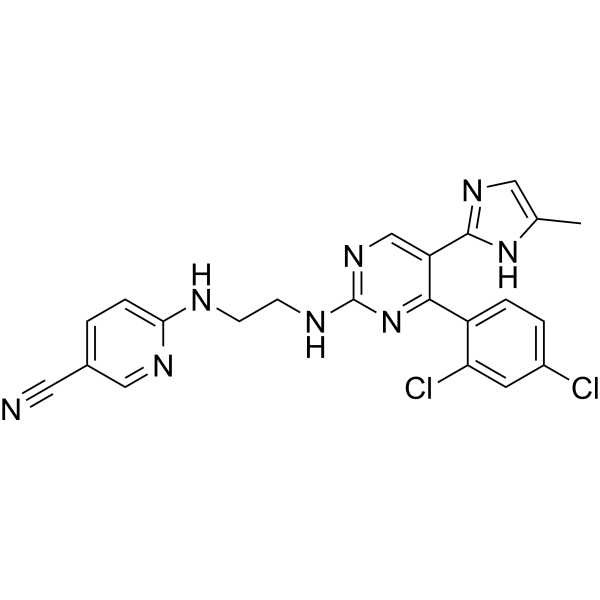
HY-10182
LaduviglusibGSK-3 Inhibitor -
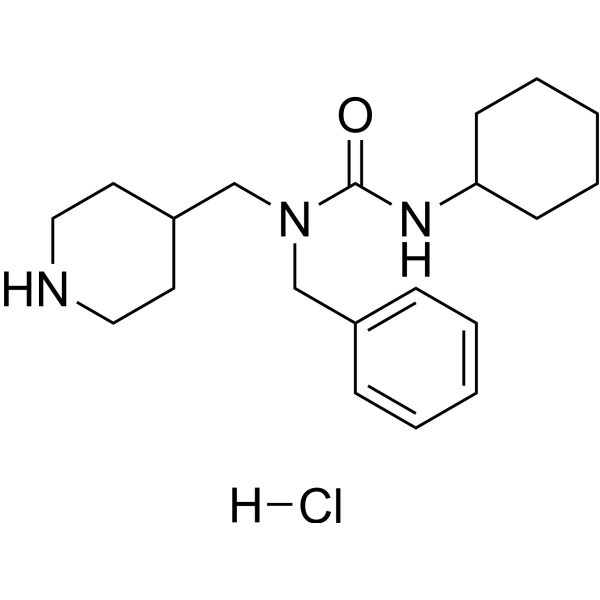
HY-100347A
SRI-011381 hydrochlorideTGF-beta/Smad Agonist


Biological Activity
Description
In Vitro
IDE 2 can induce definitive endoderm from Sox17-dsRed mouse ESCs with an EC50 of 223 nM[1].
IDE 2 (200 nM) directed HUES4 and HUES8 human ESCs toward Sox17+ endoderm, with 57% of cells positive, of which at least 90% co-expressed FoxA2[1].
IDE 2‑induced endoderm (12‑day total differentiation; sequential Indolactam V treatment) differentiates into Pdx1‑positive pancreatic progenitor cells with approximately 51‑53% efficiency[1].
IDE 2 (4-10 days) combined with Nodal enhances Sox17 expression in mouse ESCs, whereas Wnt3a does not[1].
IDE 2 activates the TGF-β/Smad2 signaling pathway in mouse ESCs and upregulates Nodal expression[1].
MedChemExpress (MCE) has not independently confirmed the accuracy of these methods. They are for reference only.


Chemical Information
-
CAS No. 1136466-93-7
-
Appearance Solid
-
Molecular Weight 240.30
-
Formula C12H20N2O3
-
Color White to off-white
-
SMILES
O=C(CCCCCC(O)=O)N/N=C1CCCC/1
-
Shipping
Room temperature in continental US; may vary elsewhere.
-
Storage
Powder -20°C 3 years In solvent -80°C 6 months -20°C 1 month


Solvent & Solubility
In Vitro:
DMSO : 25 mg/mL (104.04 mM; Need ultrasonic and warming; Hygroscopic DMSO has a significant impact on the solubility of product, please use newly opened DMSO)
Please refer to the solubility information to select the appropriate solvent. Once prepared, please aliquot and store the solution to prevent product inactivation from repeated freeze-thaw cycles.
Storage method and period of stock solution: -80°C, 6 months; -20°C, 1 month. When stored at -80°C, please use it within 6 months. When stored at -20°C, please use it within 1 month.
Please refer to the solubility information to select the appropriate solvent. Once prepared, please aliquot and store the solution to prevent product inactivation from repeated freeze-thaw cycles.
Storage method and period of stock solution: -80°C, 6 months; -20°C, 1 month. When stored at -80°C, please use it within 6 months. When stored at -20°C, please use it within 1 month.
Concentration (start) × Volume (start) = Concentration (final) × Volume (final)


Purity & Documentation
-
Data Sheet (268 KB)
-
SDS (394 KB)
- English - EN (394 KB)
- Français - FR (394 KB)
- Deutsch - DE (394 KB)
- Norwegian - NO (394 KB)
- Español - ES (394 KB)
- Swedish - SV (394 KB)
- Italian - IT (394 KB)
- Korean - KR (394 KB)
- Portuguese - PT (394 KB)
-
Handling Instructions (2659 KB)
References


Complete Stock Solution Preparation Table
Please refer to the solubility information to select the appropriate solvent. Once prepared, please aliquot and store the solution to prevent product inactivation from repeated freeze-thaw cycles.
Storage method and period of stock solution: -80°C, 6 months; -20°C, 1 month. When stored at -80°C, please use it within 6 months. When stored at -20°C, please use it within 1 month.
| Optional Solvent | Concentration Solvent Mass | 1 mg | 5 mg | 10 mg | 25 mg |
|---|---|---|---|---|---|
| DMSO | 1 mM | 4.1615 mL | 20.8073 mL | 41.6146 mL | 104.0366 mL |
| 5 mM | 0.8323 mL | 4.1615 mL | 8.3229 mL | 20.8073 mL | |
| 10 mM | 0.4161 mL | 2.0807 mL | 4.1615 mL | 10.4037 mL | |
| 15 mM | 0.2774 mL | 1.3872 mL | 2.7743 mL | 6.9358 mL | |
| 20 mM | 0.2081 mL | 1.0404 mL | 2.0807 mL | 5.2018 mL | |
| 25 mM | 0.1665 mL | 0.8323 mL | 1.6646 mL | 4.1615 mL | |
| 30 mM | 0.1387 mL | 0.6936 mL | 1.3872 mL | 3.4679 mL | |
| 40 mM | 0.1040 mL | 0.5202 mL | 1.0404 mL | 2.6009 mL | |
| 50 mM | 0.0832 mL | 0.4161 mL | 0.8323 mL | 2.0807 mL | |
| 60 mM | 0.0694 mL | 0.3468 mL | 0.6936 mL | 1.7339 mL | |
| 80 mM | 0.0520 mL | 0.2601 mL | 0.5202 mL | 1.3005 mL | |
| 100 mM | 0.0416 mL | 0.2081 mL | 0.4161 mL | 1.0404 mL |


IDE 2 Related Classifications
HY-100534 Related Classifications
 Powered by Bioz