
250 Results for "

complex II

" in MedChemExpress (MCE) Product Catalog:
Products (250)

250 Results for "complex II" in MCE Product Catalog:

Art. -Nr.: HY-15283AS1
CAS. Nr.: 1219274-95-9
Synonyms: (±)-Clopidogrelum-d4
(±)-Clopidogrel-d4 ((±)-Clopidogrelum-d4) is the deuterium labeled (±)-Clopidogrel (HY-107867). (±)-Clopidogrel is a platelet P2Y12 receptor inhibitor and an adenosine diphosphate (ADP) receptor antagonist. (±)-Clopidogrel inhibits the binding of ADP to its receptors on the membranes of platelet cells, and blocks ADP-mediated activation of the glycoprotein GPIIb/IIIa complex. (±)-Clopidogrel reduces vascular inflammation and angiotensin II induced-abdominal aortic aneurysm progression. (±)-Clopidogrel has anti-inflammatory effects .
loading...
    loading...
Art. -Nr.: HY-P81436A
Synonyms: HLA DPA1; major histocompatibility complex; class II; DP alpha 1; PLT1; HLADP; HLASB; DP(W3); DP(W4); HLA-DP1A

Host:  

Rabbit

Application:  

IHC-P

Reactivity:  

Human

loading...
    loading...
Art. -Nr.: HY-P4984
CAS. Nr.: 137593-46-5
Target:  

Endogenous Metabolite

Forschungsgebiete:  

Infection

Toxic Shock Syndrome Toxin-1 (TSST-1) (58-78) is a superantigen exotoxin produced by Staphylococcus aureus. Toxic Shock Syndrome Toxin-1 (TSST-1) (58-78) binds to TCR and MHC II outside the antigen-presenting site, thereby inducing unconventional polyclonal lymphocyte activation, excessive cytokine production, rapid shock, multiple organ failure syndrome and even death. Toxic Shock Syndrome Toxin-1 (TSST-1) (58-78) exacerbates mammary gland inflammation and further induces mastitis. Toxic Shock Syndrome Toxin-1 (TSST-1) (58-78) is thermostable and can be transmitted to humans via food, causing toxic shock syndrome. Toxic Shock Syndrome Toxin-1 (TSST-1) (58-78) can be used in studies related to toxic shock syndrome and staphylococcal food poisoning .
loading...
    loading...
Art. -Nr.: HY-107867S1
(Rac)-Clopidogrel hydrogen-d9 sulfate is the deuterium labeled (±)-Clopidogrel (bisulfate) (HY-107867). (±)-Clopidogrel bisulfate is a platelet P2Y12 receptor inhibitor and an adenosine diphosphate (ADP) receptor antagonist. (±)-Clopidogrel bisulfate inhibits the binding of ADP to its receptors on the membranes of platelet cells, and blocks ADP-mediated activation of the glycoprotein GPIIb/IIIa complex. (±)-Clopidogrel bisulfate reduces vascular inflammation and angiotensin II induced-abdominal aortic aneurysm progression. (±)-Clopidogrel bisulfate has anti-inflammatory effects .
loading...
    loading...
Art. -Nr.: HY-129795
CAS. Nr.: 119433-80-6
Forschungsgebiete:  

Cancer

Thiazolylalanine is a synthetic non-protein amino acid containing a thiazole heterocycle. Thiazolylalanine exhibits dual activities of stimulating protein synthesis and inducing protein degradation in rat reticulocytes, but exerts no effects on protein metabolism or the thermolability of phosphoenolpyruvate carboxykinase in hepatoma cells. Thiazolylalanine can serve as the N-terminal component of tripeptide ligands for the synthesis of various organometallic complexes such as gold, mercury, CyRu (II) Cl2, and Cp*Rh (III) Cl2. Thiazolylalanine finds wide application in the research of breast cancer and other related diseases .
loading...
    loading...
Art. -Nr.: HY-13552
CAS. Nr.: 80841-48-1
Synonyms: CI-921 isethionate; NSC 343499 isethionate
Asulacrine isethionate (CI-921 isethionate) is a derivative of Amsacrine (HY-13551), a Topoisomerase II inhibitor and an anticancer agent. Asulacrine isethionate binds to DNA via intercalation, forming stable complexes with long residence times at DNA sites. Asulacrine isethionate mediates DNA breakage and DNA-protein cross-linking. Asulacrine isethionate exhibits anticancer activity against leukemia or lung cancer. Asulacrine isethionate can be used in research related to breast cancer, lung cancer, mouse solid tumors and leukemia .
loading...
    loading...
Art. -Nr.: HY-170978
CAS. Nr.: 3039540-19-4
Forschungsgebiete:  

Cancer

PROTAC CDK9 degrader-11 is an orally active, selective CDK9 PROTAC degrader with a DC50 of 1.09 nM. PROTAC CDK9 degrader-11 recruits CRBN to form a ternary complex and degrades CDK9 via the ubiquitin-proteasome pathway, thereby inhibiting RNA polymerase II phosphorylation and downregulating the expression of anti-apoptotic and pro-oncogenic genes, ultimately inducing apoptosis. PROTAC CDK9 degrader-11 is suitable for research on small-cell lung cancer (SCLC) .
loading...
    loading...
Art. -Nr.: HY-181923
Target:  

EGFR CDK Cytochrome P450

Forschungsgebiete:  

Cancer

IMP-Zn is a pyrazole-hydrazone Schiff base zinc (II) complex. IMP-Zn exhibits significant antiproliferative activity against human colorectal cancer cells and induces cell cycle arrest. IMP-Zn shows stronger binding affinity than its free ligand IMP towards three cancer-related protein targets: EGFR kinase 1M17, cytochrome P450 3RUK, and CDK inhibitor 6GUE. IMP-Zn can be used in studies related to colorectal cancer .
loading...
    loading...
Art. -Nr.: HY-P992033

Target:  

Interleukin Related

Forschungsgebiete:  

Cancer

Anti-Mouse IL-4Rα Antibody (REGN1103) is a mouse homologous antibody targeting IL-4Rα, as well as an inhibitor of IL-4 signaling. Anti-Mouse IL-4Rα Antibody (REGN1103) can be used in studies related to alveolar rhabdomyosarcoma .
loading...
    loading...
Art. -Nr.: HY-107867S2
CAS. Nr.: 1246814-55-0
Clopidogrel- 13C,d3 sulfate is the deuterium and 13C-labeled (±)-Clopidogrel (bisulfate) (HY-107867). (±)-Clopidogrel bisulfate is a platelet P2Y12 receptor inhibitor and an adenosine diphosphate (ADP) receptor antagonist. (±)-Clopidogrel bisulfate inhibits the binding of ADP to its receptors on the membranes of platelet cells, and blocks ADP-mediated activation of the glycoprotein GPIIb/IIIa complex. (±)-Clopidogrel bisulfate reduces vascular inflammation and angiotensin II induced-abdominal aortic aneurysm progression. (±)-Clopidogrel bisulfate has anti-inflammatory effects .
loading...
    loading...
Art. -Nr.: HY-P704801
Reinheit:  ≥ 95%, as determined by reducing SDS-PAGE.
Synonyms: SDHA; Succinate Dehydrogenase [Ubiquinone] Flavoprotein Subunit; Prev. SDH2; CMD1GG; SDHF; MC2DN1; Succinate Dehydrogenase [Ubiquinone] Flavoprotein Subunit, Mitochondrial; NDAXOA; Flavoprotein Subunit Of complex II; PPGL5; FP; PGL5; Succinate Dehydrogena
Species:  
Human
Source:  
E. coli
loading...
    loading...
Art. -Nr.: HY-P10525
CAS. Nr.: 167278-49-1
Target:  

Inhibitory Antibodies

Forschungsgebiete:  

Neurological Disease

MBP Ac1-9 (4Y) is a synthetic peptide derived from a fragment of myelin basic protein (MBP) that has undergone specific chemical modifications. MBP Ac1-9 (4Y) is able to form a complex with the MHC class II molecule I-Au and activate specific T cell receptor (TCR), thus playing a role in the pathogenesis of experimental autoimmune encephalomyelitis (EAE). MBP Ac1-9 (4Y) can be used to study autoimmune diseases, especially those involving the central nervous system, such as multiple sclerosis .
loading...
    loading...
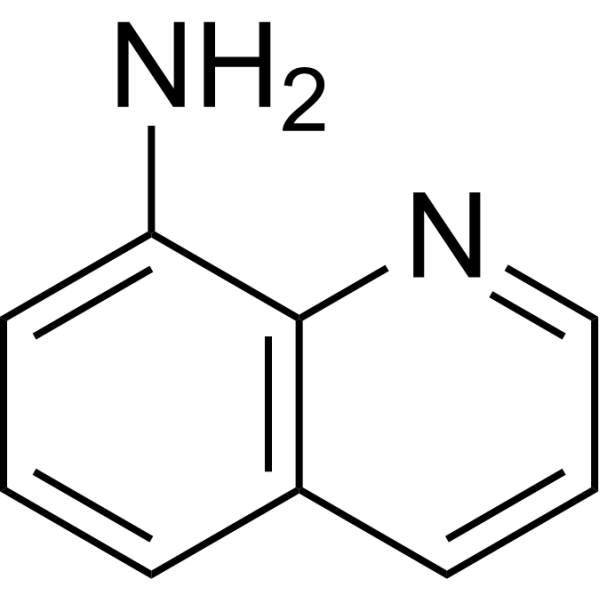
Art. -Nr.: HY-W007317
CAS. Nr.: 578-66-5
8-Aminoquinoline is a chelating ligand and intermediate. 8-Aminoquinoline assists metal-catalyzed direct C (sp 2)-H and unactivated C (sp 3)-H bond functionalization, copper-mediated C-H/C-H coupling, as well as copper/silver-catalyzed aryl C (sp 2)-H amination reactions. 8-Aminoquinoline forms cationic Pt (II) complexes with anti-tumor activity. 8-Aminoquinoline is used in research related to latent malaria, glioblastoma, pancreatic adenocarcinoma, adenocarcinoma and biphasic mesothelioma .
loading...
    loading...
Art. -Nr.: HY-181062
Forschungsgebiete:  

Cancer

VWK147 is a second-generation HSP90 C-terminal domain (CTD) inhibitor. VWK147 targets the CTD dimerization interface, prevents HSP90 CTD dimerization, disrupts co-chaperone PPID binding to HSP90 CTD, and inhibits HSP90 chaperone function dependent on dimerization. VWK147 reduces protein levels of HSP90 client proteins ULK1, RIPK1, and CDK4 without inducing a heat shock response. VWK147 induces cell death, including apoptosis, in Cisplatin (HY-17394)-sensitive and -resistant urothelial carcinoma cells. VWK147 induces LC3-II accumulation, inhibits autophagosome-lysosome fusion to block canonical autophagy, and induces non-canonical LC3 lipidation independent of ULK1 and PIK3C3 complexes. VWK147 can be used for the research of urothelial carcinoma .
loading...
    loading...
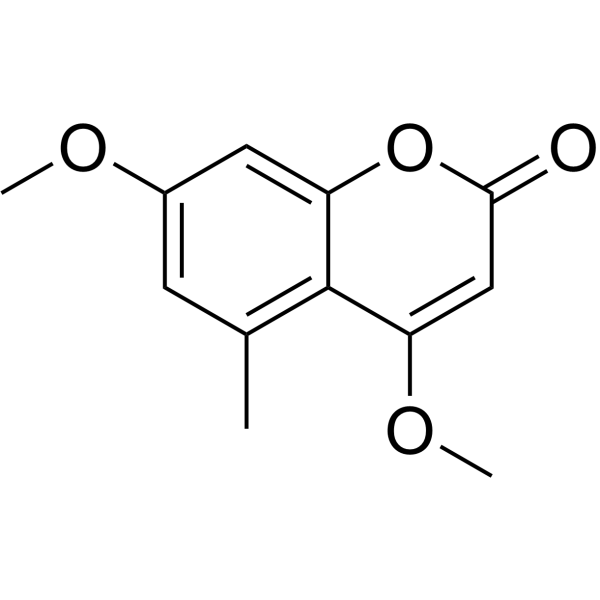
Art. -Nr.: HY-N11913
CAS. Nr.: 53377-54-1
Siderin is a selective Photosystem II (PSII) inhibitor. Siderin inhibits ATP synthesis by blocking electron transport at the donor and acceptor sides of PSII Siderin can be used in the study of plant photosynthesis .
loading...
    loading...
Art. -Nr.: HY-P87067
Synonyms: CYB560 antibody; C560_HUMAN antibody; CYBL antibody; Cytochrome B large subunit of complex II antibody; Integral membrane protein CII-3 antibody; mitochondrial antibody; PGL3 antibody; QPs-1 antibody; QPs1 antibody; SDH3 antibody; CYB560 antibody; C560_HUMAN antibody; CYBL antibody; Cytochrome B large subunit of complex II antibody; Integral membrane protein CII-3 antibody; mitochondrial antibody; PGL3 antibody; QPs-1 antibody; QPs1 antibody; SDH3 antibody; sdhC antibody; succinate dehydrgenase cytochrome b antibody; succinate dehydrogenase 3, integral membrane subunit antibody; Succinate dehydrogenase complex subunit C antibody; Succinate dehydrogenase complex subunit C integral membrane protein 15kDa antibody; Succinate dehydrogenase cytochrome b560 subunit antibody; Succinate dehydrogenase cytochrome b560 subunit mitochondrial antibody; Succinate dehydrogenase cytochrome b560 subunit, mitochondrial precursor antibody; Succinate-ubiquinone oxidoreductase cytochrome B large subunit antibody;

Host:  

Rabbit

Application:  

WB, IHC-P

Reactivity:  

Human, Mouse, Rat

loading...
    loading...
Art. -Nr.: HY-172777
CAS. Nr.: 3052432-15-9
SDH-IN-25 is a succinate dehydrogenase (SDH) inhibitor (IC50 = 4.82 mg/L). SDH-IN-25 exhibited broad-spectrum and potent antifungal activity. SDH-IN-25 mimics the interaction pattern of commercial fungicide Fluxapyroxad (HY-135549) through binding to SDH amino acid residues (TRP173, TYR58, and ARG43). SDH-IN-25 can induce hyphal morphology, interfere with respiratory metabolism by binding to complex II, generate reactive oxygen species (ROS), and affect mitochondrial membrane potential (MMP) in mycelia. SDH-IN-25 can be studied in research for agricultural disease control .
loading...
    loading...
Art. -Nr.: HY-144977
CAS. Nr.: 1281683-44-0
Reinheit:  99.67%
Forschungsgebiete:  

Cancer

dCeMM4 is a Cyclin K Molecular glue degrader. dCeMM4 mediates the direct interaction between CDK12:cyclin K and the CRL4B ligase complex, thereby driving the ubiquitination and proteasomal degradation of Cyclin K. dCeMM4 induces Apoptosis without cell cycle phase-specific arrest. dCeMM4 exhibits synergistic activity with DNA damage inducers, and a correlation exists between Cyclin K degradation and cellular sensitivity. dCeMM4 can be used in studies related to T-cell malignancies .
loading...
    loading...
Art. -Nr.: HY-187992
Forschungsgebiete:  

Others

SDH-IN-48 is a succinate dehydrogenase (SDH) inhibitor, with an IC50 of 0.056 μM against porcine SDH. SDH-IN-48 binds to the SDH active pocket through multiple non-covalent interactions. SDH-IN-48 can be used in related research on rice sheath blight disease .
loading...
    loading...
Art. -Nr.: HY-W727481
CAS. Nr.: 1253429-01-4
Target:  

Parasite Insecticide

Forschungsgebiete:  

Infection

Cyetpyrafen is a pyrazole insecticide/acaricide with broad-spectrum insecticidal activity. Cyetpyrafen binds to DhelOBP4 (Ki = 4.95 μM) and DhelOBP21 (Ki = 5.51 μM) to mediate olfactory recognition in *Cryptolaemus montrouzieri*. Cyetpyrafen induces dose-dependent electroantennogram responses in *Cryptolaemus montrouzieri* and exhibits repellent effects on the species. Cyetpyrafen has bioaccumulative properties, is rapidly and passively absorbed by the roots of lettuce and rice, reaches a steady state within 24 h, preferentially accumulates in roots, and shows limited xylem/phloem translocation .
loading...
    loading...

