2100 Results for "

ROS,

" in MedChemExpress (MCE) Product Catalog:
Products (2100)

2100 Results for "ROS," in MCE Product Catalog:

Cat. No.: HY-181160
JNK3/Wnt/β-catenin modulator-1 is a brain-penetrant JNK3 inhibitor and Wnt/β-catenin activator. JNK3/Wnt/β-catenin modulator-1 decreases 1-42 production and reduced ROS generation. JNK3/Wnt/β-catenin modulator-1 inhibits the activation of JNK and Puma, promotes Beclin-1 expression, reduces GSK-3β and BACE1 expression and activates Wnt/β-catenin signaling. JNK3/Wnt/β-catenin modulator-1 improves cognitive and memory performance, attenuates histopathological brain damage, preserves structure of hippocampal pyramidal cells and cerebral cortical neurons. JNK3/Wnt/β-catenin modulator-1 can be used for the research of Alzheimer's disease .
loading...
    loading...
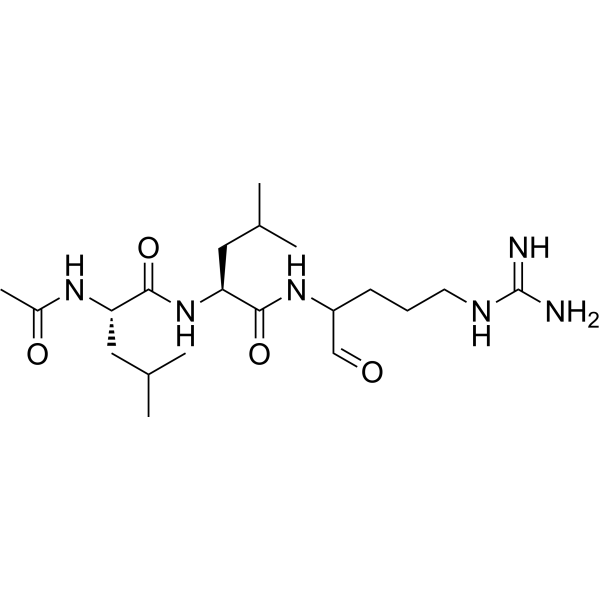
Cat. No.: HY-18234B
CAS No.: 24365-47-7
Leupeptin Ac-LL is a broad-spectrum protease inhibitor . By inhibiting the activation of the PTEN/PI3K/Akt/NF-κB/ERK1/2/p38 signaling pathway, Leupeptin Ac-LL significantly reduces LPS-induced NO and ROS production, mitochondrial membrane potential hyperpolarization, phagocytic activity, pro-inflammatory cytokine release, and M1 polarization in mouse peritoneal macrophages, and reverses autophagic flux impairment. It also decreases Concanavalin A (HY-P2149)-induced proliferation index of mouse splenic lymphocytes and the Th1/IL-10 and Th2/IL-10 cytokine ratios, thereby modulating innate and adaptive immune responses. Leupeptin Ac-LL inhibits blood coagulation and tumorigenesis in mouse skin. Leupeptin Ac-LL can be used in research on chronic inflammatory diseases and skin tumorigenesis .
loading...
    loading...
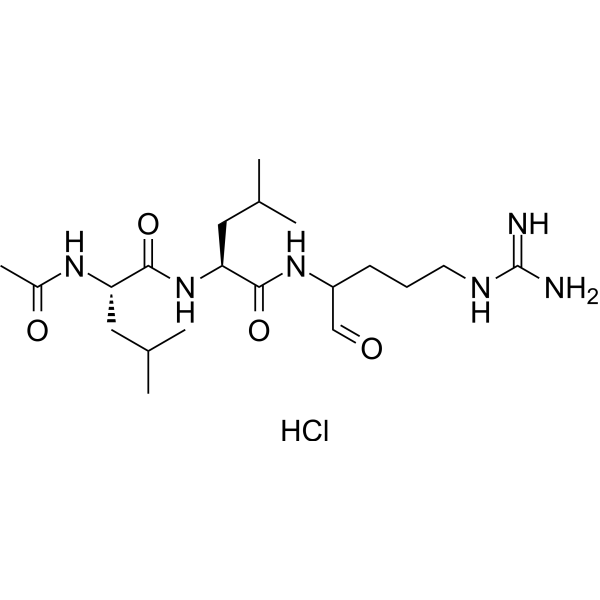
Cat. No.: HY-18234C
CAS No.: 24125-16-4
Leupeptin Ac-LL hydrochloride is a broad-spectrum protease inhibitor . By inhibiting the activation of the PTEN/PI3K/Akt/NF-κB/ERK1/2/p38 signaling pathway, Leupeptin Ac-LL hydrochloride significantly reduces LPS-induced NO and ROS production, mitochondrial membrane potential hyperpolarization, phagocytic activity, pro-inflammatory cytokine release, and M1 polarization in mouse peritoneal macrophages, and reverses autophagic flux impairment. It also decreases Concanavalin A (HY-P2149)-induced proliferation index of mouse splenic lymphocytes and the Th1/IL-10 and Th2/IL-10 cytokine ratios, thereby modulating innate and adaptive immune responses. Leupeptin Ac-LL hydrochloride inhibits blood coagulation and tumorigenesis in mouse skin. Leupeptin Ac-LL hydrochloride can be used in research on chronic inflammatory diseases and skin tumorigenesis .
loading...
    loading...
Cat. No.: HY-184737
TPP-C8-CO-DSG bromide is a derivative of Diosgenin (HY-N0177) and an anticancer agent. TPP-C8-CO-DSG bromide downregulates Bcl-2 expression and upregulates Bax expression. TPP-C8-CO-DSG bromide promotes the cleavage of Caspase 9, Caspase 3 and PARP-1. TPP-C8-CO-DSG bromide depolarizes mitochondrial membrane potential, reduces intracellular ATP production, and induces intracellular ROS accumulation. TPP-C8-CO-DSG bromide promotes Apoptosis. TPP-C8-CO-DSG bromide exhibits anticancer activity against prostate cancer, breast cancer, lung adenocarcinoma, cervical cancer and colorectal cancer. TPP-C8-CO-DSG bromide can be used in the research of cervical cancer .
loading...
    loading...
Cat. No.: HY-184943
Pan-PDK degrader-1 is a pan-PDK class PROTAC degrader that degrades PDK2, PDK3 and PDK4 with DC50 values of 9.2 nM, 9.9 nM and 11.5 nM, respectively. Pan-PDK degrader-1 recruits the mitochondrial protease HsClpP and induces selective pan-PDK degradation via HsClpP-mediated proteolysis. Pan-PDK degrader-1 reprograms mitochondrial metabolism toward oxidative phosphorylation, promoting ROS accumulation, mitochondrial permeability transition pore opening, endogenous mitochondrial apoptosis, calreticulin exposure and HMGB1 release. Pan-PDK degrader-1 upregulates cleaved Caspase-9, Caspase-3 and PARP. Pan-PDK degrader-1 inhibits primary and distal tumor growth via selective degradation of PDK in tumor tissues. Pan-PDK degrader-1 can be used for the research of breast cancer .
loading...
    loading...
Cat. No.: HY-19309
CAS No.: 223756-43-2
Synonyms: A-216546 hydrochloride
ABT-546 (A-216546) hydrochloride is an orally active ETA receptor antagonist, with Ki values of 0.46 nM and 13000 nM for human ETA and ETB receptors, respectively, and exhibits >25000-fold selectivity over the ETB receptor. ABT-546 hydrochloride effectively inhibits ET-1 (HY-P0202)-induced phosphoinositide hydrolysis (IC50 = 0.59 nM) and arachidonic acid release (IC50 = 3.03 nM), and antagonizes ET-1-induced contraction in isolated vascular rings. ABT-546 hydrochloride crosses the placental barrier but shows extremely low fetal exposure, with a favorable safety profile. ABT-546 hydrochloride inhibits ET-1-induced pressor response and downregulates the NLRP3/ROS/GSDMD-mediated pyroptosis pathway. ABT-546 hydrochloride can be used for research on abdominal aortic aneurysm .
loading...
    loading...
Cat. No.: HY-B0871R
CAS No.: 84087-01-4
Quinclorac (Standard) is the analytical standard of Quinclorac (HY-B0871). This product is intended for research and analytical applications. Quinclorac is a highly selective quinoline carboxylic acid synthetic auxin herbicide. Quinclorac weakly inhibits HPPD, accompanied by a transient decrease in carotenoids. Quinclorac upregulates ACC synthase (ACS), leading to the co-accumulation of ethylene and cyanide, while increasing the ABA/IAA ratio, which induces ROS burst, membrane lipid peroxidation (MDA) and lethal growth inhibition. Residual Quinclorac in soil can cause abnormal growth of subsequent tobacco crops. In calli of Phaseolus vulgaris, Quinclorac induces oxidative stress (increased MDA and decreased RGR), but cells after stepwise pressurized acclimation acquire a constitutive antioxidant state, which remains stable after de-acclimation and tolerates oxidative damage caused by Quinclorac. Quinclorac can be used in studies related to herbicide action mechanisms, bioremediation of soil residues, and adaptive responses of plant cells to oxidative stress .
loading...
    loading...
Cat. No.: HY-B0871S
Quinclorac- 13C is the 13C-labeled Quinclorac (HY-B0871). Quinclorac is a highly selective quinoline carboxylic acid synthetic auxin herbicide. Quinclorac weakly inhibits HPPD, accompanied by a transient decrease in carotenoids. Quinclorac upregulates ACC synthase (ACS), leading to the co-accumulation of ethylene and cyanide, while increasing the ABA/IAA ratio, which induces ROS burst, membrane lipid peroxidation (MDA) and lethal growth inhibition. Residual Quinclorac in soil can cause abnormal growth of subsequent tobacco crops. In calli of Phaseolus vulgaris, Quinclorac induces oxidative stress (increased MDA and decreased RGR), but cells after stepwise pressurized acclimation acquire a constitutive antioxidant state, which remains stable after de-acclimation and tolerates oxidative damage caused by Quinclorac. Quinclorac can be used in studies related to herbicide action mechanisms, bioremediation of soil residues, and adaptive responses of plant cells to oxidative stress .
loading...
    loading...
Cat. No.: HY-B2035R
CAS No.: 51218-49-6
Pretilachlor (Standard) is the analytical standard of Pretilachlor (HY-B2035). This product is intended for research and analytical applications. Pretilachlor is a chloroacetamide herbicide with biological activities including endocrine disruption, oxidative stress induction, apoptosis induction, and immunotoxicity. Pretilachlor exerts its effects by interfering with hormone metabolism, inducing oxidative stress, activating apoptotic pathways, and inhibiting immune functions. Pretilachlor upregulates the transcription of P53, Mdm2, and Bbc3, and increases the activities of Caspase3 and Caspase9; it upregulates the transcription of genes in the HPG/HPT axis and the activity of aromatase; it induces oxidative stress, elevates ROS levels, and upregulates CAT, SOD, and GPX. Pretilachlor downregulates the transcription of CXCL-C1C, IL-1β, and IL-8. Pretilachlor disrupts the normal physiological processes and embryonic development of fish, exhibiting significant toxicity. Pretilachlor can be used in studies related to weeding, environmental pollution, and behavioral toxicity in fish .
loading...
    loading...
Cat. No.: HY-DY1114
CAS No.: 53213-81-3
DiOC5(3) (solution) is a mitochondrial Fluorescent dye that alters membrane potential, and it also acts as an inhibitor of NADH-ubiquinone reductase (respiratory complex I). DiOC5(3) (solution) increases the NADH/NAD ratio and induces excessive production of ROS. DiOC5(3) (solution) induces Apoptosis. DiOC5(3) accumulates in the mitochondria of leukemia stem-like cells via organic anion-transporting polypeptides, specifically labels these cells, and inhibits their proliferation. DiOC5(3) (solution) enhances the cellular uptake of Hoechst 33342 (HY-15559), reduces Hoechst 33342-associated cytotoxicity, and improves the resolution of DNA content analysis by flow cytometry. DiOC5(3) (solution) shows no detectable fluorescence signal when excited in the 400-500 nm ultraviolet light range. DiOC5(3) (solution) is applicable to leukemia-related research .
Solvent and concentration: DMSO: 10 mM
loading...
    loading...
Cat. No.: HY-N10342
CAS No.: 61020-70-0
Cajanol is an isoflavanone that can be isolated from the roots of Cajanus cajan (L.) Millsp. . Cajanol inhibits cancer cell proliferation and induces cancer cell apoptosis. Cajanol promotes the expression of Bax, inhibits the expression of Bcl-2, activates caspase-9 and caspase-3, induces PARP cleavage, arrests the cell cycle at the G2/M phase, generates ROS, disrupts mitochondrial membrane potential and triggers cytochrome c release. Cajanol induces bacterial DNA damage, disrupts bacterial cell membranes, and exerts antibacterial activity in vitro. Cajanol reduces the expression of PI3K, inhibits the phosphorylation of Akt and NF-κB, downregulates the expression and transport function of P-gp, restores the sensitivity of drug-resistant cancer cells to Paclitaxel, and inhibits the growth of Paclitaxel-resistant metastatic ovarian tumors. Cajanol is applicable to research related to breast cancer, ovarian cancer and bacterial infections .
loading...
    loading...
Cat. No.: HY-N14116
CAS No.: 8000-78-0
Garlic oil is an orally effective anti-inflammatory, antioxidant, and anticancer agent. Garlic oil inhibits the activation of NF-κB, NFκB2 and NLRP3 inflammasome, and induces the expression of GSTA1, HO-1 and NQO-1. Garlic oil reduces the Bcl-2/Bax protein ratio and activates NNK-induced apoptosis (apoptosis) in lung tissues. Garlic oil attenuates NNK-induced apoptosis in MRC-5 cells and reduces excessive ROS production. Garlic oil alleviates pyroptosis (pyroptosis) and exerts a protective effect against acute lung injury in mice. Garlic oil inhibits lung tumorigenesis in mice and improves small intestinal motility in rats with type 2 diabetes . Garlic oil can be used in research related to acute lung injury, lung cancer, peptic ulcer, type 2 diabetes and hypertension .
loading...
    loading...
Cat. No.: HY-N14116A
CAS No.: 8000-78-0
Garlic oil (synthetic) is an orally effective anti-inflammatory, antioxidant, and anticancer agent. Garlic oil (synthetic) inhibits the activation of NF-κB, NFκB2 and NLRP3 inflammasome, and induces the expression of GSTA1, HO-1 and NQO-1. Garlic oil (synthetic) reduces the Bcl-2/Bax protein ratio and activates NNK-induced apoptosis (apoptosis) in lung tissues. Garlic oil (synthetic) attenuates NNK-induced apoptosis in MRC-5 cells and reduces excessive ROS production. Garlic oil (synthetic) alleviates pyroptosis (pyroptosis) and exerts a protective effect against acute lung injury in mice. Garlic oil (synthetic) inhibits lung tumorigenesis in mice and improves small intestinal motility in rats with type 2 diabetes . Garlic oil (synthetic) can be used in research related to acute lung injury, lung cancer, peptic ulcer, type 2 diabetes and hypertension .
loading...
    loading...
Cat. No.: HY-N1983R
CAS No.: 38395-02-7
Caudatin (Standard) is the analytical standard of Caudatin (HY-N1983). This product is intended for research and analytical applications. Caudatin is an orally active and brain-penetrant C-21 steroidal found in Cynanchum bungei decne with a variety of biological activities. Caudatin can inhibit cell proliferation, migration, invasion, cause cell phase arrest, induce apoptosis, autophagy, ROS prodution and loss of mitochondrial membrane potential. Caudatin activates PARP, caspase-3, -7, -9, upregulates pro-apoptotic Bad and Bax and downregulates anti-apoptotic Bcl-2 and Bcl-XL. Caudatin suppresses VEGF, FAK phosphorylation, upregulates p21, p27, DR5 protein expression, activates the p38 MAPK, JNK and PPARα/TFEB-mediated autophagy-lysosomal signaling pathways. Caudatin can be used for the research of cancer, inflammation and neurological disease, such as glioma and Alzheimer's disease .
loading...
    loading...
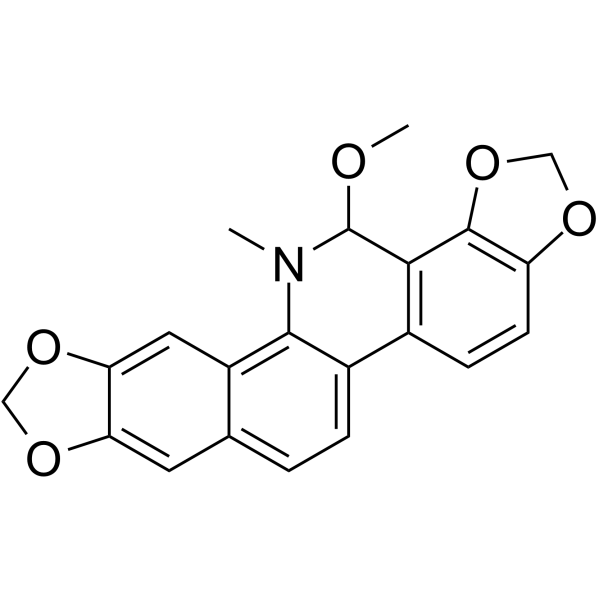
Cat. No.: HY-N3000
CAS No.: 72401-54-8
6-Methoxydihydrosanguinarine is an alkaloid with activity across multiple cancer cell types. 6-Methoxydihydrosanguinarine activates IRE1/JNK signaling, blocks Akt/mTOR and PI3K/AKT/mTOR pathways, reduces expression of Cdc25C, CyclinB1, Cdc2, YAP/TAZ, Survivin, GPX4, and EGFR, upregulates IRE1 and DR5, and activates JNK and caspases. 6-Methoxydihydrosanguinarine induces apoptosis, G2/M phase arrest, DNA damage, ROS generation, lipid peroxidation, ferroptosis, autophagy, and suppresses cancer cell growth. 6-Methoxydihydrosanguinarine disruptes the biofilm formation of Candida albicans (C. albicans). 6-Methoxydihydrosanguinarine can be used for the research of non-small cell lung cancer, hepatocellular carcinoma, melanoma, colon carcinoma, ovarian cancer and breast cancer .
loading...
    loading...
Cat. No.: HY-N3000A
6-Methoxydihydrosanguinarine hydrochloride is an alkaloid with activity across multiple cancer cell types. 6-Methoxydihydrosanguinarine hydrochloride activates IRE1/JNK signaling, blocks Akt/mTOR and PI3K/AKT/mTOR pathways, reduces expression of Cdc25C, CyclinB1, Cdc2, YAP/TAZ, Survivin, GPX4, and EGFR, upregulates IRE1 and DR5, and activates JNK and caspases. 6-Methoxydihydrosanguinarine hydrochloride induces apoptosis, G2/M phase arrest, DNA damage, ROS generation, lipid peroxidation, ferroptosis, autophagy, and suppresses cancer cell growth. 6-Methoxydihydrosanguinarine hydrochloride disruptes the biofilm formation of Candida albicans (C. albicans). 6-Methoxydihydrosanguinarine hydrochloride can be used for the research of non-small cell lung cancer, hepatocellular carcinoma, melanoma, colon carcinoma, ovarian cancer and breast cancer .
loading...
    loading...
Cat. No.: HY-N7832R
CAS No.: 6988-81-4
Petunidin-3-O-glucoside chloride (Standard) is the analytical standard of Petunidin-3-O-glucoside chloride (HY-N7832). This product is intended for research and analytical applications. Petunidin-3-O-glucoside chloride is a blood-brain barrier-penetrating tyrosinase inhibitor with an IC50 of 10.3 μM and a Ki of 9.0 μM. Petunidin-3-O-glucoside also acts as an α-glucosidase inhibitor with an IC50 of 218.2 µM. Petunidin-3-O-glucoside chloride inhibits the SIRT3/p53-mediated mitochondrial pathway and the PI3K/Akt-ERK pathway, suppresses glycolysis, and induces cell apoptosis. Petunidin-3-O-glucoside chloride scavenges ROS to exert antioxidant activity. It can be used in research related to glioblastoma multiforme, skin anti-aging and whitening, as well as obesity .
loading...
    loading...
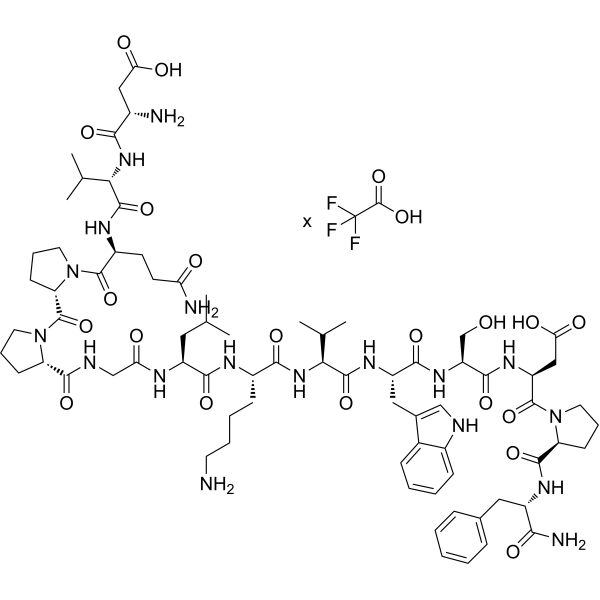
Cat. No.: HY-P5762A
Synonyms: PNX-14 TFA
Phoenixin-14 (PNX-14) TFA is an endogenous neuropeptide with multiple biological activities, and serves as the endogenous ligand of GPR173. Phoenixin-14 TFA reduces ROS production by inhibiting the HMGB1/TLR4/MyD88/NF-κB signaling axis, thereby exerting antioxidant and mitochondrial protective effects. Phoenixin-14 TFA inhibits FOXO3 phosphorylation by upregulating SIRT3 expression, suppresses apoptosis, and improves myocardial systolic/diastolic function. Phoenixin-14 TFA resists ferroptosis by activating the ATF4/SLC7A11/GPX4 axis; it activates ERK1/2 phosphorylation via GPR173. Phoenixin-14 TFA can be used in researches on neuroprotection, diabetes, cardiomyopathy, reproductive protection and so on .
loading...
    loading...
Cat. No.: HY-P990294
Anti-Mouse CD106/VCAM-1 Antibody (M/K-2.7) is an anti-mouse CD106/VCAM-1 IgG1 monoclonal antibody. Anti-Mouse CD106/VCAM-1 Antibody (M/K-2.7) reduces inflammatory response and oxidative stress by lowering p-STAT3 and reactive oxygen species (ROS) levels. Anti-Mouse CD106/VCAM-1 Antibody (M/K-2.7) can alleviate cardiac inflammation and fibrosis by reducing the expression of collagen I and collagen III. Anti-Mouse CD106/VCAM-1 Antibody (M/K-2.7) can be used for research on cardiovascular conditions such as hypertensive heart condition and subretinal fibrosis .
loading...
    loading...
Cat. No.: HY-W014937
CAS No.: 1137-42-4
Synonyms: 4HBP
4‑Hydroxybenzophenone (4HBP) is a major metabolite of Benzophenone (HY-Y0546) and is orally active. 4-Hydroxybenzophenone triggers endoplasmic reticulum stress and activates the PERK-eIF2α-ATF4-CHOP and IRE1α-XBP1s pathways, and inhibits IκB translation. 4-Hydroxybenzophenone induces endoplasmic reticulum stress, unfolded protein response activation, protein homeostasis imbalance, protein aggregation, oxidative stress, ROS accumulation, mitochondrial membrane potential decrease, ATP depletion, and cytotoxicity. 4-Hydroxybenzophenone induces neural stem cell apoptosis (apoptosis) and affects neuronal differentiation. 4-Hydroxybenzophenone promotes malignant proliferation of hepatocellular carcinoma cells and xenograft tumor growth in nude mice. 4-Hydroxybenzophenone can be used in research related to neurodevelopmental toxicity and hepatocellular carcinoma .
loading...
    loading...

