2735 Results for "

complexes

" in MedChemExpress (MCE) Product Catalog:
Products (2735)

2735 Results for "complexes" in MCE Product Catalog:

Cat. No.: HY-50907R
CAS No.: 852808-04-9
ABT-737 (Standard) is the analytical standard of ABT-737 (HY-50907). This product is intended for research and analytical applications. ABT-737, a BH3 mimetic, is a potent Bcl-2, Bcl-xL and Bcl-w inhibitor with EC50s of 30.3 nM, 78.7 nM, and 197.8 nM, respectively. ABT-737 induces the disruption of the BCL-2/BAX complex and BAK-dependent but BIM-independent activation of the intrinsic apoptotic pathway. ABT-737 induces autophagy and has the potential for acute myeloid leukemia (AML) research .
loading...
    loading...
Cat. No.: HY-D3436
Target:  

Fluorescent Dye

Research Areas:  

Cancer

Pt-Luc is a bioluminescent probe used for real-time, non-invasive monitoring of Pt (IV) prodrug reduction in living cells and animal models. The detection mechanism of Pt-Luc relies on the intracellular reduction mediated by active cysteine residues in proteins. Pt-Luc can penetrate the membrane of living cells; after entering cells, active cysteine thiolates in high-molecular-weight protein components reduce the Pt (IV) complex, thereby cleaving the caged aminoluciferin substrate. The released free aminoluciferin is then oxidized by luciferase in the presence of ATP to generate a bioluminescent signal, whose intensity is directly correlated with the reduction degree of Pt (IV) .
loading...
    loading...
Cat. No.: HY-E71265
Research Areas:  

Others

β-Acetylglucosaminidase 73A, Clostridium perfringensreleases non-reducing terminal β1-2, β1-3, β1-4 and β1-6 linked N-acetylglucosamine from complex carbohydrates. When incubated with oligosaccharides at low concentrations (<50 mU/mL) the enzyme can differentiate between GlcNAcβ1-2Man, GlcNAcβ1-4Man and GlcNAcβ1-6Man linkages.
loading...
    loading...
Cat. No.: HY-FLN0492
CAS No.: 1077-28-7
Thioctic acid solution is mainly composed of Thioctic Acid (HY-N0492). α-Lipoic Acid (Thioctic acid) is an antioxidant, which is an essential cofactor of mitochondrial enzyme complexes. α-Lipoic Acid inhibits NF-κB-dependent HIV-1 LTR activation . α-Lipoic Acid induces endoplasmic reticulum (ER) stress-mediated apoptosis in hepatoma cells . α-Lipoic Acid can be used with CPUL1 (HY-151802) to construct the self-assembled nanoaggregate CPUL1-LA NA, which has improved antitumor efficacy than CPUL1 .
loading...
    loading...
Cat. No.: HY-N0492AR
CAS No.: 2319-84-8
Synonyms: Thioctic acid sodium (Standard); (±)-α-Lipoic acid sodium (Standard); DL-α-Lipoic acid sodium (Standard)
α-Lipoic Acid (sodium) (Standard) is the analytical standard of α-Lipoic Acid (sodium). This product is intended for research and analytical applications. α-Lipoic Acid (Thioctic acid) sodium is an antioxidant, which is an essential cofactor of mitochondrial enzyme complexes. α-Lipoic Acid sodium inhibits NF-κB-dependent HIV-1 LTR activation. α-Lipoic Acid sodium induces endoplasmic reticulum (ER) stress-mediated apoptosis in hepatoma cells. α-Lipoic Acid sodium can be used with CPUL1 (HY-151802) to construct the self-assembled nanoaggregate CPUL1-LA NA, which has improved antitumor efficacy than CPUL1.
loading...
    loading...
Cat. No.: HY-N10612
CAS No.: 26577-85-5
Petasin is an orally active, potent inhibitor of mitochondrial electron transport chain complex I (ETCC1) with an IC50 of 3.55 μM. Petasin functionally activates AMPK by inhibiting mitochondrial respiration and increasing the intracellular AMP/ATP ratio. Petasin inhibits leukotriene production and eosinophil effector responses, as well as tumor cell proliferation, migration, invasion, and in vivo tumor growth and metastasis. Petasin is also a natural sesquiterpene ester that can be found in plants of the Petasites genus, such as Petasites japonicus and Petasites hybridus. Petasin can be used in studies related to cancer metabolism, glucose and lipid metabolism, and inflammation .
loading...
    loading...
Cat. No.: HY-P10409
CAS No.: 1191923-93-9
Synonyms: Small humanin-like peptide 2
SHLP2 (Small humanin-like peptide 2) is a small molecule peptide encoded by mitochondrial DNA, belonging to mitochondria derived peptide. SHLP2 has the activity of regulating apoptosis and inhibits cell death. SHLP2 binds to mitochondrial complex 1. SHLP2 improves mitochondrial metabolism by increasing respiration and biogenesis, reducing ROS, and decreasing mtDNA oxidation. SHLP2 also regulated energy homeostasis through the activation of hypothalamic neurons. SHLP2 can be used in the study of diseases related to mitochondrial dysfunction and anti-aging diseases, such as age-related macular degeneration and Parkinson’s disease .
loading...
    loading...
Cat. No.: HY-P11223
Target:  

TGF-beta/Smad

Research Areas:  

Inflammation/Immunology

CMF9, a cyclic peptide molecule, is an inhibitor of the SMAD2-SMAD4 interaction. CMF9 effectively blocks the formation of the heterodimeric complex of SMAD2 and SMAD4 by inhibiting the phosphorylation of SMAD2. CMF9 has no effect on the phosphorylation of SMAD3 or SMAD1/5/8. CMF9 downregulates the expression of fibrotic markers α-SMA and COL1A1. CMF9 exhibits potent anti-fibrotic effects in mouse models by promoting the degradation of pathological extracellular matrix (ECM) and inhibiting inflammation. CMF9 can be used for the study of liver fibrosis .
loading...
    loading...
Cat. No.: HY-P2832B
Research Areas:  

Others

Acyl-coenzyme A Synthetase, Pseudomonas sp. (EC 6.2.1.3) belongs to the ligase family and can activate the breakdown of complex fatty acids. Acyl-coenzyme A Synthetase, Pseudomonas sp. (EC 6.2.1.3) catalyzes the production of fatty acyl-CoA in a two-step process via an adenylate intermediate. Acyl-coenzyme A Synthetase, Pseudomonas sp. (EC 6.2.1.3) catalyzes the pre-reaction of fatty acid β-oxidation and can also be incorporated into phospholipids. Acyl-coenzyme A Synthetase, Pseudomonas sp. (EC 6.2.1.3) protein is involved in regulating and promoting the transport of long-chain fatty acids in mammalian cells.
loading...
    loading...
Cat. No.: HY-W611371
CAS No.: 61694-81-3
Target:  

TRP Channel iGluR

Research Areas:  

Neurological Disease

FP802 is an orally active potent TwinF interface inhibitor that disrupts and detoxifies the NMDAR/TRPM4 death complex. FP802 exerts powerful neuroprotective effects in the 5xFAD mouse model of Alzheimer’s disease (AD) by preventing cognitive decline, preserving neuronal structural integrity, reducing amyloid-β plaque formation, and mitigating mitochondrial pathology . FP802 stops loss of motor neurons, reduces serum neurofilament light chain (NfL) levels, improves motor performance, and extends life in a mouse model of amyotrophic lateral sclerosis (ALS). FP802 can be used for AD and ALS research .
loading...
    loading...
Cat. No.: HY-147099
Purity:  97.8%
Target:  

PROTACs FKBP

Research Areas:  

Cancer

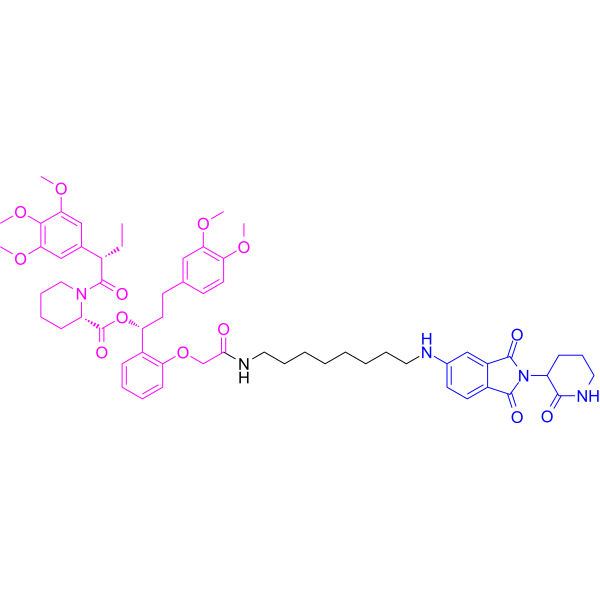
dTAG-47-NEG is an inactive bifunctional negative control PROTAC and also the diastereomer of dTAGV-1 (HY-145514D). dTAG-47-NEG does not reduce the level of BCL11A-FKBP12 F36V, nor does it induce the degradation of BCL11A-FKBP12 F36V, proteins tagged with FKBP12 F36V, wild-type FKBP12, FKBP12 F36V-KRAS G12V or FKBP12 F36V-EWS/FLI. dTAG-47-NEG exerts no antiproliferative effect in cancer cells .
loading...
    loading...
Cat. No.: HY-156084
CAS No.: 2809353-52-2
Research Areas:  

Cancer

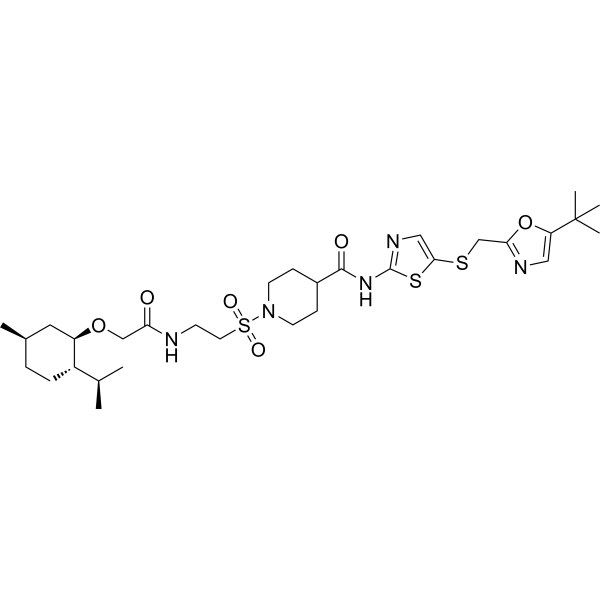
LL-K9-3 is a selective CDK9-cyclin T1 HyT degrader, with DC50 values of 0.662 μM and 0.589 μM for CDK9 and Cyclin T1, respectively. LL-K9-3 lacks an E3 ligand moiety and induces polyubiquitination and proteasome-mediated synchronous degradation of CDK9 and cyclin T1 via a hydrophobic tag-mediated mechanism. LL-K9-3 downregulates the protein levels of androgen receptor (AR) and c-Myc, and exhibits antiproliferative and pro-apoptotic (apoptosis) activity in prostate cancer cells. LL-K9-3 can be used in studies related to prostate cancer .
loading...
    loading...
Cat. No.: HY-161162
CAS No.: 2387510-81-6
Synonyms: CFT-2139
Research Areas:  

Cancer

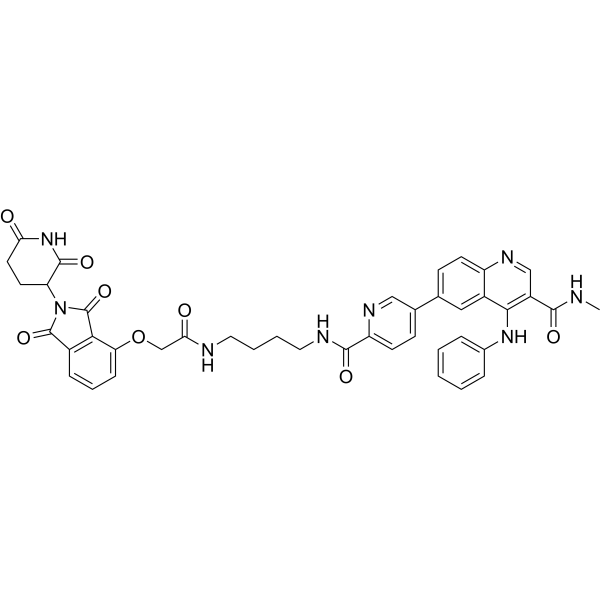
aTAG 2139 (CFT-2139) is a bifunctional tag-targeted PROTAC-class degrader that induces the degradation of the MTH1 aTAG fusion protein by recruiting cereblon, with a DC50 of 1.1 nM (in Jurkat T cells). aTAG 2139 is applicable to the research of CD19-positive cancers .
loading...
    loading...
Cat. No.: HY-162241
Research Areas:  

Cancer

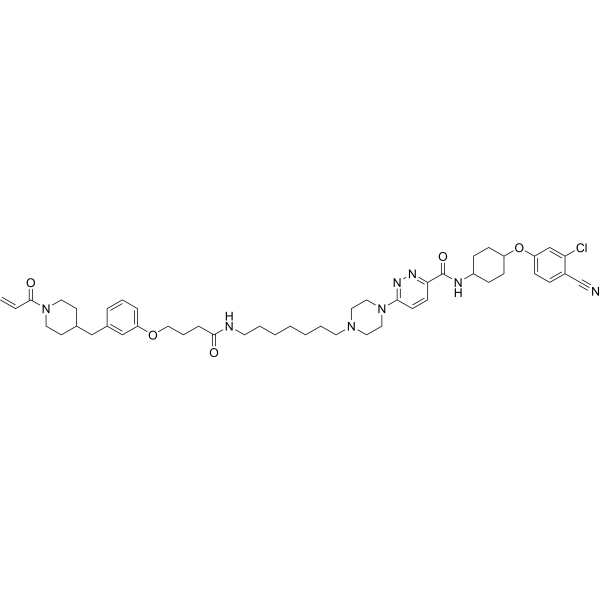
SJH1-62B is a selective Androgen receptor PROTAC degrader. SJH1-62B induces ubiquitination and degradation of the androgen receptor. SJH1-62B can be used for the research of prostate cancer .
loading...
    loading...
Cat. No.: HY-174920
CAS No.: 1797406-70-2
Research Areas:  

Cancer

PROTAC BRD4 Degrader-34 (1797406-70-2) is a VHL-recruiting PROTAC BRD4 degrader. PROTAC BRD4 Degrader-34 induces degradation of the short isoform of BRD4 and can be used in studies of BRD4-related diseases and targeted protein degradation .
loading...
    loading...
Cat. No.: HY-181305
CAS No.: 2653338-60-2
Research Areas:  

Cancer

PROTAC EZH2 Degrader-10 is a selective PROTAC protein degrader targeting EZH2. PROTAC EZH2 Degrader-10 can be used for the research of cancer .
loading...
    loading...
Cat. No.: HY-181606
Research Areas:  

Neurological Disease Cancer

Cyclo (phg-isoDGR-k)-PEG4-non-cleavable-SAR405838 is a dual MDM2 and α5β1 integrin modulator. Cyclo (phg-isoDGR-k)-PEG4-non-cleavable-SAR405838 acts as an antiproliferative agent, apoptosis inducer and cell cycle regulator, induces reactivation of p53 and upregulation of p21, redistributes glioblastoma cells from the G0/G1 phase to the G2/M phase, and enhances apoptosis. Cyclo (phg-isoDGR-k)-PEG4-non-cleavable-SAR405838 is applicable to the research of glioblastoma .
loading...
    loading...
Cat. No.: HY-183854
CAS No.: 223784-75-6
Target:  

CDK

Research Areas:  

Cancer

AG-12286 is a pan-CDK inhibitor with an IC50 value of 2 nM against cdk1/cyclin B, 6 nM against cdk2/cyclin E, and 12 nM against cdk4/cyclin D. AG-12286 is 1000-fold more selective for the CDK family than for PKC. AG-12286 can be used in cancer research .
loading...
    loading...
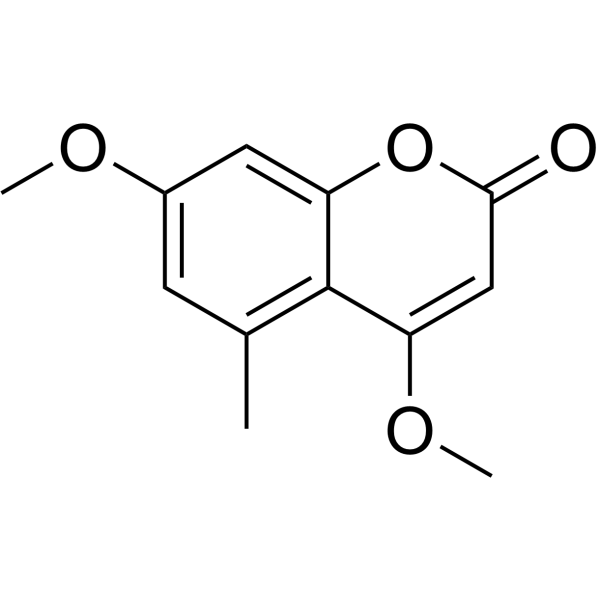
Cat. No.: HY-N11913
CAS No.: 53377-54-1
Siderin is a selective Photosystem II (PSII) inhibitor. Siderin inhibits ATP synthesis by blocking electron transport at the donor and acceptor sides of PSII Siderin can be used in the study of plant photosynthesis .
loading...
    loading...
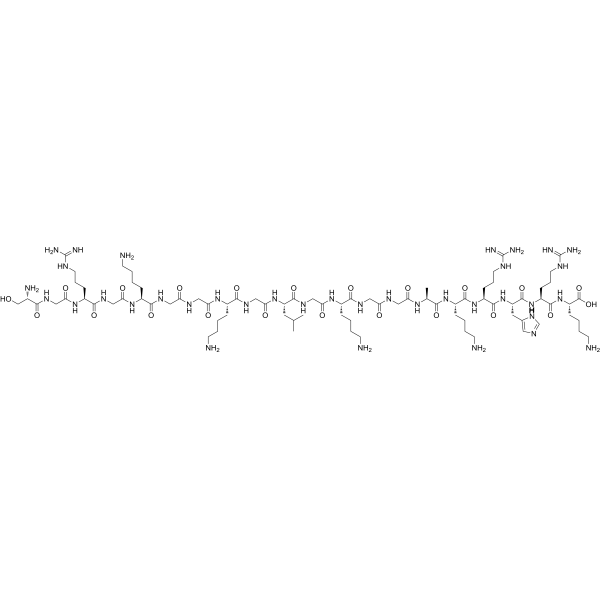
Cat. No.: HY-P1958
CAS No.: 667899-73-2
Research Areas:  

Others

Histone H4 (2-21) is a substrate peptide derived from the N-terminal region of histone H4, which serves as an acyl acceptor for lysine acetyltransferases of the MYST family (KAT). Histone H4 (2-21) participates in enzymatic reactions together with acyl-coenzyme A (acyl-CoA, and undergoes lysine acetylation and propionylation modifications catalyzed by KATs such as MOF. The apparent Km of Histone H4 (2-21) for MOF is 788.8 μM, while in the picNuA4 catalytic system, the Km and Kd values of the H4 peptide are 192 μM and 251 μM, respectively. Histone H4 (2-21) can be used in studies related to histone post-translational modifications, epigenetic regulation, and lysine acylation .
loading...
    loading...

