

245 Results for "

feed

" in MedChemExpress (MCE) Product Catalog:
Products (245)

245 Results for "feed" in MCE Product Catalog:

Cat. No.: HY-B1580A
CAS No.: 4075-81-4
Synonyms: Bioban-C, meets analytical specification of E282
Calcium propionate, meets analytical specification of E282 (Bioban-C, meets analytical specification of E282) is a calcium salt of Propionic acid with oral activity, which can be hydrolyzed into propionate and calcium ions. Calcium propionate, meets analytical specification of E282 elevates intracellular ROS levels in tumor cells, depletes GSH, reduces mitochondrial membrane potential, and thereby induces tumor cell apoptosis. In mouse colitis models, Calcium propionate, meets analytical specification of E282 modulates inflammatory factors such as IFN-γ, calprotectin, and Pglyrp3, ameliorating intestinal inflammation and metabolic disorders. In ruminants, Calcium propionate, meets analytical specification of E282 serves as a gluconeogenic precursor, regulating rumen fermentation and microbial diversity; in high-fat diet rats, it alters gut microbiota composition and affects blood biochemical parameters. Calcium propionate, meets analytical specification of E282 is commonly used as a food and feed additive, and is also used in research related to hypocalcemia, dyslipidemia, colitis, and lung cancer .
loading...
    loading...
Cat. No.: HY-B1580B
CAS No.: 4075-81-4
Synonyms: Bioban-C (Pharmaceutical primary standard, USP)
Calcium propionate, United States Pharmacopeia (USP) Reference Standard (Bioban-C (Pharmaceutical primary standard, USP)) is a calcium salt of Propionic acid with oral activity, which can be hydrolyzed into propionate and calcium ions. Calcium propionate, United States Pharmacopeia (USP) Reference Standard elevates intracellular ROS levels in tumor cells, depletes GSH, reduces mitochondrial membrane potential, and thereby induces tumor cell apoptosis. In mouse colitis models, Calcium propionate, United States Pharmacopeia (USP) Reference Standard modulates inflammatory factors such as IFN-γ, calprotectin, and Pglyrp3, ameliorating intestinal inflammation and metabolic disorders. In ruminants, Calcium propionate, United States Pharmacopeia (USP) Reference Standard serves as a gluconeogenic precursor, regulating rumen fermentation and microbial diversity; in high-fat diet rats, it alters gut microbiota composition and affects blood biochemical parameters. Calcium propionate, United States Pharmacopeia (USP) Reference Standard is commonly used as a food and feed additive, and is also used in research related to hypocalcemia, dyslipidemia, colitis, and lung cancer .
loading...
    loading...
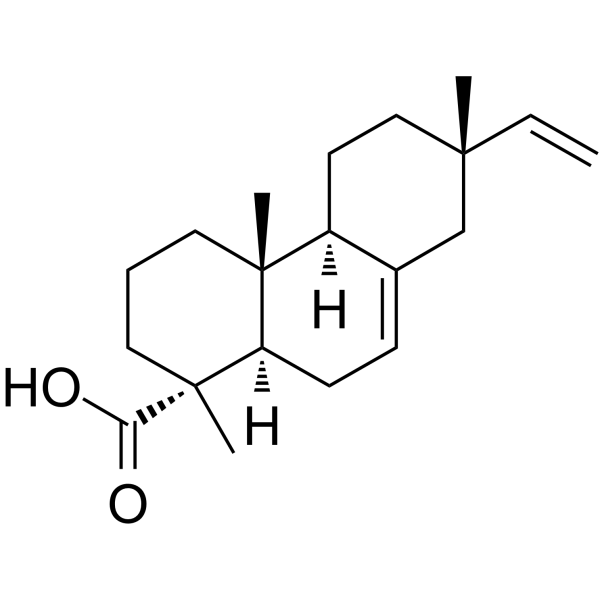
Cat. No.: HY-N3463
CAS No.: 5835-26-7
Isopimaric acid is a coniferous tree defense compound. Isopimaric acid binds to AKT and inhibits mTOR phosphorylation, thereby regulating the AKT/mTOR pathway. Isopimaric acid inhibits oxidative stress, inflammation, microglial migration, apoptosis, autophagic flux, ornithine decarboxylase activity, breast cancer proliferation and metastasis, and fungal spore germination. Isopimaric acid also induces M2 microglial polarization, mitochondrial damage, ROS accumulation, starvation-induced colon cancer cell apoptosis, and breast cancer cell cycle arrest. Isopimaric acid activates potassium channels, regulates sodium channels and calcium channels, reduces myocardial excitability, and improves arrhythmia. Isopimaric acid acts as an oxidative substrate for CYP6BW1/3, down-regulates PINK1/Parkin, and regulates calcium homeostasis, oxidative phosphorylation, EMT, and the Wnt pathway. Isopimaric acid exhibits activity against drug-resistant Staphylococcus aureus, repels feeding, and promotes the growth of rice seedlings. Isopimaric acid is suitable for research related to epilepsy, tumors, drug-resistant bacterial infections, atrial fibrillation, hypertension, hyperlipidemia, pulmonary tuberculosis, etc .
loading...
    loading...
Cat. No.: HY-L228
146 compounds

Lipids are important energy storage substances in the human body. They are involved in the regulation of cell structure and function, as well as signaling pathways and gene expression. Abnormal lipid levels in tissues or their dysregulation can lead to various diseases. These include obesity, type 2 diabetes, non-alcoholic fatty liver disease, neurodegenerative diseases, infections, and cancer. Therefore, maintaining normal levels of lipid metabolism is critical to overall health.

One of the key features of cancer is aberrant lipid metabolism. This includes alterations in lipid uptake, lipid desaturation, neolipogenesis, lipid droplets, and fatty acid oxidation in cancer cells. These changes all contribute to cellular survival in an ever-changing microenvironment. They do this by modulating feed-forward oncogenic signals and key oncogenic functions. Additionally, they affect oxidative stress, other types of stress, immune responses, and intercellular communication. Alterations in lipid metabolism have a strong impact on the properties of cancer stem cells. This includes aspects such as self-renewal, differentiation, invasion, metastasis, drug sensitivity, and resistance. Furthermore, these alterations also modulate T cell responses.

MCE can offer 146 metabolites of lipid metabolism pathways, which can be used for drug screening in cancer, immune-based diseases, metabolic diseases, and other diseases.

Cat. No.: HY-B1580AR
CAS No.: 4075-81-4
Synonyms: Bioban-C, meets analytical specification of E282 (Standard)
Calcium propionate, meets analytical specification of E282 (Standard) (Bioban-C, meets analytical specification of E282 (Standard)) is the analytical standard of Calcium propionate, meets analytical specification of E282 (HY-B1580A). This product is intended for research and analytical applications. Calcium propionate, meets analytical specification of E282 is a calcium salt of Propionic acid with oral activity, which can be hydrolyzed into propionate and calcium ions. Calcium propionate, meets analytical specification of E282 elevates intracellular ROS levels in tumor cells, depletes GSH, reduces mitochondrial membrane potential, and thereby induces tumor cell apoptosis. In mouse colitis models, Calcium propionate, meets analytical specification of E282 modulates inflammatory factors such as IFN-γ, calprotectin, and Pglyrp3, ameliorating intestinal inflammation and metabolic disorders. In ruminants, Calcium propionate, meets analytical specification of E282 serves as a gluconeogenic precursor, regulating rumen fermentation and microbial diversity; in high-fat diet rats, it alters gut microbiota composition and affects blood biochemical parameters. Calcium propionate, meets analytical specification of E282 is commonly used as a food and feed additive, and is also used in research related to hypocalcemia, dyslipidemia, colitis, and lung cancer .
loading...
    loading...

