383 Results for "

parasites

" in MedChemExpress (MCE) Product Catalog:
Products (383)

383 Results for "parasites" in MCE Product Catalog:

Cat. No.: HY-141837
CAS No.: 1820874-51-8
Target:  

Parasite

Research Areas:  

Infection

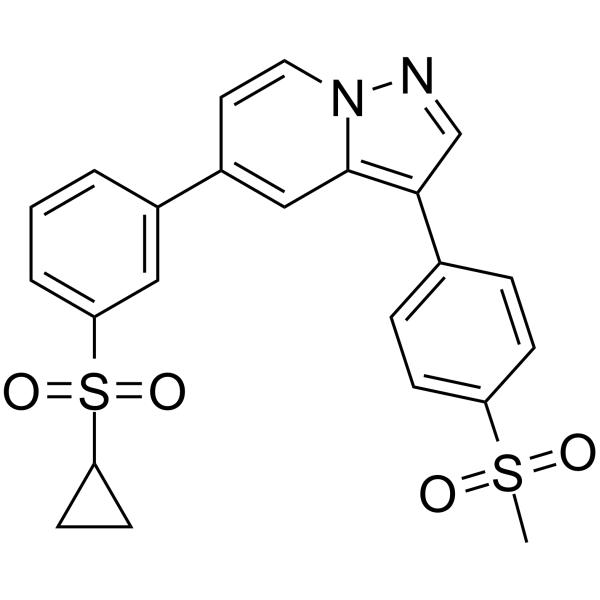
MMV674850 is potent against asexual stage parasites at 2.7 and 4.5 nM and preferentially targets early-stage gametocytes (early-stage gametocyte: IC50 4.5 ± 3.6 nM; late-stage gametocyte: IC50 28.7 ± 0.2 nM).
loading...
    loading...
Cat. No.: HY-169233
CAS No.: 2650073-66-6
Target:  

Parasite

Research Areas:  

Infection

MED6-189, a kalihinol analog, disrupts apicoplast function and vesicular trafficking in P. falciparum malaria (IC50 < 50 nM). MED6-189 targets the apicoplast, a nonphotosynthetic plastid found in most Apicomplexa parasites that is crucial for the synthesis of isoprenoids .
loading...
    loading...
Cat. No.: HY-107034
CAS No.: 23790-08-1
Synonyms: 349C59
Target:  

Parasite

Research Areas:  

Infection

Moxipraquine is a potent insecticide against Trypanosoma cruzi. Moxipraquine effectively inhibits Leishmania major, L. mexicana mexicana and L. brasiliensis panamensis but not L.b. brasiliensis .
loading...
    loading...
Cat. No.: HY-110082R
CAS No.: 130-89-2
Quinine hydrochloride (Standard) is the analytical standard of Quinine (hydrochloride) (HY-110082). This product is intended for research and analytical applications. Quinine (hydrochloride) is an alkaloid derived from the bark of the cinchona tree, acts as an anti-malaria agent. Quinine (hydrochloride) is a potassium channel inhibitor that inhibits WT mouse Slo3 (KCa5.1) channel currents evoked by voltage pulses to +100 mV with an IC50 of 169 μM .
loading...
    loading...
Cat. No.: HY-119815
CAS No.: 3810-35-3
Target:  

Bacterial

Research Areas:  

Infection

Tenonitrozole exhibits antibacterial activity through inhibition of pyruvate-ferredoxin oxidoreductase (PFOR). Tenonitrozole inhibits H. pylori and C. jejuni with MICs of 0.7 μM and 5.9 μM .
loading...
    loading...
Cat. No.: HY-124901
CAS No.: 2227-13-6
Target:  

Parasite

Research Areas:  

Infection

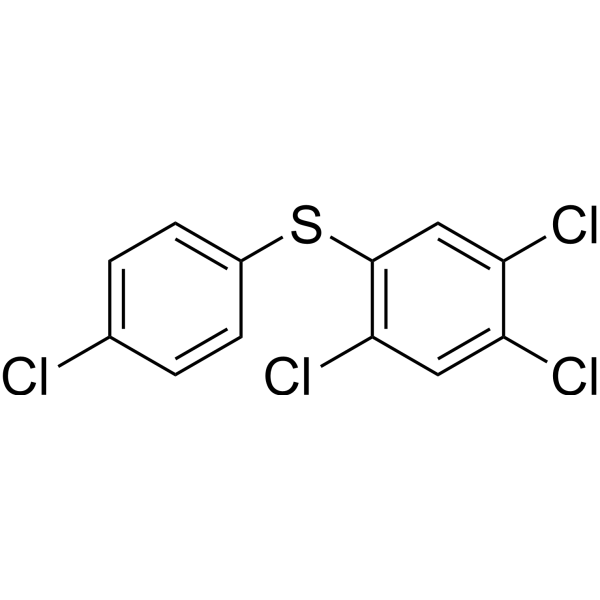
Tetrasul is an acaricide. Tetrasul inhibits Tetranychus urticae and aphids on hops. Tetrasul has also been used in research of erythematous (type one) rosacea .
loading...
    loading...
Cat. No.: HY-124901R
CAS No.: 2227-13-6
Research Areas:  

Infection

Tetrasul (Standard) is the analytical standard of Tetrasul. This product is intended for research and analytical applications. Tetrasul is an acaricide. Tetrasul inhibits Tetranychus urticae and aphids on hops. Tetrasul has also been used in research of erythematous (type one) rosacea .
loading...
    loading...
Cat. No.: HY-135625
CAS No.: 1426824-36-3
Target:  

Parasite

Research Areas:  

Infection

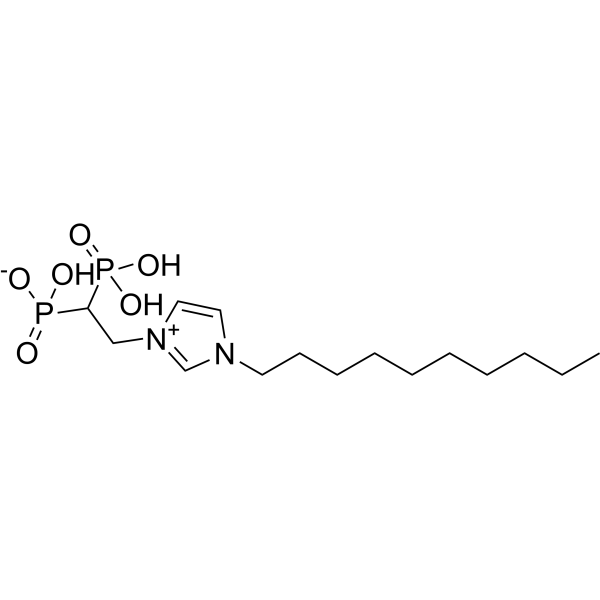
BPH-1218 is an inhibitor of squalene synthase (SQS), with the IC50 of 31 nM and 64 nM for TcSQS and HsSQS, respectively, that can be used as an anti-infective agent .
loading...
    loading...
Cat. No.: HY-148968
CAS No.: 137-42-8
Synonyms: Carbathion
Target:  

Fungal

Research Areas:  

Infection

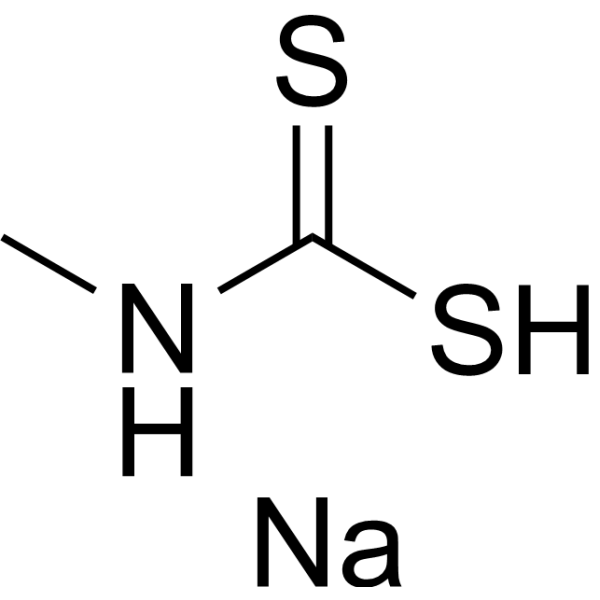
Metham sodium (Carbathion) is a broad-spectrum soil microbial suppressant. Metham sodium controls soil-borne pests and weeds. Metham sodium inhibits weed seeds, plant-parasitic nematodes, plant pathogenic fungi and soil insects .
loading...
    loading...
Cat. No.: HY-D0143R
CAS No.: 130-95-0
Quinine (Standard) is the analytical standard of Quinine (HY-D0143). This product is intended for research and analytical applications. Quinineis an orally active alkaloid extracted from cinchona bark, possessing various biological activities including antimalarial, antidengue virus (DENV), and anticancer properties. Quinine is a potassium channel inhibitor that inhibits WT mouse Slo3 (KCa5.1) channel currents evoked by voltage pulses to +100 mV with an IC50 of 169 μM .
loading...
    loading...
Cat. No.: HY-149079
CAS No.: 3046451-91-3
Target:  

Parasite Necroptosis

Research Areas:  

Infection

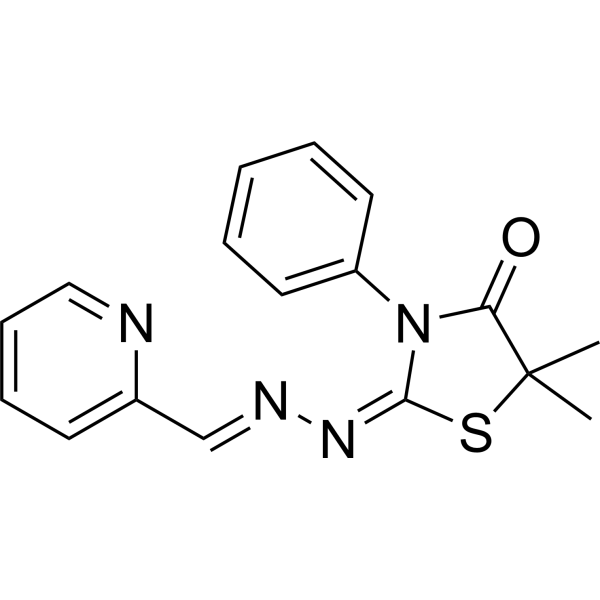
Antiparasitic agent-15, a pyridine-thiazolidinone, has anti-Trypanosoma cruzi and leishmanicidal activities. Antiparasitic agent-15 has IC50s of 0.9 μM and 0.64 μM against trypomastigote and amastigote forms of T. cruzi. Antiparasitic agent-15 has IC50s of 42.2 μM and 9.58 μM against trypomastigote and amastigote forms of L. amazonensis. Antiparasitic agent-15 induces parasite cell death through necrosis induction. Antiparasitic agent-15 induces morphological changes such as shortening, retraction and curvature of the parasite body and leakage of internal content with T. cruzi trypomastigotes .
loading...
    loading...
Cat. No.: HY-149080
CAS No.: 3046451-89-9
Target:  

Parasite Necroptosis

Research Areas:  

Infection

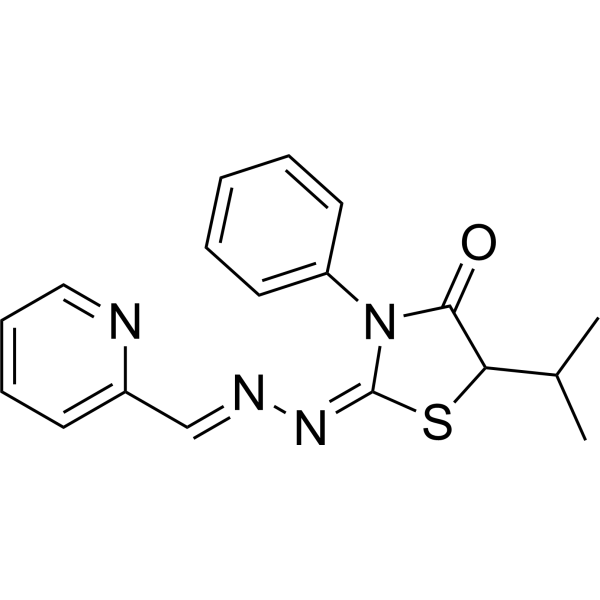
Antiparasitic agent-16, a pyridine-thiazolidinone, has anti-Trypanosoma cruzi and leishmanicidal activities. Antiparasitic agent-16 has IC50s of 1.0 μM and 0.6 μM against trypomastigote and amastigote forms of T. cruzi. Antiparasitic agent-16 has IC50s of 150.2 μM and 16.75 μM against trypomastigote and amastigote forms of L. amazonensis. Antiparasitic agent-16 induces parasite cell death through necrosis induction. Antiparasitic agent-16 induces morphological changes such as shortening, retraction and curvature of the parasite body and leakage of internal content with T. cruzi trypomastigotes .
loading...
    loading...
Cat. No.: HY-A0148B
CAS No.: 66051-76-1
Synonyms: (-)-SKF-102886 free base; (-)-WR-171669
Target:  

Parasite

Research Areas:  

Infection

(-)-Halofantrine ((-)-SKF-102886 free base; (-)-WR-171669) is an inhibitor of the malignant malaria parasite (P. falciparum) and targets multidrug-resistant P. falciparum. The pharmacokinetic parameters of (-)-Halofantrine in rats vary depending on the route of administration, distinguishing it from other isomers .
loading...
    loading...
Cat. No.: HY-162161
CAS No.: 301844-13-3
Research Areas:  

Cancer

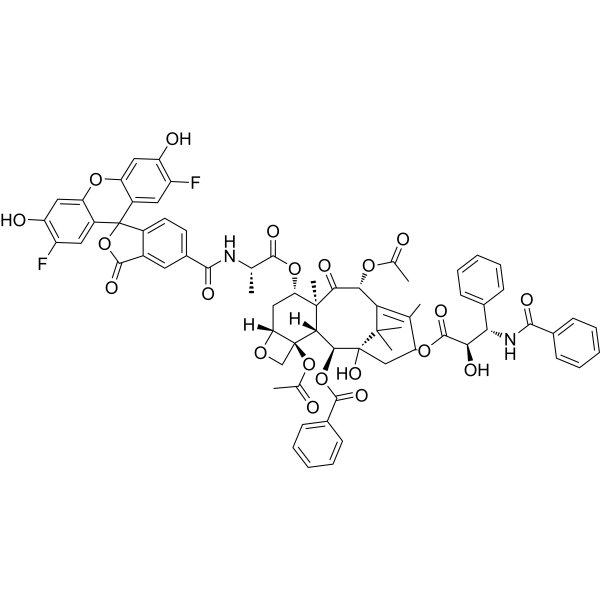
Flutax-2 is an active fluorescent derivative of Paclitaxel (HY-B0015) that binds to polymerized αβ-tubulin dimers. Flutax-2 is applicable for imaging microtubules in live cells, isolated cytoskeletons and parasites (Ex/Em=496/526 nm) .
loading...
    loading...
Cat. No.: HY-179656
CAS No.: 2455422-89-4
UA2239 is an antimalarial agent and acyclic nucleoside phosphonate. UA2239 disrupts the essential cGMP-dependent egress pathway by decreasing cGMP levels. UA2239 targets guanylyl cyclase α. UA2239 demonstrates rapid and irreversible inhibitory effects on Plasmodium parasites .
loading...
    loading...
Cat. No.: HY-B0529AR
CAS No.: 37091-65-9
Synonyms: Sodium azlocillin (Standard)
Research Areas:  

Infection

Azlocillin (sodium salt) (Standard) is the analytical standard of Azlocillin (sodium salt). This product is intended for research and analytical applications. Azlocillin sodium salt (Sodium azlocillin), a semisynthetic penicillin, is a broad spectrum β-lactam antibiotic. Azlocillin sodium salt shows antipseudomonal activity, and also potent against the malarial parasite Plasmodium falciparum .
loading...
    loading...
Cat. No.: HY-113648
CAS No.: 1025400-45-6
Target:  

HBV

Research Areas:  

Infection

LP10 is a non-azole CYP51 inhibitor with activity against Trypanosoma cruzi infection. Treatment with LP10 blocks the 14α-demethylation step, leading to disruption of the parasite cell membrane and ultimately triggering the death of important clinically relevant amoeba stages .
loading...
    loading...
Cat. No.: HY-149093
CAS No.: 1638956-72-5
Target:  

Parasite

Research Areas:  

Infection

Antileishmanial agent-14 is a sulfuretin analog with potential activity against the parasite Leishmania donovani promastigotes (IC50=4.1 μM). Antileishmanial agent-14 also inhibits infection by L. donovani amastigotes (IC50=11.1 μM) .
loading...
    loading...
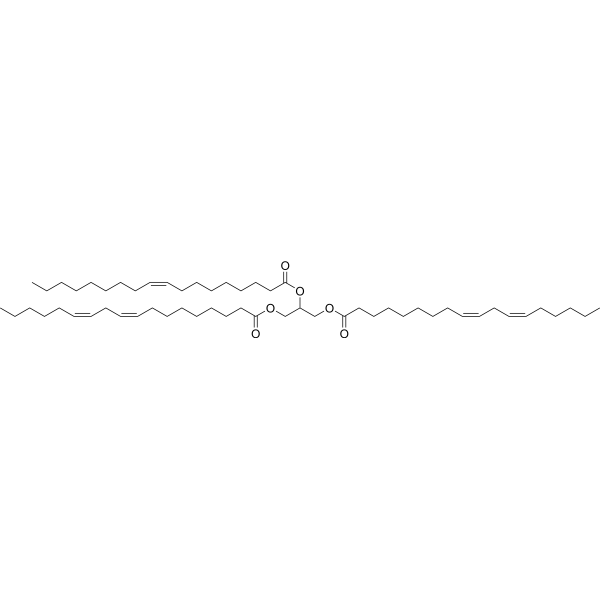
Cat. No.: HY-N8181
CAS No.: 2190-22-9
1,3-Linolein-2-Olein, a triglyceride, is an antileishmanial agent. 1,3-Linolein-2-Olein inhibits promatigotes of the parasite (IC50=0.079 ug/ml) and inhibits the growth of amastigotes (IC50= 40.03 ug/ml) .
loading...
    loading...
Cat. No.: HY-184214
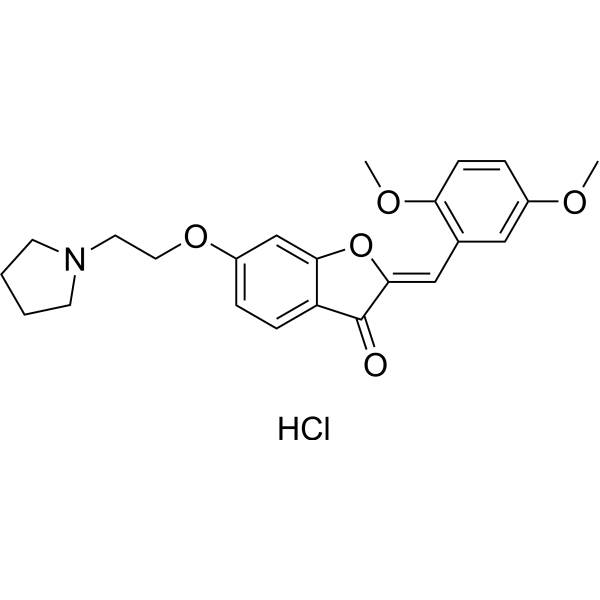
Antileishmanial agent-44 is a histone deacetylase inhibitor targeting Leishmania donovani Sir2, with an IC50 of 0.652 μM against amastigotes. Antileishmanial agent-44 elevates ROS levels to induce oxidative stress, which causes mitochondrial membrane potential depolarization, cytochrome c release, phosphatidylserine externalization and DNA fragmentation, triggers apoptosis-like cell death, and arrests the cell cycle. Antileishmanial agent-44 upregulates the expression of Th1-type cytokines and NO in macrophages, reshapes host immune responses to eliminate intracellular parasites. Antileishmanial agent-44 inhibits parasites in infected golden hamsters in vivo. Antileishmanial agent-44 can be used for the research of visceral leishmaniasis.
loading...
    loading...

