
3370 Results for "

Complex

" in MedChemExpress (MCE) Product Catalog:
Products (3370)

3370 Results for "Complex" in MCE Product Catalog:

Cat. No.: HY-121231R
CAS No.: 501-16-6
trans-Caffeic acid (Standard) is the analytical standard of trans-Caffeic acid (HY-121231). This product is intended for research and analytical applications. trans-Caffeic acid is a hydroxycinnamic acid widely distributed in coffee, propolis, and Lamiaceae herbs. trans-Caffeic acid exhibits significant antioxidant and photoprotective activities, and can be used in cancer-related research. trans-Caffeic acid readily undergoes reversible isomerization to form its cis-isomer in protic solvents, under high temperature, ultraviolet radiation, and stress conditions. Binding of trans-Caffeic acid with aluminum, lead, or copper ions attenuates isomerization and inhibits the formation of vinylcatechol, while complexation with lead or copper ions also promotes the formation of aesculetin .
loading...
    loading...
Cat. No.: HY-129692R
CAS No.: 27570-38-3
Withanone (Standard) is the analytical standard of Withanone (HY-129692). This product is intended for research and analytical applications. Withanone is an active ingredient from the roots of Withania somnifera and a GRP75 inhibitor. Withanone has multifunctional neuroprotective effects in alleviating cognitive dysfunction. In neuron-like cells, Withanone can inhibit NMDA-induced excitotoxicity. Withanone can inhibit white adipose tissue browning by blocking the formation of the GRP75-ANT2-UCP1 complex, thereby alleviating cancer-related cachexia. Withanone can be used in the research of tumors and nervous system diseases .
loading...
    loading...
Cat. No.: HY-13259G
CAS No.: 133407-82-6
Synonyms: Z-Leu-Leu-Leu-al (GMP)
MG-132 (GMP) (Z-Leu-Leu-Leu-al (GMP)) is MG-132 (HY-13259) produced by using GMP guidelines. GMP small molecules works appropriately as an auxiliary reagent for cell therapy manufacture. MG-132 (Z-Leu-Leu-Leu-al) is a potent proteasome and calpain inhibitor with IC50s of 100 nM and 1.2 μM, respectively. MG-132 effectively blocks the proteolytic activity of the 26S proteasome complex. MG-132, a peptide aldehyde, also is an autophagy activator. MG-132 also induces apoptosis .
loading...
    loading...
Cat. No.: HY-134508
CAS No.: 34435-05-7
Purity:  99.92%
Target:  

mTOR

Research Areas:  

Cancer

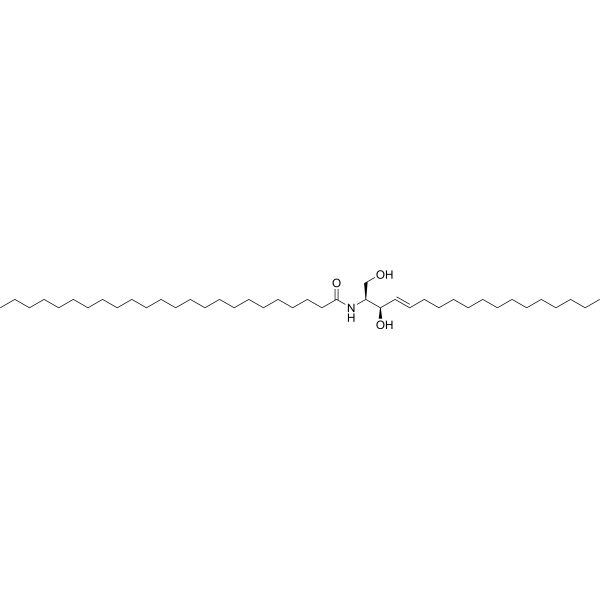
C24-Ceramide is an orally active competitive binding agonist of PIP4K2C (mTOR complex regulator), thereby activating the mTOR signaling pathway. At the same time, C24-Ceramide changes the membrane morphology by inducing the formation of a partially interlocked gel phase in the phospholipid bilayer. C24-Ceramide can promote the proliferation and migration of keratinocytes to accelerate skin wound healing and drive the proliferation and metastasis of gallbladder cancer cells. The level of C24-Ceramide in serum can be used as a diagnostic marker for gallbladder cancer .
loading...
    loading...
Cat. No.: HY-136952
CAS No.: 1822331-55-4
p-SCN-Bn-HOPO is a bifunctional chelator that forms stable octadentate complexes with Zr (IV) and 89Zr 4+ via four 1,2-hydroxypyridone groups. p-SCN-Bn-HOPO conjugates with antibodies through the formation of thiourea bonds with lysine residues, and enables efficient 89Zr radiolabeling under mild conditions. p-SCN-Bn-HOPO inhibits bone uptake of free radiometals, stabilizes radiometal-antibody conjugates, and achieves PET imaging with low background and enhanced tumor-to-organ contrast. p-SCN-Bn-HOPO can be used in breast cancer-related research .
loading...
    loading...
Cat. No.: HY-139294
CAS No.: 2417370-67-1
Research Areas:  

Cancer

PROTAC BRD4 Degrader-15 is a BRD4 PROTAC degrader with a DC50 of 2.1 nM. PROTAC BRD4 Degrader-15 forms a ternary complex with BRD4 and VHL ubiquitin ligase to induce degradation. PROTAC BRD4 Degrader-15 inhibits the transcription level of the MYC gene. PROTAC BRD4 Degrader-15 suppresses human megakaryocytopoiesis and exhibits antigen-dependent tumor growth inhibition in xenograft models of prostate cancer and acute myeloid leukemia. PROTAC BRD4 Degrader-15 can be used in studies related to prostate cancer and acute myeloid leukemia .
loading...
    loading...
Cat. No.: HY-148452
CAS No.: 1402931-84-3
Purity:  98.82%
Research Areas:  

Cancer

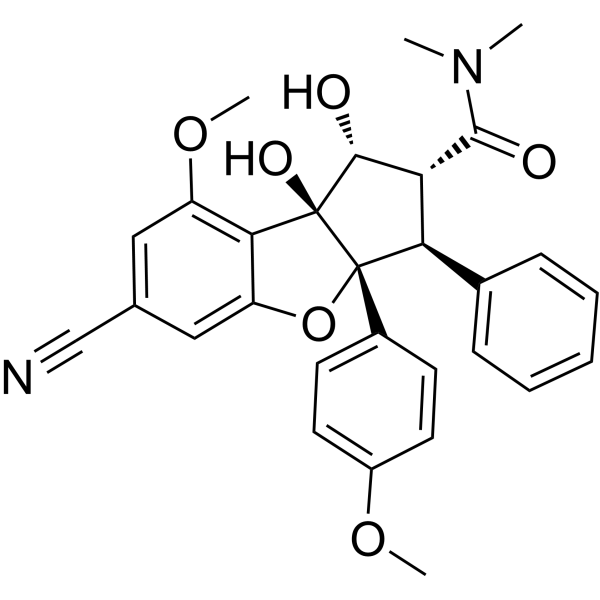
eIF4A3-IN-18 (compound 74) is a Silvestrol (HY-13251) analogue. eIF4A3-IN-18 interferes the assembling of eIF4F translation complex with EC50 values of 0.8, 35 and 2 nM for myc-LUC, tub-LUC and the growth inhibition for MBA-MB-231 cells. eIF4A3-IN-18 also has cytotoxicity to RMPI-8226 cells with an LC50 of 0.06 nM. eIF4A3-IN-18 can be used for the research of human cancer pathogenesis .
loading...
    loading...
Cat. No.: HY-148457
CAS No.: 1613641-69-2
Synonyms: Izervay
Avacincaptad pegol (Izervay) is a selective inhibitor targeting complement component C5, and is a pegylated ribonucleic acid aptamer. Avacincaptad pegol inhibits the cleavage of C5 into pro-inflammatory C5a and C5b, which forms the membrane attack complex (C5b-9), thereby reducing inflammatory cell recruitment and retinal cell damage. Avacincaptad pegol can slow the growth of geographic atrophy (GA) lesions and reduce the risk of persistent vision loss. Avacincaptad pegol can be used in research of geographic atrophy associated with age-related macular degeneration (AMD) and has been approved by the FDA .
loading...
    loading...
Cat. No.: HY-149127
CAS No.: 1039760-91-2
Purity:  ≥98.0%
Synonyms: ASC-JM17; ALZ-003
Rosolutamide (ASC-JM17) is an orally active Nrf1/Nrf2 activator. Rosolutamide activates Hsf1 pathways, upregulates proteasome subunits and antioxidant enzymes, induces proteasome complex structural rearrangement, and enhances ubiquitin-proteasome system-mediated degradation. Rosolutamide reduces mutant androgen receptor and ataxin-3 aggregates, restores mitochondrial function, attenuates reactive oxygen species (ROS) levels, induces apoptosis and ferroptosis, and inhibits cancer cell growth. Rosolutamide can be used for the research of spinal and bulbar muscular atrophy, Huntington’s disease, and temozolomide-resistant glioblastoma .
loading...
    loading...
Cat. No.: HY-152134
CAS No.: 2785404-83-1
Purity:  98.60%
Research Areas:  

Cancer

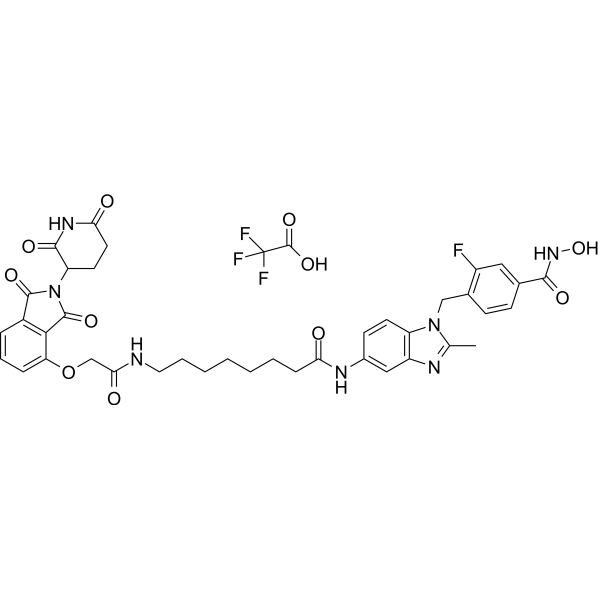
PROTAC HDAC6 degrader 11 is a PROTAC degrader targeting HDAC6, with a DC50 of 19.39 nM in HL-60 leukemia cells. PROTAC HDAC6 degrader 11 can form a ternary complex with HDAC6 and the cereblon E3 ligase, inducing polyubiquitination and proteasomal degradation of HDAC6. PROTAC HDAC6 degrader 11 inhibits the enzymatic activity of HDAC1 and does not trigger HDAC1 degradation. PROTAC HDAC6 degrader 11 induces hyperacetylation of α-tubulin. PROTAC HDAC6 degrader 11 can be used in related research on leukemia .
loading...
    loading...
Cat. No.: HY-157288
Research Areas:  

Metabolic Disease

(R)-Phe-A110/B319, a hapten, is a selective binder to tumor-associated antigens. (R)-Phe-A110/B319 has a 20-fold higher affinity towards the H1047R mutant of p110α in the p110α/p85α PI3K complex. (R)-Phe-A110/B319 can be used for the research of conditional chimeric antigen receptor T (CAR-T) cell activation and tumor targeting .
loading...
    loading...
Cat. No.: HY-159455
CAS No.: 2568523-81-7
Target:  

PROTACs SWI/SNF Complex

Research Areas:  

Cancer

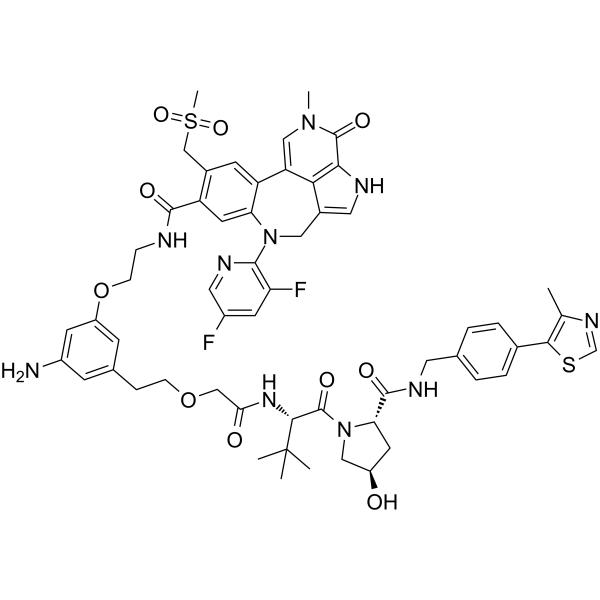
PROTAC SMARCA2/4-degrader-4 (Compound I-434) is a PROTAC degrader for catalytic subunit of the SWI/SNF complex SMARCA2 and SMARCA4. PROTAC SMARCA2/4-degrader-4 degrades SMARCA2 in MV411 and in A549 with DC50 <100 nM, degrades SMARCA4 in MV411 with DC50 <100 nM. (Pink: Ligand for target protein (HY-159472); Black: Linker (HY-159478); Blue: Ligand for E3 ligase (S,R,S)-AHPC (HY-125845))
loading...
    loading...
Cat. No.: HY-160968
CAS No.: 58957-91-8
4-Demethoxy-7,9-di-epi-daunorubicin, a derivative of Daunorubicin (HY-13062A), is an anthracycline antibiotics. 4-Demethoxy-7,9-di-epi-daunorubicin can bind to calf thymus DNA and forms a complex with the stacked DNA base pairs. 4-Demethoxy-7,9-di-epi-daunorubicin can inhibit prokaryotic nucleic acid polymerases, including E. coli DNA polymerase I and RNA polymerase. 4-Demethoxy-7,9-di-epi-daunorubicin can be used for researches of cancer and infection .
loading...
    loading...
Cat. No.: HY-163879
hMAO-B-IN-9 (Compound 25c) is a non-competitive inhibitor for monoamine oxidase B (MAO-B) with an IC50 of 1.58 µM (hMAO-B). hMAO-B-IN-9 forms complex with iron ions as a chelator, and inhibits Erastin (HY-15763)-induced ferroptosis. hMAO-B-IN-9 exhibits antioxidant activity by downregulating the level of reactive oxygen species (ROS). hMAO-B-IN-9 improves cognitive function in mice, without significant toxicity (30 mg/kg). hMAO-B-IN-9 is blood-brain barrier permeable, according to the in silico prediction .
loading...
    loading...
Cat. No.: HY-16591R
CAS No.: 1260251-31-7
Synonyms: TL32711 (Standard)
Research Areas:  

Infection Cancer

Birinapant (Standard) is the analytical standard of Birinapant (HY-16591). This product is intended for research and analytical applications. Birinapant (TL32711), a bivalent Smac mimetic, is a potent antagonist for XIAP and cIAP1 with Kds of 45 nM and less than 1 nM, respectively. Birinapant (TL32711) induces the autoubiquitylation and proteasomal degradation of cIAP1 and cIAP2 in intact cells, which results in formation of a RIPK1: caspase-8 complex, caspase-8 activation, and induction of tumor cell death. Birinapant (TL32711) targets TRAF2-associated cIAPs and abrogates TNF-induced NF-κB activation.
loading...
    loading...
Cat. No.: HY-169093
CAS No.: 2768610-97-3
Research Areas:  

Cancer

MS41 is a ENL PROTAC degrader with a DC50 of 3.50 nM. MS41 recruits the VHL E3 ubiquitin ligase, triggers ENL degradation via the ubiquitin-proteasome system, and simultaneously induces AF9 degradation. MS41 reduces the chromatin occupancy of ENL-associated transcription elongation complexes, suppresses oncogene expression, and activates differentiation gene expression. MS41 inhibits leukemia cell growth and induces cell cycle arrest and apoptosis. MS41 inhibits leukemia progression in xenograft mouse models. MS41 can be used for research on mixed lineage leukemia-rearranged leukemia and nephroblastoma .
loading...
    loading...
Cat. No.: HY-169264
Research Areas:  

Cancer

SJYHJ-026 is a PROTAC degrader targeting PXR, with a DC50 of 86.6 nM in SNU-C4 HiBiT-PXR KI cells. SJYHJ-026 shows higher selectivity for PXR over CAR, VDR, FXR, LXRα and LXRβ, and can bind to VHL to form a PXR-SJYHJ-026-VHL complex, inducing proteasomal degradation of PXR. SJYHJ-026 blocks agonist-induced PXR-mediated gene expression (including CYP3A4) and reduces basal PXR activity at the CYP3A4 promoter. SJYHJ-026 can be used for the research of colorectal cancer .
loading...
    loading...
Cat. No.: HY-170557
Research Areas:  

Cancer

Topoisomerase IIα-IN-10 (Compound 13r) is an inhibitor of Topoisomerase IIα. It binds to the active site of DNA when complexed with Topoisomerase IIα, and this binding is stabilized through interactions with DNA base pairs and amino acid residues. Topoisomerase IIα-IN-10 can induce Apoptosis by intercalating DNA and inhibiting Topoisomerase IIα, thereby disrupting the mitochondrial membrane potential and inhibiting the growth of HCT116 cell lines, with an IC50 of 4.37 μM against HCT116 cells. Topoisomerase IIα-IN-10 can be used for research in the field of cancer treatment .
loading...
    loading...
Cat. No.: HY-172777
CAS No.: 3052432-15-9
SDH-IN-25 is a succinate dehydrogenase (SDH) inhibitor (IC50 = 4.82 mg/L). SDH-IN-25 exhibited broad-spectrum and potent antifungal activity. SDH-IN-25 mimics the interaction pattern of commercial fungicide Fluxapyroxad (HY-135549) through binding to SDH amino acid residues (TRP173, TYR58, and ARG43). SDH-IN-25 can induce hyphal morphology, interfere with respiratory metabolism by binding to complex II, generate reactive oxygen species (ROS), and affect mitochondrial membrane potential (MMP) in mycelia. SDH-IN-25 can be studied in research for agricultural disease control .
loading...
    loading...
Cat. No.: HY-173422
Research Areas:  

Cancer

MS2133 is a VHL-recruiting DOT1L PROTAC degrader. MS2133 possesses antiproliferative activity with a human DOT1L IC50 of 4.6 nM, forms a ternary complex with DOT1L and VHL E3 ligase to drive DOT1L ubiquitination and subsequent proteasomal degradation without affecting DOT1L mRNA transcription, inhibits the proliferation of mixed lineage leukemia-rearranged leukemia cells and downregulates H3K79Me2, restrains proliferation of both tumor and normal cells but lacks cytotoxicity against normal cells, and can be used for the research of mixed lineage leukemia-rearranged leukemia .
loading...
    loading...

