
293 Results for "

tissue selectivity

" in MedChemExpress (MCE) Product Catalog:
Products (293)

293 Results for "tissue selectivity" in MCE Product Catalog:

Cat. No.: HY-108596R
CAS No.: 18200-13-0
BL-1249 (Standard) is the analytical standard of BL-1249 (HY-108596). This product is intended for research and analytical applications. BL-1249 is a nonsteroidal anti-inflammatory agent (NSAID) and a potassium channel activator. BL-1249 potently activates K2P2.1 (TREK-1) and K2P10.1 (TREK-2) with EC50 values of 5.5 μM and 8.0 μM, respectively. BL-1249 extracellular application activates all TREK subfamily members but has no effect on other K2P subfamilies. BL-1249 exhibits more selective for the bladder (EC50 of 1.26 μM) than vascular tissue (EC50 of 21.0 μM) .
loading...
    loading...
Cat. No.: HY-182503
CAS No.: 144928-48-3
Target:  

Adenosine Kinase

Research Areas:  

Others Inflammation/Immunology

GP515 is a potent and selective adenosine kinase inhibitor with a human IC50 of 4 nM. GP515 exerts tissue protective effects, produces long-lasting hepatic microcirculation effects after hemorrhagic shock, and induces dose- and time-related VEGF mRNA and protein expression in normoxic rat myocardial myoblasts, with additive VEGF increases during mild hypoxia and no effect during severe hypoxia. GP515 suppresses IFNγ synthesis and CD69 expression in DSS-induced colitis. GP515 also shows a dose-dependent suppression of TNF-α production with an IC50 of 80 μM and can be reversed in the presence of the cAMP antagonist (Rp)-cAMPS. Combinations of GP515 with either adenosine or rolipram led to an additive inhibition of TNF-α synthesis. GP515 can be used for the research of hemorrhagic shock .
loading...
    loading...
Cat. No.: HY-184389
Research Areas:  

Inflammation/Immunology

PROTAC HDAC6 degrader 10 is a highly efficient, safe and selective HDAC6 PROTAC degrader with a pIC50 of 8.75 and a pDC50 of 9.2 in BEAS-2B cells. PROTAC HDAC6 degrader 10 recruits cereblon to form a ternary complex with HDAC6, thereby achieving the degradation of HDAC6. PROTAC HDAC6 degrader 10 significantly induces hyperacetylation of α-tubulin without affecting the acetylation of H3, and achieves sustained HDAC6 knockdown in mouse lung tissues. PROTAC HDAC6 degrader 10 exhibits high bioavailability after subcutaneous administration in mice. PROTAC HDAC6 degrader 10 enables the study of HDAC6 pharmacology via chemical knockdown of HDAC6 in vitro and in vivo, and can be used for research on pulmonary diseases .
loading...
    loading...
Cat. No.: HY-B0735AR
CAS No.: 67227-57-0
Synonyms: Fenoldopam methanesulfonate (Standard); SKF-82526 mesylate (Standard)
Fenoldopam mesylate (Standard) is the analytical standard of Fenoldopam mesylate (HY-B0735A). This product is intended for research and analytical applications. Fenoldopam (SKF-82526) mesylate is a selective dopamine D1 receptor agonist. Fenoldopam mesylate binds to rat D1B dopamine receptors (Kd = 11 nM) and human D1A receptors (Kd = 17 nM) in COS-7 cell membranes expressing the cloned receptors. Fenoldopam mesylate modulates dopamine receptor expression, induces vasorelaxation in vascular tissues, reverses glomerular hyperfiltration in rat models, increases intracellular cAMP levels, promotes DARPP-32 phosphorylation in small cell lung cancer (SCLC) cells, inhibits cytokine secretion, and downregulates T cell activation markers in activated human T cells. Fenoldopam mesylate can be used for research on hypertension, acute kidney injury, psoriasis, and small cell lung cancer.
loading...
    loading...
Cat. No.: HY-P1130
CAS No.: 908844-75-7
Synonyms: Galanin-(2-13)-Glu-His-(Pro)3-(Ala-Leu)2-Ala-amide
M871 (Galanin-(2-13)-Glu-His-(Pro)3-(Ala-Leu)2-Ala-amide) is an orally active and selective galanin receptor type 2 (GalR2) antagonist. M871 exhibits Ki values of 13.1 nM, 420 nM and >10 μM for GalR2, GalR1 and GalR3 respectively. M871 relieves the mice allergic rhinitis by reducing IgE production, as well as the number of B cells in tissues. M871 can inhibit the nerve invasion of salivary adenoid cystic carcinoma (SACC) and alleviate myocardial ischemia-reperfusion injury. M871 can be used for research on GalR2-related diseases (such as epilepsy, pain) .
loading...
    loading...
Cat. No.: HY-P5640
CAS No.: 179264-81-4
Target:  

Bacterial Parasite

Research Areas:  

Infection

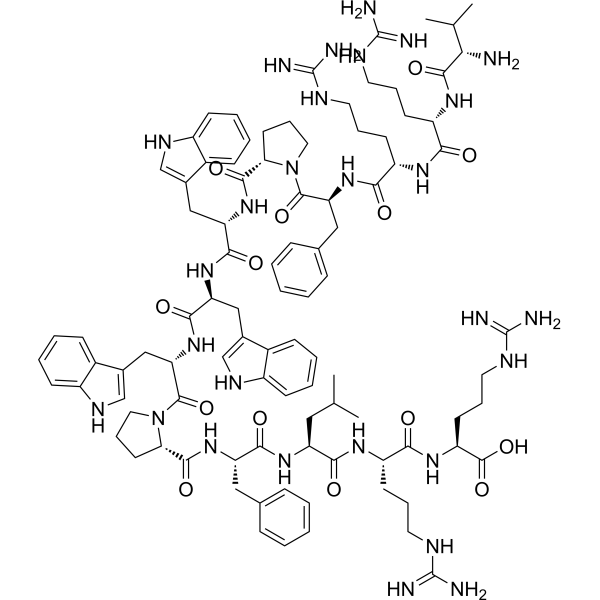
Tritrpticin is a porcine-derived antimicrobial peptide with properties such as membrane disruption and hemolysis. Tritrpticin disrupts the cell membranes of bacteria, fungi and Jurkat T cell leukemia cells and induces their death. Tritrpticin also enhances the efficacy of Metronidazole (HY-B0318) against *Trichomonas vaginalis*, reduces plasma endotoxin and inflammatory cytokine levels, restricts bacterial growth in blood and visceral tissues, decreases the mortality rate of septic shock in rats and enhances the therapeutic effect of ertapenem. Tritrpticin exhibits selective cytotoxicity against Jurkat T cell leukemia cells, while showing low toxicity to normal peripheral blood mononuclear cells and red blood cells, and can serve as a template for antimicrobial peptide design. Tritrpticin can be applied to research related to bacterial infections, fungal infections, trichomoniasis, septic shock and leukemia .
loading...
    loading...
Cat. No.: HY-P990301

Target:  

Amyloid-β

Research Areas:  

Neurological Disease

Anti-Human/Mouse/Rat Amyloid-beta Antibody (MOAB-2) is a mouse-derived IgG2b λ type antibody inhibitor, targeting to Amyloid-beta. Anti-Human/Mouse/Rat Amyloid-beta Antibody (MOAB-2) recognizes unaggregated, oligomeric or fibrillar forms of Aβ42 and unaggregated Aβ40. Anti-Human/Mouse/Rat Amyloid-beta Antibody (MOAB-2) is selective for human Aβ42 over Aβ40, but not amyloid precursor protein (APP). Anti-Human/Mouse/Rat Amyloid-beta Antibody (MOAB-2) can immunostain human or rat and mouse tissue. Anti-Human/Mouse/Rat Amyloid-beta Antibody (MOAB-2) can be used for detections of western blot, immunohistochemistry, immunofluorescence, immunoprecipitation and ELISA .
loading...
    loading...
Cat. No.: HY-P992323

Target:  

VEGFR Tie ERK

Research Areas:  

Cardiovascular Disease Cancer

BI-836880 is a humanized bispecific nanobody and a selective inhibitor of VEGF and ANG2, with a Kd of 16 pM for hANG2, an EC50 of 1.4 nM for VEGF165, and an EC50 of 2.3 nM for VEGF121. BI-836880 blocks ERK phosphorylation downstream of VEGF-A as well as TIE2 phosphorylation downstream of ANG2. BI-836880 does not inhibit ANG1-mediated TIE2 phosphorylation. BI-836880 exerts anti-angiogenic effects, reduces the number of immature endothelial vessels in tumor tissues, and inhibits tumor growth in preclinical models. BI-836880 can be used in the research of pancreatic cancer, non-small cell lung cancer, renal cell carcinoma, ovarian cancer, colon cancer, and Lewis lung cancer .
loading...
    loading...
Cat. No.: HY-149878
CAS No.: 3037514-38-5
Purity:  98.81%
Research Areas:  

Cancer

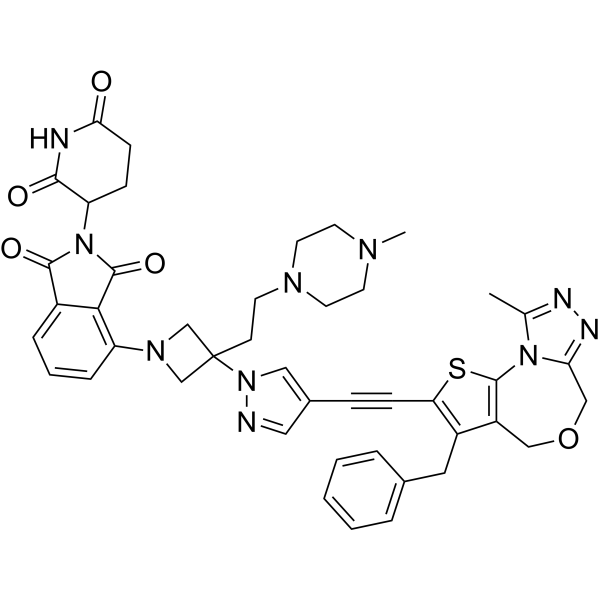
BD-9136 is a selective BRD4 PROTAC degrader with a DC50 of 1.2 nM, and exhibits a selectivity of ≥1000-fold over BRD2 and BRD3. BD-9136 preferentially forms a ternary complex with the BD1 domain of BRD4, and downregulates the expression of B7-H4 by disrupting the PR-P300-BRD4 axis. BD-9136 depletes BRD4 protein in tumor tissues, inhibits tumor growth, reduces B7-H4 protein expression, increases CD8+ T cell infiltration, and enhances tumor sensitivity to anti-PD-L1. Degradation of BRD4 by BD-9136 rescues the erythroid differentiation block induced by LSD1 inhibition, and transient administration restores erythroid output while retaining HbF induction. BD-9136 causes no adverse effects in mice at effective doses. BD-9136 can be used in studies related to acute myeloid leukemia, acute lymphoblastic leukemia and breast cancer .
loading...
    loading...
Cat. No.: HY-149662
CAS No.: 2681302-83-8
Purity:  99.92%
Research Areas:  

Cardiovascular Disease

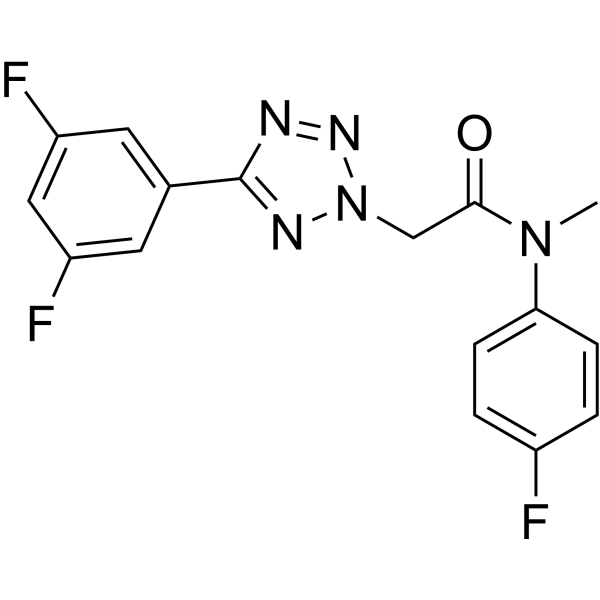
TMDJ-035 is a high-affinity, selective RyR2 inhibitor with an EC50 of 0.0130 μM. TMDJ-035 reduces RyR2 protein expression without affecting action potential-induced Ca 2+ transients. TMDJ-035 decreases ATP content and intracellular Ca 2+ levels. TMDJ-035 inhibits arrhythmias in a CPVT mouse model carrying mutant RyR2s. TMDJ-035 has no effect on electrocardiogram parameters or cardiac systolic function. TMDJ-035 exacerbates heart failure in mouse myocardial infarction models and hypoxic cardiomyocytes by altering cardiac function, causing tissue damage, promoting inflammatory infiltration, collagen deposition, and changes in Myosin heavy chain/actin expression. TMDJ-035 can be used in studies related to heart failure, catecholaminergic polymorphic ventricular tachycardia, and arrhythmias .
loading...
    loading...
Cat. No.: HY-178958
CAS No.: 3122526-69-3
PPAR agonist 7 is an orally active pan-PPAR agonist, demonstrating potent activation of all three subtypes, PPARα (EC50 = 1.51 μM), PPARδ (EC50 = 1.11 μM), and PPARγ (EC50 = 3.14 μM). PPAR agonist 7 significantly enhances glucose uptake in adipocytes while exhibiting minimal adipogenic activity. PPAR agonist 7 can suppress PPARγ Ser273 phosphorylation in white adipose tissue and upregulate insulin-sensitizing genes. PPAR agonist 7 does not cause weight gain or fluid retention in high-fat diet (HFD)/ Streptozotocin (HY-13753) (STZ)-induced type 2 diabetes mellitus (T2DM) models. PPAR agonist 7 has selective modulation of PPAR signaling pathways without activation of adipogenic gene programs. PPAR agonist 7 can be used for the study of diabetes .
loading...
    loading...
Cat. No.: HY-W068119A
CAS No.: 134272-64-3
Synonyms: 2-Maleimidoethylamine hydrochloride
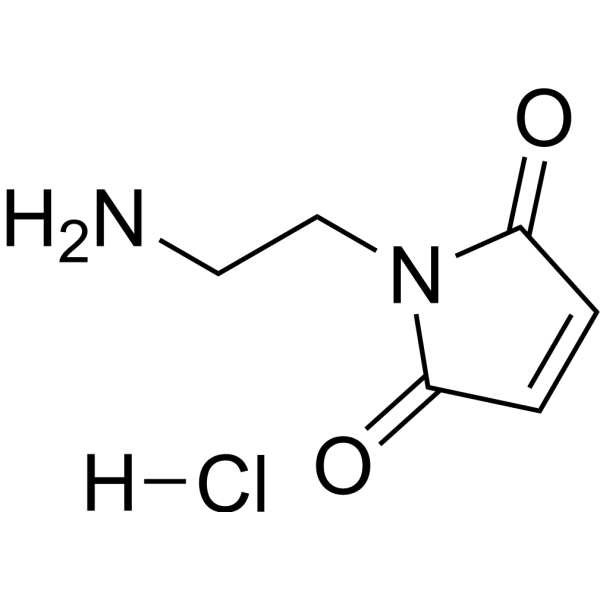
N-(2-Aminoethyl)maleimide (2-Maleimidoethylamine) hydrochloride is a selective covalent binding agent for thiol groups (RSGs), covalently binding to thiols via an irreversible thioether bond to prepare MMP-2-sensitive nanosystems. Under near-neutral conditions, the maleimide group in N-(2-Aminoethyl)maleimide hydrochloride binds to thiol groups via a nucleophilic addition reaction, and can be used to modify polymers or biological interfaces, enhancing mucosal adhesion and regulating the surface charge of biological interfaces. N-(2-Aminoethyl)maleimide hydrochloride can optimize the adhesion performance of drug delivery carriers and cell interactions with biological interfaces, and is applied in transmucosal drug delivery systems (such as drug carriers for oral and bladder sites) and biomaterial surface engineering research, providing support for tissue implantation, regeneration, and related drug delivery .
loading...
    loading...
Cat. No.: HY-14197AR
CAS No.: 17780-75-5
Synonyms: M&B 9302 hydrochloride (Standard)
Clorgyline hydrochloride (Standard) (M&B 9302 hydrochloride (Standard)) is the analytical standard of Clorgyline hydrochloride (HY-14197A). This product is intended for research and analytical applications. Clorgyline hydrochloride (M&B 9302 hydrochloride) is a selective, irreversible monoamine oxidase A (MAO-A) inhibitor that can cross the blood-brain barrier and exhibits activity against the 5-HT Receptor at very high doses. Clorgyline hydrochloride regulates monoamine neurotransmitter levels, the release of dopamine and acetylcholine, the uptake and effects of Tyramine (HY-W007606), noradrenergic function, circadian locomotor activity rhythms, feeding behavior, and body weight. Clorgyline hydrochloride induces tumor-suppressive transcriptional programs, secretory differentiation, androgen signaling regulation, Bcl-2 expression, and radioprotective effects in non-malignant cells. Clorgyline hydrochloride is used in the research of high-grade prostate cancer, Huntington's disease, major affective disorder, radiation-induced normal tissue toxicity, and obesity .
loading...
    loading...
Cat. No.: HY-145425
CAS No.: 2771006-54-1
Target:  

IRE1 Apoptosis FGFR

Research Areas:  

Inflammation/Immunology

PAIR2 is a highly selective inhibitor targeting the kinase domain of human IRE1α, with a Ki value of 8.8 nM against human IRE1α. PAIR2 fully occupies the ATP-binding site of the IRE1α kinase domain, partially antagonizes the ribonuclease activity of IRE1α, specifically inhibits regulated IRE1α-dependent decay (RIDD) and its mediated substrate cleavage, while preserving the splicing function of Xbp1 mRNA. PAIR2 also promotes the differentiation of B cells into plasma cells, blocks IRE1α-induced cell apoptosis, and restores the expression of Fgfr2 mRNA in AT2 cells. PAIR2 effectively reaches a steady-state concentration in the lung tissues of Mus musculus, and serves as an important tool for investigating the function of the IRE1α signaling pathway in diseases such as pulmonary fibrosis .
loading...
    loading...
Cat. No.: HY-159494
PROTAC sEH degrader-1 is a PROTAC degrader targeting soluble epoxide hydrolase (sEH) with a DC50 of 0.5 nM, and it also possesses sEH inhibitory activity. PROTAC sEH degrader-1 has an IC50 of 3.8 nM against human sEH and an IC50 of 210 nM against mouse sEH. PROTAC sEH degrader-1 relies on the ubiquitin-proteasome system to achieve target protein degradation, and it selectively degrades cytoplasmic sEH. PROTAC sEH degrader-1 rapidly reduces endoplasmic reticulum stress in cells, downregulates the phosphorylation levels of IRE1α, PERK and eIF2α, enhances cell viability, and alleviates Thapsigargin (HY-13433)-induced apoptosis. PROTAC sEH degrader-1 effectively degrades sEH in mouse liver and brown adipose tissue. PROTAC sEH degrader-1 can be used in studies related to metabolic disorders and inflammation .
loading...
    loading...
Cat. No.: HY-181088
CAS No.: 3088024-27-2
PDE3/4-IN-4 is an orally active PDE3A and PDE4B inhibitor with IC50 values of 10 nM and 9.4 nM, respectively. PDE3/4-IN-4 shows selective activity relative to most other PDE family members. PDE3/4-IN-4 modulates the cAMP/PKA/CREB signaling pathway. PDE3/4-IN-4 inhibits pro-inflammatory factor IL-6. PDE3/4-IN-4 reduces expression of inflammatory markers in liver tissue. PDE3/4-IN-4 attenuates liver fibrosis. PDE3/4-IN-4 limits liver damage in cholestatic and sepsis-induced liver disease mice models. PDE3/4-IN-4 can be used for the research of liver injury, cholestatic liver diseases, sepsis-induced liver injury .
loading...
    loading...
Cat. No.: HY-111556R
CAS No.: 2361493-16-3
Research Areas:  

Cancer

BSJ-03-123 (Standard) is the analytical standard of BSJ-03-123 (HY-111556). This product is intended for research and analytical applications. BSJ-03-123 is a selective PROTAC degrader of CDK6. BSJ-03-123 degrades CDK6, thereby inhibiting Rb S780 phosphorylation and inducing G1 phase arrest, while remodeling cell cycle and transcriptional signaling, with no effect on CDK4-dependent cancer cells. BSJ-03-123 reduces CDK6 protein levels in mouse ovarian tissues, increases the proportion of primordial follicles, and induces granulosa cell apoptosis, without impairing the ability of oocytes to resume meiosis and mature to the MII stage. BSJ-03-123 alleviates uveitis by blocking the HDACs-CDK6/ID2 axis. BSJ-03-123 can be used in studies related to acute myeloid leukemia, mantle cell lymphoma and autoimmune uveitis .
loading...
    loading...
Cat. No.: HY-B0377A
CAS No.: 125193-62-6
Synonyms: MK-208 hydrochloride
Famotidine hydrochloride (MK-208 hydrochloride) is an orally active and highly selective histamine H2 receptor antagonist. It inhibits gastric acid secretion by blocking the Gs signaling pathway, and regulates intracellular cAMP and ERK pathways. Famotidine hydrochloride inhibits TLR3-mediated inflammatory pathways, and reduces the expression of various inflammatory mediators and interferon-related genes. Famotidine hydrochloride scavenges DPPH and nitric oxide free radicals, alleviates oxidative stress damage in gastric tissue, inhibits proMMP-9, improves vascular endothelial permeability, and restores the normal physiological functions of neutrophils and eosinophils. Famotidine hydrochloride crosses intestinal epithelial cells via facilitated diffusion and passive diffusion, blocks paracellular cation transport, and increases intestinal transepithelial electrical resistance. Famotidine hydrochloride reduces serum levels of transaminases and alkaline phosphatase, exerts analgesic effects and gastric protective effects simultaneously. Famotidine hydrochloride can be used in studies related to COVID-19, liver injury and acute gastric ulcer .
loading...
    loading...
Cat. No.: HY-153552
CAS No.: 2758337-19-6
Target:  

FAP

Research Areas:  

Cancer

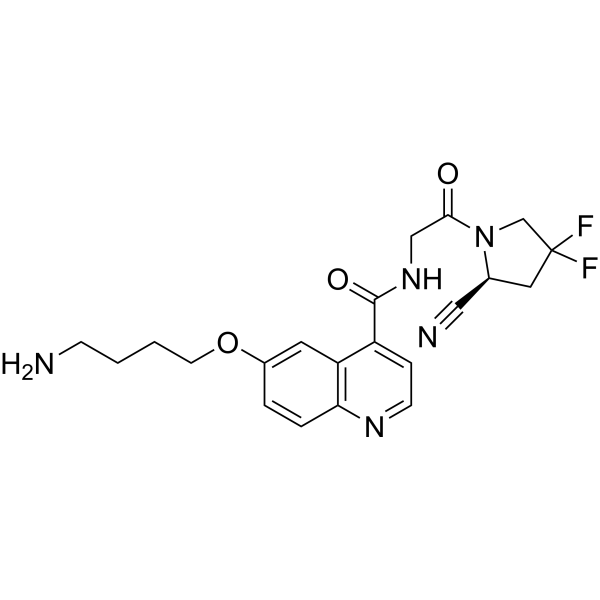
NH2-UAMC1110 is an aminobutoxy derivative of the fibroblast activation protein (FAP) inhibitor UAMC1110 (HY-100684), and is a precursor compound for the synthesis of FAP inhibitor probes, not directly used in bioactivity experiments. For example, NH2-UAMC1110 is involved in the synthesis of the radiotracer FAPI-QS, which exhibits high tumor selectivity and high dose-response, and has been used for tumor diagnosis. NH2-UAMC1110 introduces an active amino group into its structure, enabling it to form covalent bonds with various molecules (such as DOTA, DATA5m, radionuclide chelators, etc.), thereby synthesizing molecular imaging probes or targeted compounds with the ability to target FAP. NH2-UAMC1110 specifically binds to the FAP active site, inhibiting its proline-selective serine protease activity (including dipeptidyl peptidase and endopeptidase activity), blocking FAP-mediated tissue remodeling processes. Its key activity is high targeting and high affinity, and its core function is to be coupled with bifunctional chelators (such as DOTA, DATA5m) as a targeting module. NH2-UAMC1110 can be applied to diagnostic imaging studies of tumors expressing FAP (such as colorectal cancer, pancreatic cancer, etc.), and also provides molecular tools for targeted research of FAP-related diseases with high FAP expression, such as fibrosis and arthritis .
loading...
    loading...
Cat. No.: HY-153552A
CAS No.: 2990021-73-1
Purity:  99.89%
Target:  

FAP

Research Areas:  

Cancer

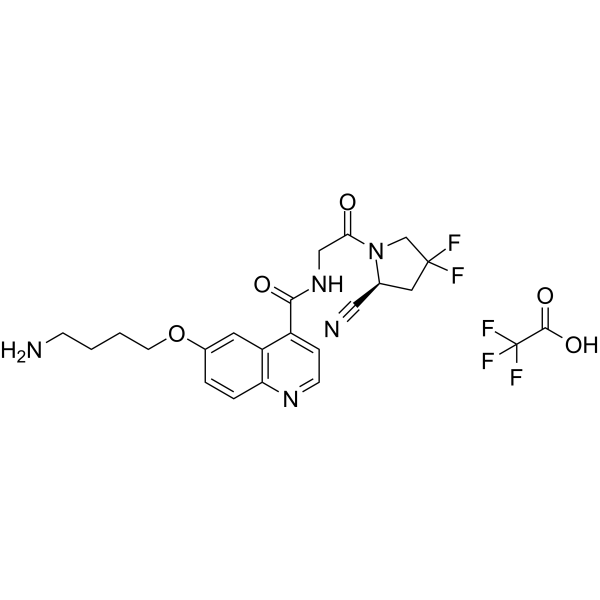
NH2-UAMC1110 TFA is an aminobutoxy derivative of the fibroblast activation protein (FAP) inhibitor UAMC1110 (HY-100684), and is a precursor compound for the synthesis of FAP inhibitor probes, not directly used in bioactivity experiments. For example, NH2-UAMC1110 TFA is involved in the synthesis of the radiotracer FAPI-QS, which exhibits high tumor selectivity and high dose effect, and has been used in tumor diagnosis. NH2-UAMC1110 TFA structurally incorporates an active amino group, allowing it to form covalent bonds with various molecules (such as DOTA, DATA5m, radionuclide chelators, etc.) to synthesize molecular imaging probes or targeted compounds with the ability to target FAP. NH2-UAMC1110 TFA specifically binds to the FAP active site, inhibiting its proline-selective serine protease activity (including dipeptidyl peptidase and endopeptidase activity), blocking FAP-mediated tissue remodeling-related processes. Its key activity is high targeting and high affinity, and its core function is to act as a targeting module coupled with bifunctional chelators (such as DOTA, DATA5m). NH2-UAMC1110 TFA can be applied to diagnostic imaging studies of tumors expressing FAP (such as colorectal cancer, pancreatic cancer, etc.), and also provides molecular tools for targeted research of FAP-related diseases with high FAP expression, such as fibrosis and arthritis .
loading...
    loading...

