334 Results for "

hydroxyl groups

" in MedChemExpress (MCE) Product Catalog:
Products (334)

334 Results for "hydroxyl groups" in MCE Product Catalog:

Cat. No.: HY-W127434A
CAS No.: 1466461-81-3
Synonyms: (12R)-Octadecane-1,12-diol
Research Areas:  

Others

(12R)-1,12-Octadecanediol ((12R)-Octadecane-1,12-diol) is a compound characterized by a linear chain of 18 carbon atoms with two hydroxyl groups (C18H38O2). This colorless substance has unique properties owing to the presence of two hydroxyl groups in its molecular structure. Whether derived from natural sources or synthesized chemically, 12-Octadecanediol finds applications in various industries. It is often utilized in the formulation of cosmetics, personal care products, and pharmaceuticals due to its emollient properties, enhancing moisturization and conditioning effects in different formulations. The compound's distinctive structure may make it suitable for specific uses in research or industrial processes. In industrial contexts, 12-Octadecanediol serves as a valuable chemical intermediate for synthesizing other compounds. Its specialized structure and adaptability in formulations make it a significant component across diverse industries, contributing to the development of products for various purposes.
loading...
    loading...
Cat. No.: HY-I0259
CAS No.: 118-46-7
8-Amino-2-naphthol is a photoactive charge transfer compounds, which can be used as fluorescent probe. 8-Amino-2-naphthol undergoes excited-state proton transfer (ESPT) to form a zwitterion under acidic conditions, where the photoacidity of its hydroxyl group is regulated by the protonation state of the amino group, enabling pH to act as an on/off switch for photoacidity. 8-Amino-2-naphthol is also utilized as chiral organocatalyst .
loading...
    loading...
Cat. No.: HY-W763591A
CAS No.: 24991-55-7
Polyethylene glycol dimethyl ether (MW=250) is a polyethylene glycol derivative that can be used to prepare rigid gel electrolytes and serve as a plasticizer .
loading...
    loading...
Cat. No.: HY-W1048558A
Synonyms: mPEG2000-COOH
mPEG2000-CM (mPEG2000-COOH) is a carboxyl-terminated monomethoxy polyethylene glycol. mPEG2000-CM bears a reactive carboxyl group (-COOH) at its structural terminal site, which can form stable amide bonds with amino groups and ester bonds with hydroxyl groups. mPEG2000-CM binds to PCA-g-PCL copolymers via electrostatic interaction to form polyion complex micelles with a hydrophilic PEG surface, which enhances the stability of micelles in aqueous media. mPEG2000-CM can be used for drug delivery .
loading...
    loading...
Cat. No.: HY-N17138
CAS No.: 1621347-17-8
threo-1-(4-Hydroxyphenyl)-1-methoxy-2,3-propanediol is an aromatic propanediol phenolic derivative containing methoxy and hydroxyl groups. It can be naturally extracted from the dried aerial parts of Abies delavayi Franch. var. delavayi (Cangshan fir) from Dali, Yunnan, China. This source plant produces anti-inflammatory and anti-tumor active components .
loading...
    loading...
Cat. No.: HY-W017690
CAS No.: 17102-64-6
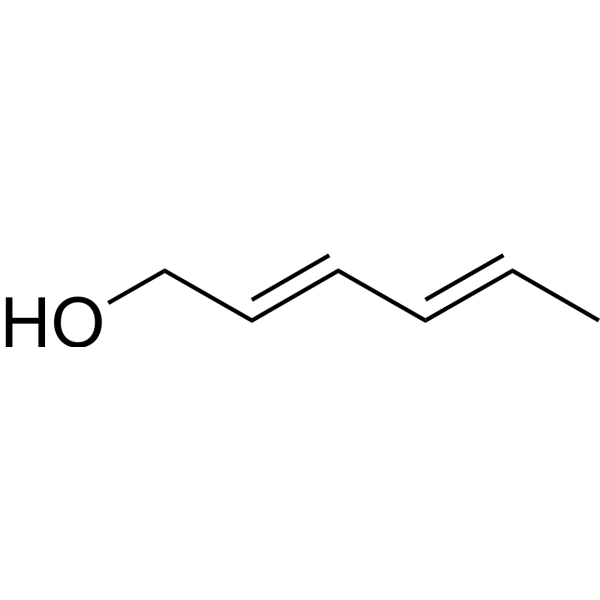
(2E,4E)-Hexa-2,4-dien-1-ol consists of a six-carbon chain with two conjugated double bonds between carbon atoms 2 and 3 and between carbon atoms 4 and 5, and a The hydroxyl group attached to carbon atom 1. This compound has a floral fragrance and can be found in a variety of plants in nature.
loading...
    loading...
Cat. No.: HY-W761397
CAS No.: 117568-28-2
Target:  

COMT

Research Areas:  

Neurological Disease

COMT-IN-3 is a competitive inhibitor of soluble catechol-O-methyltransferase (S-COMT). COMT-IN-3 coordinates with the Mg 2+ ion at the COMT active site via its catechol hydroxyl group, and its nitro group, as a strong electron-withdrawing substituent, further enhances the binding affinity. COMT-IN-3 interacts with the hydrophobic residues Trp38, Met40, and Trp143 at the back of the active site via its neutral nitrile tail, thereby competitively inhibiting COMT activity. COMT-IN-3 can be used in research related to Parkinson's disease .
loading...
    loading...
Cat. No.: HY-185404
Target:  

Liposome

Research Areas:  

Others

DSPE-PEG8-OH is a monodisperse lipid-polyethylene glycol conjugate featuring a hydrophobic 1,2-distearoyl-sn-glycero-3-phosphoethanolamine (DSPE) anchor, an 8-unit discrete (PEG8) spacer, and a terminal hydroxyl (-OH) group. DSPE-PEG8-OH is primarily used in liposome formulation, nanoparticle surface modification, and targeted drug delivery systems.
loading...
    loading...
Cat. No.: HY-N21956
CAS No.: 96657-95-3
Merenskine N-oxide is a jacobine-like chlorinated 1,2-unsaturated pyrrolizidine alkaloid N-oxide with a hydroxyl group at the α-position. Merenskine N-oxide has a halohydrin side-chain configuration and serves as a substrate for epoxidation reactions. The transfer rate of Merenskine N-oxide into black tea leachate is pH-dependent, and its transfer rate decreases significantly under alkaline conditions .
loading...
    loading...
Cat. No.: HY-W105426
CAS No.: 2530-85-0
Synonyms: [3-(Methacryloyloxy)propyl]trimethoxysilane
3-(Trimethoxysilyl)propyl methacrylate ([3-(Methacryloyloxy)propyl]trimethoxysilane) is a reactive monomer and silane coupling agent with C=C and O-C=O functional groups, acting as a surface modifier and anti-agglomeration agent. 3-(Trimethoxysilyl)propyl methacrylate can be used to prepare nanoparticles .
loading...
    loading...
Cat. No.: HY-137566
CAS No.: 116524-58-4
Cucumarioside H is a novel triterpene glycoside isolated from the Far Eastern sea cucumber Eupentacta fraudatrix, including H2, H3 and H4. These glycosides have a branched pentasyl structure with a rare 3-O-methyl-D-xylose as the terminal monosaccharide. H2 contains 23,24,25,26,27-pentanolone sterols and has an 18(16)-lactone, which is not common in sea cucumbers. The glycoside portion of H3 contains an extremely rare ethoxyl radical at the 25 position, which may be an artifact formed during the long ethanol extraction process. Studies have shown that H1-3 are cytotoxic to mouse spleen lymphocytes, hemolytic to mouse erythrocytes, and cytotoxic to Ehrlich carcinoma cells. The presence of a 25-hydroxyl group in the glycoside portion significantly reduces these activities.
loading...
    loading...
Cat. No.: HY-118380
CAS No.: 39628-94-9
Purity:  98.78%
Synonyms: 4-Nitrobenzyl mesylate; para-Nitrobenzyl mesylate; PNBM
p-Nitrobenzyl mesylate (4-Nitrobenzyl mesylate) is an alkylating reagent. p-Nitrobenzyl mesylate alkylates thiophosphorylated serine, threonine, tyrosine residues and cysteine thiols, without modifying hydroxyl, amino or carboxylic acid functional groups. p-Nitrobenzyl mesylate generates thiophosphate epitopes on thiophosphorylated substrate proteins for recognition by thiophosphate-specific antibodies. p-Nitrobenzyl mesylate facilitates the identification and purification of kinase substrates. p-Nitrobenzyl mesylate is applicable to studies related to cerebral ischemia-reperfusion injury .
loading...
    loading...
Cat. No.: HY-32959
CAS No.: 135884-31-0
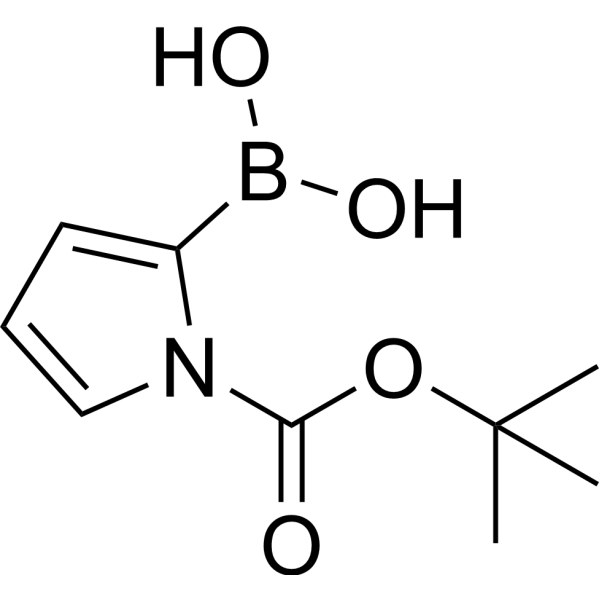
N-Boc-2-pyrroleboronic acid is an organic synthesis intermediate used primarily in the synthesis of chiral pharmaceutical molecules and biologically active molecules. The boronic acid on the pyrrole ring can participate in Suzuki coupling reactions. The boronic acid can be oxidized to a hydroxyl group under the action of nitrogen oxides, and after tautomerization, it can be further transformed into 2-oxo-2,5-dihydro-1-pyrrolecarboxylic acid tert-butyl ester .
loading...
    loading...
Cat. No.: HY-G0004
CAS No.: 37519-14-5
Synonyms: 3-Hydroxyacetaminophen
Target:  

Drug Metabolite

Research Areas:  

Inflammation/Immunology

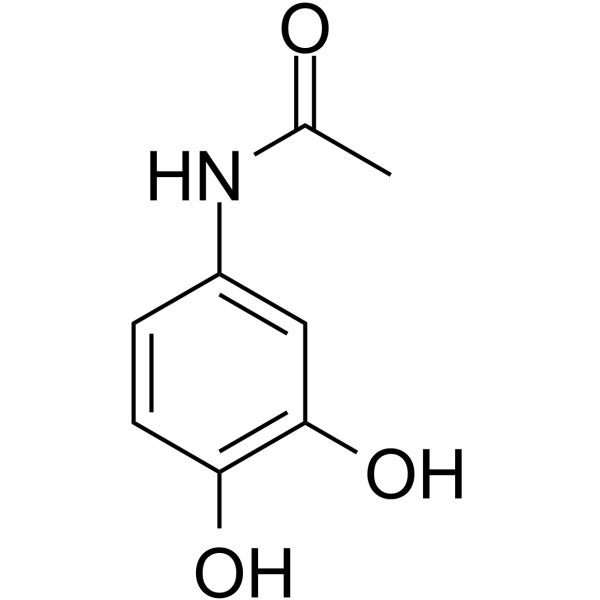
Acetaminophen metabolite 3-hydroxy-acetaminophen (3-Hydroxyacetaminophen) is a non-toxic metabolite and antioxidant of acetaminophen (HY-66005) with free radical scavenging activity. Acetaminophen metabolite 3-hydroxy-acetaminophen can reduce oxidative damage by exerting electron donation ability and antioxidant activity through phenolic hydroxyl groups. 3-hydroxy-acetaminophen can be used to study the toxicity mechanism and drug metabolism of acetaminophen .
loading...
    loading...
Cat. No.: HY-Y1353
CAS No.: 24424-99-5
Research Areas:  

Others Metabolic Disease

Di-tert-butyl dicarbonate (tBOC) is a covalent modification agent for hydroxyl groups (-OH) on the chitosan molecular chain. Di-tert-butyl dicarbonate selectively modifies chitosan and stabilizes the material structure through hydrophobic encapsulation. Di-tert-butyl dicarbonate reacts with the -OH groups of chitosan to form a hydrophobic layer, and in conjunction with triethylamine (TEA), removes trifluoroacetic acid (TFA) salts produced during the electrospinning process, preserving the nanofiber structure and high porosity of the membrane, and improving the material's cytocompatibility and mineralization-promoting ability. Di-tert-butyl dicarbonate can be used in research in the field of guided bone regeneration (GBR) .
loading...
    loading...
Cat. No.: HY-155902C
CAS No.: 88504-24-9
Synonyms: Maleimide-PEG3400-Hydroxy
Mal-PEG3400-OH (Maleimide-PEG3400-Hydroxy) is a linear heteroterminal bifunctional PEG product with maleimide and hydroxyl groups. Mal-PEG3400-OH can be used as a macroinitiator to obtain amphiphilic diblock copolymers through ring-opening polymerization of Lactate (Lactic Acid) (HY-B2227). Nanoparticles prepared using amphiphilic block copolymers can form active drug delivery systems .
loading...
    loading...
Cat. No.: HY-155902D
CAS No.: 88504-24-9
Synonyms: Maleimide-PEG10000-Hydroxy
Mal-PEG10000-OH (Maleimide-PEG10000-Hydroxy) is a linear heteroterminal bifunctional PEG product with maleimide and hydroxyl groups. Mal-PEG10000-OH can be used as a macroinitiator to obtain amphiphilic diblock copolymers through ring-opening polymerization of Lactate (Lactic Acid) (HY-B2227). Nanoparticles prepared using amphiphilic block copolymers can form active drug delivery systems .
loading...
    loading...
Cat. No.: HY-155902E
CAS No.: 88504-24-9
Synonyms: Maleimide-PEG20000-Hydroxy
Mal-PEG20000-OH (Maleimide-PEG20000-Hydroxy) is a linear heteroterminal bifunctional PEG product with maleimide and hydroxyl groups. Mal-PEG20000-OH can be used as a macroinitiator to obtain amphiphilic diblock copolymers through ring-opening polymerization of Lactate (Lactic Acid) (HY-B2227). Nanoparticles prepared using amphiphilic block copolymers can form active drug delivery systems .
loading...
    loading...
Cat. No.: HY-155902H
CAS No.: 88504-24-9
Synonyms: Maleimide-PEG40000-Hydroxy
Mal-PEG40000-OH (Maleimide-PEG40000-Hydroxy) is a linear heteroterminal bifunctional PEG product with maleimide and hydroxyl groups. Mal-PEG40000-OH can be used as a macroinitiator to obtain amphiphilic diblock copolymers through ring-opening polymerization of Lactate (Lactic Acid) (HY-B2227). Nanoparticles prepared using amphiphilic block copolymers can form active drug delivery systems .
loading...
    loading...
Cat. No.: HY-34596
CAS No.: 2380-94-1
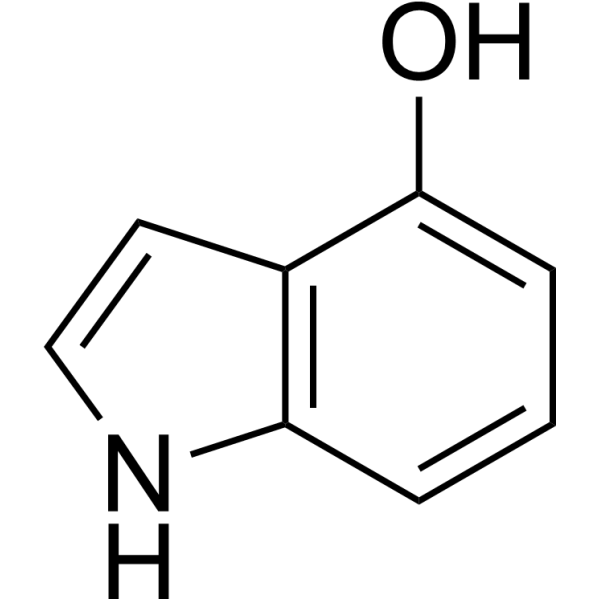
4-Hydroxyindole is a type of hydroxyindole in which the 1H-indole at position 4 is substituted by a hydroxyl group. 4-Hydroxyindole serves as an important raw material or intermediate in the synthesis of pharmaceutical products and industrial polymers. 4-Hydroxyindole inhibits amyloid fibrillization and induces liver function impairment, thyroid abnormalities, and blood glucose fluctuations in mice. 4-Hydroxyindole holds potential for research in neurodegenerative diseases and metabolic disorders .
loading...
    loading...

