326 Results for "

Calcium/Sodium Channel Blocker

" in MedChemExpress (MCE) Product Catalog:
Products (326)

326 Results for "Calcium/Sodium Channel Blocker" in MCE Product Catalog:

Art. -Nr.: HY-12502AR
CAS. Nr.: 111011-76-8
Synonyms: NZ-105 hydrochloride monoethanolate (Standard); (±)-Efonidipine hydrochloride monoethanolate (Standard)
Efonidipine (NZ-105) hydrochloride monoethanolate (Standard) is the analytical standard of Efonidipine hydrochloride monoethanolate (HY-12502AR). This product is intended for research and analytical applications. Efonidipine (NZ-105) hydrochloride monoethanolate is an orally active dual L-type and T-type calcium channel blocker (CCB) with IC50 values of 1.8 and 350 nM, respectively. Efonidipine hydrochloride monoethanolate inhibits SARS-CoV-2 main protease. Efonidipine hydrochloride monoethanolate modulates adrenal steroidogenesis by increasing the expression of steroidogenic acute regulatory protein (StAR), dbcAMP-or angiotensin II-induced StAR mRNA expression and DHEA-S production, while suppressing the biosynthesis of aldosterone and cortisol. Efonidipine hydrochloride monoethanolate reduces plasma aldosterone levels in vivo. Efonidipine hydrochloride monoethanolate improves cardiac function in heart failure models by inhibiting T-type calcium channels (via both tonic and use-dependent blockade), independently of blood pressure reduction. Efonidipine hydrochloride monoethanolate can be used for research in hypertension, heart failure, and disorders involving dysregulated steroid hormone synthesis .
loading...
    loading...
Art. -Nr.: HY-B0984R
CAS. Nr.: 13636-18-5
Fendiline (hydrochloride) (Standard) is the analytical standard of Fendiline (hydrochloride). This product is intended for research and analytical applications. Fendiline hydrochloride, a diphenylalkylamine type of antianginal agent, is an L-type calcium channel blocker (IC50 of 17 µM). Fendiline hydrochloride is also a selective K-Ras inhibitor, and has no effect on H-Ras and N-Ras. Fendiline hydrochloride inhibits K-Ras plasma membrane localization (IC50 of 9.64 μM), inhibits K-Ras signal output and blocks the proliferation of pancreatic, colon, lung, and endometrial cancer cell lines expressing oncogenic mutant K-Ras. Fendiline hydrochloride is a STING agonist and is able to inhibit the growth of multiple refractory cold tumors (MC38, CT26 and B16F10) .
loading...
    loading...
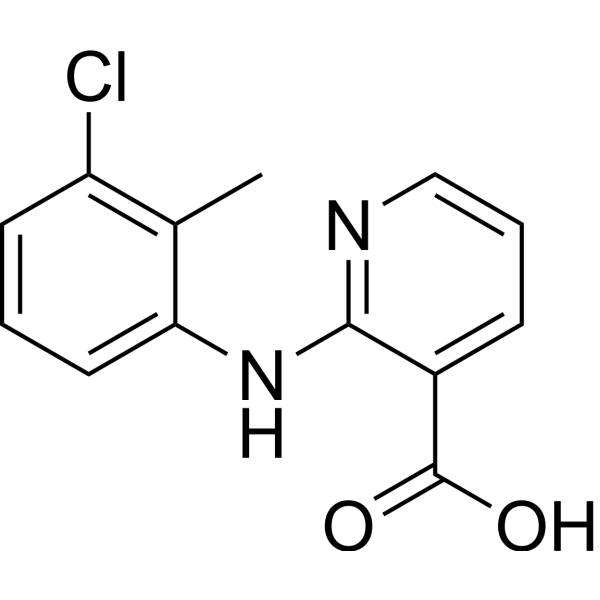
Art. -Nr.: HY-121235
CAS. Nr.: 17737-65-4
Reinheit:  ≥98.0%
Synonyms: SCH-10304
Clonixin (SCH-10304) is an orally active non-steroidal anti-inflammatory agent (NSAID) that inhibits COX synthesis. Clonixin acts as a voltage-gated L-type calcium channel blocker, exerts vasodilatory effects by antagonizing Ca 2+ in vascular smooth muscle. Clonixin inhibits TGF-β, reduces lung coefficient, immune cell infiltration level, oxidative stress response, airway resistance, hydroxyproline content and collagen deposition. Clonixin can be used in research related to inflammation such as idiopathic pulmonary fibrosis and moderate to severe pain .
loading...
    loading...
Art. -Nr.: HY-128547
CAS. Nr.: 16286-69-4
Forschungsgebiete:  

Cardiovascular Disease

Cetiedil citrate is a vasodilator and antihemolytic agent . Cetiedil citrate exerts anti-sickle cell anemia effects by blocking Ca 2+-activated K + channels (Gardos/KCa3.1). Cetiedil citrate is a muscarinic receptor antagonist that inhibits calcium-dependent release of acetylcholine (ACh) from mediated reconstituted proteoliposomes, with a Ki value of 5 μM. Cetiedil citrate possesses analgesic, spasmolytic and local anesthetic activities. Cetiedil citrate can be used in research related to ischemic leg pain caused by vascular diseases and sickle cell disease .
loading...
    loading...
Art. -Nr.: HY-180892
Forschungsgebiete:  

Neurological Disease

Multi-kinase-IN-10 (Compound IIIk) is a multi-kinase inhibitor. Multi-kinase-IN-10 exhibits significant calcium channel blocking activity, with its IC50 being 26.67 μM. Multi-kinase-IN-10 is a potent dual cholinesterase inhibitor, with its IC50 values for hAChE and hBuChE being 0.304 μM and 1.033 μM respectively. Multi-kinase-IN-10 has antioxidant and neuroprotective activities, and shows significant anti-amnesia activity. Multi-kinase-IN-10 can be used for research on Alzheimer's disease .
loading...
    loading...
Art. -Nr.: HY-B0493R
CAS. Nr.: 4394-00-7
Niflumic acid (Standard) is the analytical standard of Niflumic acid. This product is intended for research and analytical applications. Niflumic acid is a calcium-activated chloride channel blocker and COX-2 inhibitor with the IC50 value of 100 nM. Niflumic acid induces apoptosis through caspase-8/Bid/Bax pathway in lung cancer cells. Niflumic acide exhibits anti-tumor activity by affecting the expression of ERK1/2 and the activity of MMP2 and MMP9. Niflumic acid has orally bioactivity. Niflumic acid acts on rheumatoid arthritis .
loading...
    loading...
Art. -Nr.: HY-L145
930 compounds

The majority of hypertensive patients have primary (or essential) hypertension, that is, hypertension in which secondary causes are not present. Management aims to control arterial pressure, prevent end-organ damage (cerebrovascular, cardiovascular, and renal), and reduce the risk of premature death.

Antihypertensive drugs may be divided into two broad groups, the first group being those which directly or indirectly block the renin–angiotensin system (RAS), for example, ACEIs, angiotensin receptor antagonists (ARAs), direct renin inhibitors (DRIs), and to a lesser extent β-blockers. The second group of drugs works by increasing water and sodium excretion, thereby reducing intravascular volume, or by causing vasodilatation through non-RAS pathways, for example, diuretics and calcium channel blockers (CCBs).

MCE offers a unique collection of 930 compounds with identified and potential antihypertensive activity. MCE Antihypertensive Compound Library is critical for antihypertensive drug discovery and development.

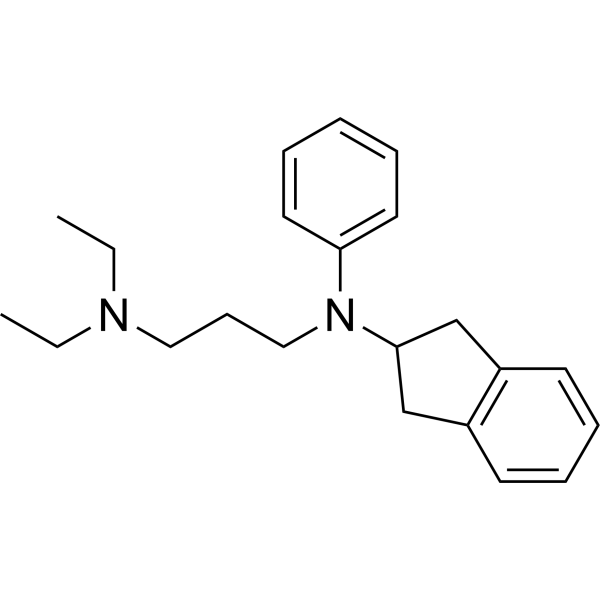
Art. -Nr.: HY-A0236
CAS. Nr.: 37640-71-4
Aprindine is an Ib-class anti-arrhythmic agent. Aprindine mainly exerts its effect by blocking sodium channels (INa), thereby reducing the excitability and conduction velocity of cardiac muscle cells. Aprindine significantly inhibits delayed potassium currents, which helps to prolong the atrial effective refractory period (AERP) and inhibit the occurrence of atrial fibrillation. Aprindine can also regulate intracellular calcium ion concentration by inhibiting Na +/Ca 2+ exchange current (INCX), thereby further stabilizing cardiac electrical activity. Aprindine can be used for the study of atrial fibrillation (AF) and ventricular arrhythmias .
loading...
    loading...
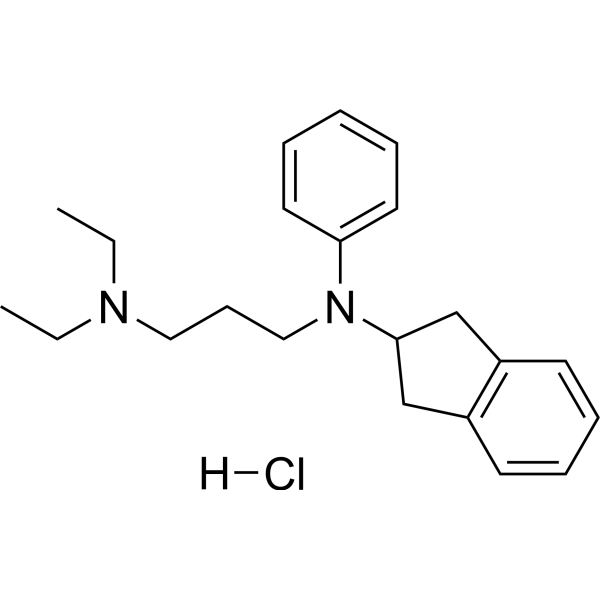
Art. -Nr.: HY-A0236A
CAS. Nr.: 33237-74-0
Aprindine hydrochloride is an Ib-class anti-arrhythmic agent. Aprindine hydrochloride mainly exerts its effect by blocking sodium channels (INa), thereby reducing the excitability and conduction velocity of cardiac muscle cells. Aprindine hydrochloride significantly inhibits delayed potassium currents, which helps to prolong the atrial effective refractory period (AERP) and inhibit the occurrence of atrial fibrillation. Aprindine hydrochloride can also regulate intracellular calcium ion concentration by inhibiting Na +/Ca 2+ exchange current (INCX), thereby further stabilizing cardiac electrical activity. Aprindine hydrochloride can be used for the study of atrial fibrillation (AF) and ventricular arrhythmias .
loading...
    loading...
Art. -Nr.: HY-121235R
CAS. Nr.: 17737-65-4
Synonyms: SCH-10304 (Standard)
Clonixin (SCH-10304) (Standard) is the analytical standard of Clonixin. This product is intended for research and analytical applications. Clonixin is an orally active non-steroidal anti-inflammatory agent (NSAID) that inhibits COX synthesis. Clonixin acts as a voltage-gated L-type calcium channel blocker, exerts vasodilatory effects by antagonizing Ca 2+ in vascular smooth muscle. Clonixin inhibits TGF-β, reduces lung coefficient, immune cell infiltration level, oxidative stress response, airway resistance, hydroxyproline content and collagen deposition. Clonixin can be used in research related to inflammation such as idiopathic pulmonary fibrosis and moderate to severe pain .
loading...
    loading...
Art. -Nr.: HY-13750R
CAS. Nr.: 60940-34-3
Synonyms: SPI-1005 (Standard); PZ-51 (Standard); CCG-39161 (Standard)
Ebselen (Standard) is the analytical standard of Ebselen (HY-13750). This product is intended for research and analytical applications. Ebselen (SPI-1005), a glutathione peroxidase mimetic, is a potent voltage-dependent calcium channel (VDCC) blocker . Ebselen potently inhibits M pro (IC50=0.67 μM) and COVID-19 virus (EC50=4.67 μM) .Ebselen is an inhibitor of HIV-1 capsid CTD dimerization. Ebselen, an organoselenium compound, can permeate the blood-brain barrier and has anti-inflammatory, antioxidant and anticancer activity .
loading...
    loading...
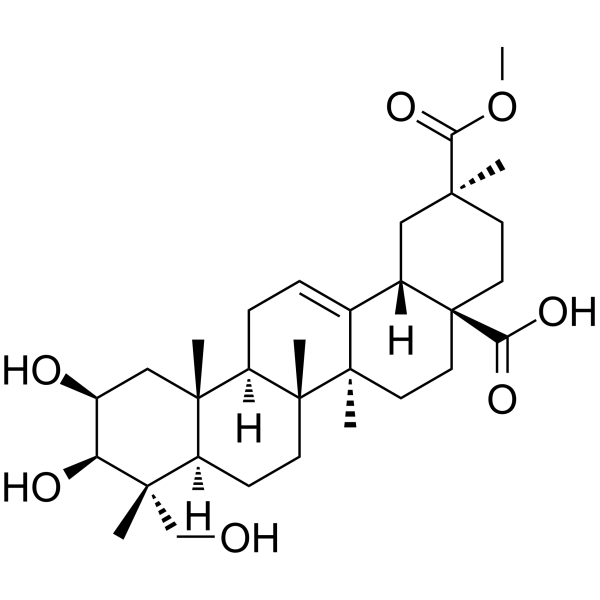
Art. -Nr.: HY-N1433
CAS. Nr.: 1802-12-6
Phytolaccagenin is a triterpenoid saponin aglycone, Antifungal agent, vasodilator, antihypertensive agent, and anti-inflammatory agent. Phytolaccagenin activates vascular and cardiac Muscarinic receptors, blocks cardiac β-adrenergic receptors, and inhibits voltage-dependent calcium channels in blood vessels. Phytolaccagenin inhibits the growth of Candida albicans and Cryptococcus neoformans. Phytolaccagenin induces vasodilation, produces negative inotropic and negative chronotropic effects, reduces mean arterial pressure, and inhibits LPS-induced inflammation. Phytolaccagenin exhibits enhanced antihypertensive effects in high salt-induced hypertensive rats. Phytolaccagenin can be used in the research of candidiasis, cryptococcosis, hypertension, and inflammation-related diseases .
loading...
    loading...
Art. -Nr.: HY-100607
CAS. Nr.: 133242-30-5
Synonyms: ONO1101
Landiolol (ONO1101) is a highly selective, ultra-short-acting competitive inhibitor of β1 adrenergic receptors. Landiolol specifically blocks cardiac β1 receptors, reducing heart rate and myocardial oxygen consumption. Landiolol inhibits TNF-α-induced excessive mitochondrial oxygen consumption and reactive oxygen species production in a sepsis model, alleviating renal injury. Landiolol has little effect on cardiac ion channels (such as L-type calcium current and inward rectifier potassium current) and has a weak negative inotropic effect. Landiolol can be used for perioperative tachycardia control and protection studies of sepsis-related acute kidney injury .
loading...
    loading...
Art. -Nr.: HY-100607A
CAS. Nr.: 144481-98-1
Reinheit:  99.65%
Synonyms: ONO1101 hydrochloride
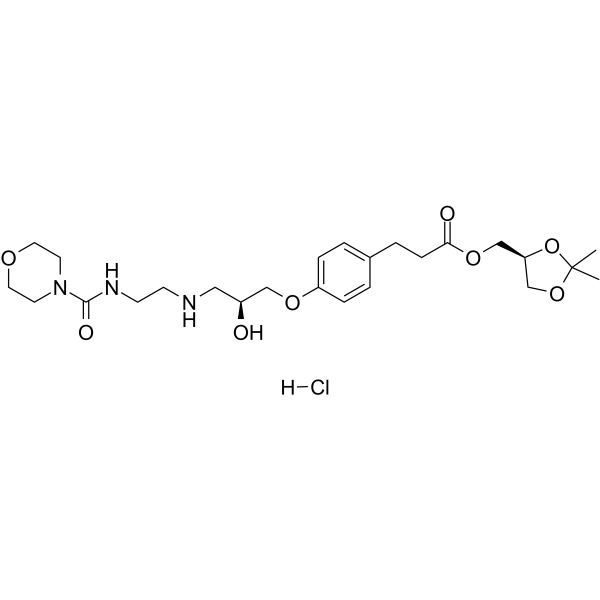
Landiolol (ONO1101) hydrochloride is a highly selective, ultra-short-acting competitive inhibitor of β1 adrenergic receptors. Landiolol hydrochloride specifically blocks cardiac β1 receptors, reducing heart rate and myocardial oxygen consumption. Landiolol hydrochloride inhibits TNF-α-induced excessive mitochondrial oxygen consumption and reactive oxygen species production in a sepsis model, alleviating renal injury. Landiolol hydrochloride has little effect on cardiac ion channels (such as L-type calcium current and inward rectifier potassium current) and has a weak negative inotropic effect. Landiolol hydrochloride can be used for perioperative tachycardia control and protection studies of sepsis-related acute kidney injury .
loading...
    loading...
Art. -Nr.: HY-124108
CAS. Nr.: 1191-85-1
Reinheit:  ≥99.0%
Synonyms: ETYA
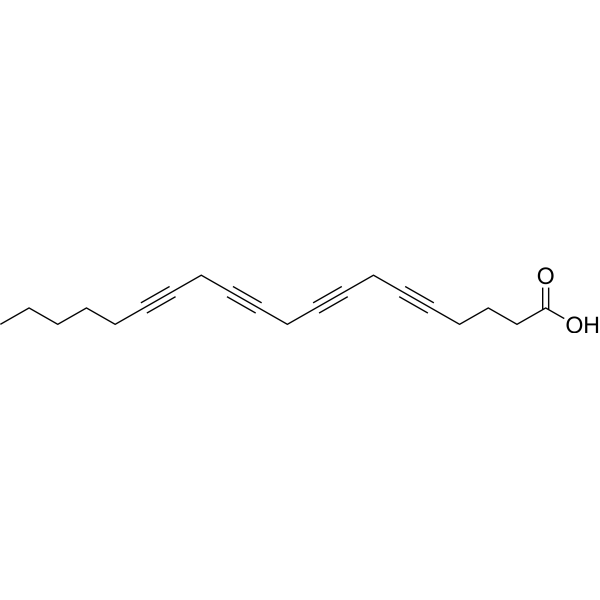
Eicosatetraynoic acid (ETYA) is a non-metabolizable analog of Arachidonic acid (HY-109590) and also an inhibitor of the lipoxygenase (LOX)/cyclooxygenase (COX) pathway (ID50 = 8 μM and 4 μM). Eicosatetraynoic acid acts as a suicide substrate to inhibit the production of inflammatory mediators such as leukotrienes and prostaglandins. Eicosatetraynoic acid acts directly on cell membranes and membrane proteins to exert a wide range of effects, including blocking potassium channels, increasing cell membrane fluidity, elevating intracellular calcium levels, inhibiting DNA synthesis in tumor cells, inducing differentiation of certain cells, and specifically inhibiting the assembly and replication of orthopoxviruses. Eicosatetraynoic acid alleviates acute lung injury induced by chemicals such as phosgene .
loading...
    loading...
Art. -Nr.: HY-P1636
CAS. Nr.: 113274-56-9
Forschungsgebiete:  

Metabolic Disease

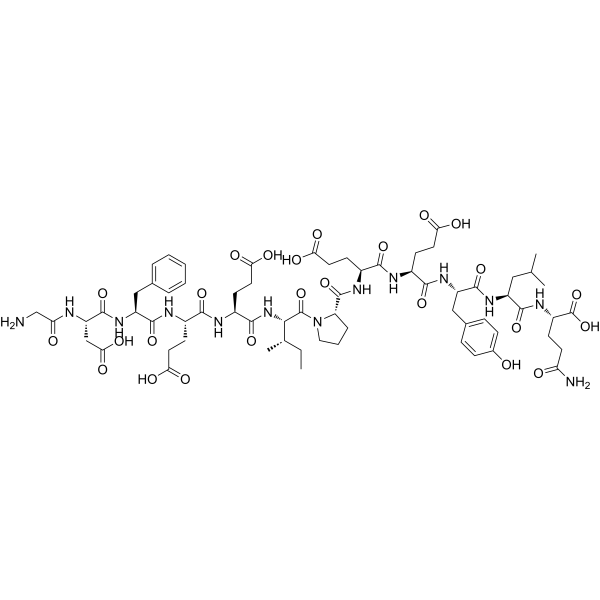
Hirudin (54-65) is a thrombin antagonist and YAP suppressor with anticoagulatory properties.Hirudin (54-65) blocks thrombin's anion binding site, acts on soluble and thrombus-bound thrombin.Hirudin (54-65) suppresses thrombin-induced profibrotic YAP activity, reduces YAP expression, nuclear translocation, and downstream effector signaling in vascular endothelial cells.Hirudin (54-65) ameliorates obstructive cholestasis, attenuates liver fibrosis symptoms, fibrosis-associated angiogenesis, and endothelial-to-mesenchymal transition.Hirudin (54-65) reduces liver inflammation and tissue hypoxia.Hirudin (54-65) promotes extracellular calcium influx through L-type calcium channels in canine coronary artery smooth muscle, mediates contraction.Hirudin (54-65) induces endothelium-independent contraction of canine coronary arterial segments; this response is not affected by indomethacin pretreatment.Hirudin (54-65) can be used for the research of liver obstructive cholestasis, liver fibrosis .
loading...
    loading...
Art. -Nr.: HY-121235S1
Synonyms: SCH-10304-13C,d3
Clonixin- 13C,d3 (SCH-10304- 13C,d3) is the deuterium and 13C-labeled Clonixin (HY-121235). Clonixin is an orally active non-steroidal anti-inflammatory agent (NSAID) that inhibits COX synthesis. Clonixin acts as a voltage-gated L-type calcium channel blocker, exerts vasodilatory effects by antagonizing Ca 2+ in vascular smooth muscle. Clonixin inhibits TGF-β, reduces lung coefficient, immune cell infiltration level, oxidative stress response, airway resistance, hydroxyproline content and collagen deposition. Clonixin can be used in research related to inflammation such as idiopathic pulmonary fibrosis and moderate to severe pain.
loading...
    loading...
Art. -Nr.: HY-A0236AR
CAS. Nr.: 33237-74-0
Aprindine hydrochloride (Standard) is the analytical reference standard of Aprindine hydrochloride (HY-A0236A). This product is used for research and analytical applications. Aprindine hydrochloride is an Ib-class anti-arrhythmic agent. Aprindine hydrochloride mainly exerts its effect by blocking sodium channels (INa), thereby reducing the excitability and conduction velocity of cardiac muscle cells. Aprindine hydrochloride significantly inhibits delayed potassium currents, which helps to prolong the atrial effective refractory period (AERP) and inhibit the occurrence of atrial fibrillation. Aprindine hydrochloride can also regulate intracellular calcium ion concentration by inhibiting Na +/Ca 2+ exchange current (INCX), thereby further stabilizing cardiac electrical activity. Aprindine hydrochloride can be used for the study of atrial fibrillation (AF) and ventricular arrhythmias.
loading...
    loading...
Art. -Nr.: HY-100607AR
CAS. Nr.: 144481-98-1
Synonyms: ONO1101 hydrochloride (Standard)
Landiolol (ONO1101) hydrochloride (Standard) is the analytical standard of Landiolol hydrochloride (HY-100607A). This product is intended for research and analytical applications. Landiolol (ONO1101) hydrochloride is a highly selective, ultra-short-acting competitive inhibitor of β1 adrenergic receptors. Landiolol hydrochloride specifically blocks cardiac β1 receptors, reducing heart rate and myocardial oxygen consumption. Landiolol hydrochloride inhibits TNF-α-induced excessive mitochondrial oxygen consumption and reactive oxygen species production in a sepsis model, alleviating renal injury. Landiolol hydrochloride has little effect on cardiac ion channels (such as L-type calcium current and inward rectifier potassium current) and has a weak negative inotropic effect. Landiolol hydrochloride can be used for perioperative tachycardia control and protection studies of sepsis-related acute kidney injury .
loading...
    loading...
Art. -Nr.: HY-100607S
Synonyms: ONO1101-d8
Landiolol-d8 (ONO1101-d8) is the deuterium labeled Landiolol (HY-100607). Landiolol (ONO1101) is a highly selective, ultra-short-acting competitive inhibitor of β1 adrenergic receptors. Landiolol specifically blocks cardiac β1 receptors, reducing heart rate and myocardial oxygen consumption. Landiolol inhibits TNF-α-induced excessive mitochondrial oxygen consumption and reactive oxygen species production in a sepsis model, alleviating renal injury. Landiolol has little effect on cardiac ion channels (such as L-type calcium current and inward rectifier potassium current) and has a weak negative inotropic effect. Landiolol can be used for perioperative tachycardia control and protection studies of sepsis-related acute kidney injury .
loading...
    loading...

