358 Results for "

Building block

" in MedChemExpress (MCE) Product Catalog:
Products (358)

358 Results for "Building block" in MCE Product Catalog:

Cat. No.: HY-D2765
CAS No.: 757156-70-0
BP Fluor 405 Cadaverine is a carbonyl-reactive building block used to modify carboxylic groups in the presence of activators (e.g. EDC or DCC) or activated esters (e.g. NHS esters) through a stable amide bond. Another common application for BP Fluor 405 Cadaverine is cell fixing by treatment with formaldehyde or glutaraldehyde. BP Fluor 405 is a water-soluble, blue-fluorescent dye that is often used in multi-color applications, including flow cytometry and super-resolution microscopy using STORM. Its excitation is ideally suited for the 407 nm spectral line of the krypton laser or the 408 nm violet laser diode.
loading...
    loading...
Cat. No.: HY-W009216R
CAS No.: 1032-65-1
Synonyms: 5'-dCMP (Standard); Deoxy-CMP (Standard); 2'-Deoxycytidine-5'-monophosphoric acid (Standard)
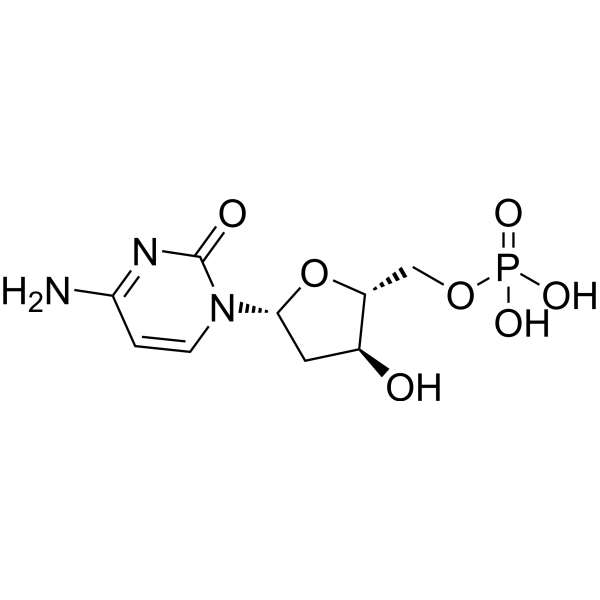
2'-Deoxycytidine-5'-monophosphoric acid (Standard) is the analytical standard of 2'-Deoxycytidine-5'-monophosphoric acid. This product is intended for research and analytical applications. 2'-Deoxycytidine-5'-monophosphate (2'-Deoxycytidine-5'-monophosphoric acid) is an endogenous metabolite. 2'-Deoxycytidine-5'-monophosphate is a deoxynucleotide building block of which DNA is made. 2'-Deoxycytidine-5'-monophosphate can be used as a substrate of UMP/CMP kinase to form dCDP upon phosphorylation to dCTP and supports DNA biosynthesis .
loading...
    loading...
Cat. No.: HY-W018158R
CAS No.: 4790-08-3
Synonyms: 5,6-Dihydroxyindole-2-carboxylic acid (Standard)
DHICA (Standard) is an analytical standard of DHICA (HY-W018158). This product is for research and analytical applications. DHICA (5,6-Dihydroxyindole-2-carboxylic acid) is an eumelanin building block, GPR35 agonist and melanin synthesis intermediate. DHICA activates GPR35, triggering dynamic mass redistribution and β-arrestin translocation. DHICA interacts with DNA and interferes with Fpg activity . DHICA promotes the generation of single-strand breaks in plasmid DNA. DHICA increases the activity and expression levels of SOD and Catalase. DHICA is applicable to research related to skin cancer and colon cancer .
loading...
    loading...
Cat. No.: HY-W142618
CAS No.: 13265-84-4
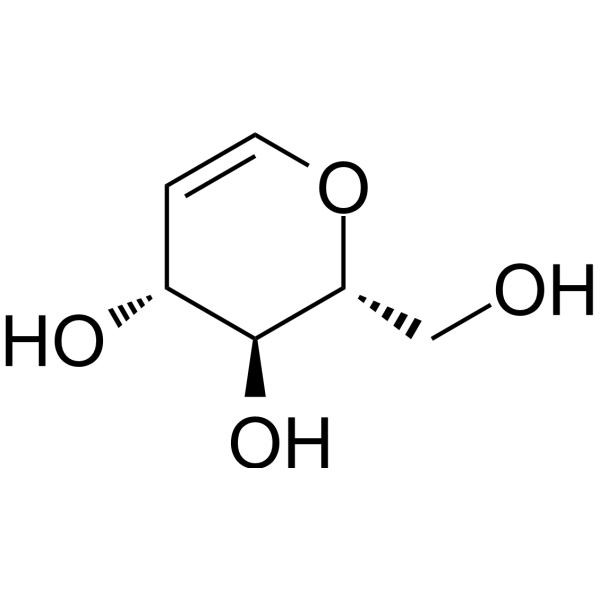
D-Glucal is an organic compound belonging to the family of aldoses, which are monosaccharides containing an aldehyde functional group. It has a six-carbon structure and is derived from glucose by oxidation of the primary alcohol group at carbon 1 to an aldehyde group. D-Glucal is a white crystalline solid that is soluble in water and has a sweet taste. It is an important intermediate in the chemical synthesis of a wide variety of compounds, including pharmaceuticals, agrochemicals, and natural products. D-Glucal can be converted into other carbohydrate derivatives such as glycosides, glycoconjugates and amino sugars. It also plays a role in the study of carbohydrate chemistry, where it is used as a chiral building block for the synthesis of complex structures.
loading...
    loading...
Cat. No.: HY-W540123
CAS No.: 186046-82-2
Domaines de recherche:  

Cancer

Fmoc-PNA-A(Bhoc)-OH is a protected peptide nucleic acid (PNA) monomer carrying an adenine base. Fmoc-PNA-A(Bhoc)-OH contains Fmoc and benzhydryloxycarbonyl (Bhoc) protecting groups, and serves as a standard building block designed specifically for solid-phase PNA synthesis. Fmoc-PNA-A(Bhoc)-OH can be efficiently used to synthesize PNA-based sequence-specific hybridization probes. These probes have broad applications in molecular biology research; for example, they can be used in HER2-expressing tumor-related studies, providing tools for disease diagnosis and mechanism exploration .
loading...
    loading...
Cat. No.: HY-W754064
CAS No.: 200258-75-9
Synonyms: Cytidine triphosphate-13C5; 5'-CTP-13C5; Cytidine-5'-triphosphate-1',2',3',4',5'-13C5 Triethylamine Salt
Cytidine-5'-triphosphate- 13C5 (Cytidine triphosphate- 13C5) is the 13C-labeled Cytidine-5'-triphosphate (HY-125818). Cytidine 5′-triphosphate (Cytidine triphosphate; 5'-CTP) is a nucleoside triphosphate and serves as a building block for nucleotides and nucleic acids, lipid biosynthesis. Cytidine triphosphate synthase can catalyze the formation of cytidine 5′-triphosphate from uridine 5′-triphosphate (UTP). Cytidine 5′-triphosphate is an essential biomolecule?in the de novo?pyrimidine biosynthetic pathway in?T. gondii .
loading...
    loading...
Cat. No.: HY-L258
437 compounds

In modern medicinal chemistry and chemical biology research, alkyne (-C≡C-) structures play an important role in click chemistry, bioorthogonal labeling, and the construction of functional molecules due to their unique linear geometry and high reactivity. In particular, driven by the development of copper-catalyzed azide-alkyne cycloaddition (CuAAC) and copper-free click reactions (SPAAC), terminal alkyne groups have become important “chemical handles” for building complex biomolecular systems.

The MCE Alkyne Compound Library contains 437 compounds designed for the construction of click chemistry reaction systems and the development of diverse functional molecules. In drug discovery, these structures serve as key reactive sites that can efficiently undergo click reactions with azide groups, enabling modular assembly of PROTAC molecules, construction of ADC linkers, and rapid synthesis of bioorthogonal labeling probes. In addition, alkyne groups exhibit high stability, mild reaction conditions, and excellent biocompatibility, allowing them to maintain reactivity in complex biological environments. This contributes to improved efficiency and controllability in drug development, making them indispensable chemical building blocks in modern drug design and functional molecular engineering.

Cat. No.: HY-128417AR
CAS No.: 14431-43-7
alpha-D-glucose (hydrate) (Standard) is the analytical standard of alpha-D-glucose (hydrate). This product is intended for research and analytical applications. alpha-D-glucose hydrate is a monosaccharide and the most common form of glucose. It is a monosaccharide, which means it cannot be broken down into simpler sugars. alpha-D-glucose plays a vital role in energy metabolism and is the primary source of energy for many cells in the body. It is also a building block of larger carbohydrates such as starch and glycogen. The "α" prefix refers to the orientation of the hydroxyl group attached to the first carbon atom. Alpha-D-glucose exists in solution as a hydrate, which means it is bound to water molecules.
loading...
    loading...
Cat. No.: HY-151671
CAS No.: 1263721-14-7
Target:  

ADC Linkers

Domaines de recherche:  

Others

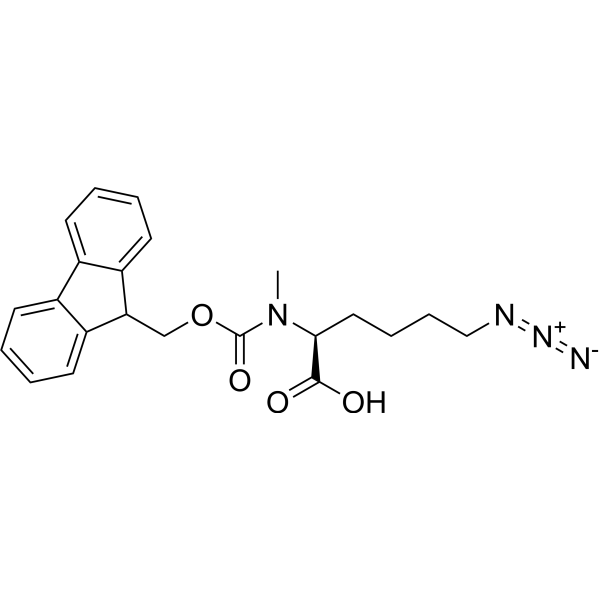
Fmoc-L-MeLys(N3)-OH is a click chemistry reagent containing an azide. Fmoc-L-MeLys(N3)-OH is a SPPS building-block for the introduction of N-Me-Lys that can be modified at the N3-group using Click-chemistry . Fmoc-L-MeLys(N3)-OH is a click chemistry reagent, it contains an Azide group and can undergo copper-catalyzed azide-alkyne cycloaddition reaction (CuAAc) with molecules containing Alkyne groups. It can also undergo strain-promoted alkyne-azide cycloaddition (SPAAC) reactions with molecules containing DBCO or BCN groups.
loading...
    loading...
Cat. No.: HY-176415S1
Synonyms: Cys-MC-GGFG-Dxd-d5 TFA
Cys-MC-GGFG-Dxd-d5 TFA (Cys-MC-GGFG-Dxd-d5 TFA) is the deuterium labeled Cys-MC-GGFG-Dxd (HY-176415). Cys-MC-GGFG-Dxd-d5 TFA is a conjugate of Cys and Deruxtecan (HY-13631E). Cys-MC-GGFG-Dxd-d5 TFA is a linker-toxin building block in antibody-drug conjugates (ADCs) used to link antibody Cys residues to cytotoxic drugs. Cys-MC-GGFG-Dxd-d5 TFA can be used in cancer research .
loading...
    loading...
Cat. No.: HY-Y0837
CAS No.: 2749-11-3
Synonyms: (S)-2-Amino-1-propanol; (S)-2-Aminopropanol; (S)-Alaninol
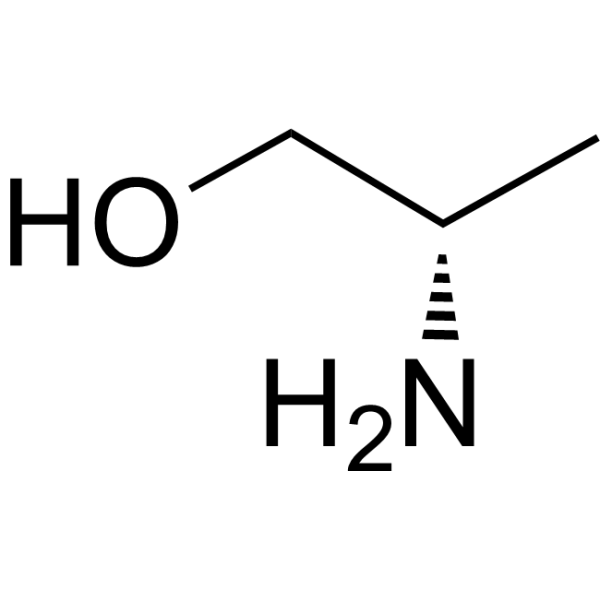
L-Alaninol ((S)-2-Amino-1-propanol; (S)-2-Aminopropanol; (S)-Alaninol) is a chiral amino alcohol that serves as a precursor for Levofloxacin (HY-B0330) and Metolachlor (HY-B1871). L-Alaninol acts as the sole carbon source for Pseudomonas sp. strain KIE171, and it is a metabolite produced by the hydrolysis of γ-glutamyl-L-alaninol. L-Alaninol functions as a substrate for oxidative/deaminative degradation and undergoes enzymatic glutamylation via IpuC. It is used as a synthetic building block in the fields of agriculture, pharmaceuticals, and peptide chemistry, and also serves as a chiral auxiliary .
loading...
    loading...
Cat. No.: HY-65036
CAS No.: 36953-37-4
Synonyms: 4-Bromo-2-pyridone
Domaines de recherche:  

Others

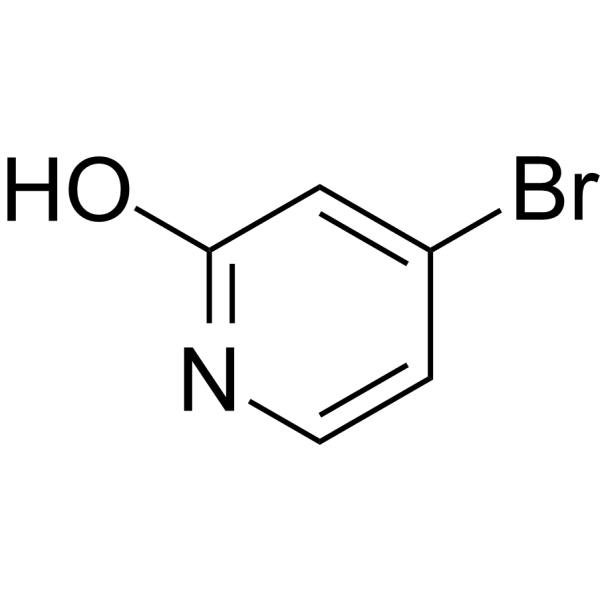
4-Bromo-2-hydroxypyridine (4-Bromo-2-pyridone) is a brominated pyridine/pyridone chemical building block. 4-Bromo-2-hydroxypyridine exists in tautomeric forms between 2-hydroxypyridine and pyridin-2 (1H)-one. 4-Bromo-2-hydroxypyridine is used for the synthesis of bromopyridone nucleoside analogs, phosphoramidite intermediates, and 4-phenylpyridin-2-one derivatives. 4-Bromo-2-hydroxypyridine is applied in studies on heterocyclic synthesis and oligonucleotide modification chemistry .
loading...
    loading...
Cat. No.: HY-D0185R
CAS No.: 312693-72-4
2'-Deoxyguanosine monohydrate (Standard) is the analytical standard of 2'-Deoxyguanosine monohydrate. This product is intended for research and analytical applications. 2'-Deoxyguanosine monohydrate is a nucleoside composed of guanine and deoxyribose, and is one of the basic building blocks of DNA. In the oxidation reaction mediated by singlet oxygen 1O2, the guanine base of 2'-Deoxyguanosine is easily oxidized to generate two major products, 4,8-dihydro-4-hydroxy-8-oxodG and 7,8-dihydro-8-oxodG. The oxidation products of 2'-Deoxyguanosine monohydrate may participate in DNA damage, which may affect gene expression or induce cancer .
loading...
    loading...
Cat. No.: HY-W086988
CAS No.: 136-85-6
Synonyms: 5-Methylbenzotriazole
Domaines de recherche:  

Others

5-Methyl-1H-benzotriazole (5-Methylbenzotriazole) is a benzotriazole derivative, and serves as a key building block for ultraviolet absorbers and light stabilizers. 5-Methyl-1H-benzotriazole reduces the photosensitizing ability of nitrate and dissolved organic matter (DOM), enhances the persistence of microorganic pollutants, inhibits the photodegradation of DOM and drug residues, and quenches the triplet excited states of DOM and methotrexate substructures. 5-Methyl-1H-benzotriazole acts as a corrosion inhibitor for copper and copper alloys, and is present in formulations of anti-icing fluids, dishwasher detergents, aircraft deicing fluids and automotive antifreezes .
loading...
    loading...
Cat. No.: HY-134058S
Synonyms: Butylethylcarbinol-d4
3-Heptanol-d4 (Butylethylcarbinol-d4) is the deuterium labeled 3-Heptanol (HY-134058). 3-Heptanol is a biotransformation product of n-heptane. 3-Heptanol can act as the building block in the synthesis of 4-(3-adamantan-1-yl-ureido)-butyric acid and cyclohexanecarboxylic acid derivatives as sEH inhibitors. 3-Heptanol can be used as a solvent to form microenvironments around single-walled carbon nanotubes. 3-Heptanol can be used in the preperation of substituted pyrimidine derivatives as C1 domain-targeted isophthalate analogs to study their binding affinities towards PKCα isoform .
loading...
    loading...
Cat. No.: HY-W111226
CAS No.: 252049-16-4
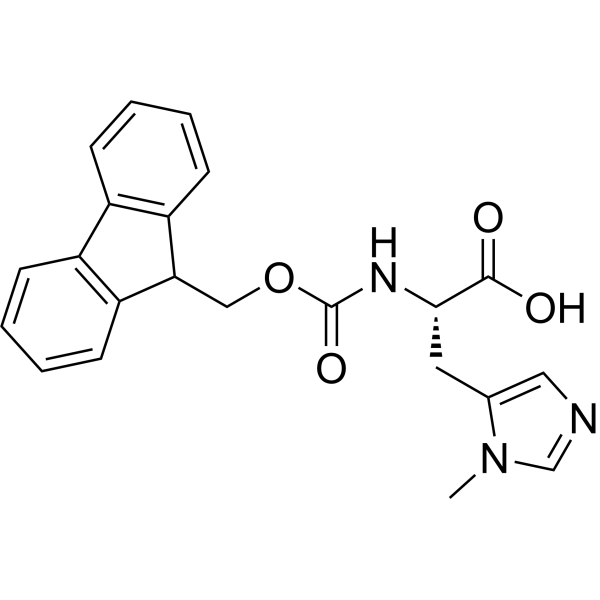
Fmoc-His (3-Me)-OH is a histidine derivative with a methylated imidazole group. Fmoc-His (3-Me)-OH can be used for the synthesis of the chemically modified tripeptide His (3-methyl)-Arg-Trp (H (3-Me)-RW). Fmoc-His (3-Me)-OH serves as a resin in Fmoc solid-phase synthesis for the generation of the His-(3-Me)-Gly-Lys peptide. Fmoc-His (3-Me)-OH is a building block for the synthesis of NAHIS02-(p-Met). Fmoc-His (3-Me)-OH can be applied in research related to Alzheimer's disease .
loading...
    loading...
Cat. No.: HY-W768213
2'-Deoxyguanosine monohydrate- 13C5 is the 13C-labeled 2'-Deoxyguanosine monohydrate (HY-D0185). 2'-Deoxyguanosine monohydrate is a nucleoside composed of guanine and deoxyribose, and is one of the basic building blocks of DNA. In the oxidation reaction mediated by singlet oxygen 1O2, the guanine base of 2'-Deoxyguanosine is easily oxidized to generate two major products, 4,8-dihydro-4-hydroxy-8-oxodG and 7,8-dihydro-8-oxodG. The oxidation products of 2'-Deoxyguanosine monohydrate may participate in DNA damage, which may affect gene expression or induce cancer .
loading...
    loading...
Cat. No.: HY-W037850
CAS No.: 13074-39-0
Synonyms: 2-Aminoadamantane
Target:  

HyT

Domaines de recherche:  

Neurological Disease Cancer

Adamantan-2-amine (2-Aminoadamantane) serves as the hydrophobic tag structural unit of Tubulin degrader 2 (HY-161641) and is used for the synthesis of anticancer drugs that target tubulin via a dual mechanism. Adamantan-2-amine can be applied in research on breast cancer, lung cancer, colorectal cancer, and Parkinson's syndrome .
loading...
    loading...
Cat. No.: HY-151829
CAS No.: 2616562-74-2
Target:  

ADC Linkers

Domaines de recherche:  

Others

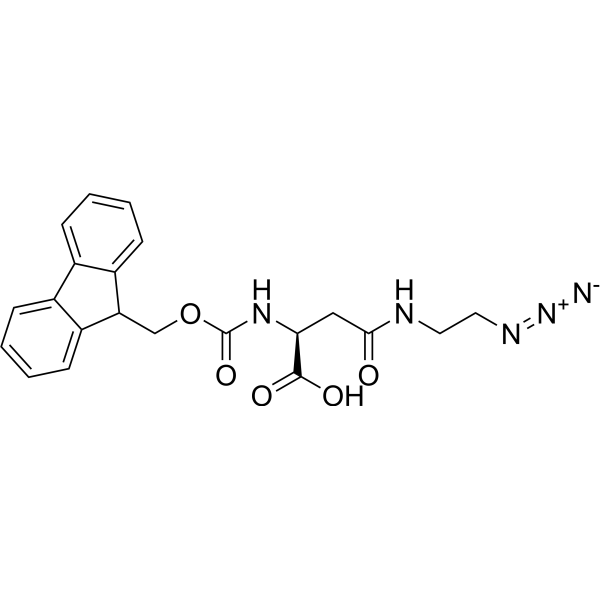
Fmoc-L-Asn(EDA-N3)-OH is a click chemistry reagent containing an azide group. This building block is reported in literature for the modification of Amanitin via Click Chemistry. Alpha-Amanitin is the deadliest member of the amatoxin peptide family produced by the death-cap mushroom A. phalloides. It is an orally available, rigid, bicyclic octapeptide and one of the most lethal known natural products (LD50 = 50-100 μg/kg) acting as highly selective allosteric inhibitor of the RNA polymerase II . It contains an azide group and can undergo copper-catalyzed azide-alkyne cycloaddition (CuAAc) with molecules containing alkyne groups. It can also undergo ring strain-promoted alkyne-azide cycloaddition (SPAAC) with molecules containing DBCO or BCN groups.
loading...
    loading...
Cat. No.: HY-W047709
CAS No.: 140-07-8
Synonyms: THEED; THEEN
Domaines de recherche:  

Infection Cancer

N,N,N',N'-Tetrakis(2-hydroxyethyl)ethylenediamine (THEED; THEEN) is a tetrapodal pentadentate chelating ligand that functions as a chelator to form stable complexes with metal ions. N,N,N',N'-Tetrakis(2-hydroxyethyl)ethylenediamine serves as a versatile building block for organic synthesis, a reagent for metal extraction, and an auxiliary for catalytic reactions. N,N,N',N'-Tetrakis(2-hydroxyethyl)ethylenediamine-derived metal complexes exhibit antibacterial, antifungal, and anticancer activities. N,N,N',N'-Tetrakis(2-hydroxyethyl)ethylenediamine and its metal complexes can be used for research related to breast cancer, leukemia, various bacterial and fungal infections .
loading...
    loading...

