340 Results for "

Cell tracking

" in MedChemExpress (MCE) Product Catalog:
Products (340)

340 Results for "Cell tracking" in MCE Product Catalog:

Cat. No.: HY-D2348A
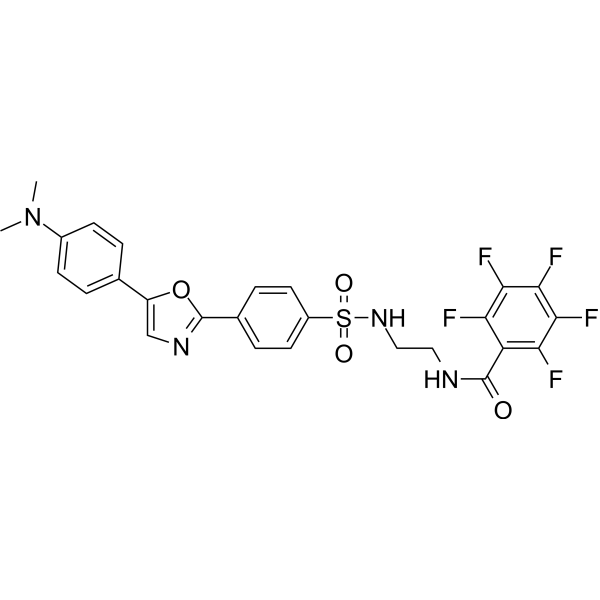
ACE TFA is a low-background, photostable fluorophore with nanomolar binding affinity for the Okra RNA aptamer. ACE TFA enables clear visualization of mRNA in live bacteria and mammalian cells, including tracking the trafficking of mRNA to stress granules and dual-color super-resolution imaging of RNA in live cells. (Ex=488 nm, Em=555 nm) .
loading...
    loading...
Cat. No.: HY-D2865
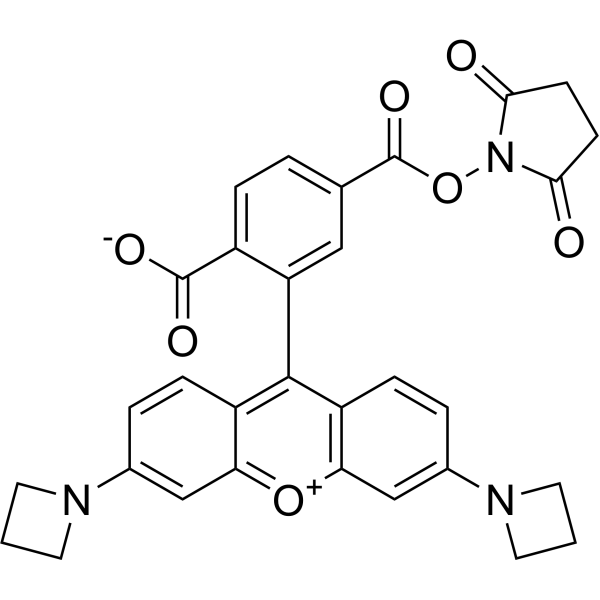
Celltrack Deep Red is a fluorescent dye with a fluorescence signal that can be maintained for at least 72 h and has good stability. Celltrack Deep Red can be used for cell tracing and multi-generation cell movement tracking. Within a cell population, Celltrack Deep Red is only transferred to daughter cells and not to neighboring cells (Ex/Em = 630/650 nm) .
loading...
    loading...
Cat. No.: HY-D1429
CAS No.: 287715-95-1
Target:  

Fluorescent Dye

Research Areas:  

Others

ER-Tracker dye is a derivative of BODIPY series dyes coupled with Glibenclamide (HY-15206), highly selective binding to the endoplasmic reticulum, non-toxic to cells at low concentrations, this type of dye is an environmentally sensitive probe, and formaldehyde treatment can still retain part of the fluorescence, with high fluorescence life, good extinction coefficient and other characteristics. Glibenclamide is an atp-dependent K + channel blocker (Kir6, KATP) and CFTR Cl-channel blocker that binds in the endoplasmic reticulum. ER-Tracker is not suitable for staining fixed cells. Staining followed by fixation is possible, but cells fixed with aldehydes will only retain partial fluorescence (Ex/Em = 374/ 430-640 nm) .
loading...
    loading...
Cat. No.: HY-DY1074
CAS No.: 287715-95-1
Target:  

Fluorescent Dye

Research Areas:  

Others

ER-Tracker dye is a derivative of BODIPY series dyes coupled with Glibenclamide (HY-15206) , highly selective binding to the endoplasmic reticulum, non-toxic to cells at low concentrations, this type of dye is an environmentally sensitive probe, and formaldehyde treatment can still retain part of the fluorescence, with high fluorescence life, good extinction coefficient and other characteristics. Glibenclamide is an atp-dependent K + channel blocker (Kir6, KATP) and CFTR Cl-channel blocker that binds in the endoplasmic reticulum. ER-Tracker is not suitable for staining fixed cells. Staining followed by fixation is possible, but cells fixed with aldehydes will only retain partial fluorescence .
Solvent and concentration: DMSO: 1 mM
loading...
    loading...
Cat. No.: HY-D2348
CAS No.: 3058751-62-2
ACE is a low-background, photostable fluorophore with nanomolar binding affinity for the Okra RNA aptamer. ACE enables clear visualization of mRNA in live bacteria and mammalian cells, including tracking the trafficking of mRNA to stress granules and dual-color super-resolution imaging of RNA in live cells. (Ex=488 nm, Em=555 nm) .
loading...
    loading...
Cat. No.: HY-141793
CAS No.: 2226143-93-5
Purity:  95.74%
Synonyms: Biotin-ATRA-conjugate
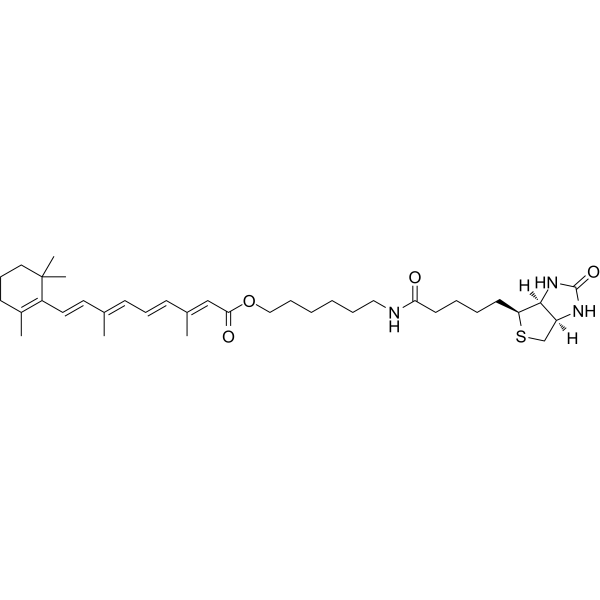
ATRA-biotin (Biotin-ATRA-conjugate) is a biotin-conjugated ATRA. ATRA-biotin can be used to track ATRA in cells or a given tissue .
loading...
    loading...
Cat. No.: HY-W110898
CAS No.: 2381-85-3
Target:  

Fluorescent Dye

Research Areas:  

Others

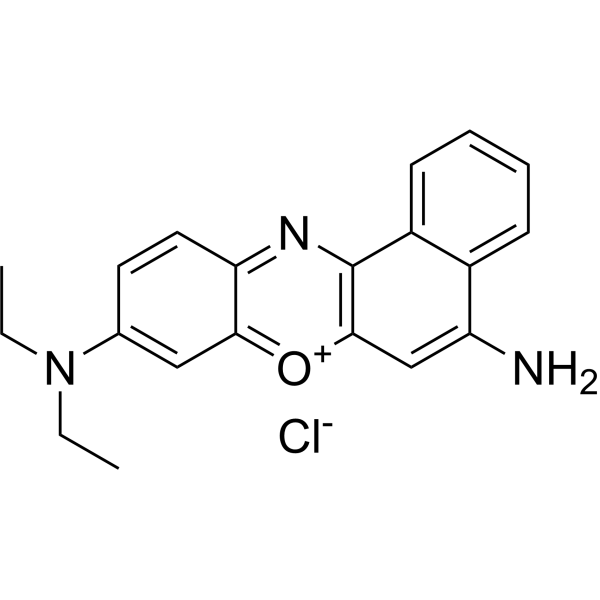
Nile blue chloride is a highly fluorescent and photostable organic dye. Nile blue chloride and fluorescein isothiocyanate (FITC) can be used to construct a ratiometric pH sensitive probe for tracking the pH of the extracellular fluid between cancer cells in realtime. Nile Blue chloride has the potential for the research of nonlinear optics .
loading...
    loading...
Cat. No.: HY-DY1041
CAS No.: 147963-22-2
CellTracker Blue CMAC (solution) is a non-fluorescent cell membrane permeable dye. The chloromethyl groups of CellTracker Blue CMAC are enzymatically cleaved by intracellular glutathione (GSH) to generate a fluorescent product (blue fluorescence, Ex/Em: 360/460 nm). CellTracker Blue CMAC is suitable for long-term cell tracking (up to 72 hours) and cell proliferation studies, and can also quantify GSH levels .
Solvent and concentration: DMSO: 10 mM
loading...
    loading...
Cat. No.: HY-W923645
CAS No.: 7262-39-7
Synonyms: Diacryloyloxyfluorescein
Fluorescein O,O′-diacrylate (Diacryloyloxyfluorescein) is a fluorescent compound with good biocompatibility and cell labeling ability. Fluorescein O,O′-diacrylate is often used in biological imaging and cell tracking research, and can effectively label cells and track their dynamic changes in vivo. Fluorescein O,O′-diacrylate is also used in compound delivery systems to improve the localization accuracy and inhibitory effect of compounds. Fluorescein O,O′-diacrylate is also used to prepare polymer materials to enhance their optical properties and biological interactions.
loading...
    loading...
Cat. No.: HY-DY1043
CAS No.: 730931-46-1
ER-Tracker dye is a derivative of BODIPY series dyes coupled with Glibenclamide (HY-15206) , highly selective binding to the endoplasmic reticulum, non-toxic to cells at low concentrations, this type of dye is an environmentally sensitive probe, and formaldehyde treatment can still retain part of the fluorescence, with high fluorescence life, good extinction coefficient and other characteristics. Glibenclamide is an atp-dependent K + channel blocker (Kir6, KATP) and CFTR Cl-channel blocker that binds in the endoplasmic reticulum. ER-Tracker is not suitable for staining cells after fixation .
Solvent and concentration: DMSO: 1 mM
loading...
    loading...
Cat. No.: HY-130736
CAS No.: 1811539-32-8
Synonyms: JF549, SE; JF549, NHS
Janelia Fluor? 549, SE (JF549, SE) is a cell-permeable fluorescent dye with an NHS ester (succinimidyl ester (SE)) reactive group. NHS esters react with primary amines and are commonly used to conjugate dyes to proteins, antibodies, amine-modified oligonucleotides, and other molecules. Janelia Fluor fluorescent dyes can be chemically conjugated to the specific HaloTag substrate (a chloroalkane ligand) to form a fluorescent ligand, rather than binding directly to the HaloTag protein itself. Janelia Fluor? 549, SE also acts as a ligand for self-labeling tags such as HaloTag and SNAP-tag, and can be used in live-cell imaging studies (Ex/Em = 549 nm/571 nm) .
loading...
    loading...
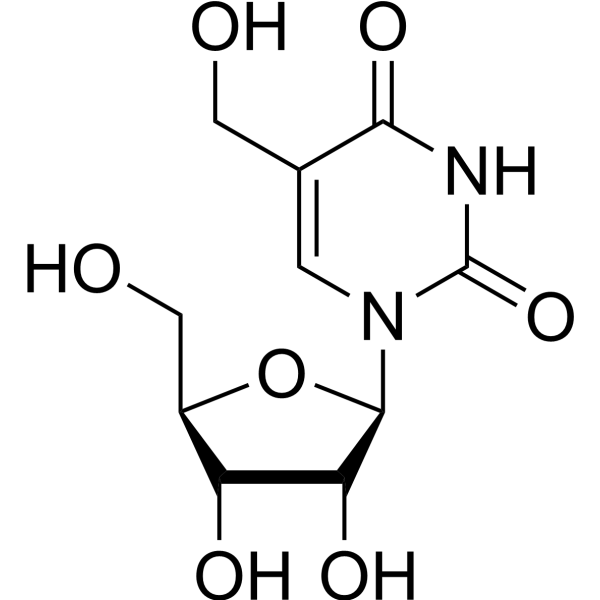
Cat. No.: HY-W394106
CAS No.: 30414-00-7
5-Hydroxymethyl uridine is a thymidine analogue. Analogs of this series have insertional activity towards replicated DNA. They can be used to label cells and track DNA synthesis .
loading...
    loading...
Cat. No.: HY-DY1026
ER-Tracker dye is a derivative of BODIPY series dyes coupled with Glibenclamide (HY-15206) , highly selective binding to the endoplasmic reticulum, non-toxic to cells at low concentrations, this type of dye is an environmentally sensitive probe, and formaldehyde treatment can still retain part of the fluorescence, with high fluorescence life, good extinction coefficient and other characteristics. Glibenclamide is an atp-dependent K + channel blocker (Kir6, KATP) and CFTR Cl-channel blocker that binds in the endoplasmic reticulum. ER-Tracker is not suitable for staining cells after fixation. Ex/Em=587/615 nm .
Solvent and concentration: DMSO: 1 mM
loading...
    loading...
Cat. No.: HY-D2853
FITC-PEG2000-PBA is a fluorescent dye composed of FITC (HY-66019), PEG and phenylboronic acid (PBA). FITC-PEG2000-PBA can be used for cell imaging and tracking, as well as sugar molecule detection (Ex/Em=488/525 nm).
loading...
    loading...
Cat. No.: HY-P5114A
Target:  

Calcium Channel

Research Areas:  

Others

Maurocalcine TFA is an agonist of ryanodine receptor (RyR) channel types 1, 2 and 3 with cellular permeability. Maurocalcine TFA induces [ 3H]ryanodine binding on RyR1 with an EC50 value of 2558 nM. Maurocalcine TFA exhibits a apparent affinity of 14 nM for RyR2. Maurocalcine TFA can be applied to in vivo cell tracking or other cell imaging techniques .
loading...
    loading...
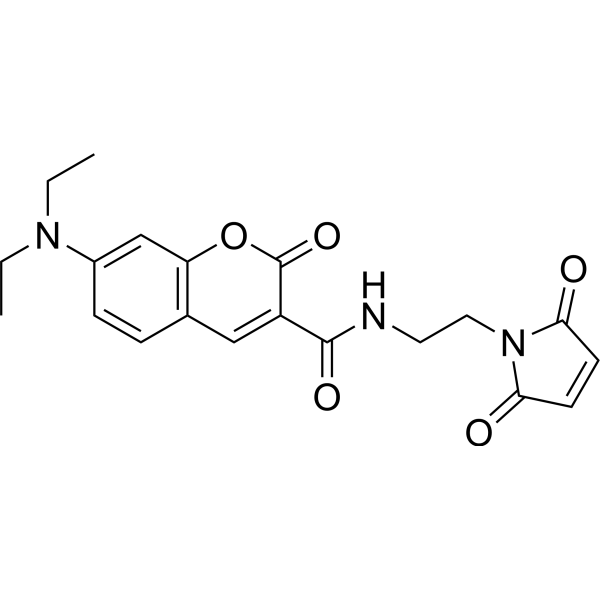
Cat. No.: HY-D0087
CAS No.: 156571-46-9
MDCC is a multifunctional dye. Dyes are important tools in biological experiments. They can help researchers observe and analyze cell structures, track biomolecules, evaluate cell functions, distinguish cell types, detect biomolecules, study tissue pathology and monitor microorganisms. Their applications range from basic scientific research to clinical A wide range of diagnostics. Dyes are also widely used in traditional fields such as textile dyeing, as well as in emerging fields such as functional textile processing, food pigments and dye-sensitized solar cells.
loading...
    loading...
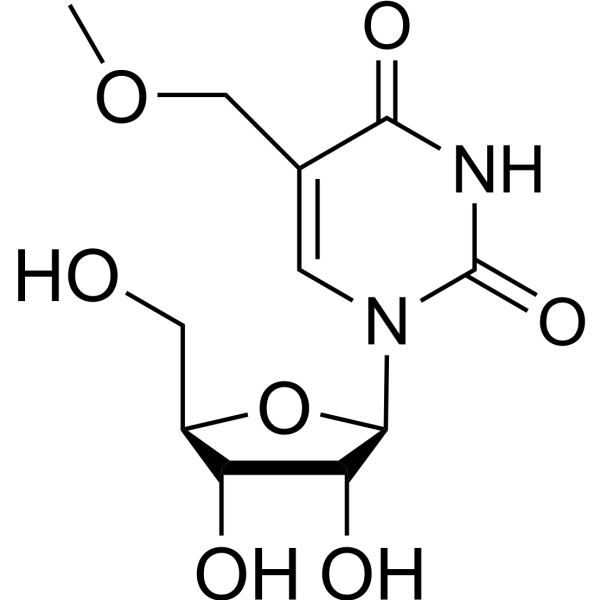
Cat. No.: HY-152557
CAS No.: 82448-44-0
Research Areas:  

Cancer

5-Methoxymethyluridine is a thymidine analog. Analogs of this series have insertional activity towards replicated DNA. They can be used to label cells and track DNA synthesis .
loading...
    loading...
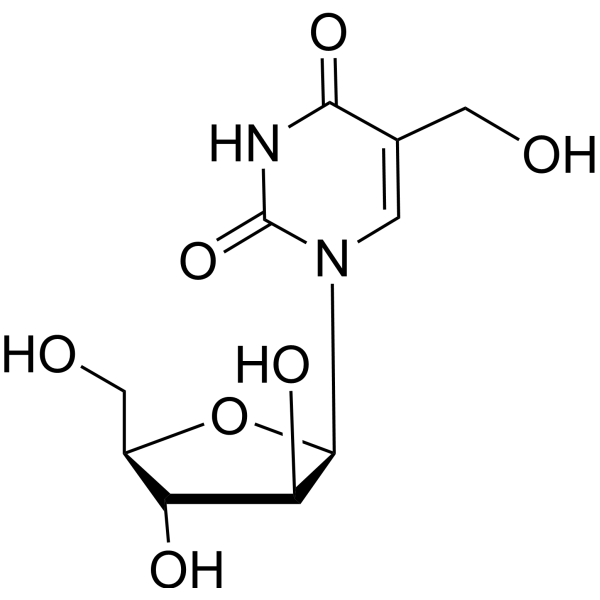
Cat. No.: HY-152434
CAS No.: 28608-82-4
Research Areas:  

Others

5-Hydroxymethyl-arauridine is a thymidine analogue. Analogs of this series have insertional activity towards replicated DNA. They can be used to label cells and track DNA synthesis .
loading...
    loading...
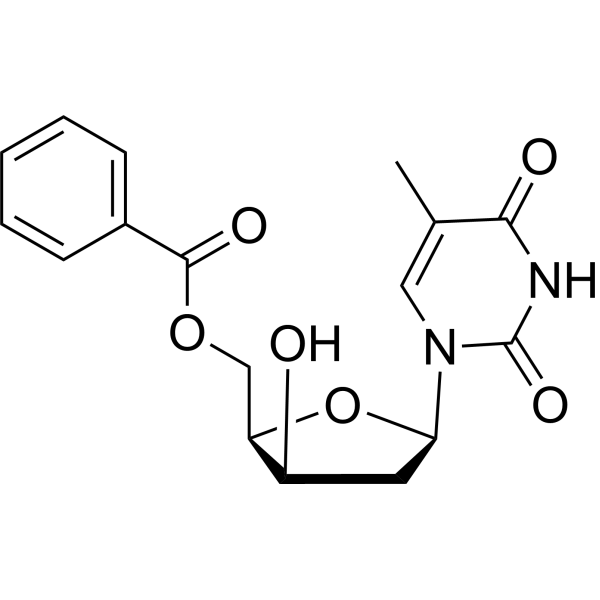
Cat. No.: HY-154719
CAS No.: 65475-51-6
Research Areas:  

Cancer

5’-O-Benzoylthymidine is a thymidine analog. Analogs of this series have insertional activity towards replicated DNA. They can be used to label cells and track DNA synthesis .
loading...
    loading...
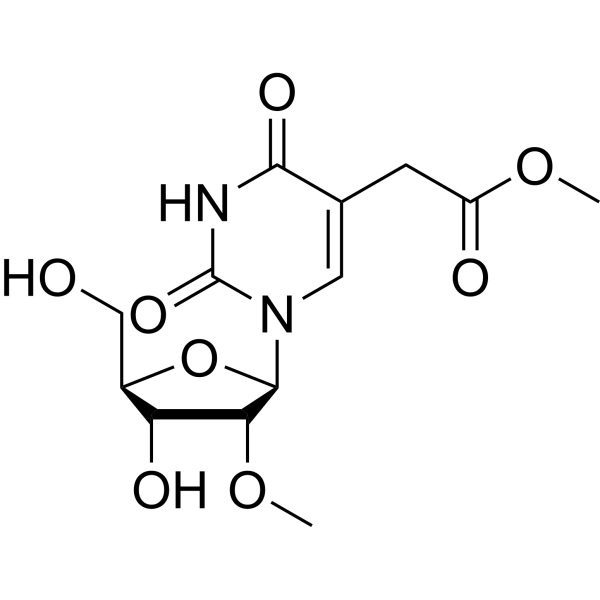
Cat. No.: HY-W393317
CAS No.: 60197-31-1
Research Areas:  

Others

5-Methoxycarbonylmethyl-2'-O-methyluridine is a thymidine analogue. Analogs of this series have insertional activity towards replicated DNA. They can be used to label cells and track DNA synthesis .
loading...
    loading...

