839 Results for "

E. Coli

" in MedChemExpress (MCE) Product Catalog:
Products (839)

839 Results for "E. Coli" in MCE Product Catalog:

4
4 Cited Publications
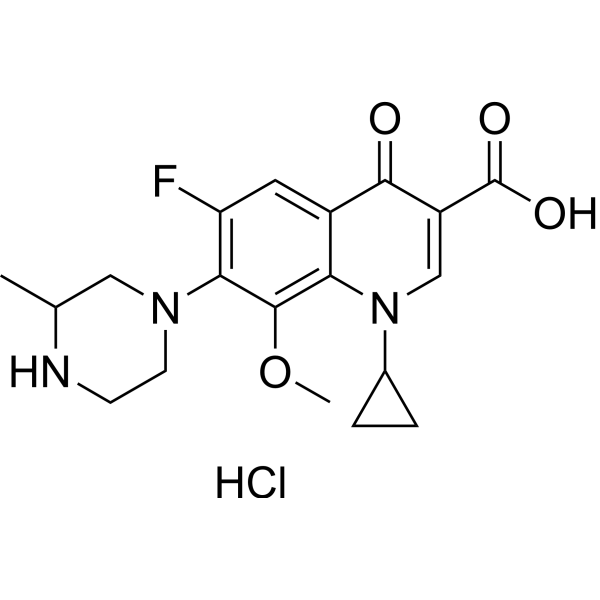
Cat. No.: HY-10581A
CAS No.: 121577-32-0
Purity:  99.89%
Synonyms: AM-1155 hydrochloride; BMS-206584 hydrochloride; PD135432 hydrochloride
Research Areas:  

Infection

Gatifloxacin hydrochloride (AM-1155; BMS-206584; PD135432) is a potent fluoroquinolone antibiotic with broad-spectrum antibacterial activity. Gatifloxacin hydrochloride inhibits bacterial type II topoisomerases (IC50=13.8 μg/ml for S. aureus topoisomerase IV) and E. coli DNA gyrase (IC50 = 0.109 μg/ml) . Gatifloxacin hydrochloride can be used to treat bacterial conjunctivitis in vivo.
loading...
    loading...
4
4 Cited Publications
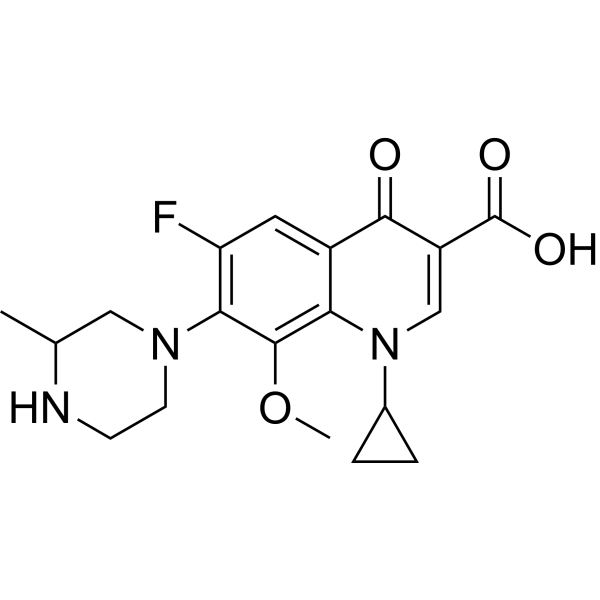
Cat. No.: HY-10581
CAS No.: 112811-59-3
Purity:  99.69%
Synonyms: AM-1155; BMS-206584; PD135432
Gatifloxacin (AM-1155; BMS-206584; PD135432) is a potent fluoroquinolone antibiotic that can cross the blood-brain barrier, with broad-spectrum antibacterial activity. Gatifloxacin inhibits bacterial type II topoisomerases (IC50=13.8 μg/ml for S. aureus topoisomerase IV) and E. coli DNA gyrase (IC50=0.109 μg/ml) . Gatifloxacin can be used to treat bacterial conjunctivitis in vivo.
loading...
    loading...
3
3 Cited Publications
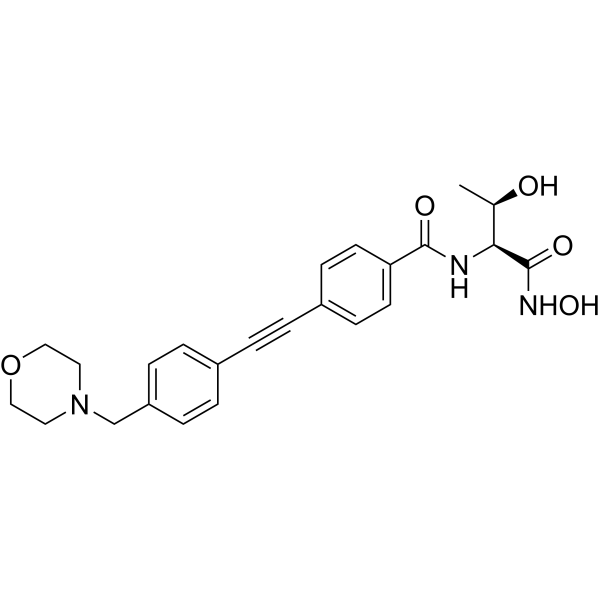
Cat. No.: HY-15460
CAS No.: 728865-23-4
Purity:  98.58%
Target:  

Bacterial Antibiotic

Research Areas:  

Infection

CHIR-090 is a potent, slow, tight-binding inhibitor of the LpxC deacetylase. It binds to E. coli LpxC with a Ki of 4.0 nM. CHIR-090 is a click chemistry reagent, it contains an Alkyne group and can undergo copper-catalyzed azide-alkyne cycloaddition (CuAAc) with molecules containing Azide groups.
loading...
    loading...
3
3 Cited Publications
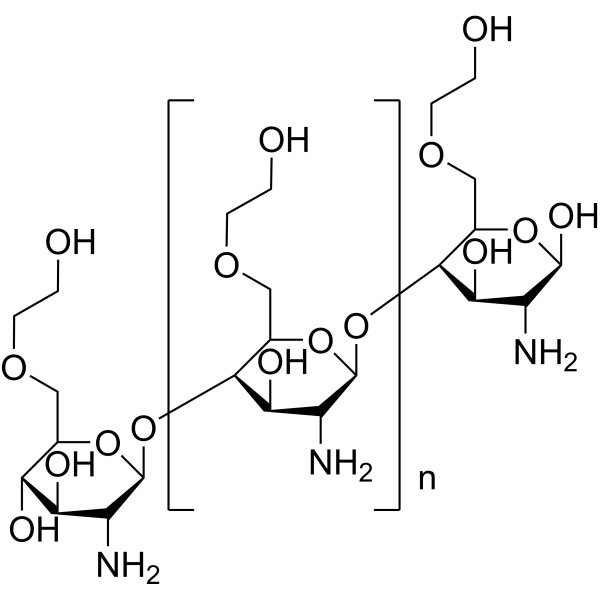
Cat. No.: HY-135969
CAS No.: 123938-86-3
Purity:  61.22%
Glycol chitosan is a chitosan derivative with ethylene glycol branches. Glycol chitosan enhances membrane permeability and leadkage in Glycine max Harosoy 63W cells. Glycol chitosan is biocompatible and biodegradable . Glycol chitosan inhibits E. coli, S. aureus and S. enteritidis growths with MIC values of 4 μg/mL, 32 μg/mL and <0.5 μg/mL, respectively .
loading...
    loading...
3
3 Cited Publications
Cat. No.: HY-W040258
CAS No.: 905-96-4
Synonyms: DiOC2(3)
Target:  

Fluorescent Dye

Research Areas:  

Others

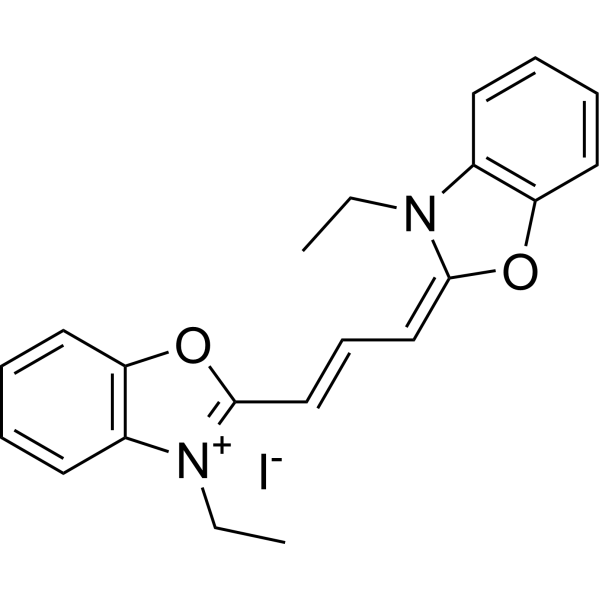
3,3'-Diethyloxacarbocyanine iodide (DiOC2 (3)) is a Fluorescent probe used for microviscosity detection, micelle and microemulsion probing, critical micelle concentration determination, photophysical property research, and bacterial membrane potential assessment. The excitation wavelength of 3,3'-Diethyloxacarbocyanine iodide is 355 nm .
loading...
    loading...
2
2 Cited Publications
Cat. No.: HY-P2733
CAS No.: 9046-28-0
Synonyms: GPO
Glycerol-3-phosphate oxidase, E. coli (GPO) is a key intermediate in glycerol metabolism. Glycerol-3-phosphate oxidase, E. coli is the skeleton of phospholipids in membrane lipids, and also a substrate in the respiratory chain. Glycerol-3-phosphate oxidase, E. coli produces electrons through oxidation. Glycerol-3-phosphate oxidase, E. coli is an enzyme with important functions in the field of biochemistry, and is widely used in medical testing and scientific research .
loading...
    loading...
2
2 Cited Publications
Cat. No.: HY-K0234

MCE Glutathione Magnetic Agarose Beads have high protein-binding capacity and stability, making it ideal for high performance purification of GST-tagged fusion proteins expressed in E. coli, yeast, insect and mammalian expression systems.

loading...
    loading...
2
2 Cited Publications
Cat. No.: HY-P700300
Purity:  ≥ 95%, as determined by reducing SDS-PAGE.
Synonyms: NR2E3; Rd7; Nuclear Receptor Subfamily 2 Group E Member 3; RNR; PNR; Nuclear Receptor Subfamily 2, Group E, Member 3; Photoreceptor-Specific Nuclear Receptor; NR2E3 Protein; Retina-Specific Nuclear Receptor; ESCS1; RP37; ESCS
Species:  
E.coli
Source:  
E. coli
loading...
    loading...
2
2 Cited Publications
Cat. No.: HY-128773A
CAS No.: 2699937-04-5
Purity:  98.39%
Target:  

Bacterial

Research Areas:  

Infection

MRL-494 hydrochloride, an antibacterial agent, is a inhibitor of β-barrel assembly machine A (BamA) impervious to efflux and the outer membrane permeability barrier. MRL-494 hydrochloride can inhibits Gram-positive (MIC of 12.5 μM for Staphylococcus aureus COL) and Gram-negative (MIC of 25 μM for E. coli JCM158) bacterias .
loading...
    loading...
2
2 Cited Publications
Cat. No.: HY-B1407
CAS No.: 85-73-4
Synonyms: N4-Phthalylsulfathiazole
Target:  

Antibiotic Bacterial

Research Areas:  

Infection

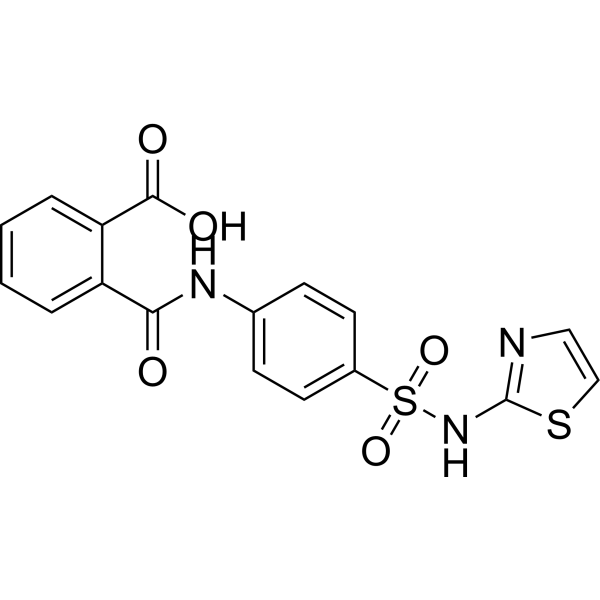
Phthalylsulfathiazole (N4-Phthalylsulfathiazole) is an orally active sulfonamide intestinal antibacterial agent. Phthalylsulfathiazole has low toxicity and excellent bacteriostatic efficacy. Phthalylsulfathiazole inhibits E. coli, streptococci, staphylococci, and total fecal bacteria. Phthalylsulfathiazole can be used in research related to intestinal infections such as colon infection, bacillary dysentery, and ulcerative colitis .
loading...
    loading...
2
2 Cited Publications
Cat. No.: HY-P1633
CAS No.: 168831-77-4
Synonyms: PG1
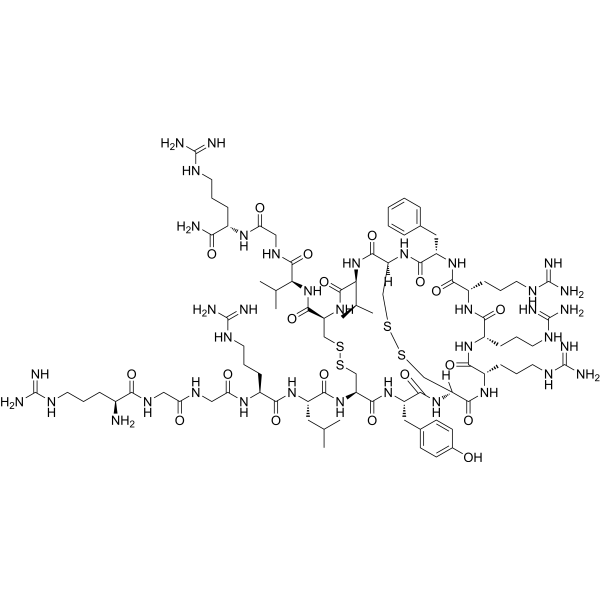
Protegrin-1 is an orally active antibacterial peptide. Protegrin-1 activates ERK, COX2, NFκB, inhibits Apoptosis, and NO production. Protegrin-1 has antibacterial activity against S. aureus, E. faecium, E. coli, P. aeruginosa and K. Pneumoniae, with MBC values between 10 and 20 µM. Protegrin-1 has antiviral activity against dengue NS2B-NS3. Protegrin-1 has anti-inflammatory activity. Protegrin-1 is used in the study of inflammatory diseases and infections .
loading...
    loading...
2
2 Cited Publications
Cat. No.: HY-B0343
CAS No.: 98105-99-8
Synonyms: A-56620
Target:  

Bacterial

Research Areas:  

Infection Inflammation/Immunology

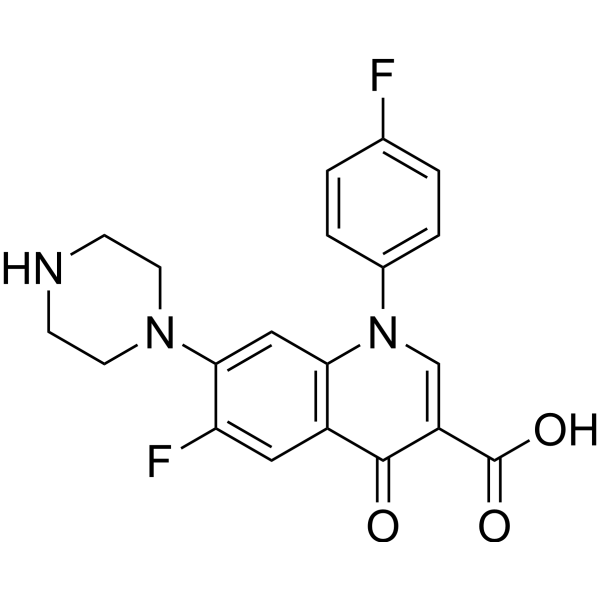
Sarafloxacin (A-56620) is a fluoroquinolone Antibacterial agent. Sarafloxacin inhibits the growth of Staphylococcus aureus, Enterobacteriaceae, and both aminoglycoside-sensitive and aminoglycoside-resistant strains of Pseudomonas aeruginosa .
loading...
    loading...
1
1 Cited Publications
Cat. No.: HY-D1056F
Synonyms: Biotin-LPS, from Escherichia Coli (O111:B4)
Biotin-Lipopolysaccharide, from E.coli O111:B4 (Biotin-LPS, from Escherichia coli (O111:B4)) is a biotin-conjugated Lipopolysaccharide (LPS) (HY-D1056A1) that can be coupled with streptavidin protein. Biotin-Lipopolysaccharide, from E.coli O111:B4 can be used to identify Lipopolysaccharide ligands. Lipopolysaccharides, from E. coli O111:B4 (LPS, from Escherichia coli (O111:B4)) are endotoxins and TLR4 activators extracted from Escherichia coli (E. coli O111:B4) and are classified as S (smooth) type LPS. Lipopolysaccharides, from E. coli O111:B4 possess the typical three-part structure: O-antigen, R3-type core oligosaccharide, and lipid A. Lipopolysaccharides, from E. coli O111:B4 activate TLR-4 in immune cells and can cause significant gastric diseases. Lipopolysaccharides, from E. coli O111:B4 can also induce M1-type polarization in mouse macrophages .
It is recommended to prepare a solution with concentration ≥2 mg/mL. Vortex thoroughly for more than 10 minutes. Due to the adsorption characteristics of LPS, silanized container or low adsorption centrifuge tubes should be used for aliquoting and storage, and mix thoroughly before use.
loading...
    loading...
1
1 Cited Publications
Cat. No.: HY-Y1718
CAS No.: 638-53-9
Synonyms: N-Tridecanoic acid
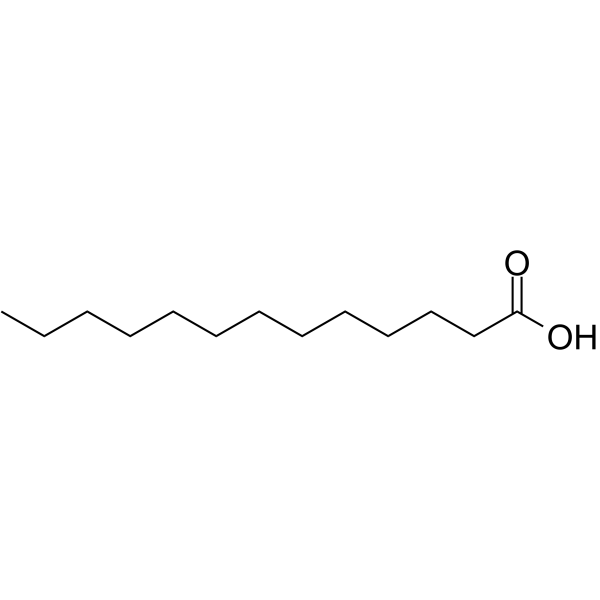
Tridecanoic acid (N-Tridecanoic acid) is a medium-chain saturated fatty acid and inhibitor with no antibacterial activity against enterohemorrhagic E. coli (EHEC). When used in combination with Ciprofloxacin (HY-B0356) or Ampicillin (HY-B0522), Tridecanoic acid suppresses persister formation in exponentially growing E. coli and EHEC, but exerts no inhibitory effect on persister formation induced by Kanamycin (HY-16566) or in stationary-phase cells. Tridecanoic acid inhibits biofilm formation in EHEC. It can be used in the research of bacterial infections .
loading...
    loading...
1
1 Cited Publications
Cat. No.: HY-119749
CAS No.: 22959-81-5
Purity:  98.01%
Target:  

Bacterial

Research Areas:  

Infection

Diazaborine is an inhibitor for enoyl-acyl carrier protein (enoyl ACP) in an NAD+-dependent manner. Diazaborine exhibits antibacterial activity, MIC for E. coli and K. pneumoniae is 25 and 3.12 μg/mL .
loading...
    loading...
1
1 Cited Publications
Cat. No.: HY-116872
CAS No.: 4871-40-3
Purity:  99.33%
Target:  

Bacterial

Research Areas:  

Infection

MAC13772 is a BioA inhibitor with an IC50 of 0.28 μM against E. coli and an IC50 of 0.269 μM against A. baumannii. MAC13772 inhibits bacterial growth by targeting the biotin biosynthesis pathway. MAC13772 can be used in studies related to bacterial infections .
loading...
    loading...
1
1 Cited Publications
Cat. No.: HY-P702777
Purity:  ≥ 90%, as determined by reducing SDS-PAGE.
Synonyms: RAD51; RAD51 Homolog A; Prev. RAD51A; RAD51 Homolog (RecA Homolog, E. Coli) (S. Cerevisiae); Prev. RECA; RAD51 (S. Cerevisiae) Homolog (E Coli RecA Homolog); HsT16930; RAD51 Homolog (S. Cerevisiae); HsRad51; RecA, E. Coli, Homolog Of; BRCC5; Recombination
Species:  
Human
Source:  
E. coli
loading...
    loading...
1
1 Cited Publications
Cat. No.: HY-Y0367
CAS No.: 110-16-7
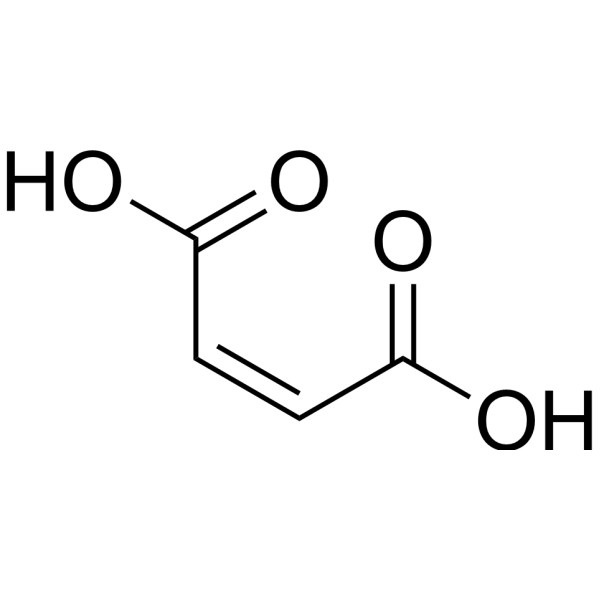
Maleic Acid is a Glutamate Decarboxylase (GAD) inhibitor of E. coli and L. monocytogenes.
loading...
    loading...
1
1 Cited Publications
Cat. No.: HY-P2818A
CAS No.: 9001-78-9
Synonyms: Apase, Escherichia Coli
Alkaline Phosphatase (Apase), Escherichia coli is an alkaline phosphatase from Escherichia coli, and is one of the most active alkaline phosphatases. Alkaline phosphatase, Escherichia coli is an orally active membrane-bound glycoprotein that catalyzes the hydrolysis of phosphate monoesters at alkaline pH. Alkaline phosphatase, Escherichia coli reduces myeloperoxidase activity and bacterial translocation. Alkaline phosphatase, Escherichia coli improves survival rate of mice infected with E. coli. Alkaline phosphatase, Escherichia coli improves TNBS-induced colon inflammation .
loading...
    loading...
1
1 Cited Publications
Cat. No.: HY-KE7056

RNase III is a specific exonuclease expressed in E.coli that can cleave dsRNA into 12-15 bp dsRNA fragments.

loading...
    loading...

