46 Results for "

Energy substrate

" in MedChemExpress (MCE) Product Catalog:
Products (46)

46 Results for "Energy substrate" in MCE Product Catalog:

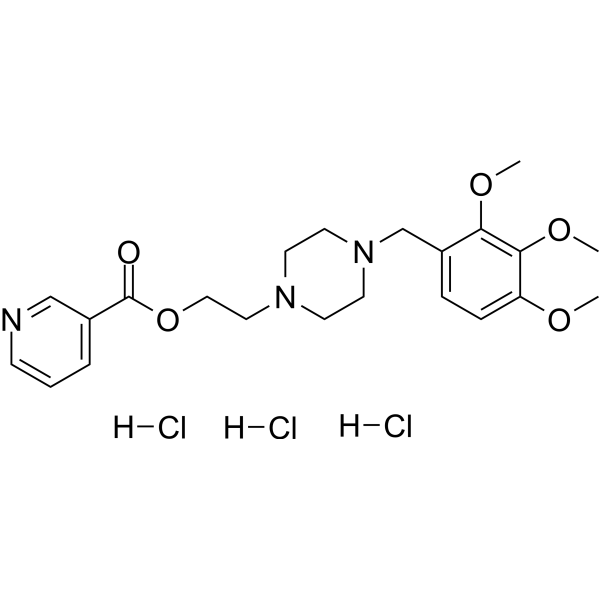
Cat. No.: HY-139577A
CAS No.: 2311824-72-1
Purity:  99.65%
Synonyms: MB-1018972 trihydrochloride; IMB-101 trihydrochloride
Ninerafaxstat trihydrochloride (IMB-1018972 trihydrochloride) is the trihydrochloride salt form of Ninerafaxstat (HY-139577). Ninerafaxstat trihydrochloride is a novel orally active cardiac mitochondrial drug that restores myocardial energy homeostasis. Ninerafaxstat trihydrochloride competitively inhibits 3-ketoacyl-CoA thiolase (3-KAT) to partially suppress fatty acid oxidation, and shifts cardiac energy metabolism from free fatty acid oxidation to glucose oxidation, regulating myocardial substrate utilization and thereby improving cardiac efficiency. Ninerafaxstat trihydrochloride can be used for research on cardiovascular diseases .
loading...
    loading...
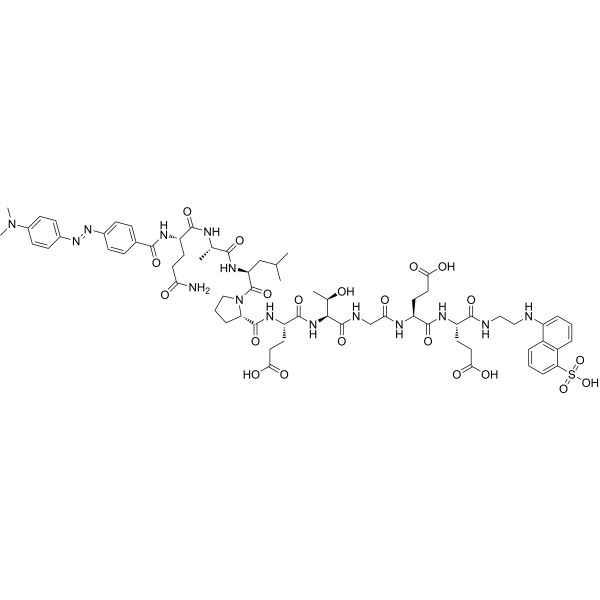
Cat. No.: HY-P5485
CAS No.: 271798-75-5
Target:  

Bacterial

Research Areas:  

Others

Dabcyl-QALPETGEE-Edans is a synthetic peptide substrate for fluorescence resonance energy transfer (FRET) detection of Sortase A (SrtA) enzymatic activity. Dabcyl-QALPETGEE-Edans is labeled at both ends with the fluorescent group Edans (donor) and the quencher Dabcyl (acceptor), respectively. Dabcyl-QALPETGEE-Edans's central sequence contains a conserved motif specifically recognized by SrtA. Dabcyl-QALPETGEE-Edans demonstrates high sensitivity in vitro assays, enabling precise determination of the half-maximal inhibitory concentration of SrtA .
loading...
    loading...
Cat. No.: HY-D0889R
CAS No.: 556-50-3
Synonyms: Gly-Gly (Standard); H-Gly-Gly-OH (Standard)
Glycylglycine (Standard) is the analytical standard of Glycylglycine (HY-D0889). This product is intended for research and analytical applications. Glycylglycine is a non-selective glycylglycine dipeptidase substrate and iNOS inhibitor. Glycylglycine can cross the cell membrane by passive diffusion and is hydrolyzed to glycine in the cell, participating in energy metabolism and antioxidant processes. Glycylglycine promotes spermatogonial stem cells (SSCs) proliferation, inhibits astrocyte overactivation and reduces nitric oxide (NO) release, while upregulating the expression of neurotrophic factors (such as PDGFA, FGF2, CNTF) to support nerve myelin repair. Glycylglycine can be used to study male reproductive biology (such as SSCs proliferation regulation) and neurodegenerative diseases (such as neuroprotective mechanisms in multiple sclerosis) .
loading...
    loading...
Cat. No.: HY-D1080R
CAS No.: 50402-56-7
Synonyms: 1,5-EDANS (Standard)
Research Areas:  

Others

EDANS (1,5-EDANS) (Standard) is an analytical standard for EDANS. This product is intended for research and analytical applications. EDANS (1,5-EDANS) is a novel quenched fluorogenic substrate for the analysis of retroviral proteases by resonance energy transfer .
loading...
    loading...
Cat. No.: HY-167805
CAS No.: 103192-55-8
D-Glucose 6-phosphate potassium is a biologically active compound that has the activity of being a substrate for glucose-6-phosphate isomerase. D-Glucose 6-phosphate potassium can participate in the sugar metabolism process and promote the production and utilization of energy in cells.
loading...
    loading...
Cat. No.: HY-W013093R
CAS No.: 19817-92-6
Synonyms: UTP trisodium salt (Standard); Uridine 5'-triphosphate trisodium salt (Standard)
Uridine triphosphate (trisodium salt) (Standard) is the analytical standard of Uridine triphosphate (trisodium salt). This product is intended for research and analytical applications. Uridine triphosphate (UTP) trisodium salt is a pyrimidine nucleoside triphosphate that is used as a substrate to synthesize RNA or as an energy source in metabolic reactions. Uridine triphosphate trisodium salt activates membrane-bound P2Y2 receptors .
loading...
    loading...
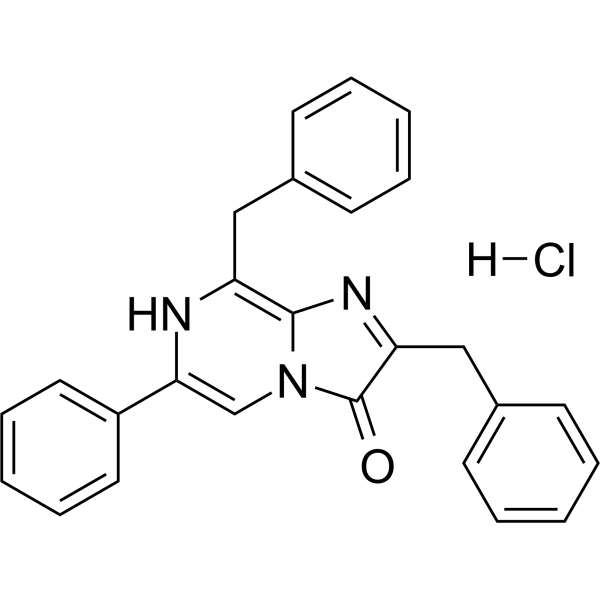
Cat. No.: HY-118462A
CAS No.: 2320429-05-6
Synonyms: Coelenterazine 400a hydrochloride; Bisdeoxycoelenterazine hydrochloride
Target:  

Fluorescent Dye

Research Areas:  

Others

Coelenteramine (Coelenterazine) 400a hydrochloride, a derivative of Coelenterazine, is a Renilla luciferase (RLuc) substrate. In the presence of Coelenteramine 400a hydrochloride, RLuc can emit blue light at 395 nm . Coelenteramine 400a hydrochloride will causes color change in the bioluminescence reaction of Rluc by replacing the sulfur and oxygen heteroatoms of the methylene bridge. Coelenteramine 400a hydrochloride provides higher signal resolution and can be used in the research of bioluminescence resonance energy transfer (BRET) .
loading...
    loading...
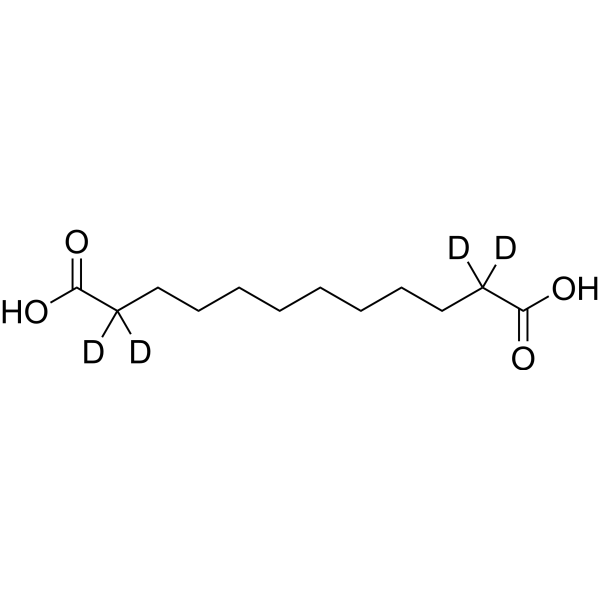
Cat. No.: HY-W012241S1
CAS No.: 97543-02-7
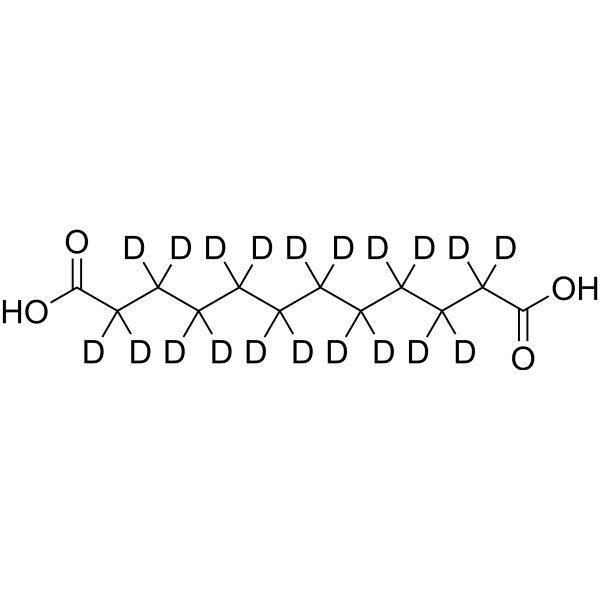
Dodecanedioic acid-d4 is the deuterium labeled Dodecanedioic acid (HY-W012241). Dodecanedioic acid is an orally active straight-chain dicarboxylic acid. As an alternative energy substrate between lipids and carbohydrates, Dodecanedioic acid can be rapidly oxidized during exercise, reducing muscle fatigue without stimulating insulin secretion. Dodecanedioic acid also exhibits blood glucose-lowering activity in non-insulin-dependent diabetes mellitus .
loading...
    loading...
Cat. No.: HY-W012241R
CAS No.: 693-23-2
Dodecanedioic acid (Standard) is the analytical standard of Dodecanedioic acid (HY-W012241). This product is intended for research and analytical applications. Dodecanedioic acid is an orally active straight-chain dicarboxylic acid. As an alternative energy substrate between lipids and carbohydrates, Dodecanedioic acid can be rapidly oxidized during exercise, reducing muscle fatigue without stimulating insulin secretion. Dodecanedioic acid also exhibits blood glucose-lowering activity in non-insulin-dependent diabetes mellitus .
loading...
    loading...
Cat. No.: HY-166309
CAS No.: 116912-55-1
Crotonyl-CoA tetralithium, a high-energy acyl donor, is an intermediate in the fermentation of butyric acid, and in the metabolism of lysine and tryptophan. Crotonyl-CoA tetralithium is important in the metabolism of fatty acids and amino acids. Crotonyl-CoA tetralithium acts as a substrate for p300’s histone crotonyltransferase activity, competing with acetyl-CoA for p300-mediated histone acylation reactions. Crotonyl-CoA tetralithium regulates global and gene-specific histone crotonylation levels in cells, with cellular concentration changes altering histone crotonylation at regulatory elements of activated genes. Crotonyl-CoA tetralithium serves as the substrate for crotonyl-CoA reductase/carboxylase (CCRC)-catalyzed NADPH-mediated reduction and carbon dioxide trapping to form unusual alkylmalonyl-CoA polyketide synthase extender units. Crotonyl-CoA tetralithium can be used for the research of LPS-induced inflammatory response .
loading...
    loading...
Cat. No.: HY-P10344
CAS No.: 932391-88-3
Target:  

Fluorescent Dye

Research Areas:  

Infection

MCA-AVLQSGFR-Lys(Dnp)-Lys-NH2 is a fluorescent substrate used for fluorescence resonance energy transfer (FRET) protease assays. This substrate is employed to measure the activity of SARS-CoV-2 3CLpro .
loading...
    loading...
Cat. No.: HY-W324458
CAS No.: 359436-89-8
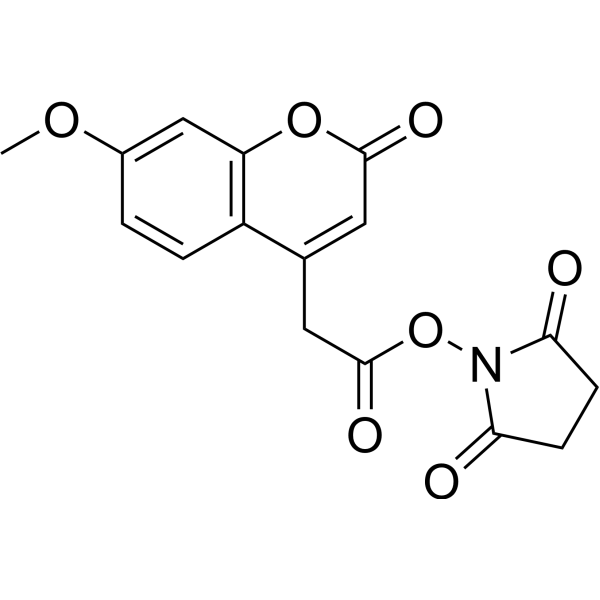
MCA succinimidyl ester is a derivative of MCA (HY-W027544). MCA succinimidyl ester has succinimidyl ester can react selectively with amines. MCA succinimidyl ester can be used as peptide substrate for fluorescence resonance energy transfer .
loading...
    loading...
Cat. No.: HY-134274A
Synonyms: 8-Bromoguanosine-5'-triphosphate tetrasodium
Target:  

Bacterial

Research Areas:  

Metabolic Disease

8-Br-GTP (tetrasodium) (8-Bromoguanosine-5'-triphosphate (tetrasodium)) is a derivative of the energy substrate – GTP, for protein synthesis and gluconeogenesis. 8-Br-GTP (tetrasodium) inhibits the E. coli GTPase FtsZ with a Ki of 31.8 μM. 8-Br-GTP (tetrasodium) promotes the assembly of porcine brain microtubules .
loading...
    loading...
Cat. No.: HY-W002114
CAS No.: 2374-03-0
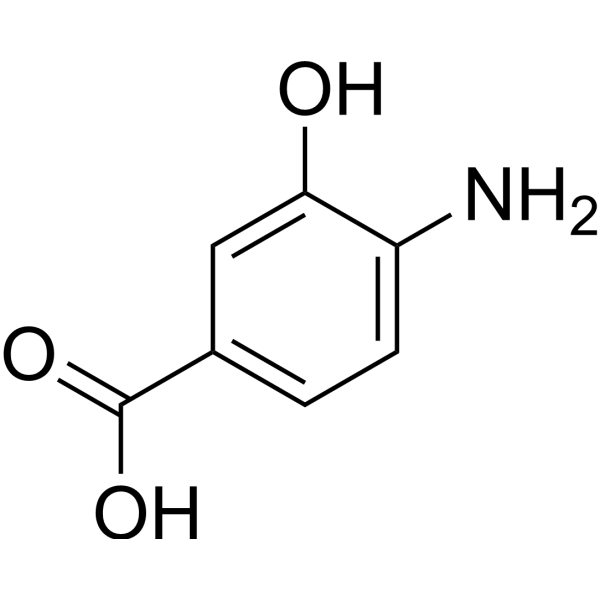
4-Amino-3-hydroxybenzoic acid is an aromatic substrate degradable by Bordetella sp. strain 10d. 4-Amino-3-hydroxybenzoic acid can serve as a carbon source, nitrogen source and energy source for the growth of Bordetella sp. strain 10d. 4-Amino-3-hydroxybenzoic acid acts as a substrate for 2-amino-5-carboxymuconate-6-semialdehyde deaminase and 4-amino-3-hydroxybenzoate 2,3-dioxygenase .
loading...
    loading...
Cat. No.: HY-158801
CAS No.: 2133455-98-6
Synonyms: C20:4 Carnitine chloride; L-Arachidonoylcarnitine chloride; L-Carnitine arachidonoyl ester chloride
Target:  

Endogenous Metabolite

Research Areas:  

Metabolic Disease

Arachidonoyl-L-carnitine (C20:4 Carnitine) chloride is an arachidonic acid-L-carnitine complex and also a substrate for β-oxidation. Arachidonoyl-L-carnitine chloride undergoes mitochondrial β-oxidation, a process that requires energy-dependent function provided by NADP + transhydrogenase supplying NADPH for 2,4-enoyl-CoA reductase activity. Arachidonoyl-L-carnitine chloride shows reduced respiration under uncoupling conditions, and ATP partially restores its oxidation .
loading...
    loading...
Cat. No.: HY-W011425B
NTP 25 mM Solution, PCR Grade is a mixed solution composed of 25 mM ATP (HY-B2176), 25 mM CTP (HY-125818), 25 mM GTP (HY-113225) and 25 mM UTP (HY-107372), free of DNase, RNase, phosphatase and protease. NTP 25 mM Solution, PCR Grade serves as an energy substrate and raw material for nucleic acid synthesis (DNA/RNA), and can also regulate the advanced structure of DNA to turn transcription on or off .
loading...
    loading...
Cat. No.: HY-W012241S
CAS No.: 89613-32-1
Dodecanedioic acid-d20 is the deuterium labeled Dodecanedioic acid (HY-W012241). Dodecanedioic acid is an orally active straight-chain dicarboxylic acid. As an alternative energy substrate between lipids and carbohydrates, Dodecanedioic acid can be rapidly oxidized during exercise, reducing muscle fatigue without stimulating insulin secretion. Dodecanedioic acid also exhibits blood glucose-lowering activity in non-insulin-dependent diabetes mellitus .
loading...
    loading...
Cat. No.: HY-W777762
CAS No.: 1173019-20-9
Dodecanedioic Acid- 13C12 is the 13C-labeled Dodecanedioic acid (HY-W012241). Dodecanedioic acid is an orally active straight-chain dicarboxylic acid. As an alternative energy substrate between lipids and carbohydrates, Dodecanedioic acid can be rapidly oxidized during exercise, reducing muscle fatigue without stimulating insulin secretion. Dodecanedioic acid also exhibits blood glucose-lowering activity in non-insulin-dependent diabetes mellitus .
loading...
    loading...
Cat. No.: HY-128895A
CAS No.: 1800406-26-1
KL1333 hydrochloride is an orally active NAD + modulator that reacts with NAD(P)H:quinone oxidoreductase 1 (NQO1) as a substrate, leading to increased intracellular NAD + levels through NADH oxidation. Elevated NAD + levels trigger activation of SIRT1 and AMPK, and subsequently activate PGC-1α. KL1333 hydrochloride improves energy metabolism and mitochondrial dysfunction in mitochondrial encephalomyopathy, lactic acidosis, and stroke-like episodes (MELAS) fibroblasts. KL1333 hydrochloride protects against cisplatin-induced ototoxicity in mouse cochlear cultures .
loading...
    loading...
Cat. No.: HY-W040074
CAS No.: 23273-91-8
Synonyms: Diglycine hydrochloride hydrate; Gly-Gly (HCl H2O)
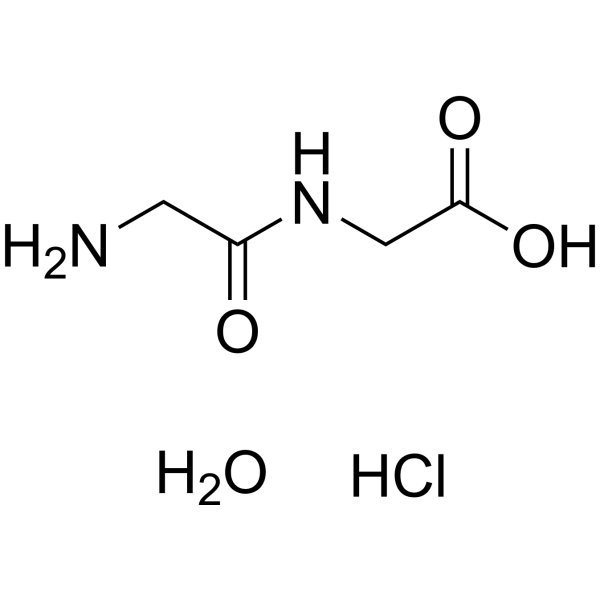
Glycylglycine hydrochloride hydrate is a non-selective Glycylglycine hydrochloride hydrate dipeptidase substrate and iNOS inhibitor. Glycylglycine hydrochloride hydrate can cross the cell membrane by passive diffusion and is hydrolyzed to glycine in the cell, participating in energy metabolism and antioxidant processes. Glycylglycine hydrochloride hydrate promotes spermatogonial stem cells (SSCs) proliferation, inhibits astrocyte overactivation and reduces nitric oxide (NO) release, while upregulating the expression of neurotrophic factors (such as PDGFA, FGF2, CNTF) to support nerve myelin repair. Glycylglycine hydrochloride hydrate can be used to study male reproductive biology (such as SSCs proliferation regulation) and neurodegenerative diseases (such as neuroprotective mechanisms in multiple sclerosis) .
loading...
    loading...

