160 Results for "

Muscle Relaxant

" in MedChemExpress (MCE) Product Catalog:
Products (160)

160 Results for "Muscle Relaxant" in MCE Product Catalog:

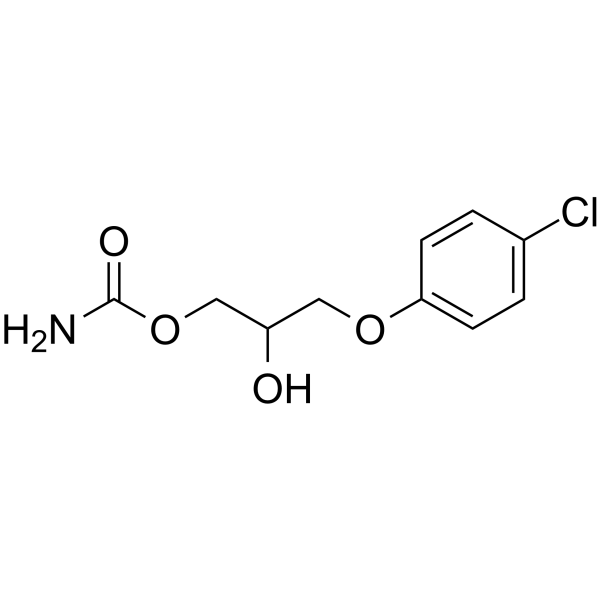
Cat. No.: HY-107944
CAS No.: 886-74-8
Purity:  99.92%
Synonyms: Maolate; U 19646
Target:  

Drug Derivative

Research Areas:  

Neurological Disease

Chlorphenesin carbamate is a centrally acting skeletal muscle relaxant, as well as a derivate of Chlorphenesin (HY-A0133). Chlorphenesin carbamate can be used for the research of pain and discomfort related to skeletal muscle trauma and inflammation . Chlorphenesin carbamate is a selective blocker of polysynaptic pathways at the spinal and supra-spinal levels . Antinociceptive effect .
loading...
    loading...
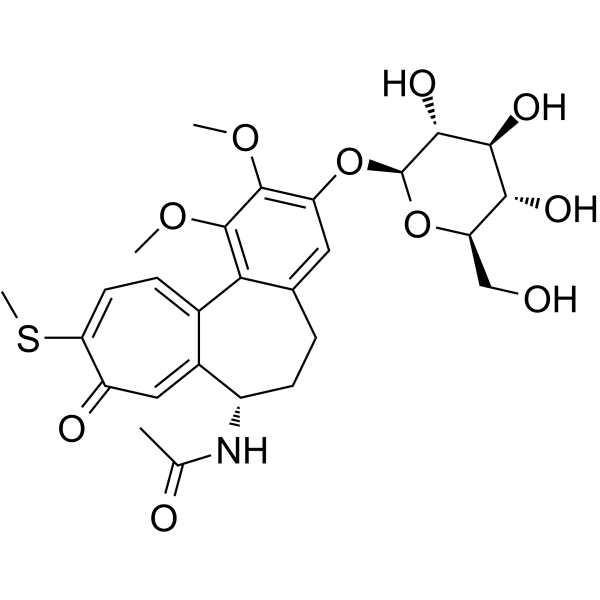
Cat. No.: HY-N0301
CAS No.: 602-41-5
Thiocolchicoside is a competitive γ-aminobutyric acid type A (GABAA) receptor antagonist and glycine receptor agonist in the central nervous system. Thiocolchicoside is a semisynthetic sulfur derivative of colchicoside. Thiocolchicoside is a muscle relaxant and has anti-inflammatory, and analgesic properties .
loading...
    loading...
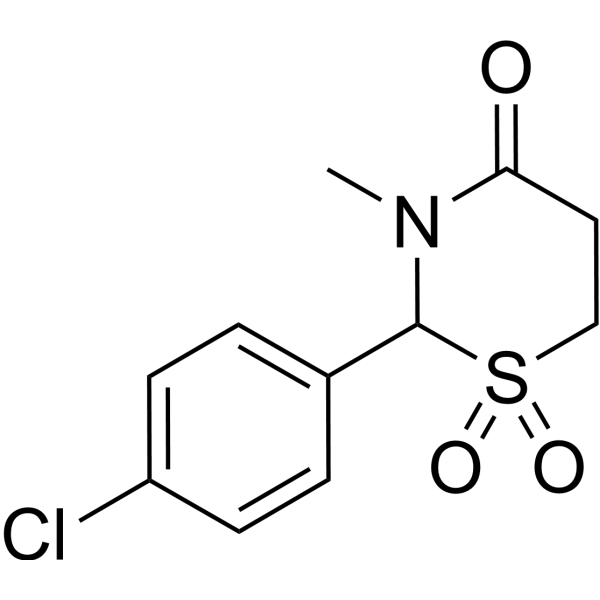
Cat. No.: HY-B0353
CAS No.: 80-77-3
Target:  

GABA Receptor

Research Areas:  

Neurological Disease

Chlormezanone resembles benzodiazepine. The action of Chlormezanone is similar to benzodiazepine-type agents. Chlormezanone is used as an anxiolytic and a muscle relaxant.
loading...
    loading...
Cat. No.: HY-B0678
CAS No.: 1665-48-1
Synonyms: AHR438; NSC170959
Metaxalone (AHR438; NSC170959) is an FDA-approved muscle relaxant. Metaxalone acts mainly on the central nervous system and achieves muscle relaxation by inhibiting polysynaptic reflex arcs. In addition, Metaxalone is an inhibitor of MAO-A, which has anti-inflammatory and antioxidant effects. Metaxalone inhibits IL-1β-induced inflammatory phenotype, modulates NF-κB and other related signaling pathways, and decreases MAO-A expression and activity in IL-1β-treated microglia .
loading...
    loading...
Cat. No.: HY-B0416
CAS No.: 65-29-2
Research Areas:  

Neurological Disease

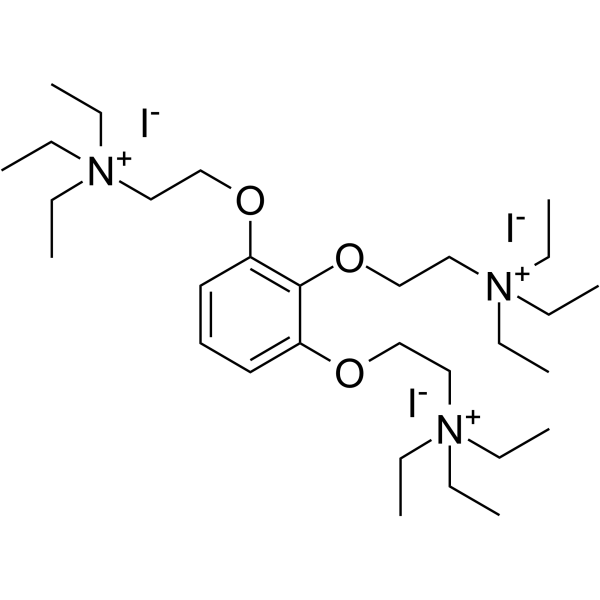
Gallamine Triethiodide is a blood-brain barrier-permeable skeletal muscle relaxant. Gallamine Triethiodide induces skeletal muscle paralysis by blocking acetylcholine. Gallamine Triethiodide directly stimulates intracardiac β receptors. Gallamine Triethiodide prolongs the duration of afterdischarge in the cat cerebral cortex. Gallamine Triethiodide can be used in studies related to convulsive disorders .
loading...
    loading...
Cat. No.: HY-101237
CAS No.: 6159-05-3
Purity:  99.17%
Synonyms: Diheptylviologen dibromide
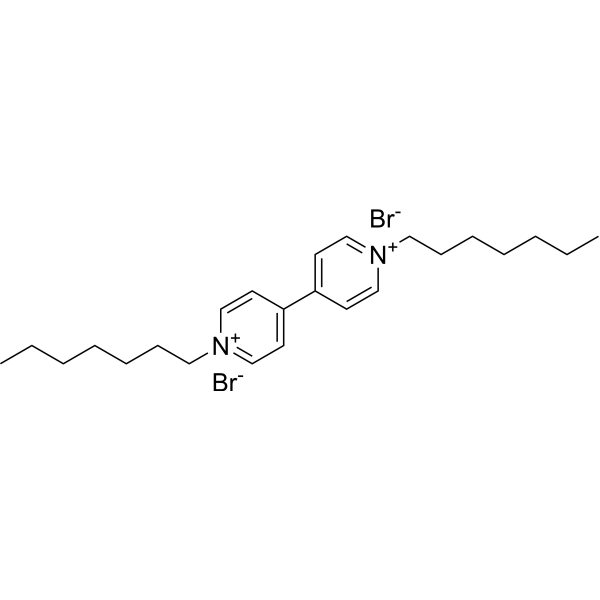
DHBP dibromide is an inhibitor for calcium release and a muscle relaxant.
loading...
    loading...
Cat. No.: HY-108974
CAS No.: 985-12-6
Purity:  99.65%
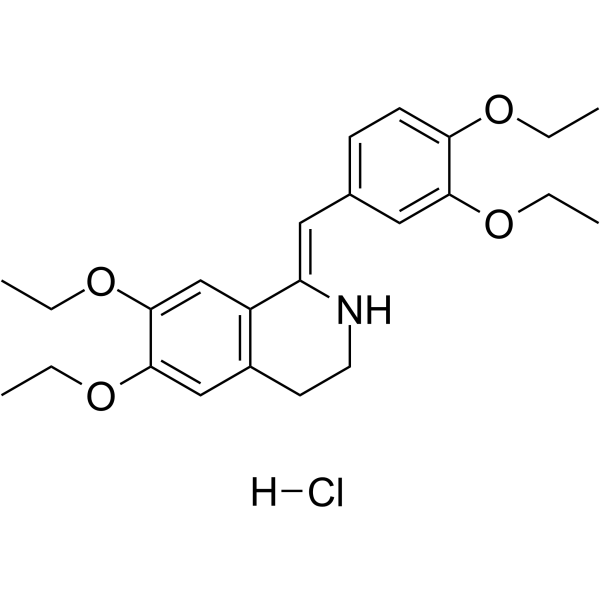
Drotaverine hydrochloride is a type 4 cyclic nucleotide phosphodiesterase (PDE4) inhibitor and an L-type voltage-dependent calcium channel (L-VDCC) blocker, blocks the degradation of 3',5'-cyclic adenosine monophosphate. Drotaverine (hydrochloride) exhibits in vivo antispasmodic efficacy without anticholinergic effects.
loading...
    loading...
Cat. No.: HY-B1343
CAS No.: 6856-31-1
Target:  

Cholinesterase (ChE)

Research Areas:  

Neurological Disease

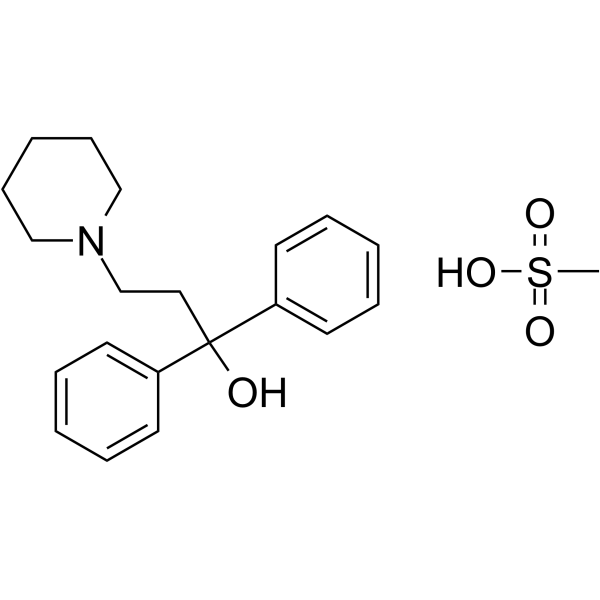
Pridinol mesylate is an orally active, blood-brain permeable, muscarinic acetylcholine receptor (mAChR)-directed muscle relaxant. Pridinol mesylate reduces the conduction of impulses to spinal motor neurons and exerts muscle relaxant activity. Pridinol mesylate inhibits skeletal muscle contractures in diseases of both central and peripheral origin and can be used in research in the field of musculoskeletal diseases .
loading...
    loading...
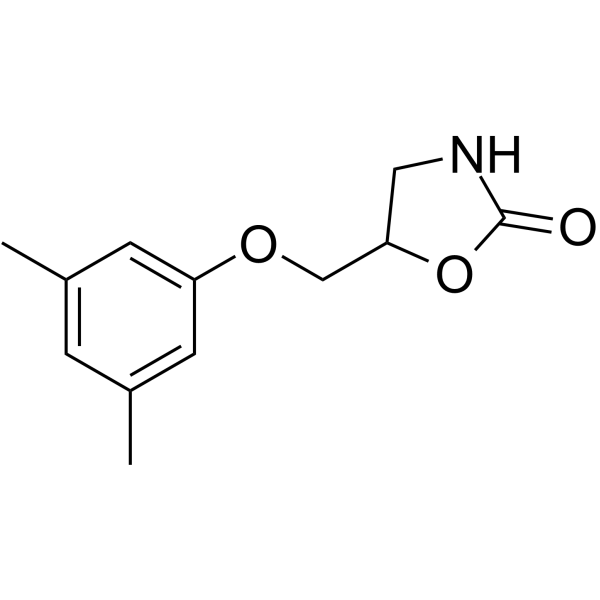
Cat. No.: HY-126112
CAS No.: 70-07-5
Purity:  98.57%
Target:  

Drug Derivative

Research Areas:  

Neurological Disease

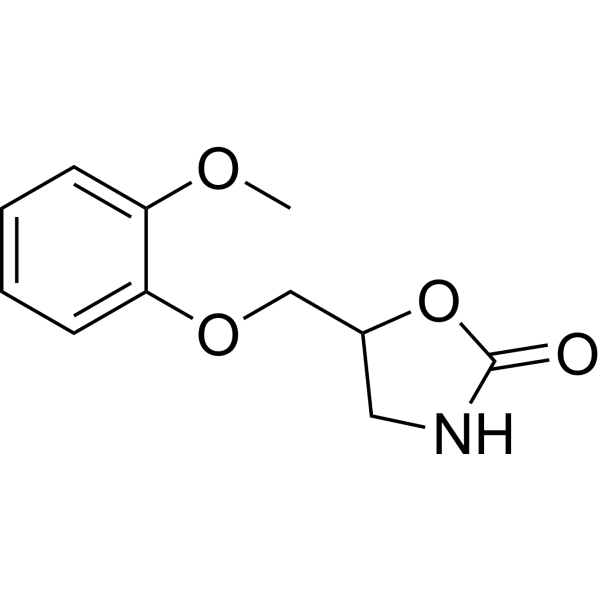
Mephenoxalone is a muscle relaxant with anti-anxiety activity. Mephenoxalone has neuropharmacologic activity in vivo. Mephenoxalone inhibits neuron transmission and can relax skeletal muscles by inhibiting the reflex arc .
loading...
    loading...
Cat. No.: HY-N3320
CAS No.: 14957-38-1
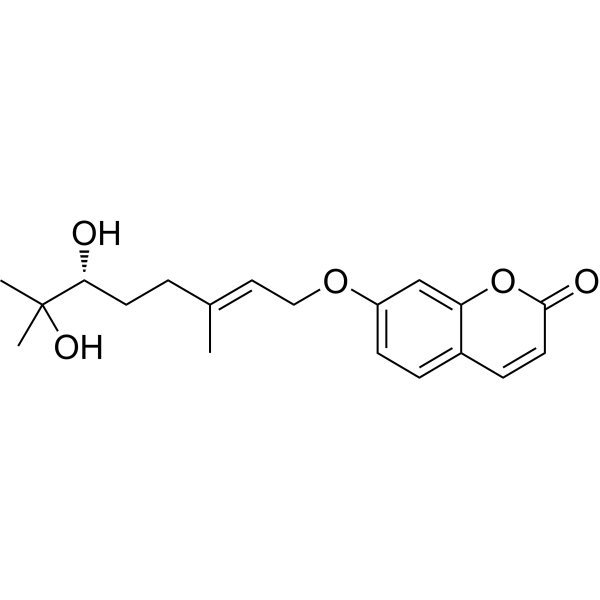
Marmin is a histamine receptor inhibitor and tracheal smooth muscle relaxant. Marmin antagonizes histamine- and methacholine-induced contraction of tracheal smooth muscle. Marmin inhibits histamine release from mast cells, and also blocks extracellular calcium influx via voltage-dependent calcium channels as well as calcium release from intracellular calcium stores, thereby effectively inhibiting calcium-mediated smooth muscle contraction. Marmin slightly enhances the relaxant effect of isoprenaline, and induces epithelial-dependent tracheal smooth muscle relaxation independent of nitric oxide, cGMP or β2-adrenergic pathways through the release of prostaglandin E2 .
loading...
    loading...
Cat. No.: HY-N2005
CAS No.: 518-94-5
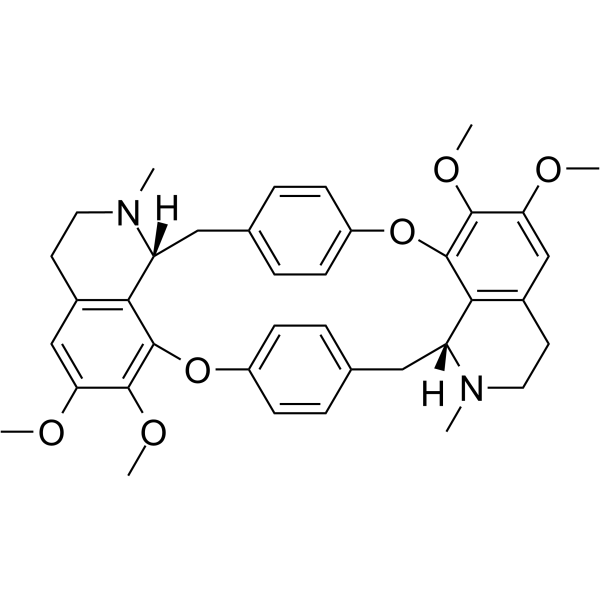
Cycleanine is a potent vascular selective Calcium antagonist. Cycleanine has analgesic, muscle relaxant and anti-inflammatory activities. Cycleanine has potential for anti-ovarian cancer acting through the apoptosis pathway .
loading...
    loading...
Cat. No.: HY-B2112
CAS No.: 90-22-2
Target:  

mAChR

Research Areas:  

Neurological Disease

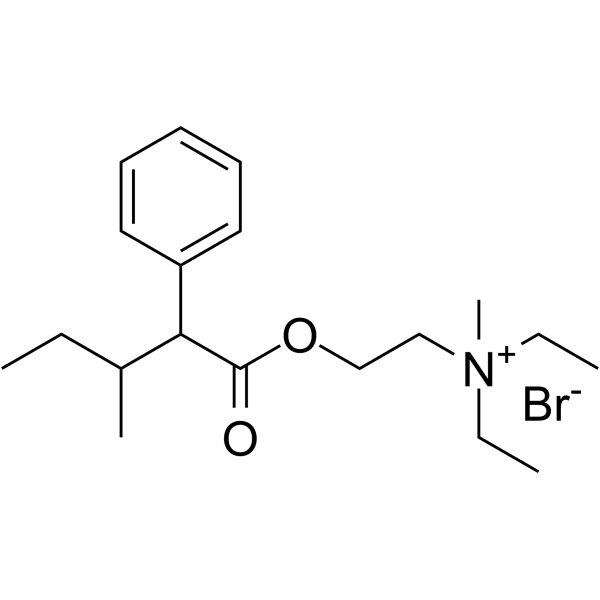
Valethamate bromide is an ester, serving as an effective rapidly acting anticholinergic antispasmodic and muscle relaxant. Valethamate bromide accelerates labor by improving cervical dilation. Valethamate bromide can significantly shorten the labor process and have fewer side effects .
loading...
    loading...
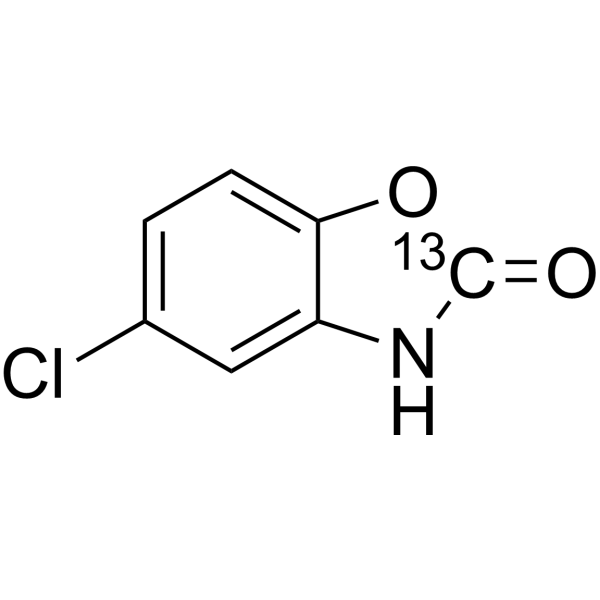
Cat. No.: HY-B1462S1
CAS No.: 616865-28-2
Chlorzoxazone- 13C is the 13C labeled Chlorzoxazone . Chlorzoxazone is a centrally acting muscle relaxant used to treat muscle spasm and the resulting pain or discomfort .
loading...
    loading...
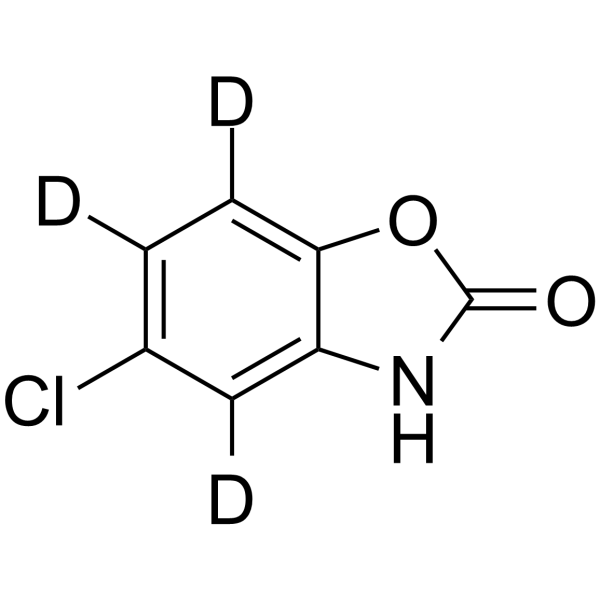
Cat. No.: HY-B1462S
CAS No.: 1185173-60-7
Chlorzoxazone-d3 is the deuterium labeled Chlorzoxazone. Chlorzoxazone is a centrally acting muscle relaxant used to treat muscle spasm and the resulting pain or discomfort. It acts on the spinal cord by depressing reflexes.Chlorzoxazone is currently being used as a marker substrate in vitro/vivo studies to quantify cytochrome P450 2E1 (CYP2E1) activity in humans.
loading...
    loading...
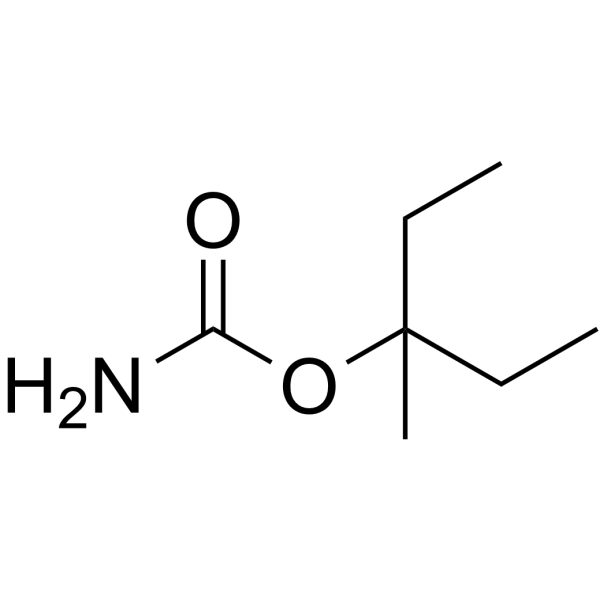
Cat. No.: HY-121340
CAS No.: 78-28-4
Target:  

Others

Research Areas:  

Neurological Disease

Emylcamate is a potent muscle relaxant. Emylcamate has the potential for the research of neurological diseases .
loading...
    loading...
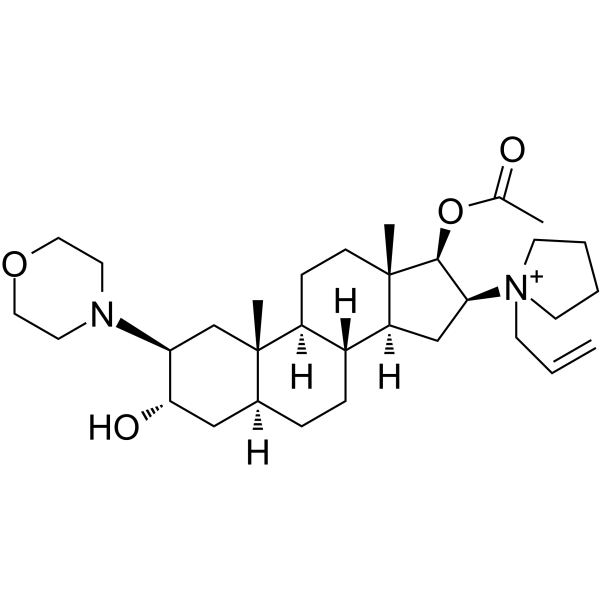
Cat. No.: HY-17033
CAS No.: 143558-00-3
Synonyms: Org-9426
Target:  

nAChR

Research Areas:  

Neurological Disease Cancer

Rocuronium (Org-9426) is an aminosteroid non-depolarizing neuromuscular blocker or muscle relaxant used in modern anaesthesia.
loading...
    loading...
Cat. No.: HY-128891
CAS No.: 64840-90-0
Target:  

P2X Receptor

Research Areas:  

Neurological Disease

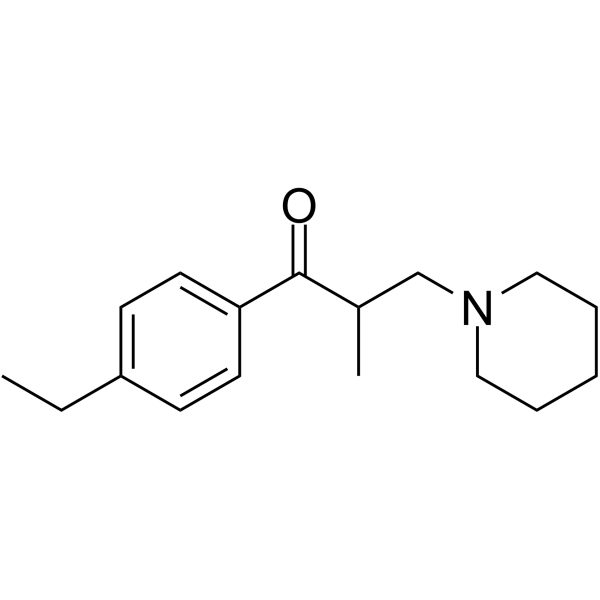
Eperisone ((±)-Eperisone) is an antispasmodic agent and centrally acting muscle relaxant useful in the study of diseases characterized by muscle stiffness and pain. Eperisone acts by relaxing skeletal and vascular smooth muscle, resulting in vasodilation, decreased muscle tone, improved circulation, and inhibition of pain reflexes. Eperisone is also a potent P2X7 receptor antagonist .
loading...
    loading...
Cat. No.: HY-W748379
CAS No.: 553-69-5
Synonyms: (±)-Phenyramidol
Target:  

Drug Derivative

Research Areas:  

Neurological Disease

Fenyramidol is an Aminopyridine derivative. Fenyramidol can be used as a moderately potent, non-narcotic muscle relaxant with concomitant analgesic activity .
loading...
    loading...
Cat. No.: HY-B1343A
CAS No.: 511-45-5
Target:  

Cholinesterase (ChE)

Research Areas:  

Neurological Disease

Pridinol is an orally active, blood-brain permeable, muscarinic acetylcholine receptor (mAChR)-directed muscle relaxant. Pridinol reduces the conduction of impulses to spinal motor neurons and exerts muscle relaxant activity. Pridinol inhibits skeletal muscle contractures in diseases of both central and peripheral origin and can be used in research in the field of musculoskeletal diseases .
loading...
    loading...
Cat. No.: HY-B1343R
CAS No.: 6856-31-1
Pridinol mesylate (Standard) is the analytical standard of Pridinol mesylate (HY-B1343). This product is intended for research and analytical applications. Pridinol mesylate is an orally active, blood-brain permeable, muscarinic acetylcholine receptor (mAChR)-directed muscle relaxant. Pridinol mesylate reduces the conduction of impulses to spinal motor neurons and exerts muscle relaxant activity. Pridinol mesylate inhibits skeletal muscle contractures in diseases of both central and peripheral origin and can be used in research in the field of musculoskeletal diseases .
loading...
    loading...

