

60 Results for "

MPA

" in MedChemExpress (MCE) Product Catalog:
Products (60)

60 Results for "MPA" in MCE Product Catalog:

Cat. No.: HY-Y1889
CAS No.: 9004-32-4
Synonyms: CMC-Na (Viscosity:5000-15000 MPA.s)
Sodium carboxymethyl cellulose (Viscosity:5000-15000 mPa.s) is the sodium salt of cellulose arboxymethyl and frequently used as viscous agent, paste and barrier agent.
loading...
    loading...
Cat. No.: HY-B2144E
CAS No.: 9012-76-4
Synonyms: Deacetylated chitin (≥90% deacetylated, Low viscosity,<200MPA.s); Poly(D-glucosamine) (≥90% deacetylated, Low viscosity,<200MPA.s)
Research Areas:  

Infection Cancer

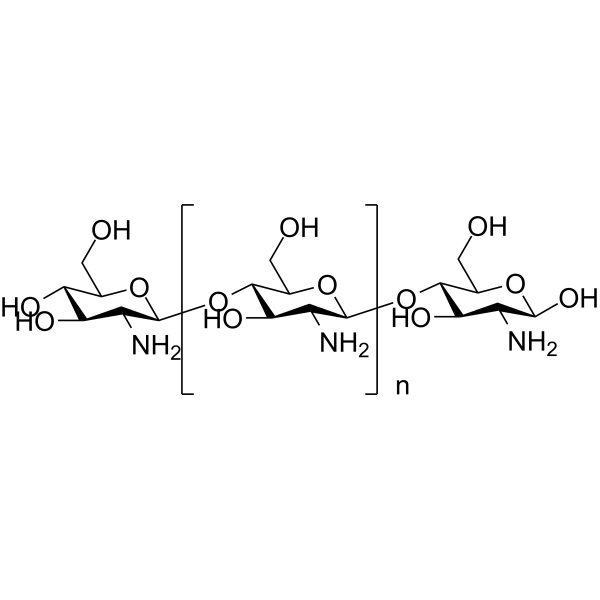
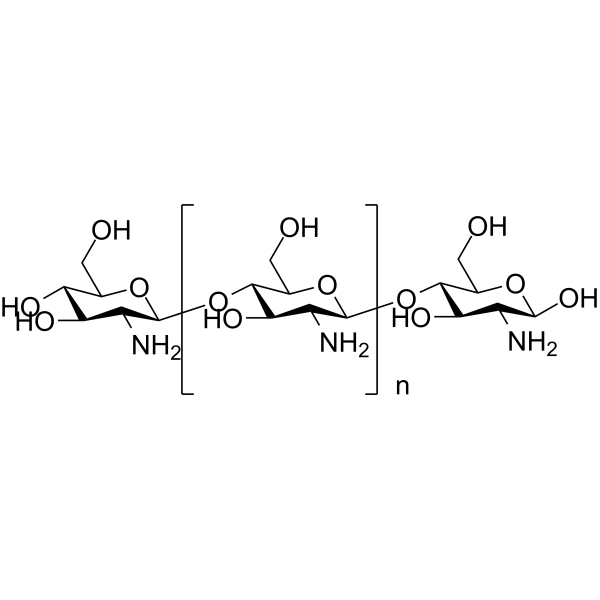
Chitosan (Deacetylated chitin) (≥90% deacetylated, Low viscosity,<200mPa.s) is a polysaccharide obtained by deacetylating chitin, and exhibits antimicrobial activity against various bacteria and fungi .
loading...
    loading...
Cat. No.: HY-Y0703D
CAS No.: 9004-32-4
Synonyms: CMC-Na (average Mw 90000, DS=0.7, Viscosity:50-200 MPA.s)
Sodium carboxymethyl cellulose (average Mw 90000, DS=0.7, Viscosity:50-200 mPa.s) is the sodium salt of cellulose arboxymethyl and frequently used as viscous agent, paste and barrier agent .
loading...
    loading...
Cat. No.: HY-W145522
CAS No.: 9057-02-7
Pullulan (Pullulan standard 5800) (Mw 362-480 kDa; Mn 100-200 kDa) is a class of orally active and water-soluble linear glucosic polysaccharide. Pullulan can be isolated from the polymorphic fungus Aureobasidium pullulans. Pullulan is composed of maltotriose repeating units linked by α-1,6 linkages and is an amorphous slime matter. Pullulan is widely used in food, environment, pharmaceutical, manufacturing, and electronics .
loading...
    loading...
Cat. No.: HY-A0104D
CAS No.: 9004-65-3
Synonyms: Hypromellose (Type I,Viscosity:4000MPA.s); (Hydroxypropyl)methyl cellulose (Type I,Viscosity:4000MPA.s); Celacol HPM 5000 (Type I,Viscosity:4000MPA.s)
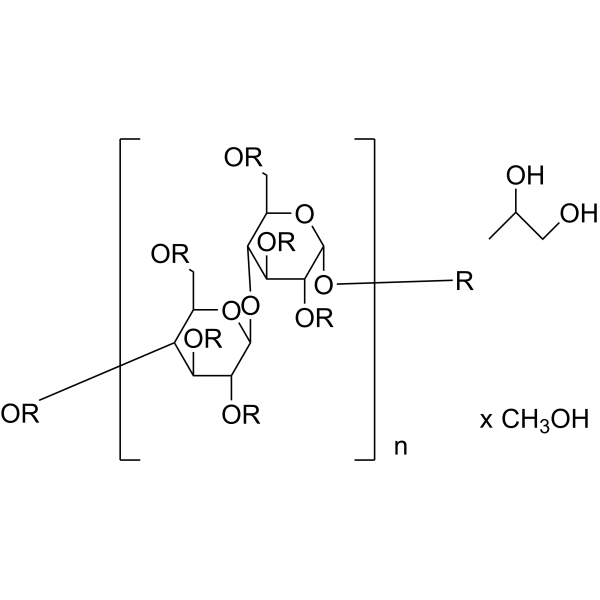
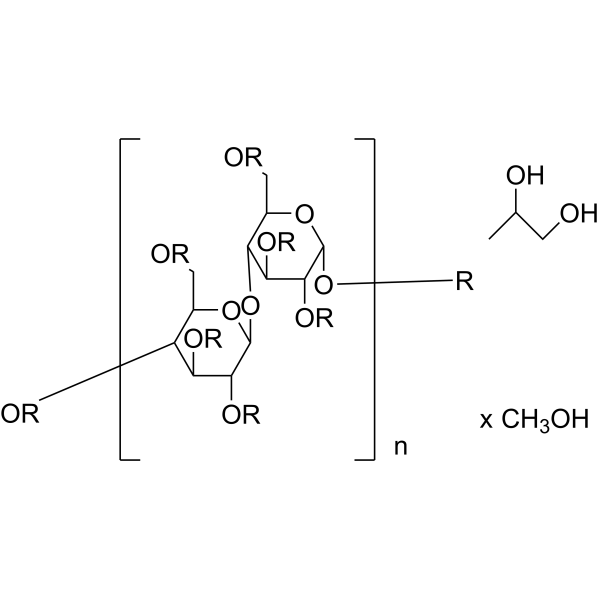
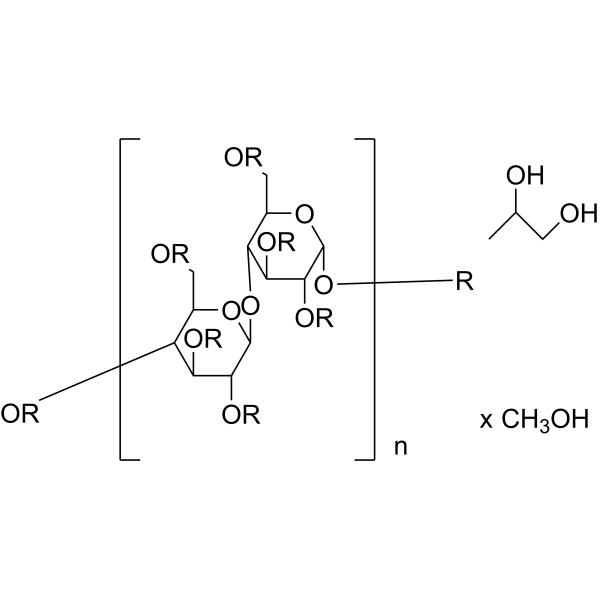
HPMC (Hypromellose) (Type I, Viscosity: 4000mPa.s) is a primary sodium alginate and controlled release hydrophilic polymer with an average viscosity of 4000mPa.s. The viscosity of HPMC may change due to concentration, pH, temperature or the presence of metal ions. When the pH is above 10, the viscosity decreases .
loading...
    loading...
Cat. No.: HY-B2144J
CAS No.: 9012-76-4
Synonyms: Deacetylated chitin (≥90% deacetylated,viscosity 650-700 MPA.s); Poly(D-glucosamine) (≥90% deacetylated,viscosity 650-700 MPA.s)
Chitosan (Deacetylated chitin) (≥90% deacetylated, viscosity 650-700 mPa.s) is a polysaccharide obtained by deacetylating chitin, and exhibits antimicrobial activity against various bacteria and fungi. Chitosan (≥90% deacetylated, viscosity 650-700 mPa.s) can be used as a versatile biomaterial in drug delivery, tissue engineering, and wound healing .
loading...
    loading...
Cat. No.: HY-B2144K
CAS No.: 9012-76-4
Synonyms: Deacetylated chitin (≥85% deacetylated, viscosity>90 MPA.s, MW 15000); Poly(D-glucosamine) (≥85% deacetylated, viscosity>90 MPA.s, MW 15000)
Chitosan (Deacetylated chitin) (≥85% deacetylated, viscosity>90 mPa.s, MW 15000) is a polysaccharide obtained by deacetylating chitin, and exhibits antimicrobial activity against various bacteria and fungi .
loading...
    loading...
Cat. No.: HY-A0104G
CAS No.: 9004-65-3
Synonyms: Hypromellose (Type II,Viscosity:4000MPA.s); (Hydroxypropyl)methyl cellulose (Type II,Viscosity:4000MPA.s); Celacol HPM 5000 (Type II,Viscosity:4000MPA.s)
Hypromellose (Hypromellose (Type II,Viscosity:4000mPa.s); (Hydroxypropyl)methyl cellulose (Type II,Viscosity:4000mPa.s); Celacol HPM 5000 (Type II,Viscosity:4000mPa.s)) is a biochemical reagent that can be used as a biological material or organic compound for life science related research.
loading...
    loading...
Cat. No.: HY-A0104C
CAS No.: 9004-65-3
Synonyms: Hypromellose (Type I,Viscosity:400MPA.s); (Hydroxypropyl)methyl cellulose (Type I,Viscosity:400MPA.s); Celacol HPM 5000 (Type I,Viscosity:400MPA.s)
HPMC (Hypromellose) (Type I, Viscosity: 400mPa.s) is a first-grade sodium alginate with an average viscosity of 400 mPa.s. Typically, a 1% w/v HPMC aqueous solution has a viscosity of 20-400mPa.s (20-400cp) at 20°C. The viscosity of HPMC may vary depending on concentration, pH, temperature, or the presence of metal ions. Viscosity decreases at pH values above 10 .
loading...
    loading...
Cat. No.: HY-B2144G
CAS No.: 9012-76-4
Synonyms: Deacetylated chitin (≥80% deacetylated, High viscosity,>400MPA.s); Poly(D-glucosamine) (≥80% deacetylated, High viscosity,>400MPA.s)
Chitosan (Deacetylated chitin; Poly(D-glucosamine)) (≥80% deacetylated, High viscosity,>400mPa.s) is a polysaccharide obtained by deacetylating chitin, and exhibits antimicrobial activity against various bacteria and fungi .
loading...
    loading...
Cat. No.: HY-A0104B
CAS No.: 9004-65-3
Synonyms: Hypromellose (Type I,Viscosity:100MPA.s); (Hydroxypropyl)methyl cellulose (Type I,Viscosity:100MPA.s); Celacol HPM 5000 (Type I,Viscosity:100MPA.s)
HPMC (Type I, Viscosity: 100 mPa·s) is a nonionic polymer obtained via synthetic modification of cellulose. As a hydrophilic matrix material, HPMC prolongs drug release through non-Fickian diffusion, including the diffusion of drugs within the hydrated matrix and the polymer relaxation process .
loading...
    loading...
Cat. No.: HY-A0104K
CAS No.: 9004-65-3
Synonyms: Hypromellose (Type II,Viscosity:3MPA.s); (Hydroxypropyl)methyl cellulose (Type II,Viscosity:3MPA.s); Celacol HPM 5000 (Type II,Viscosity:3MPA.s)
HPMC (Type II, Viscosity: 3 mPa.s) is a nonionic polymer prepared via synthetic modification of cellulose. As a hydrophilic matrix material, HPMC prolongs drug release through non-Fickian diffusion, which includes the diffusion of drugs in the hydrated matrix and the polymer relaxation process .
loading...
    loading...
Cat. No.: HY-B2144F
CAS No.: 9012-76-4
Synonyms: Deacetylated chitin (≥80% deacetylated, Medium viscosity,200-400MPA.s); Poly(D-glucosamine) (≥80% deacetylated, Medium viscosity,200-400MPA.s)
Chitosan (Deacetylated chitin; Poly(D-glucosamine)) (≥80% deacetylated, Medium viscosity,200-400mPa.s) is a polysaccharide obtained by deacetylating chitin, and exhibits antimicrobial activity against various bacteria and fungi .
loading...
    loading...
Cat. No.: HY-A0104E
CAS No.: 9004-65-3
Synonyms: Hypromellose (Type II,Viscosity:100MPA.s); (Hydroxypropyl)methyl cellulose (Type II,Viscosity:100MPA.s); Celacol HPM 5000 (Type II,Viscosity:100MPA.s)
HPMC (Hypromellose; (Hydroxypropyl)methyl cellulose; Celacol HPM 5000) (Type II,Viscosity:100mPa.s) is a non-ionic polymer obtained via synthetic modification of cellulose. As a hydrophilic matrix material, HPMC prolongs drug release through non-Fickian diffusion, including the diffusion of drugs in the hydrated matrix and the polymer relaxation process .
loading...
    loading...
Cat. No.: HY-A0104A
CAS No.: 9004-65-3
Synonyms: Hypromellose (Type I,Viscosity:30MPA.s); (Hydroxypropyl)methyl cellulose (Type I,Viscosity:30MPA.s); Celacol HPM 5000 (Type I,Viscosity:30MPA.s)
Hydroxypropylmethylcellulose (Type I,Viscosity:30mPa.s) is a biochemical reagent that can be used as a biological material or organic compound for life science related research.
loading...
    loading...
Cat. No.: HY-W250120
CAS No.: 37220-17-0
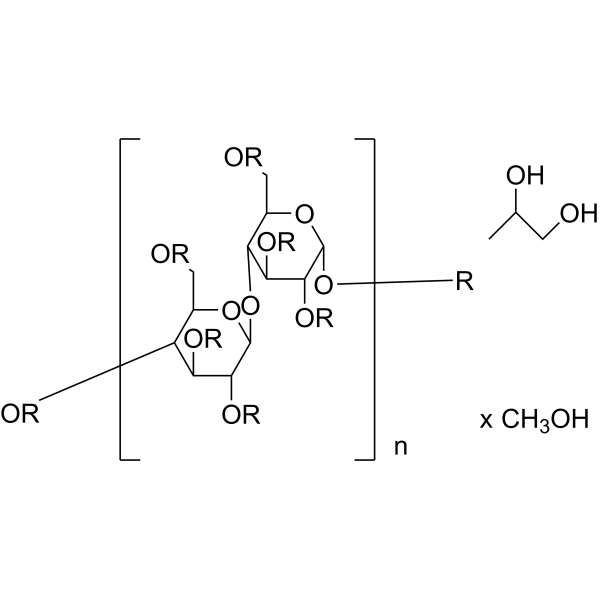
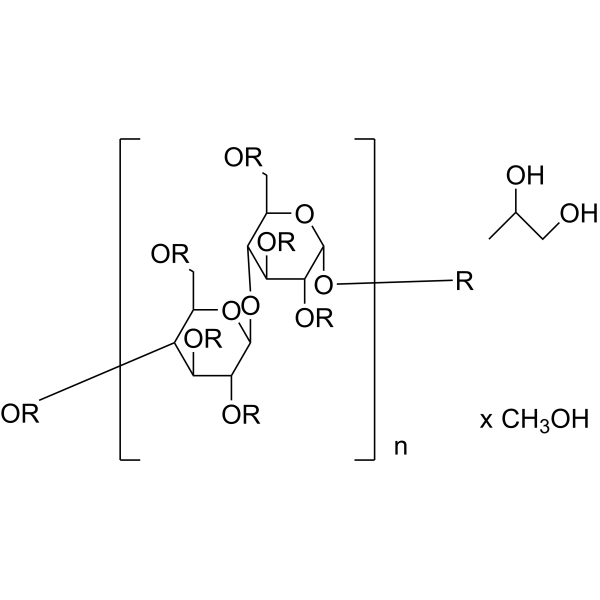
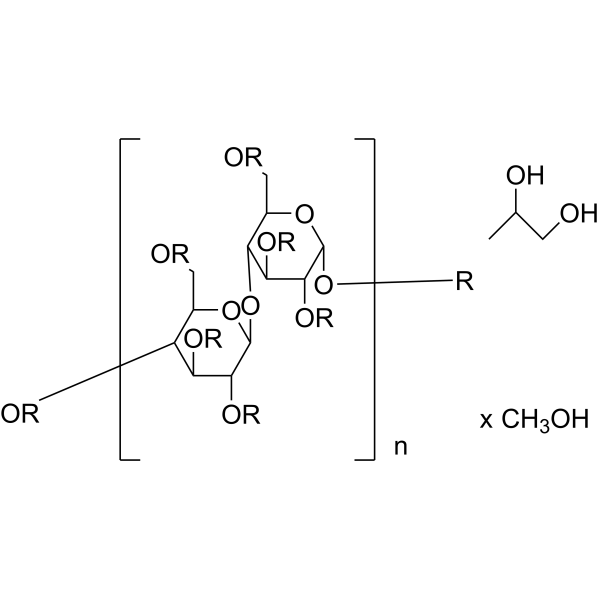
Konjac glucomannan (Viscosity≥15000mPa.s) is an orally active acetylated (1-4)-β-D-glucomannan with multiple biological activities including anti-diabetic, anti-obesity, anti-inflammatory effects, as well as film-forming and gelling properties. Konjac glucomannan (Viscosity≥15000mPa.s) forms a defensive coating on the intestinal surface, reducing levels of blood glucose, cholesterol, triglycerides and blood pressure; it is specifically degraded by colonic β-mannanase produced by human colonic bacteria. Konjac glucomannan (Viscosity≥15000mPa.s) can be used as a food additive, dietary supplement and excipient for oral colon-targeted drug delivery systems. Konjac glucomannan (Viscosity≥15000mPa.s) is applicable to research related to various diseases such as type 2 diabetes, obesity, atopic dermatitis and metabolic syndrome, as well as research in fields including biotechnology, pharmaceuticals and tissue engineering .
loading...
    loading...
Cat. No.: HY-A0104I
CAS No.: 9004-65-3
Synonyms: Hypromellose (Type II,Viscosity:100000MPA.s); (Hydroxypropyl)methyl cellulose (Type II,Viscosity:100000MPA.s); Celacol HPM 5000 (Type II,Viscosity:100000MPA.s)
HPMC (Hypromellose; (Hydroxypropyl)methyl cellulose; Celacol HPM 5000) (Type II,Viscosity:100000mPa.s) is a non-ionic polymer obtained via synthetic modification of cellulose. As a hydrophilic matrix material, HPMC prolongs drug release through non-Fickian diffusion, including the diffusion of drugs in the hydrated matrix and the polymer relaxation process .
loading...
    loading...
Cat. No.: HY-19794
CAS No.: 219832-49-2
Target:  

SphK

Research Areas:  

Cancer

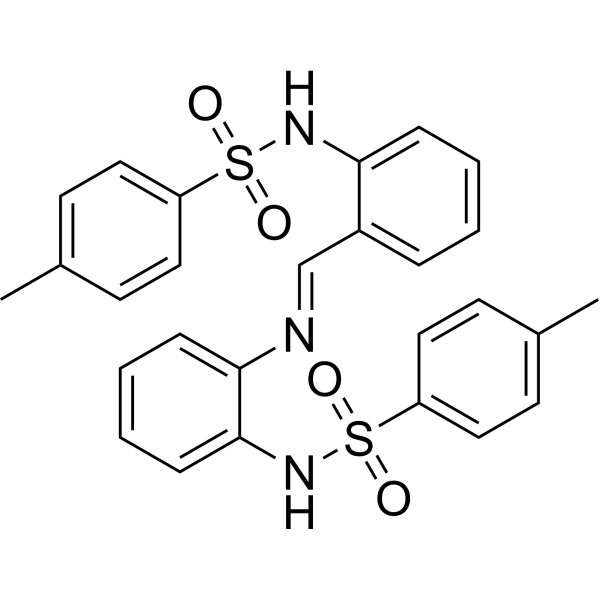
MP-A08 is a highly selective ATP competitive sphingosine kinase (SPHK1) inhibitor that targets both SphK1 and SphK2 with Ki values of 6.9 ± 0.8 μM and 27 ± 3 μM, respectively.
loading...
    loading...
Cat. No.: HY-A0104F
CAS No.: 9004-65-3
Synonyms: Hypromellose (Type II,Viscosity:400MPA.s); (Hydroxypropyl)methyl cellulose (Type II,Viscosity:400MPA.s); Celacol HPM 5000 (Type II,Viscosity:400MPA.s)
Research Areas:  

Others

HPMC (Type II, Viscosity: 400 mPa·s) is a thermosensitive hydroxypropyl methylcellulose polymer. HPMC (Type II, Viscosity: 400 mPa·s) can be used to prepare Fe3O4@HPMC magnetic fluids with temperature-responsive properties, and its temperature-responsive process involves the weakening of HPMC-water hydrogen bonds and the enhanced association of hydrophobic groups. HPMC (Type II, Viscosity: 400 mPa·s) can be used in research on thermosensitive magnetic fluid materials .
loading...
    loading...
Cat. No.: HY-W250146
CAS No.: 9000-40-2
Synonyms: Locust bean gum, Polysaccharide>75%, 5000-6500 MPA·S
Locust bean gum is a natural polysaccharide derived from the seeds of the carob tree. It is commonly used as a thickening, stabilizing and gelling agent in a variety of foods, including dairy, baked goods and meat products. Locust bean gum has several properties suitable for these applications, including high water retention capacity, ability to form stable gels at low temperatures, and resistance to acidic conditions. Additionally, it can be used as a dietary fiber supplement due to its potential health benefits, including improving digestion and lowering cholesterol levels.
loading...
    loading...

