
58 Results for "

NAD levels

" in MedChemExpress (MCE) Product Catalog:
Products (58)

58 Results for "NAD levels" in MCE Product Catalog:

Cat. No.: HY-173679
CAS No.: 2569517-30-0
Research Areas:  

Infection Cancer

RBN012811 is a highly selective PROTAC-based PARP14 degrader. RBN012811 forms a ternary complex with cereblon by binding to the NAD + site of PARP14, and mediates the specific degradation of PARP14 via the ubiquitin-proteasome pathway (IC50=10 nM). RBN012811 effectively depletes endogenous PARP14 in various cell lines and primary human macrophages, thereby downregulating IL-10 production and IFN-β mRNA levels, increasing phosphorylated STAT1 levels to enhance inflammatory signaling, and inhibiting interferon-induced ADPr condensate formation. RBN012811 also modulates viral replication, exhibiting increased HSV1 replication while reducing VSV replication. RBN012811 has important application value in research related to cancer and viral infections .
loading...
    loading...
Cat. No.: HY-163280
CAS No.: 3011930-28-9
Research Areas:  

Neurological Disease

JGB-1-155 is a nicotinamide phosphoribosyltransferase (NAMPT) activator and also a reactive oxygen species (ROS) inhibitor. JGB-1-155 binds to NAMPT, thereby enhancing its catalytic activity and increasing intracellular NAD + levels. JGB-1-155 alleviates the elevation of ROS levels induced by various types of damage. JGB-1-155 can be used in research related to neurodegenerative diseases .
loading...
    loading...
Cat. No.: HY-125147
CAS No.: 1375557-33-7
Target:  

NAMPT

Research Areas:  

Cancer

A-1293201 is a substrate-independent NAMPT inhibitor with antitumor activity. A-1293201 effectively reduces the total cellular NAD +/NADH (NADt) level, subsequently leading to ATP depletion and cancer cell death. In addition, A-1293201 can effectively overcome the acquired resistance mechanism of the NAMPT Y18 mutant to CHS-828 (HY-10079) .
loading...
    loading...
Cat. No.: HY-173276
CAS No.: 3069378-18-0
Research Areas:  

Neurological Disease

SARM1-IN-4 (Compound 7) is an orally active SARM1 inhibitor. After being orally administered at a dose of 50 mg/kg in a mouse model, it can reduce the level of plasma neurofilament light chain (NfL). SARM1-IN-4 prevents programmed axonal degeneration by inhibiting the NAD+ hydrolase activity of SARM1, and it can be used in research related to neurodegenerative diseases and neurological disorders (such as multiple sclerosis, amyotrophic lateral sclerosis, Parkinson's disease, and peripheral neuropathies, etc.).
loading...
    loading...
Cat. No.: HY-123033D
CAS No.: 445489-49-6
Nicotinamide riboside triflate, an orally active NAD + precursor, increases NAD + levels and activates SIRT1 and SIRT3. Nicotinamide riboside triflate is a source of vitamin B3 (niacin) and enhances oxidative metabolism, protection against high fat diet-induced metabolic abnormalities . Nicotinamide riboside triflate reduces cognitive deterioration in a transgenic mouse model of Alzheimer’s disease .
loading...
    loading...
Cat. No.: HY-B0150A
CAS No.: 25334-23-0
Synonyms: Niacinamide hydrochloride; Nicotinic acid amide hydrochloride
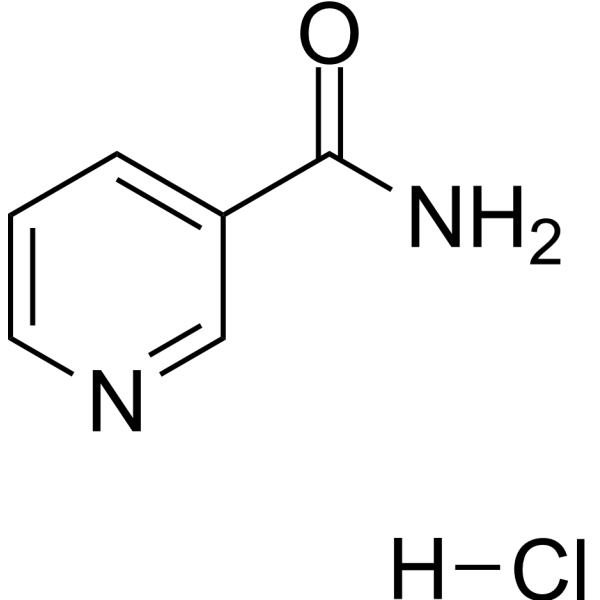
Nicotinamide hydrochloride is a form of vitamin B3 or niacin. Nicotinamide hydrochloride inhibits SIRT2 activity (IC50: 2 μM). Nicotinamide hydrochloride also inhibits SIRT1. Nicotinamide hydrochloride increases cellular NAD+, ATP, ROS levels. Nicotinamide hydrochloride inhibits tumor growth and improves survival. Nicotinamide hydrochloride also has anti-HBV activity .
loading...
    loading...
Cat. No.: HY-B0399A
CAS No.: 406-76-8
Synonyms: DL-Carnitine; DL-Levocarnitine
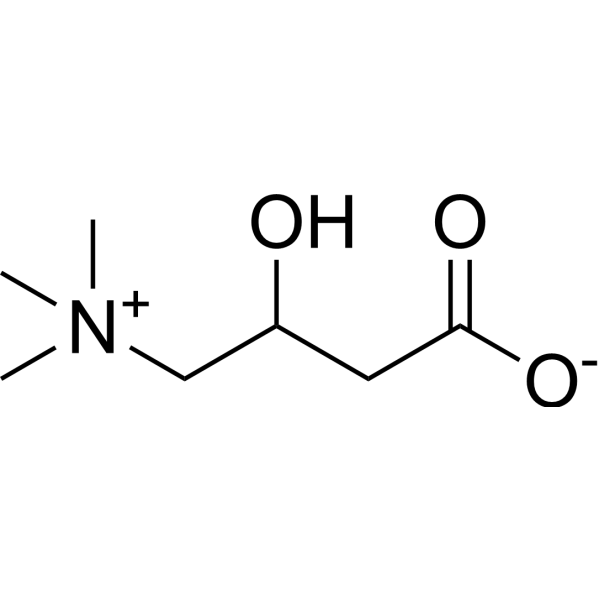
(±)-Carnitine (DL-Carnitine) is an orally effective racemic mixture of L-Carnitine (HY-B0399) and D-Carnitine. (±)-Carnitine elevates the mitochondrial NAD +/NADH ratio in the presence of 1,3-butanediol (HY-77490A). (±)-Carnitine does not increase glucose and urea production from L-glutamine, but stimulates propionate gluconeogenesis in rat renal cortical slices, and significantly reduces hepatic ketone body levels in rats fed a diet containing 30% high fat plus 20% 1,3-butanediol .
loading...
    loading...
Cat. No.: HY-119648A
CAS No.: 301687-87-6
Purity:  98.00%
Target:  

CD38

Research Areas:  

Inflammation/Immunology

(E/Z)-CCR-11 (Comp 12) is a selective CD38 inhibitor, with an IC50 of 20.8 μM against CD38 cyclase. (E/Z)-CCR-11 promotes increases in cellular NAD+ levels and interferon γ .
loading...
    loading...
Cat. No.: HY-162537
CAS No.: 2484876-99-3
Target:  

PROTACs NAMPT

Research Areas:  

Cancer

LYP-8 is an intracellular nicotinamide phosphoribosyltransferase (iNAMPT) PROTAC degrader with an IC50 of 0.76 μM. LYP-8 recruits VHL E3 ligase to induce iNAMPT polyubiquitination and proteasome-dependent degradation, and inhibits iNAMPT enzymatic activity. LYP-8 reduces eNAMPT levels by degrading iNAMPT to decrease eNAMPT secretion. LYP-8 reduces intracellular NAD + levels in cancer cells and proinflammatory cytokine levels (IL-6, TNF-α) in tumor tissue and serum. LYP-8 can be used for the research of colon cancer .
loading...
    loading...
Cat. No.: HY-W975966
CAS No.: 14085-33-7
Target:  

Keap1-Nrf2

Research Areas:  

Neurological Disease

CPDT is an orally active and highly potent inducer of phase 2 enzymes and an activator of Nrf2. The activities of key phase 2 enzymes, including glutathione S-transferase, NAD(P)H:quinone:oxidoreductase 1 and glutamate cysteine synthetase, and levels of glutathione were elevated by CPDT in rat bladder in vivo and in cultured bladder cells in vitro [2].
loading...
    loading...
Cat. No.: HY-176237
CAS No.: 3077970-44-3
Target:  

NAMPT Apoptosis

Research Areas:  

Cancer

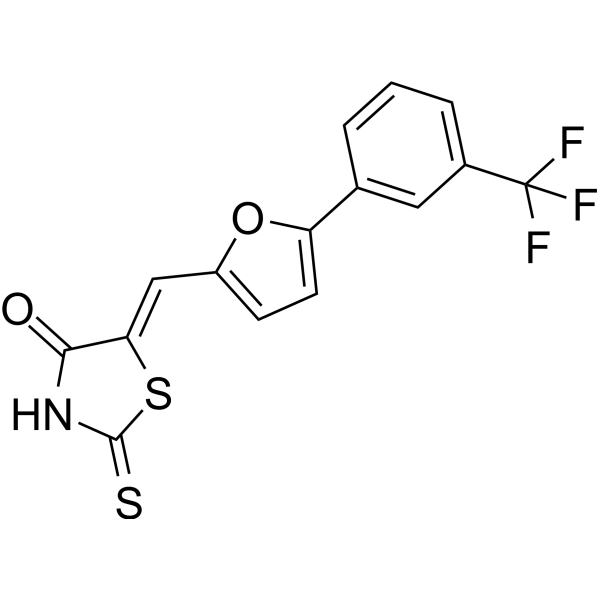
Nampt-IN-16 (Compound 9a) is an orally active NAMPT inhibitor with an IC50 of 0.15 μM. Nampt-IN-16 can reduce intracellular NAD + and ATP levels. Nampt-IN-16 can inhibit the proliferation, migration, and invasion, induce cell cycle arrest and apoptosis, and alter cellular metabolism of gastric cancer cells. Nampt-IN-16 can be used in the research of tumors such as gastric cancer .
loading...
    loading...
Cat. No.: HY-176284
OXPHOS-IN-2 is an orally active OXPHOS inhibitor. OXPHOS-IN-2 exhibits potent inhibitory activity in PC9 (IC50 = 12.3 nM) and Bxpc-3 cells (IC50 = 250 nM in glucose medium, IC50 = 17.5 nM in galactose medium). OXPHOS-IN-2 decreases the NADH/NAD + ratio and reduces ATP levels. OXPHOS-IN-2 induces tumor cells apoptosis by activating reactive oxygen species (ROS) and downregulating the level of Nrf2. OXPHOS-IN-2 can be used for research on cancer such as non-small cell lung cancer and pancreatic cancer .
loading...
    loading...
Cat. No.: HY-B0150S3
CAS No.: 2162970-00-3
Synonyms: Niacinamide-d3; Nicotinic acid amide-d3
Nicotinamide-d3 (Niacinamide-d3) is deuterium labeled Nicotinamide. Nicotinamide is a form of vitamin B3 or niacin. Nicotinamide Hydrochloride inhibits SIRT2 activity (IC50: 2 μM). Nicotinamide also inhibits SIRT1. Nicotinamide increases cellular NAD+, ATP, ROS levels. Nicotinamide inhibits tumor growth and improves survival. Nicotinamide also has anti-HBV activity .
loading...
    loading...
Cat. No.: HY-178912
Anti-MRSA agent 39 is an orally active ClpX modulator that binds Staphylococcus aureus caseinolytic protease X (SaClpX) with high affinity (Kd = 3.6 μM). Anti-MRSA agent 39 exerts antibacterial effects through temperature-dependent inhibition of cell division. Anti-MRSA agent 39 elicits profound metabolic dysregulation in methicillin-resistant Staphylococcus aureus (MRSA), manifesting as significantly reduced ATP levels, elevated reactive oxygen species (ROS), and decreased NAD+/NADH ratio, and accelerates bacterial lysis rates in MRSA ATCC 33591. Anti-MRSA agent 39 significantly increases the proportion of MRSA cells in the mitotic phase, and the cells exhibit obvious morphological abnormalities. Anti-MRSA agent 39 can be used for the study of invasive MRSA infections .
loading...
    loading...
Cat. No.: HY-128895A
CAS No.: 1800406-26-1
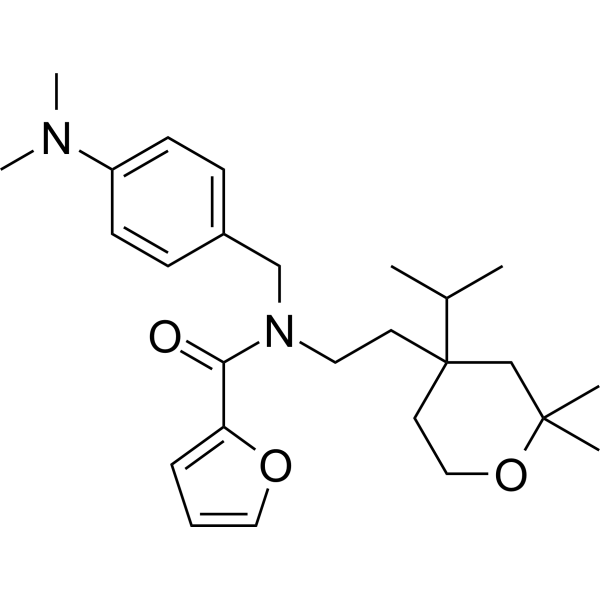
KL1333 hydrochloride is an orally active NAD + modulator that reacts with NAD(P)H:quinone oxidoreductase 1 (NQO1) as a substrate, leading to increased intracellular NAD + levels through NADH oxidation. Elevated NAD + levels trigger activation of SIRT1 and AMPK, and subsequently activate PGC-1α. KL1333 hydrochloride improves energy metabolism and mitochondrial dysfunction in mitochondrial encephalomyopathy, lactic acidosis, and stroke-like episodes (MELAS) fibroblasts. KL1333 hydrochloride protects against cisplatin-induced ototoxicity in mouse cochlear cultures .
loading...
    loading...
Cat. No.: HY-155023
Research Areas:  

Cancer

Apoptosis inducer 13 (Compound Ru4) can induce cancer cell apoptosis, and inhibits cancer cell migration and invasion. Apoptosis inducer 13 converts coenzyme NADH to NAD +, and increases intracellular ROS levels .
loading...
    loading...
Cat. No.: HY-10079A
CAS No.: 1160589-73-0
Synonyms: GMX1778 (nicotinate)
Target:  

NAMPT Apoptosis

Research Areas:  

Cancer

CHS-828 nicotinate is a competitive inhibitor of nicotinamide phosphoribosyltransferase (NAMPT), with an IC50 less than 25 nM. CHS-828 nicotinate (GMX1778) exerts a cytotoxic effect by decreasing the cellular level of NAD + and exhibits a potent anticancer activity .
loading...
    loading...
Cat. No.: HY-117420
CAS No.: 1350296-29-5
Target:  

Sigma Receptor

Research Areas:  

Cancer

CM764 is an activator for sigma receptor with Ki of 86.6 and 3.5 nM for sigma-1 receptor and sigma-2 receptor. CM764 increases cytoplasmic calcium, NAD +/NADH, and ATP levels, and decreases the concentration of ROS .
loading...
    loading...
Cat. No.: HY-10079R
CAS No.: 200484-11-3
Synonyms: GMX1778 (Standard)
Research Areas:  

Cancer

CHS-828 (Standard) is the analytical standard of CHS-828. This product is intended for research and analytical applications. CHS-828 (GMX1778) is a competitive inhibitor of nicotinamide phosphoribosyltransferase (NAMPT), with an IC50 less than 25 nM. CHS-828 (GMX1778) exerts a cytotoxic effect by decreasing the cellular level of NAD+ and exhibits a potent anticancer activity .
loading...
    loading...
Cat. No.: HY-78036R
CAS No.: 498-24-8
Synonyms: Citronic acid (Standard); Methylfumaric acid (Standard)
Mesaconic acid (Standard) is the analytical standard of Mesaconic acid. This product is intended for research and analytical applications. Mesaconic acid (Citronic acid; Methylfumaric acid) is an orally active anti-inflammatory and antioxidant agent. Mesaconic acid reduces the level of NF-κB in colon tissues, downregulates the expression of Keap1 and Bax, upregulates the expression of Nrf2 and Bcl2, and decreases the expression of Caspase-1. Mesaconic acid reduces the levels of NLRP3, ASC and Casp-1 in colon, liver and kidney tissues. Mesaconic acid reduces pro-inflammatory cytokine levels, increases the level of the anti-inflammatory cytokine IL-10, elevates NAD + levels, regulates oxidative stress markers and antioxidant enzyme levels, and upregulates intestinal barrier proteins in colon, liver and kidney tissues. Mesaconic acid increases the abundance of beneficial gut bacteria and reduces the abundance of harmful gut bacteria in rapidly aging mice, and exhibits anti-aging properties. Mesaconic acid acts as a flame retardant and serves as a competitive inhibitor of fumarate reduction. Mesaconic acid can be used in the research of aging-related inflammation .
loading...
    loading...

