
103 Results for "

solubilizer

" in MedChemExpress (MCE) Product Catalog:
Products (103)

103 Results for "solubilizer" in MCE Product Catalog:

Cat. No.: HY-W250168
CAS No.: 9004-98-2
Synonyms: Polyethylene glycol oleyl ether, average Mn~709; Polyethylene glycol monooleyl ether, n~10
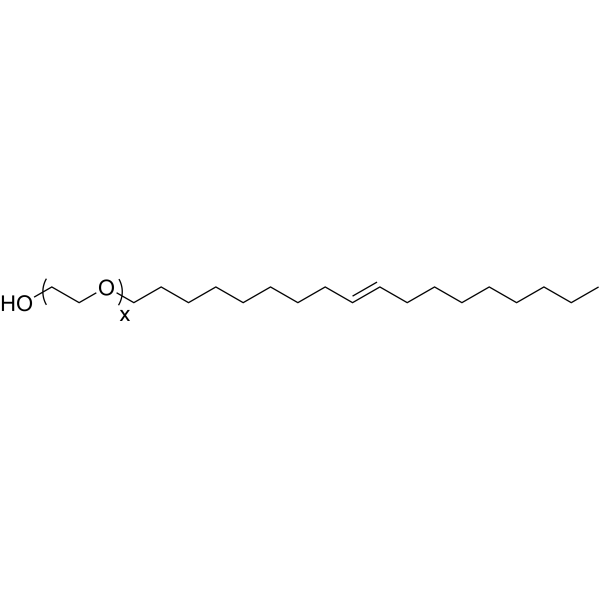
Polyoxyethylene(10) oleyl ether, also known as POE(10) monooleate, is a nonionic surfactant consisting of a polyethylene glycol chain with 10 ethylene oxide units and an oleic acid residue. It has excellent emulsifying, wetting and dispersing properties, making it suitable for a variety of applications including personal care products and pharmaceutical formulations. POE(10) monooleate is commonly used as a solubilizer to improve the solubility and bioavailability of poorly soluble drugs. Furthermore, it is biodegradable and has low toxicity, making it an environmentally friendly ingredient suitable for various industrial applications.
loading...
    loading...
Cat. No.: HY-Y0873P
CAS No.: 25322-68-3
Synonyms: Polyethylene glycol 10000
PEG10000 (Polyethylene glycol 10000) can be used as a solubilizer. PEG10000 is a kind of biological materials or organic compounds that are widely used in life science research .
loading...
    loading...
Cat. No.: HY-B1620C
CAS No.: 9003-39-8
Synonyms: PVP K17; Polyvidone K17; Povidone K17
Polyvinylpyrrolidone K17 is one of the polymers in pharmaceutical preparations. Polyvinylpyrrolidone K17 is a versatile excipient for both conventional formulations and novel controlled or targeted delivery systems, serving as a binder, coating agent, suspending agent, pore-former, solubilizer, stabilizer, etc .
loading...
    loading...
Cat. No.: HY-P5366
Target:  

Liposome

Domaines de recherche:  

Others

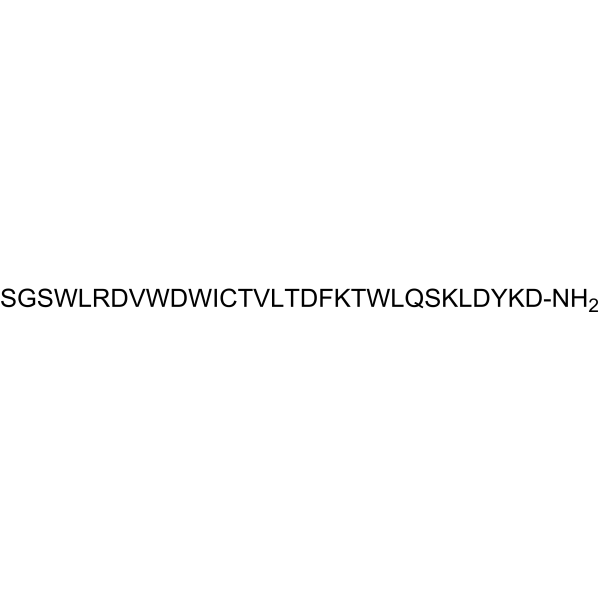
PEP1 is an amphipathic α-helical peptide containing 31 residues. The interaction of PEP1 with POPC-supported lipid bilayers (SLBs) is concentration-dependent: at low concentrations, it inserts into SLBs to generate compressive stress; at medium concentrations, it saturates the membrane surface to maintain constant stress; and at high concentrations, it solubilizes SLBs. PEP1 can be used for research on the mechanism of membrane-peptide interactions .
loading...
    loading...
Cat. No.: HY-Y0537C
CAS No.: 7447-40-7
Synonyms: Potassium chloride, suitable for the extraction and solubilization of proteins
Potassium chloride, ≥99.99% trace metals basis (Potassium chloride, suitable for the extraction and solubilization of proteins), is an inorganic salt used in the preparation of phosphate buffers. With very low metal impurity content, it is suitable for protein extraction and dissolution.
loading...
    loading...
Cat. No.: HY-W129593
CAS No.: 1338-41-6
Synonyms: Sorbitan monostearate
Domaines de recherche:  

Others

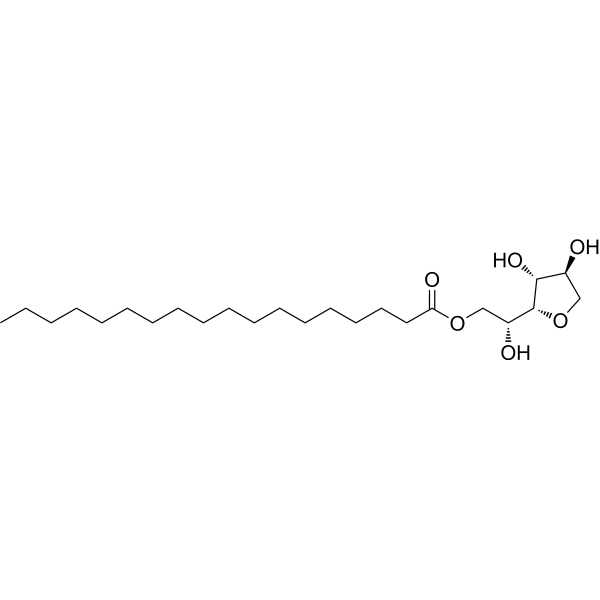
Sorbitan monooctadecanoate (Sorbitan monostearate) is a hydrophobic nonionic surfactant. Sorbitan monooctadecanoate can serve as a pharmaceutical excipient, such as an emulsifier, nonionic surfactant, solubilizer, wetting agent, and dispersing/suspending agent .
loading...
    loading...
Cat. No.: HY-W250195
CAS No.: 5157-04-0
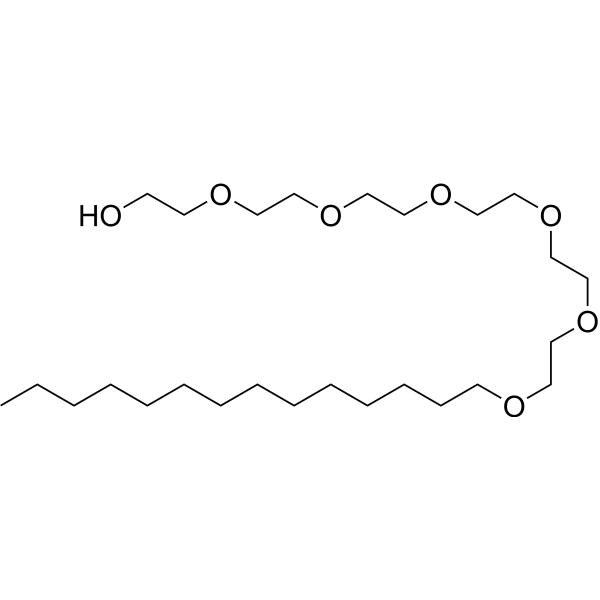
Hexaethylene glycol monotetradecyl ether is a kind of nonionic surfactant with hydrophilic head and lipophilic tail. It belongs to the class of polyethylene glycol (PEG) ethers and is widely used in different industrial and research applications. Due to its unique properties, Hexaethylene glycol monotetradecyl ether is commonly used in lotions, detergents and solubilizers. It is particularly useful in the study of membrane proteins and can be used to stabilize and solubilize proteins for use in structural analysis techniques. Due to its moisturizing and emulsifying properties, Hexaethylene glycol monotetradecyl ether is also used in personal care and cosmetics.
loading...
    loading...
Cat. No.: HY-W040201
CAS No.: 82473-24-3
Synonyms: 3-[3-(Cholamidopropyl)dimethylammonio]-2-hydroxy-1-propanesulfonate
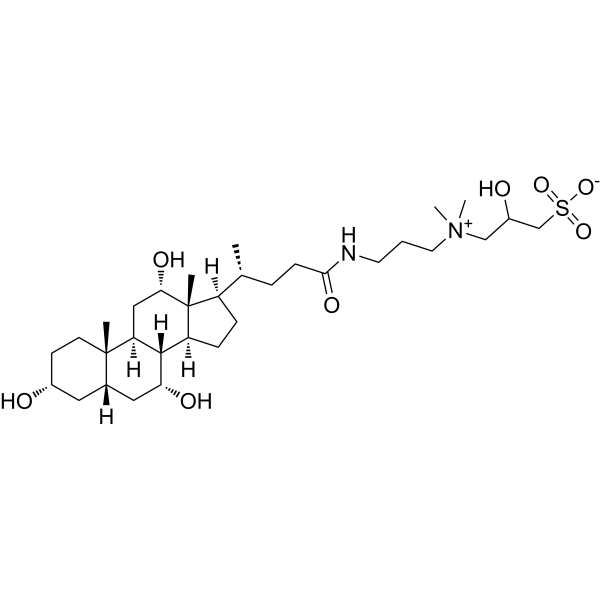
CHAPSO is a bile derivative. CHAPSO reduces protein adsorption, improves the cryo-EM imaging quality. CHAPSO can be used as a detergent, or as the membrane protein solubilization and reconstruction reagent in membrane protein structural studies .
loading...
    loading...
Cat. No.: HY-B1620J
CAS No.: 9003-39-8
Synonyms: PVP, average Mw~10000; Polyvidone, average Mw~10000; Povidone, average Mw~10000
Polyvinylpyrrolidone, average Mw~10000 is a multifunctional synthetic polymer with an average molecular weight of 10000 Da. Polyvinylpyrrolidone, average Mw~10000 is widely used to synthesize nanoparticlesPolyvinylpyrrolidone, average Mw~10000 is a versatile excipient for both conventional formulations and novel controlled or targeted delivery systems, serving as a binder, coating agent, suspending agent, pore-former, solubilizer, stabilizer, etc .
loading...
    loading...
Cat. No.: HY-B1620N
CAS No.: 9003-39-8
Synonyms: PVP, average Mw~360000; Polyvidone, average Mw~360000; Povidone, average Mw~360000
Polyvinylpyrrolidone, average Mw~360000 is a multifunctional synthetic polymer with an average molecular weight of 360000 Da. Polyvinylpyrrolidone, average Mw~360000 is widely used to synthesize nanoparticlesPolyvinylpyrrolidone, average Mw~360000 is a versatile excipient for both conventional formulations and novel controlled or targeted delivery systems, serving as a binder, coating agent, suspending agent, pore-former, solubilizer, stabilizer, etc .
loading...
    loading...
Cat. No.: HY-W250166
CAS No.: 78330-21-9
Domaines de recherche:  

Others

Poly(ethylene glycol) (12) tridecyl ether is a nonionic surfactant belonging to the family of ethoxylated fatty alcohols. It is commonly used as an emulsifier, solubilizer, and wetting agent in a variety of industrial and personal care products. Poly(ethylene glycol)(12) tridecyl ether has various properties that make it suitable for these applications, including its low toxicity, high solubility in water and organic solvents, and ability to stabilize emulsions. In addition, it can be used as a raw material for the production of other surfactants and specialty chemicals.
loading...
    loading...
Cat. No.: HY-N2334S
CAS No.: 1201918-16-2
Synonyms: Chenodeoxycholylglycine-d4
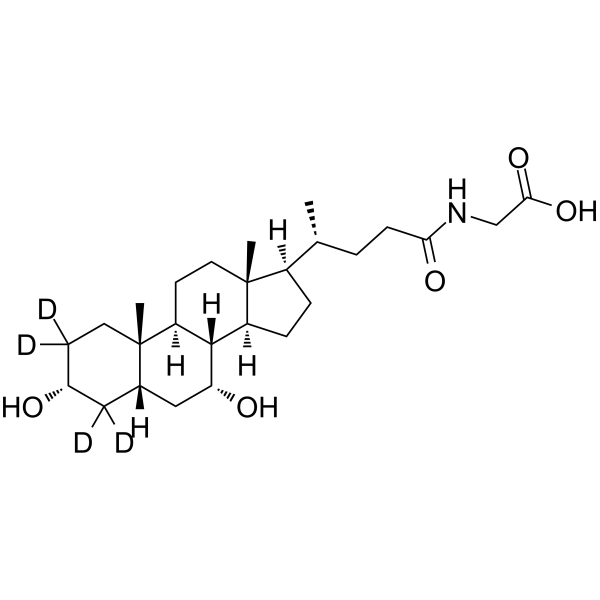
Glycochenodeoxycholic acid-d4 is the deuterium labeled Glycochenodeoxycholic acid. Glycochenodeoxycholic acid (Chenodeoxycholylglycine) is a bile acid formed in the liver from chenodeoxycholate and glycine. It acts as a detergent to solubilize fats for absorption and is itself absorbed. Glycochenodeoxycholic acid (Chenodeoxycholylglycine) induces hepatocyte apoptosis .
loading...
    loading...
Cat. No.: HY-44157
CAS No.: 308818-13-5
Domaines de recherche:  

Neurological Disease

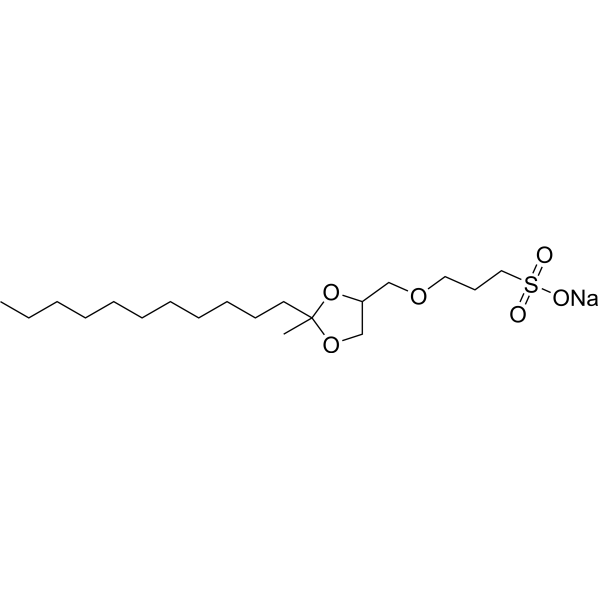
ALS-I, an acid-Liable surfactant, is adopted for in-solution enzymatic digestions, can help to solubilize hydrophobic proteins. ALS-I is significantly enhanced peptide recovery for mass spectrometry (MS) mapping in the study of the proteomes of regenerating rat retina and mouse brain .
loading...
    loading...
Cat. No.: HY-W013827
CAS No.: 641-74-7
Synonyms: 1,4:3,6-Dianhydromannitol
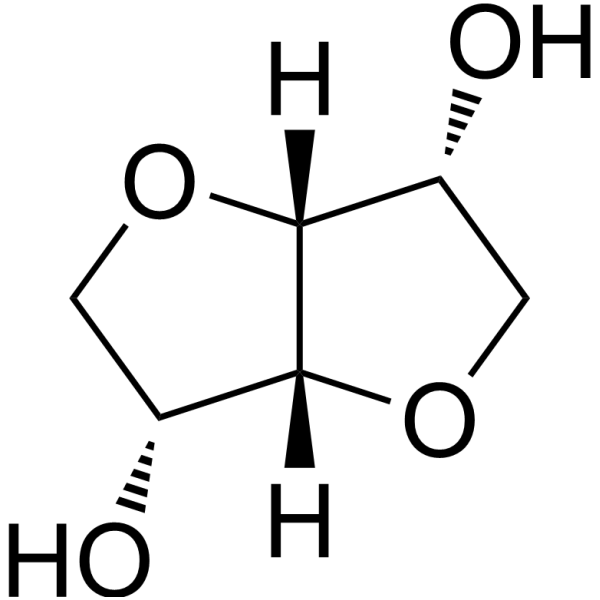
Isomannide (1,4:3,6-Dianhydromannitol) is a cyclic diol and a derivative of Isosorbide (HY-B1469). Isomannide serves as a starting material for chiral solubilizers and a linker group for novel bacterial topoisomerase inhibitors (NBTIs). Isomannide is also used in the synthesis of biocompatible polymers .
loading...
    loading...
Cat. No.: HY-B1620K
CAS No.: 9003-39-8
Synonyms: PVP, average Mw~29000; Polyvidone, average Mw~29000; Povidone, average Mw~29000
Polyvinylpyrrolidone, average Mw~29000 is a multifunctional synthetic polymer with an average molecular weight of 29,000 Da. Polyvinylpyrrolidone, average Mw~29000 is a versatile excipient for both conventional formulations and novel controlled or targeted delivery systems, serving as a binder, coating agent, suspending agent, pore-former, solubilizer, stabilizer, etc .
loading...
    loading...
Cat. No.: HY-W195048
CAS No.: 1191-50-0
Domaines de recherche:  

Cancer

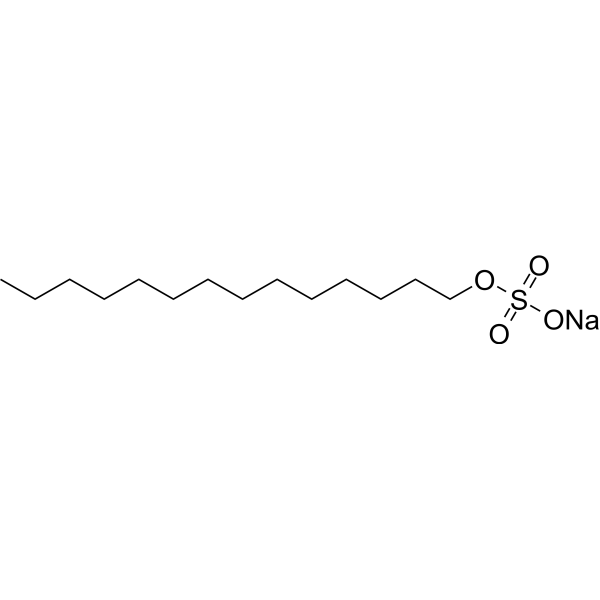
Tetradecyl sulfate sodium is an anionic detergent sclerosant. Tetradecyl sulfate sodium disturbs phospholipid cell membranes, causing membrane solubilization and cell lysis at high concentrations, and creates endothelial cell membrane negative charge to induce coagulation, thrombotic occlusion, fibrosis, and vessel ablation at lower concentrations. Tetradecyl sulfate (sodium) can be used for the research of hemangioma, Kaposi sarcoma, lymphangioma circumscriptum .
loading...
    loading...
Cat. No.: HY-D1005F
CAS No.: 9003-11-6
Synonyms: PEG-PPG-PEG, 2500(Average Mn)
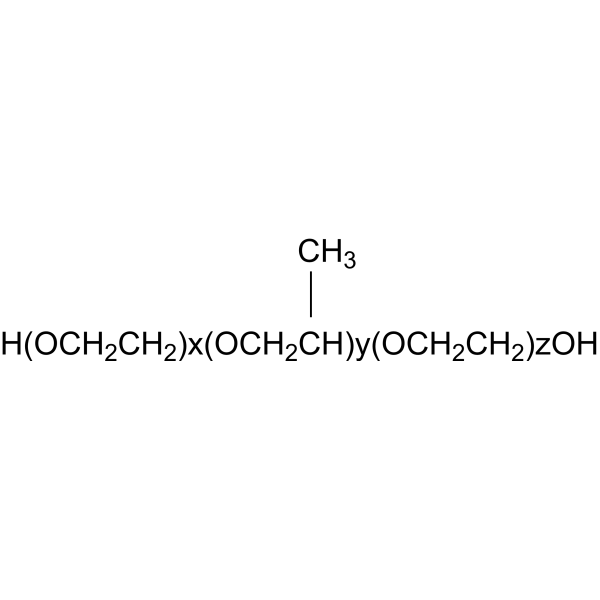
Poloxamer 182 (L62) can be used as an excipient, such as Emulsifier, solubilizer, lubricant, etc. Pharmaceutical excipients, or pharmaceutical auxiliaries, refer to other chemical substances used in the pharmaceutical process other than pharmaceutical ingredients. Pharmaceutical excipients generally refer to inactive ingredients in pharmaceutical preparations, which can improve the stability, solubility and processability of pharmaceutical preparations. Pharmaceutical excipients also affect the absorption, distribution, metabolism, and elimination (ADME) processes of co-administered drugs .
loading...
    loading...
Cat. No.: HY-Y1173
CAS No.: 1562-00-1
Synonyms: 2-Hydroxyethanesulfonic acid sodium; Sodium isethionate
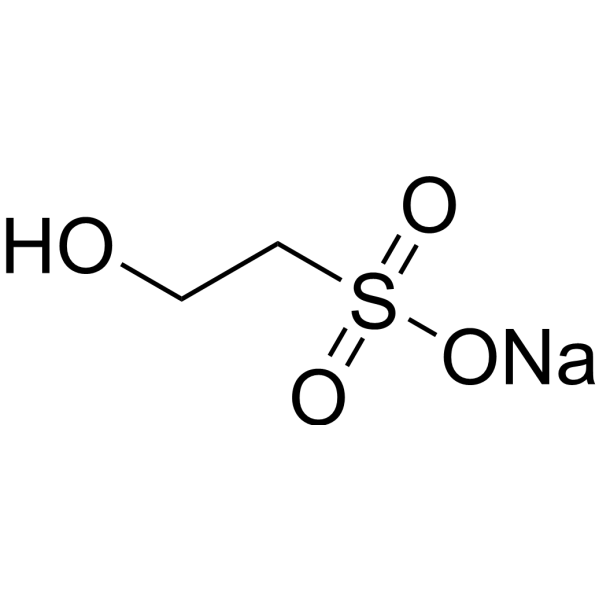
Isethionic acid sodium salt (2-Hydroxyethanesulfonic acid sodium; Sodium isethionate) is an endogenous mammalian Taurine (HY-B0351) metabolite. Isethionic acid sodium salt forms covalent ester linkages with cholic acid. It acts as a larval settlement inhibitor for Balanus amphitrite with larval toxicity. Isethionic acid sodium salt enables the low-temperature synthesis of highly hygroscopic water-soluble sulfonates, and its acylated derivatives serve as acidic wetting solubilizers. It is used in studies related to hepatic bile acid metabolism, biological control and organic synthesis .
loading...
    loading...
Cat. No.: HY-166519
CAS No.: 128446-33-3
Synonyms: α‐HPCD (MW 1180)
(2-Hydroxypropyl)-α-cyclodextrin (MW 1180) is a cyclic oligosaccharide derivative that acts as a solubilizer in various experiments.
loading...
    loading...
Cat. No.: HY-154630
CAS No.: 25231-21-4
Pureté:  99.92%
Domaines de recherche:  

Others

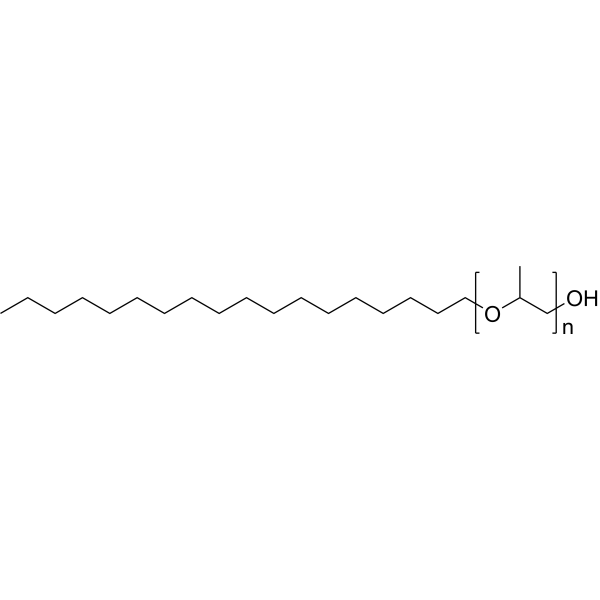
Polyoxypropylene stearyl ether can be used as an excipient, such as surfactant, softener, lubricating, wetting, plasticizing, solubilizing and dispersing properties. Pharmaceutical excipients, or pharmaceutical auxiliaries, refer to other chemical substances used in the pharmaceutical process other than pharmaceutical ingredients. Pharmaceutical excipients generally refer to inactive ingredients in pharmaceutical preparations, which can improve the stability, solubility and processability of pharmaceutical preparations. Pharmaceutical excipients also affect the absorption, distribution, metabolism, and elimination (ADME) processes of co-administered drugs .
loading...
    loading...

