5149 Results for "

effector

" in MedChemExpress (MCE) Product Catalog:
Products (5149)

5149 Results for "effector" in MCE Product Catalog:

Cat. No.: HY-180525
Target:  

Influenza Virus

Research Areas:  

Infection

PB2-IN-2 is an orally active PB2 inhibitor with RNA-dependent RNA Polymerase (RNP) IC50 = 0.2 nM, LRA (Ligand Receptor Assay) EC50 = 0.8 nM, Cytopathic Effect (CPE) EC50 = 0.1 nM. PB2-IN-2 exhibits broad-spectrum, nanomolar antiviral potency against a panel of influenza A strains (including H1N1pdm09, Lyon/1337/2007/H1N1, Tex12-Like/H3N2, PR/8/34/H1N1, WSN/1933/H1N1, rPR8(H1N1)/H7N9 with EC50 = 1.5, 3.6, 3.7, 13.8, 2.9 and 9.8 nM and all the CC50 values > 2 μM. PB2-IN-2 possesses an excellent pharmacokinetic profile and metabolic stability. PB2-IN-2 can be used for anti-influenza research .
loading...
    loading...
Cat. No.: HY-N2037R
CAS No.: 5843-65-2
Synonyms: Norcoclaurine (Standard); Demethyl-Coclaurine (Standard)
Higenamine (Norcoclaurine), a β2-AR agonist with antioxidant capability, is a key component of the Chinese herb aconite root that prescribes for treating symptoms of heart failure in the oriental Asian countries. Higenamine is also a α1-adrenergic receptor antagonist with hypotensive effect. is a selective LSD1 inhibitor (IC50=1.47 μM) that can be isolated from aconite. Higenamine hydrochloride has anti-inflammatory and antibacterial activity. Higenamine protects myocyte Apoptosis and ischemia/reperfusion (I/R) injury through selective activation of beta2-adrenergic receptor (β2-AR). Higenamine also reduces I/R-induced myocardial infarction in mice. Higenamine can attenuate IL-1β-induced Apoptosis through ROS-mediated PI3K/Akt signaling pathway. Higenamine protects brain cells from oxygen deprivation. Higenamine can promote bone formation in osteoporosis through the SMAD2/3 pathway. Higenamine can be used to study cancer, inflammation, cardiorenal syndrome and other diseases .
loading...
    loading...
Cat. No.: HY-P992056

Target:  

Autophagy

Research Areas:  

Cancer

Anti-Human/Mouse LY6E Antibody (9B12) is a high-affinity, multi-target antibody that binds specifically to LY6E. Anti-Human/Mouse LY6E Antibody (9B12) binds specifically to cell-surface LY6E and enters lysosomes via lipid raft-dependent endocytosis, thereby effectively inhibiting the growth of various LY6E-expressing solid tumors (such as breast cancer and lung cancer) in both in vitro and in vivo models. Anti-Human/Mouse LY6E Antibody (9B12) exerts a dual mechanism of action: on one hand, it blocks the interaction between PILRα and CD8α, specifically reduces the survival rate of peripheral CD8 + T cells and induces their activation, breaking the state of cellular quiescence; on the other hand, it recognizes and immunoprecipitates IDE under both non-denaturing and denaturing conditions, which is applicable to studies on the subcellular localization and protein interactions of IDE. The regulatory effect of Anti-Human/Mouse LY6E Antibody (9B12) on CD8 + T cells strictly depends on the presence of PILRα, and it does not affect CD4 + T cells or T cell development in the thymus, exhibiting high specificity .
loading...
    loading...
Cat. No.: HY-112288R
CAS No.: 432001-19-9
Synonyms: TTI-101 (Standard)
C188-9 (Standard) is the analytical standard of C188-9 (HY-112288). This product is intended for research and analytical applications. C188-9 (TTI-101) is a STAT3 inhibitor with a Kd value of 4.7 nM. C188-9 targets the SH2 domain of STAT3, blocks the processes of STAT3 ligand binding, receptor recruitment, homodimerization and phosphorylation, and regulates STAT3-mediated genes associated with tumorigenesis and radioresistance. C188-9 regulates STAT1-mediated genes related to radioresistance and reduces the activation level of STAT1. C188-9 downregulates the expression of DNMT1, enhances DAC-induced demethylation and re-expression of RASSF1A, and simultaneously potentiates the anti-tumor effect of DAC on pancreatic cancer cells. C188-9 inhibits both anchorage-dependent and anchorage-independent growth of cancer cells, induces Apoptosis, blocks the growth of tumor xenografts, and suppresses muscle atrophy. C188-9 maintains muscle mass, increases body weight and improves grip strength in tumor-bearing mice. C188-9 can be used in research related to head and neck squamous cell carcinoma, pancreatic cancer, sepsis-related skeletal muscle wasting, non-small cell lung cancer, acute myeloid leukemia and cancer cachexia .
loading...
    loading...
Cat. No.: HY-153552A
CAS No.: 2990021-73-1
Purity:  99.89%
Target:  

FAP

Research Areas:  

Cancer

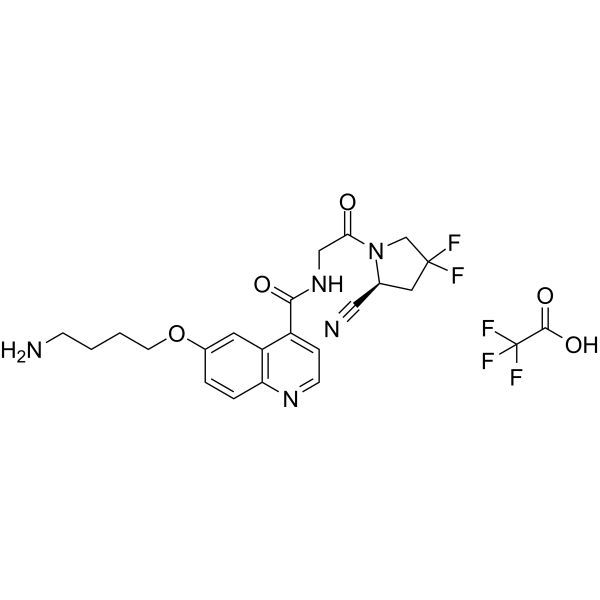
NH2-UAMC1110 TFA is an aminobutoxy derivative of the fibroblast activation protein (FAP) inhibitor UAMC1110 (HY-100684), and is a precursor compound for the synthesis of FAP inhibitor probes, not directly used in bioactivity experiments. For example, NH2-UAMC1110 TFA is involved in the synthesis of the radiotracer FAPI-QS, which exhibits high tumor selectivity and high dose effect, and has been used in tumor diagnosis. NH2-UAMC1110 TFA structurally incorporates an active amino group, allowing it to form covalent bonds with various molecules (such as DOTA, DATA5m, radionuclide chelators, etc.) to synthesize molecular imaging probes or targeted compounds with the ability to target FAP. NH2-UAMC1110 TFA specifically binds to the FAP active site, inhibiting its proline-selective serine protease activity (including dipeptidyl peptidase and endopeptidase activity), blocking FAP-mediated tissue remodeling-related processes. Its key activity is high targeting and high affinity, and its core function is to act as a targeting module coupled with bifunctional chelators (such as DOTA, DATA5m). NH2-UAMC1110 TFA can be applied to diagnostic imaging studies of tumors expressing FAP (such as colorectal cancer, pancreatic cancer, etc.), and also provides molecular tools for targeted research of FAP-related diseases with high FAP expression, such as fibrosis and arthritis .
loading...
    loading...
Cat. No.: HY-L252
76 compounds

Carbohydrate metabolism serves as a central hub for energy supply and biosynthesis in living organisms and plays a critical role in the onset and progression of various diseases. In recent years, studies have shown that tumor cells reprogram their energy metabolism through aerobic glycolysis (the Warburg effect) to support rapid proliferation. Immune cells also rely on specific carbohydrate metabolic pathways to regulate their activation and differentiation states, while disorders such as diabetes and metabolic syndrome arise directly from dysregulation of carbohydrate metabolism. In addition, enzymes and key metabolic nodes involved in carbohydrate metabolism have become important targets for drug discovery, and therapeutic strategies targeting glycolysis, the pentose phosphate pathway, and energy metabolism are continuously advancing the treatment of cancer and metabolic diseases. Therefore, systematic analysis of carbohydrate metabolic networks and their associated metabolites is of great significance for elucidating disease mechanisms and developing novel therapeutic approaches.

The MCE Carbohydrate Metabolism Metabolite Library is constructed based on classical carbohydrate metabolic pathways and contains 76 metabolites. It systematically integrates key metabolic networks, including glycolysis, the pentose phosphate pathway, the tricarboxylic acid (TCA) cycle, monosaccharide metabolism, and sugar acid interconversions. The library comprehensively covers core metabolic nodes from glucose uptake and utilization to energy production and biosynthesis, while also incorporating important upstream and downstream intermediates. It enables accurate representation of intracellular metabolic flux dynamics and is well suited for applications such as metabolic flux analysis, target validation, and mechanistic studies. Furthermore, it provides robust support for multi-omics integration and the development of precision intervention strategies.

Cat. No.: HY-116028S1
CAS No.: 2750534-91-7
Synonyms: 15-Deoxy-Δ12,14-PGD2-d4
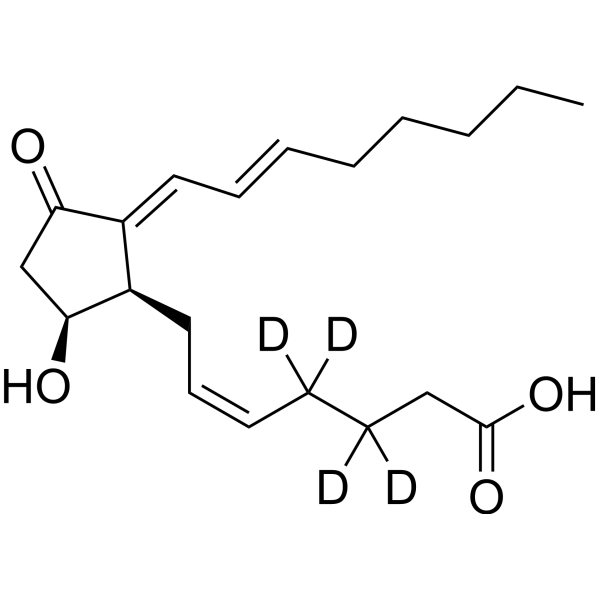
15-Deoxy-Δ12,14-Prostaglandin D2-d4 (15-Deoxy-Δ12,14-PGD2-d4) is the deuterium labeled 15-deoxy-Δ12,14-Prostaglandin D2. 15-deoxy-Δ12,14-Prostaglandin D2 (15-Deoxy-Δ12,14-PGD2) is a metabolite of prostaglandin D₂ (PGD₂) (HY-101988), which can undergo further dehydration metabolism to 15-deoxy-Δ12,14-PGJ₂. 15-deoxy-Δ12,14-Prostaglandin D2 is a highly selective agonist for DP2 receptor and PPARγ. 15-deoxy-Δ12,14-Prostaglandin D2 causes morphological changes in eosinophils and migration of type II innate lymphoid cells (ILC2). 15-deoxy-Δ12,14-Prostaglandin D2 has a growth inhibitory effect on prostate cancer cells expressing PPARγ, induces cell cycle arrest and promotes apoptosis. 15-deoxy-Δ12,14-Prostaglandin D2 can be used in related research on asthma and prostate cancer.
loading...
    loading...
Cat. No.: HY-N16637
CAS No.: 408324-05-0
(3R,5R)-3,5-Dihydroxy-1,7-bis(3,4-dihydroxyphenyl)heptane 3-O-β-D-glucopyranoside is a diarylheptanol glycoside compound isolated from Tacca plantaginea. (3R,5R)-3,5-Dihydroxy-1,7-bis(3,4-dihydroxyphenyl)heptane 3-O-β-D-glucopyranoside significantly inhibit TNF-α-induced NF-κB transcriptional activity (IC50 = 9.4 μM). (3R,5R)-3,5-Dihydroxy-1,7-bis(3,4-dihydroxyphenyl)heptane 3-O-β-D-glucopyranoside significantly activates PPAR transcriptional activity (EC50 = 9.9 μM) and has a specific activating effect on PPAR β(δ) (EC50 = 23.1 μM). (3R,5R)-3,5-Dihydroxy-1,7-bis(3,4-dihydroxyphenyl)heptane 3-O-β-D-glucopyranoside is non-toxic to cells at the tested concentration. (3R,5R)-3,5-Dihydroxy-1,7-bis(3,4-dihydroxyphenyl)heptane 3-O-β-D-glucopyranoside can be used for research on inflammatory conditions .
loading...
    loading...
Cat. No.: HY-P87028
Synonyms: KIAA1142 antibody; p21 activated kinase 4 antibody; p21 Cdc42/Rac1-actiated kinase 4 antibody; P21 protein (Cdc42/Rac) activated kinase 4 antibody; p21(CDKN1A) activated kinase 4 antibody; p21-activated kinase 4 antibody; PAK 4 antibody; PAK-4 antibody; Pak4 antibody; PAK4_HUMAN antibody; KIAA1142 antibody; p21 activated kinase 4 antibody; p21 Cdc42/Rac1-actiated kinase 4 antibody; P21 protein (Cdc42/Rac) activated kinase 4 antibody; p21(CDKN1A) activated kinase 4 antibody; p21-activated kinase 4 antibody; PAK 4 antibody; PAK-4 antibody; Pak4 antibody; PAK4_HUMAN antibody; Protein kinase related to S.cerevisiae STE20 effector for Cdc42Hs antibody; Serine threonine kinase PAK 4 antibody; Serine/threonine protein kinase PAK 4 antibody; Serine/threonine protein kinase PAK4 antibody; Serine/threonine-protein kinase PAK 4 antibody; EC 2.7.11.1 antibody; KIAA1264 antibody; MGC26232 antibody; p21 activated kinase 7 antibody; p21 protein (Cdc42/Rac)-activated kinase 7 antibody; p21(CDKN1A) activated kinase 7 antibody; p21-activated kinase 5 antibody; p21-activated kinase 7 antibody; PAK 5 antibody; PAK 7 antibody; PAK-5 antibody; PAK-7 antibody; PAK5 antibody; PAK7 antibody; PAK7_HUMAN antibody; Protein kinase PAK5 antibody; Serine/threonine protein kinase PAK 7 antibody; Serine/threonine-protein kinase PAK 7 antibody; CDKN1A activated kinase 6 antibody; EC 2.7.1.37 antibody; p21 activated protein kinase 6 antibody; p21 protein (Cdc42/Rac)-activated kinase 6 antibody; p21(CDKN1A) activated kinase 6 antibody; p21-activated kinase 6 antibody; p21activated kinase 6 antibody; PAK 6 antibody; PAK-6 antibody; Pak6 antibody; PAK6_HUMAN antibody; Serine threonine protein kinase PAK 6 antibody; Serine/threonine protein kinase PAK 6 antibody; Serine/threonine protein kinase PAK6 antibody; Serine/threonine-protein kinase PAK 6 antibody;

Host:  

Rabbit

Application:  

WB

Reactivity:  

Human

loading...
    loading...

