68 Results for "

Nuclear function

" in MedChemExpress (MCE) Product Catalog:
Products (68)

68 Results for "Nuclear function" in MCE Product Catalog:

Cat. No.: HY-W015490R
CAS No.: 130-15-4
1,4-Naphthoquinone is an inhibitor with broad-spectrum inhibitory activity targeting DNA polymerase, NF-κB and monoamine oxidase (MAO-A/B), with antibacterial and anti-biofilm efficacy. 1,4-Naphthoquinone is a competitive inhibitor of MAO-B (Ki=1.4 μM) and a non-competitive inhibitor of MAO-A (Ki=7.7 μM). 1,4-Naphthoquinone inhibits DNA polymerase pol α, β, γ, δ, ε, λ with IC50 ranging from 5.57-128 μM. 1,4-Naphthoquinone inhibits tumor cell proliferation, induces apoptosis and necrosis, and has anti-angiogenic and anti-inflammatory activities by inducing oxidative stress, depleting glutathione (GSH), inhibiting DNA polymerase-mediated DNA synthesis and blocking NF-κB nuclear translocation. 1,4-Naphthoquinone can be used in anti-bacterial , anti-tumor and anti-inflammatory studies, including inhibition of melanoma and colon cancer cell growth and endothelial cell function, as well as LPS-induced inflammation models .
loading...
    loading...
Cat. No.: HY-N2259R
CAS No.: 19431-84-6
Synonyms: (+)-Curcumenol (Standard)
Curcumenol (Standard) ((+)-Curcumenol (Standard)) is the analytical standard of Curcumenol (HY-N2259). This product is intended for research and analytical applications. Curcumenol ((+)-Curcumenol) is a natural compound with oral efficacy, exhibiting an IC50 of 12.6 μM and a Ki of 10.8 μM against human CYP3A4. Curcumenol inhibits TNFα-induced phosphorylation/degradation of IκBα, phosphorylation/nuclear translocation of NF-κB p65, as well as the upregulation of MMP3, MMP9, MMP13, TRAF3, IL1RL1, TNFα and IL-1β. Curcumenol suppresses LPS-induced phosphorylation of Akt and p38 MAPK, as well as the production of pro-inflammatory mediators/proteins, and downregulates the SLC7A11/NF-κB/TGF-β pathway. Curcumenol binds to and inhibits the activation of Fyn and Lyn, blocks the function of downstream FcεRI signaling components, and reduces the release of allergic mediators/cytokines. Curcumenol upregulates the expression of KDM6B, and promotes chondrocyte proliferation and cartilage repair. Curcumenol induces ferroptosis and apoptosis, regulates the EMT process, and inhibits tumor growth and metastasis of triple-negative breast cancer. Curcumenol possesses anti-inflammatory, neuroprotective, antioxidant, antitumor, antiviral and hepatoprotective activities. Curcumenol can be used in research related to intervertebral disc degeneration, cancer, inflammation, central nervous system neurodegenerative diseases, allergic reactions and knee osteoarthritis .
loading...
    loading...
Cat. No.: HY-146287
CAS No.: 2785342-54-1
Research Areas:  

Cancer

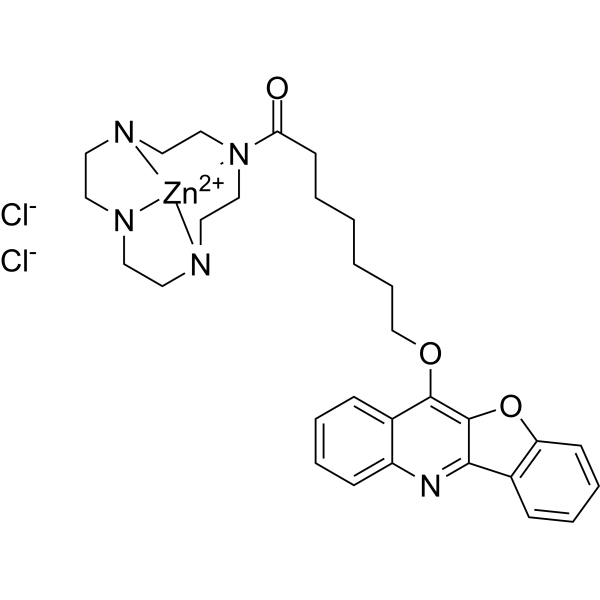
Zn(BQTC) is a highly potent mitochondrial DNA (mtDNA) and nuclear DNA (nDNA) inhibitor. Zn(BQTC) causes severe damage to the mtDNA and nDNA, sequentially disruptes mitochondrial and nuclear functions. Zn(BQTC) promotes the DNA damage-induced apoptotic signaling pathway. Zn(BQTC) has selectively antiproliferative activity against A549R cells. Zn(BQTC) can be used for researching anticancer .
loading...
    loading...
Cat. No.: HY-174568
Target:  

mRNA

Research Areas:  

Inflammation/Immunology

Human NFKB2 mRNA encodes the human nuclear factor kappa B subunit 2 (NFKB2) protein, a subunit of the transcription factor complex nuclear factor-kappa-B (NFkB). The NFkB complex is expressed in numerous cell types and functions as a central activator of genes involved in inflammation and immune function. NFKB2 can function as either a transcriptional activator or repressor depending on its dimerization partner.
loading...
    loading...
Cat. No.: HY-E70692
Target:  

CDK

Research Areas:  

Cancer

CLK3 is a nuclear dual-specificity kinase has been shown to undergo conserved alternative splicing to generate catalytically active (Clk) and inactive (ClkT) isoforms. CLK3 Recombinant Human Active Protein Kinase is a recombinant CLK3 protein that can be used to study CLK3-related functions .
loading...
    loading...
Cat. No.: HY-174505
Target:  

mRNA

Research Areas:  

Cancer

Human YAP1 mRNA encodes the human Yes1 associated transcriptional regulator (YAP1) protein, a downstream nuclear effector of the Hippo signaling pathway which is involved in development, growth, repair, and homeostasis. YAP1 is known to play a role in the development and progression of multiple cancers as a transcriptional regulator of this signaling pathway and may function as a potential target for cancer treatment.
loading...
    loading...
Cat. No.: HY-120785A
CAS No.: 2309312-90-9
Target:  

ROR

Research Areas:  

Inflammation/Immunology

SR1555 hydrochloride is the hydrochloride salt form of SR1555 (HY-120785). SR1555 hydrochloride is an inverse agonist for retinoic acid receptor-related orphan nuclear receptor γ (RORγ) with an IC50 of 1 μM. SR1555 hydrochloride inhibits the development and function of pro-inflammatory TH17 cell, increases the frequency of anti-inflammatory T regulatory (Treg) cells. SR1555 hydrochloride can be used for research about autoimmune diseases .
loading...
    loading...
Cat. No.: HY-B1014R
CAS No.: 152-72-7
Acenocoumarol (Standard) is the analytical standard of Acenocoumarol. This product is intended for research and analytical applications. Acenocoumarol is an anticoagulant that functions as a Vitamin K antagonist. Acenocoumarol inhibits MAPK/ERK/JNK signaling pathway, reduces the nuclear translocation of NF-κB p65, activates Akt/GSK3β signaling pathway. Acenocoumarol induces apoptosis in cell A549, arrests cell cycle at S phase .
loading...
    loading...
Cat. No.: HY-B1014S
CAS No.: 1185071-64-0
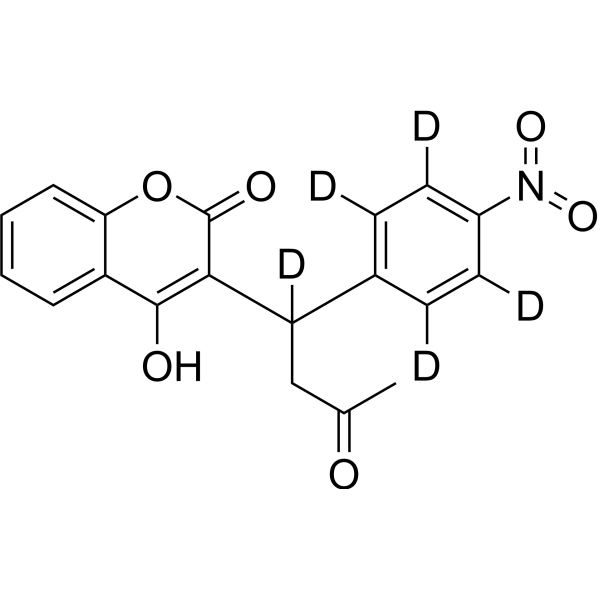
Acenocoumarol-d5 is the deuterium labeled Acenocoumarol (HY-B1014). Acenocoumarol is an anticoagulant that functions as a Vitamin K antagonist. Acenocoumarol inhibits MAPK/ERK/JNK signaling pathway, reduces the nuclear translocation of NF-κB p65, activates Akt/GSK3β signaling pathway. Acenocoumarol induces apoptosis in cell A549, arrests cell cycle at S phase .
loading...
    loading...
Cat. No.: HY-B1014S1
CAS No.: 2937878-24-3
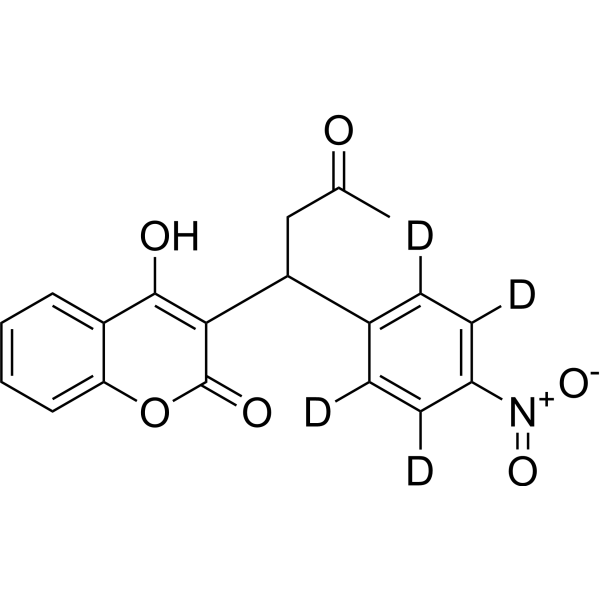
Acenocoumarol-d4 is deuterium labeled Acenocoumarol (HY-B1014). Acenocoumarol is an anticoagulant that functions as a Vitamin K antagonist. Acenocoumarol inhibits MAPK/ERK/JNK signaling pathway, reduces the nuclear translocation of NF-κB p65, activates Akt/GSK3β signaling pathway. Acenocoumarol induces apoptosis in cell A549, arrests cell cycle at S phase .
loading...
    loading...
Cat. No.: HY-161670
Research Areas:  

Cancer

NSD2-PWWP1 ligand 1 (compound 34) is a small molecule ligand targeting the NSD2-PWWP1 domain (pIC50: 8.2). NSD2 is a large multidomain protein with histone writer and histone reader functions. Dysregulation of the levels of histone methyltransferase nuclear receptor binding SET domain 2 (NSD2) may lead to a variety of hematological and solid malignancies. NSD2-PWWP1 ligand 1 binds to NSD2, reducing its enzymatic activity and inhibiting tumorigenesis .
loading...
    loading...
Cat. No.: HY-162538
CAS No.: 3053823-69-8
Target:  

PROTACs IRAK NF-κB

Research Areas:  

Inflammation/Immunology

LC-MI-3 is an orally active IRAK4 PROTAC degrader with an IC50 of 57.2 nM and high selectivity among human protein kinases. LC-MI-3 eliminates IRAK4 kinase and scaffolding functions via the cereblon E3 ubiquitin ligase and ubiquitin-proteasome systems. LC-MI-3 inhibits downstream nuclear factor-κB and IRAK4-mediated inflammatory signaling pathways. LC-MI-3 can be used for the research of acute lung injury, sepsis, psoriasis, and inflammatory diseases .
loading...
    loading...
Cat. No.: HY-174126
Target:  

P2Y Receptor

Research Areas:  

Cardiovascular Disease

P2Y1 antagonist 2 (Compound 19) is a P2Y1 receptor antagonist (IC50: 0.49 μM). P2Y1 antagonist 2 has significant antiplatelet aggregation activity and exerts its effects by inhibiting P2Y1 receptor. P2Y1 antagonist 2 can upregulate nuclear Nrf2 protein levels, exhibit neuroprotective effects, and resist oxidative stress damage. P2Y1 antagonist 2 can effectively reduce cerebral infarction area and improve neurobehavioral function, and can be used in the study of ischemic stroke .
loading...
    loading...
Cat. No.: HY-N0392R
CAS No.: 882664-74-6
Polygalasaponin F (Standard) is the analytical standard of Polygalasaponin F. This product is intended for research and analytical applications. Polygalasaponin F is an orally active triterpenoid saponin monomer. Polygalasaponin F downregulates the expression of Bax, p53, caspase-3, NF-κB p65 and MEK1; restores and upregulates the expression of Bcl-2; activates the PI3K/Akt signaling pathway; inhibits the phosphorylation of p38 MAPK, nuclear translocation of NF-κB, TLR4-mediated signaling pathway, mitophagy (Mitophagy) and ROS production; enhances cell viability and suppresses apoptosis (Apoptosis). Polygalasaponin F maintains mitochondrial function, alleviates Ca 2+ overload, upregulates pCREB and BDNF, preserves cell viability and inhibits the release of inflammatory cytokines. Polygalasaponin F alleviates lung injury induced by influenza A H1N1 and cerebral ischemia-reperfusion injury. Polygalasaponin F is applicable to researches related to Parkinson's disease, cerebral ischemia, pneumonia induced by influenza A H1N1, stroke and Alzheimer's disease.
loading...
    loading...
Cat. No.: HY-N0566R
CAS No.: 85999-40-2
Synonyms: Anemosapogenin (Standard)
23-Hydroxybetulinic acid (Standard) is the analytical standard of 23-Hydroxybetulinic acid (HY-N0566). This product is intended for research and analytical applications. 23-Hydroxybetulinic acid (Anemosapogenin) is an orally active triterpenoid with broad-spectrum anticancer activity. 23-Hydroxybetulinic acid reduces the levels of Bcl-2 and survivin, elevates the level of Bax, promotes the cleavage/activation of caspase-3 and caspase-9, and induces apoptosis via the endogenous mitochondrial pathway involving cytochrome C release and mitochondrial membrane potential disruption. 23-Hydroxybetulinic acid arrests the cell cycle at S and G1 phases, inhibits cancer cell proliferation, blocks the MAPK signaling pathway, regulates MMP2, and induces autophagic apoptosis by upregulating beclin-1. 23-Hydroxybetulinic acid inhibits the activity and efflux function of P-gp, increases the intracellular accumulation of chemotherapeutic drugs, and synergistically enhances cytotoxicity with Doxorubicin (HY-15142). 23-Hydroxybetulinic acid inhibits the phosphorylation and nuclear translocation of STAT6, blocks M2 macrophage polarization, and reduces M2 macrophage-mediated apoptosis resistance of colon cancer cells. 23-Hydroxybetulinic acid can be used in related studies on chronic myeloid leukemia, hepatocellular carcinoma, sarcoma 180, multidrug-resistant breast cancer, leukemia, Doxorubicin-induced cardiotoxicity, and colorectal cancer.
loading...
    loading...
Cat. No.: HY-P11744
CAS No.: 503474-42-8
Target:  

Inhibitory Antibodies

Research Areas:  

Others

Nuclear localizing sequence is a peptide sequence that functions as an inducer and exhibits membrane permeability in mammalian cells. Nuclear localizing sequence enhances cellular uptake and directs conjugated ruthenium (II) complexes to the nucleus for nuclear DNA imaging .
loading...
    loading...
Cat. No.: HY-105636
CAS No.: 926-93-2
Synonyms: ICI 33828; Methallibure
Research Areas:  

Endocrinology

Methallibure (ICI 33828) is a dithiocarbamoylhydrazine derivative and gonadotropic function blocker. Methallibure can block the action of pituitary gonadotropins in teleost fishes and inhibit germ cell maturation. Methallibure does not affect the histological structure of the thyroid gland but reduces the nuclear volume of thyroid epithelial cells. Methallibure can be used in the research of endocrine diseases .
loading...
    loading...
Cat. No.: HY-187684
CAS No.: 3054389-11-3
Target:  

CRM1 Apoptosis

Research Areas:  

Neurological Disease Cancer

FR-027 is an orally active, blood-brain barrier permeable XPO1 inhibitor with an EC50 value of 54-69 nM in human cells. FR-027 covalently modifies Cys528 of XPO1 via nucleophilic aromatic substitution, maintaining the nuclear export signal binding groove of XPO1 in a closed conformation to block the nuclear export process, and inhibits XPO1 function without inducing its protein degradation. FR-027 promotes cancer cell apoptosis and inhibits the growth of hematological and solid tumor cells. FR-027 can be used in research related to acute lymphoblastic leukemia, ovarian cancer, glioblastoma, and primary central nervous system lymphoma .
loading...
    loading...
Cat. No.: HY-N20677
CAS No.: 1151683-53-2
9''-Methyl lithospermic acid is a serine palmitoyltransferase (SPT) activator. 9''-Methyl lithospermic acid increases the levels of SPT1 and SPT2 in human keratinocytes. 9''-Methyl lithospermic acid maintains epidermal permeability barrier function by promoting SPT expression .
loading...
    loading...
Cat. No.: HY-W714214
CAS No.: 55283-68-6
Ethalfluralin is a dinitroaniline herbicide and microtubule inhibitor. Ethalfluralin blocks nuclear division and cytokinesis of parasites by inhibiting intranuclear spindle formation. Ethalfluralin activates the phosphorylation levels of NF-κB and P38 MAPK, inhibits the PI3K/AKT signaling pathway, impairs mitochondrial function, and induces apoptosis, endoplasmic reticulum stress, autophagy, and ROS production. Ethalfluralin is applicable to research related to toxoplasmosis .
loading...
    loading...

