



728 Results for "

Transmembrane

" in MedChemExpress (MCE) Product Catalog:
Products (728)

728 Results for "Transmembrane" in MCE Product Catalog:

1
1 Cited Publications
Cat. No.: HY-125176
CAS No.: 2244035-16-1
Purity:  98.14%
Target:  

Bacterial

Research Areas:  

Infection

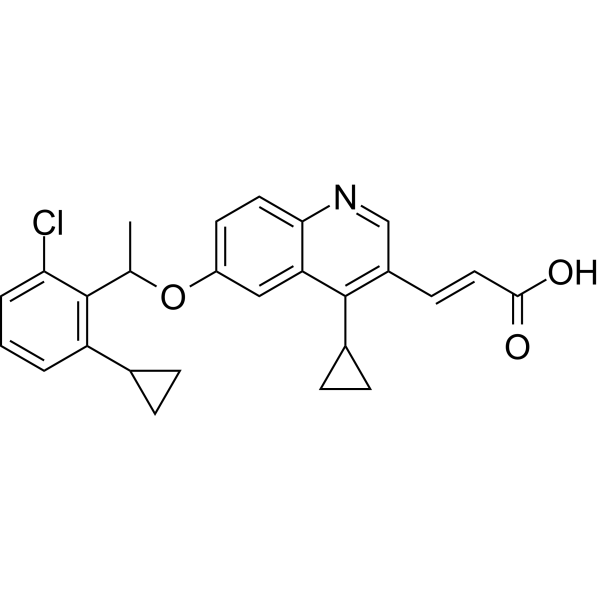
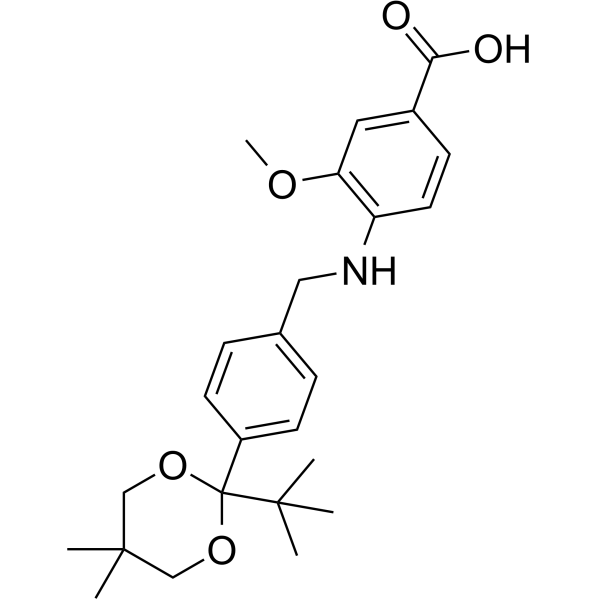
G907 is a selective antagonist of ATP-binding cassette (ABC) transporter MsbA with anti-microbial activity. G907 inhibits E. coli MsbA with an IC50 value of 18 nM. G907 traps MsbA in an inward-facing, lipopolysaccharide-bound conformation by wedging into an architecturally conserved transmembrane pocket .
loading...
    loading...
1
1 Cited Publications
Cat. No.: HY-P3496
CAS No.: 1322711-38-5
Target:  

Pyroptosis

Research Areas:  

Inflammation/Immunology

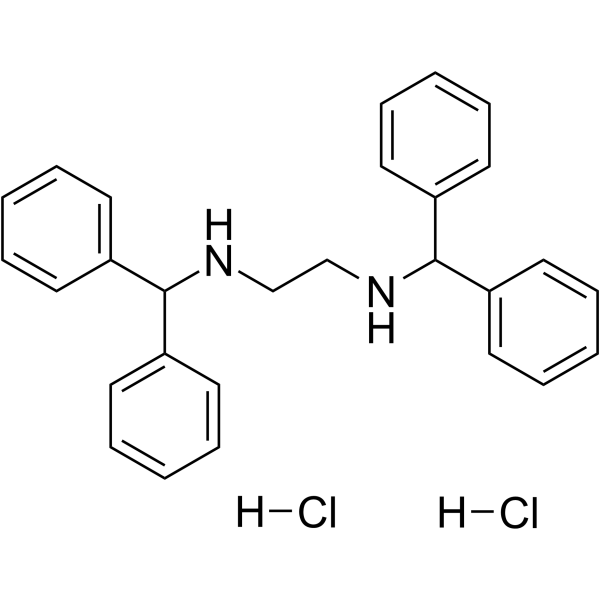
Pep19-2.5 is an synthetic and antitoxin peptide, blocks the intracellular endotoxin signaling cascade. Pep19-2.5 inhibits signaling of lipopeptides (LP) and lipopolysaccharides (LPS) mediated by transmembrane and cytosolic pattern recognition receptors (PRRs). The signaling cascades lead to inflammation and cell pyroptosis .
loading...
    loading...
1
1 Cited Publications
Cat. No.: HY-103565
CAS No.: 97075-46-2
Purity:  99.83%
Target:  

mGluR

Research Areas:  

Neurological Disease

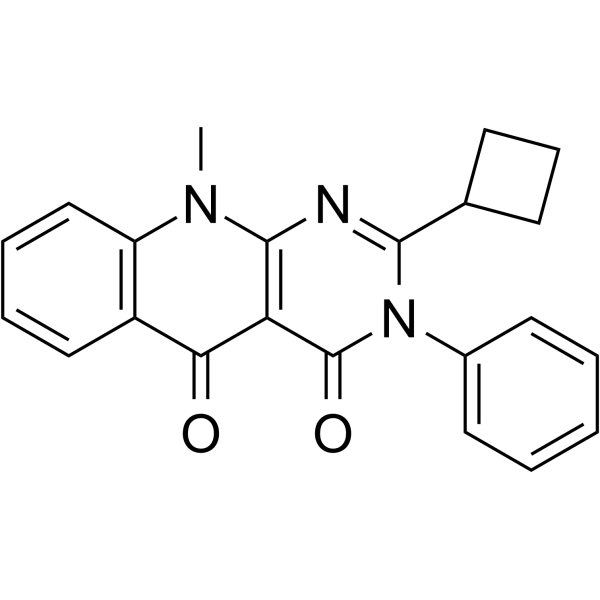
AMN082, a selective, orally active, and brain penetrant mGluR7 agonist, directly activates receptor signaling via an allosteric site in the transmembrane domain. AMN082 potently inhibits cAMP accumulation and stimulates GTPγS binding (EC50 values, 64-290 nM) at transfected mammalian cells expressing mGluR7. AMN082 shows selectivity over other mGluR subtypes and selected ionotropic glutamate receptors. Antidepressant effects .
loading...
    loading...
1
1 Cited Publications
Cat. No.: HY-148033
CAS No.: 52349-26-5
Synonyms: N,N,N-Trimethylchitosan
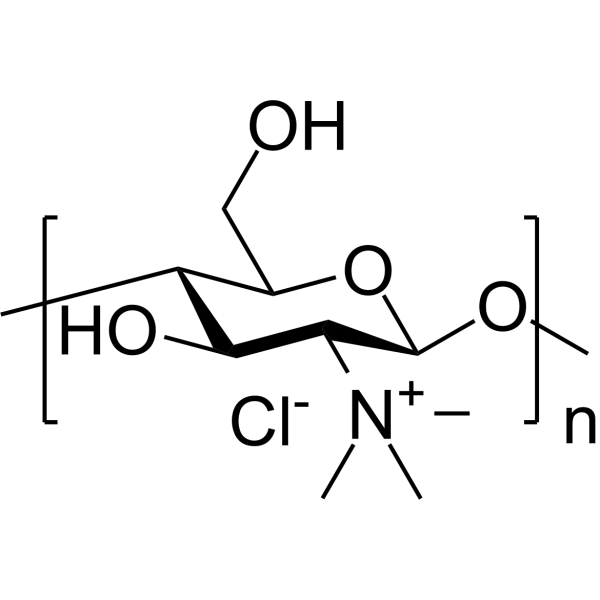
Trimethyl chitosan (N,N,N-Trimethylchitosan) is a multifunctional polymer and a derivative of Chitosan (HY-B2144A). Trimethyl chitosan targets the absorption enhancing proteins of tight junctions of intestinal and mucosal epithelial cells, induces tight junction protein rearrangement, and increases intercellular permeability. Trimethyl chitosan can stimulate the activity of promoting transmembrane transport of hydrophilic drugs (such as peptides and proteins) and can be used for drug delivery and synthesis of nanoparticles .
loading...
    loading...
1
1 Cited Publications
Cat. No.: HY-150090
CAS No.: 1613509-49-1
Purity:  99.68%
Target:  

CFTR

Research Areas:  

Inflammation/Immunology

SRI-41315 induces a prolonged pause at stop codons and suppresses PTCs (premature termination codons) associated with cystic fibrosis in immortalized and primary human bronchial epithelial cells, restoring CFTR (cystic fibrosis transmembrane conductance regulator) expression and function. SRI-41315 suppresses PTCs by reducing the abundance of the termination factor eRF1. SRI-41315 also potentiates aminoglycoside-mediated readthrough, leading to synergistic increases in CFTR activity .
loading...
    loading...
1
1 Cited Publications
Cat. No.: HY-157214
CAS No.: 3030588-01-0
Purity:  99.76%
Target:  

STING Molecular Glues

Research Areas:  

Cancer

NVS-STG2 is a molecular glue that targets STINGtransmembrane domains, effectively acting as a molecular glue. NVS-STGI enhances the activity of cGAMP by inducing the formation of more abundant and larger oligomers. NVS-STG2 produces antitumor activity in animal models .
loading...
    loading...
1
1 Cited Publications
Cat. No.: HY-N4104
CAS No.: 666-99-9
Synonyms: Agaricinic Acid
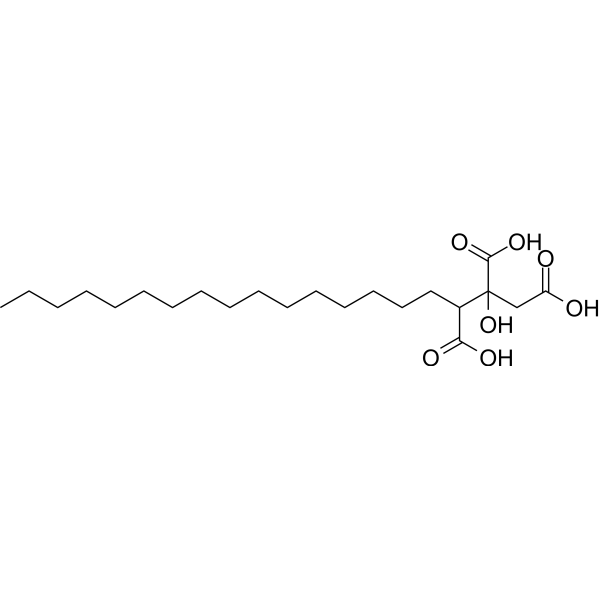
Agaric acid (Agaricinic Acid) is an orally active inhibitor of adenine nucleotide translocase found in specific fungi. Agaric acid can inhibit the biofilm formation of various bacteria such as Salmonella. Agaric acid can also induce mitochondrial permeability transition, prompting mitochondria to release Ca 2+, disrupting the transmembrane potential, and causing mitochondrial swelling. In addition, Agaric acid can also inhibit citrate transport in liver mitochondria and participate in the inhibition of fatty acid synthesis, affecting multiple metabolic processes .
loading...
    loading...
1
1 Cited Publications
Cat. No.: HY-P80940
Synonyms: ERIS; MITA; MPYS; SAVI; NET23; STING; hMITA; hSTING; STING-beta; Transmembrane Protein 173

Host:  

Rabbit

Application:  

WB

Reactivity:  

Human, Mouse

loading...
    loading...
1
1 Cited Publications
Cat. No.: HY-103565A
CAS No.: 83027-13-8
Purity:  98.37%
Target:  

mGluR

Research Areas:  

Neurological Disease

AMN082 free base, a selective, orally active, and brain penetrant mGluR7 agonist, directly activates receptor signaling via an allosteric site in the transmembrane domain. AMN082 free base potently inhibits cAMP accumulation and stimulates GTPγS binding (EC50 values, 64-290 nM) at transfected mammalian cells expressing mGluR7. AMN082 free base shows selectivity over other mGluR subtypes and selected ionotropic glutamate receptors. Antidepressant effects .
loading...
    loading...
1
1 Cited Publications
Cat. No.: HY-135416A
CAS No.: 98072-47-0
Purity:  ≥96.0%
Recombinant Streptolysin O is a cholesterol-targeting, thiol-activated pore-forming toxin. Recombinant Streptolysin O binds to cholesterol via its C-terminal domain 4, oligomerizes to form arc-shaped or ring-shaped structures, inserts amphipathic helices into the lipid bilayer, and forms transmembrane β-barrel pores, resulting in cell permeabilization. Recombinant Streptolysin O enables controllable cell membrane permeabilization, fluorescent probe delivery, and exogenous molecule uptake .
loading...
    loading...
1
1 Cited Publications
Cat. No.: HY-153084A
Target:  

mRNA CD19

Research Areas:  

Cancer

CD19 CAR mRNA (Human) expresses CAR protein that specifically targets human CD19. CD19 CAR mRNA can trigger transitory expression of CAR, allowing T cells to be targeted without permanent genetic modification. CD19 CAR mRNA targets CD19 which is a transmembrane glycoprotein primarily expressed on B lymphocytes and is important in B cell activation. CD19 CAR mRNA can be studied in cancer research such as lymphoma and leukemia .
loading...
    loading...
1
1 Cited Publications
Cat. No.: HY-161834
CAS No.: 2140901-88-6
RG100204 is a selective, orally available inhibitor of the aquaporin AQP9. RG100204 directly inhibits AQP9 channel function, preventing the transmembrane transport of water, glycerol, and H 2O 2. RG100204 reduces the activation of the NLRP3 inflammasome and p38 MAPK signaling pathways, thereby alleviating inflammation and pyroptosis. RG100204 reduces multi-organ dysfunction in a mouse sepsis model and shows glucose-regulating effects in diabetic db/db mice .
loading...
    loading...
1
1 Cited Publications
Cat. No.: HY-P9976
CAS No.: 1461640-62-9
Synonyms: ch38SB19; hu38SB19; SAR-650984

Target:  

CD38 Apoptosis

Research Areas:  

Cancer

Isatuximab is a monoclonal antibody targeting the transmembrane receptor and ectoenzyme CD38, a protein highly expressed on hematological malignant cells, including those in multiple myeloma (MM). Isatuximab has antitumor activity via multiple biological mechanisms, including antibody-dependent cellular-mediated cytotoxicity, complement-dependent cytotoxicity, antibody-dependent cellular phagocytosis, and direct induction of apoptosis without crosslinking. Isatuximab also directly inhibits CD38 ectoenzyme activity, which is implicated in many cellular functions .
loading...
    loading...
1
1 Cited Publications
Cat. No.: HY-120380
CAS No.: 133314-07-5
Purity:  99.8%
Target:  

MOFs PARP

Research Areas:  

Neurological Disease

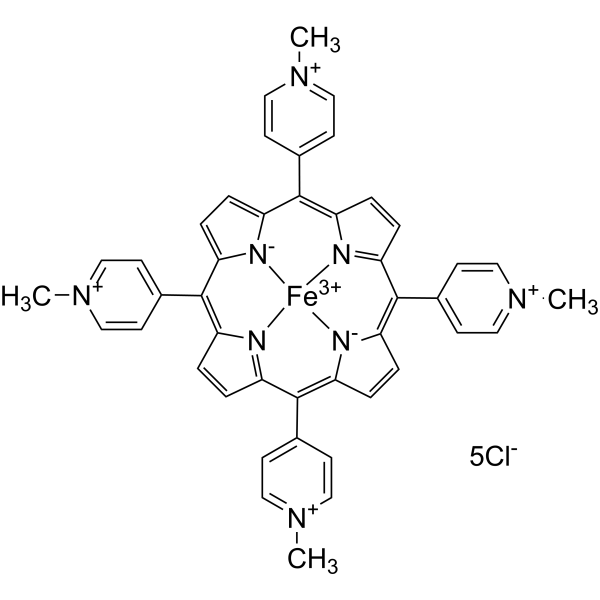
FeTMPyP is an orally active poly (ADP-ribose) polymerase (PARP) inhibitor. FeTMPyP inhibits cell death, nitrotyrosine formation, and depolarization of mitochondrial transmembrane potential. FeTMPyP reduces homocysteine-induced nitrosative stress and partially restores TFEB protein and mRNA levels. FeTMPyP improves functional and behavioral deficits caused by chronic constriction injury in rats. FeTMPyP alleviates acute cerebral infarction in a rat model of middle cerebral artery occlusion with mild hyperglycemia. FeTMPyP can be used in studies related to neuropathic pain, renal aging, ischemic penumbra, and hyperglycemic stroke .
loading...
    loading...
1
1 Cited Publications
Cat. No.: HY-P9976A
CAS No.: 1461640-62-9

Target:  

CD38 Apoptosis

Research Areas:  

Cancer

Isatuximab (anti-CD38) is a monoclonal antibody that targets the transmembrane receptor and extracellular enzyme CD38, a protein highly expressed in hematological malignancies, including multiple myeloma. Isatuximab (anti-CD38) exhibits anti-tumor activity through multiple biological mechanisms, including antibody-dependent cell-mediated cytotoxicity, complement-dependent cytotoxicity, antibody-dependent cell phagocytosis, and non-crosslinking direct induction of apoptosis. Isatuximab (anti-CD38) also directly inhibits the extracellular enzyme activity of CD38, which is related to many cellular functions .
loading...
    loading...
1
1 Cited Publications
Cat. No.: HY-P86615
Synonyms: IFITM3; Interferon-induced Transmembrane protein 3; Dispanin subfamily A member 2b; DSPA2b; Interferon-inducible protein 1-8U

Host:  

Rabbit

Application:  

WB, IHC-P, ICC/IF, IP, ELISA

Reactivity:  

Human, Mouse, Rat

loading...
    loading...
1
1 Cited Publications
Cat. No.: HY-P99813
CAS No.: 2227102-46-5
Synonyms: HER3-DXd; U3-1402
Research Areas:  

Cancer

Patritumab deruxtecan (HER3-DXd) is an antibody-drug conjugate (ADC) targeting HER3, consisting of the anti-HER3 IgG1 antibody Patritumab (HY-P99275), a cleavable tetrapeptide linker, and the membrane-permeable topoisomerase I (Topoisomerase Ⅰ) inhibitor DXd (HY-13631D). After binding to membrane-localized HER3, Patritumab deruxtecan is internalized into lysosomes, where the linker is cleaved to release DXd. DXd enters the nucleus to induce DNA damage and cell death, and exerts a bystander effect via transmembrane diffusion. Patritumab deruxtecan reduces the viability of HER3-positive cells and induces features of immunogenic cell death including CALR membrane exposure, ATP and HMGB1 release, and can be used in studies related to HER3-positive breast cancer and non-small cell lung cancer .
loading...
    loading...
1
1 Cited Publications
Cat. No.: HY-N7922
CAS No.: 91485-02-8
Synonyms: Decarboxyellagic acid
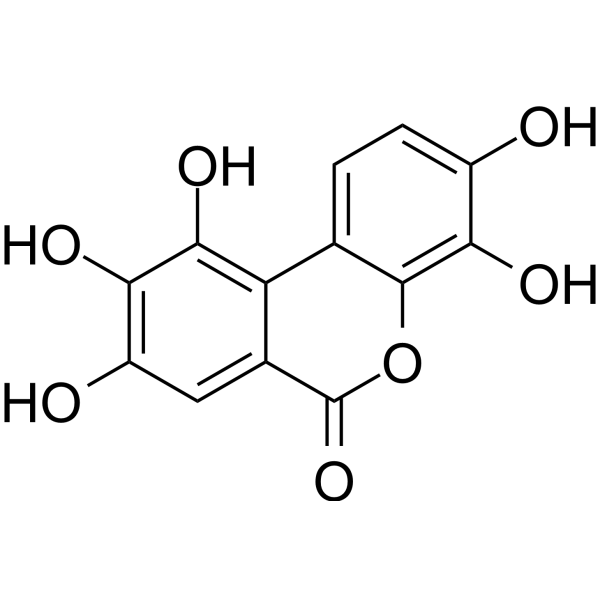
Urolithin M5 (Decarboxyellagic acid) is an orally active influenza virus neuraminidase inhibitor and neuroprotective agent, with IC50 values of 174.8 μM (HK68), 191.5 μM (pdm09), 243.2 μM (WSN) and 257.1 μM (PR8) against four influenza virus neuraminidases, respectively. Urolithin M5 inhibits viral neuraminidase activity, thereby blocking influenza virus replication (including oseltamivir (HY-13317)-resistant strains), protecting infected mammals from death and improving pulmonary edema. Urolithin M5 forms a hydrogen-bond stabilized complex with IGF1R, and binds to MAPK14, AKT1, NFKB1 and EGFR. Urolithin M5 reduces reactive oxygen species production, inhibits neuronal apoptosis, restores mitochondrial transmembrane potential, and promotes neurite outgrowth of damaged neuronal cells. Urolithin M5 can be used in research related to influenza virus infection and Alzheimer's disease .
loading...
    loading...
1
1 Cited Publications
Cat. No.: HY-P70907
Purity:  ≥ 95%, as determined by reducing SDS-PAGE.
Synonyms: Envelope glycoprotein gp160; Env polyprotein; Surface protein gp120; SU; Glycoprotein 120; gp120; Transmembrane protein gp41; TM; Glycoprotein 41; gp41 ; env
Species:  
Virus
Source:  
HEK293
loading...
    loading...
1
1 Cited Publications
Cat. No.: HY-P72206
Purity:  ≥ 90%, as determined by reducing SDS-PAGE.
Synonyms: GLP1R; GLP-1-R; Glucagon Like Peptide 1 Receptor; Seven Transmembrane Helix Receptor; Glucagon-Like Peptide 1 Receptor; GLP1 Receptor; GLP-1R; GLP-1; GLP-1 Receptor
Species:  
Mouse
Source:  
E. coli
loading...
    loading...

