621 Results for "

Development Inhibitors

" in MedChemExpress (MCE) Product Catalog:
Products (621)

621 Results for "Development Inhibitors" in MCE Product Catalog:

Cat. No.: HY-20176
CAS No.: 16234-14-3
Research Areas:  

Infection

2,4-Dichlorothieno[3,2-d]pyrimidine is a thienopyrimidine scaffold and a key synthetic precursor, which is widely used for constructing 4-arylthieno[3,2-d]pyrimidine compounds. 2,4-Dichlorothieno[3,2-d]pyrimidine serves for the development of 4-arylthieno[3,2-d]pyrimidine-based human adenosine A2a receptor antagonists, as well as thienopyrimidine-based PI3K-α inhibitors. In addition, 2,4-Dichlorothieno[3,2-d]pyrimidine has potential application value in studies related to whipworm disease .
loading...
    loading...
Cat. No.: HY-P2310A
Defensin HNP-1 human TFA is a type of human neutrophil peptide (HNPs). Defensin HNP-1 human TFA possesses immunomodulatory functions and can delay the apoptosis of neutrophils. Defensin HNP-1 human TFA inhibits DNA/RNA/protein synthesis and interferes with metabolic pathways, thus exhibiting broad antibacterial activity. Defensin HNP-1 human TFA has direct inactivation effects on HIV, HSV-1, HSV-2, CMV, influenza virus, etc. Defensin HNP-1 human TFA has antileishmanial activity. Defensin HNP-1 human TFA is involved in endothelial cell dysfunction during the early development of atherosclerosis .
loading...
    loading...
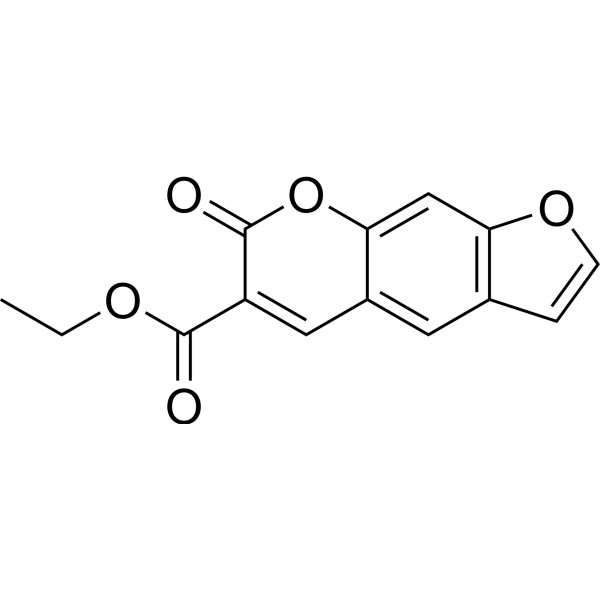
Cat. No.: HY-U00265
CAS No.: 20073-24-9
Synonyms: 3-Carbethoxypsoralen; 3-Ethoxycarbonylpsoralen
Target:  

Bacterial

Research Areas:  

Infection

3-CPs is a monofunctional furanocoumarin and a photoprotective agent targeting Staphylococcus aureus DNA, possessesing anti-UVB lethal activity. 3-CPs competitively intercalates into DNA, forming exclusively 4',5'-furan-side mono-adducts upon UVB irradiation, and irreversibly inhibits the formation of cyclobutane pyrimidine dimers. 3-CPs prevents UVB-induced DNA damage by preferentially binding to strong (AT)n sites within the DNA, without inducing lethal interstrand DNA cross-links; the limited number of mono-adducts it induces can be efficiently repaired by bacteria. 3-CPs holds potential for use in the development of photoprotective formulations for skin diseases, as well as in studies investigating bacterial DNA photodamage repair mechanisms and the optimization of photochemotherapy safety .
loading...
    loading...
Cat. No.: HY-W020788R
CAS No.: 98730-04-2
Synonyms: CGA 154281 (Standard)
Benoxacor (Standard) is the analytical standard of Benoxacor. This product is intended for research and analytical applications. Benoxacor (CGA 154281) is a herbicide safener and xenobiotic metabolism regulator. Benoxacor protects maize from the toxicity of metolachlor mainly by inducing detoxifying enzymes such as Glutathione S-transferase. Benoxacor also activates FXR, PXR and ERRα, and inhibits aromatase (aromatase). However, Benoxacor exhibits potential subacute oral toxicity and a high risk of hepatotoxicity in animal models. Benoxacor induces reactive oxygen species accumulation, interferes with embryonic heart development, and causes increased liver and kidney weights as well as alterations in gut microbiota in mice. Benoxacor can be used in studies related to hepatic steatosis, infertility, breast cancer and developmental toxicity .
loading...
    loading...
Cat. No.: HY-L084
939 compounds

Nature has been a source of medicinal products for millennia, with many useful active substances developed from plant sources. In the 20th century, the discovery of the penicillin was the starting point for drug discovery from microbial sources. Microorganisms, which have been considered to be a rich source of unique bioactive compounds, play an important role in the development of the chemistry of natural products and medical therapy. Microbial metabolites have proved to be affective antimicrobial agents, anti-tumor agents, enzyme inhibitors, anti-inflammatory agents, etc. Today, many microbial-originated antibiotics are available in the mark, and a large number of bioactive metabolites are used in medicine.

MCE provides a unique collection of 939 microbial metabolites, which is an important source of lead compounds and can be used for drug discovery.

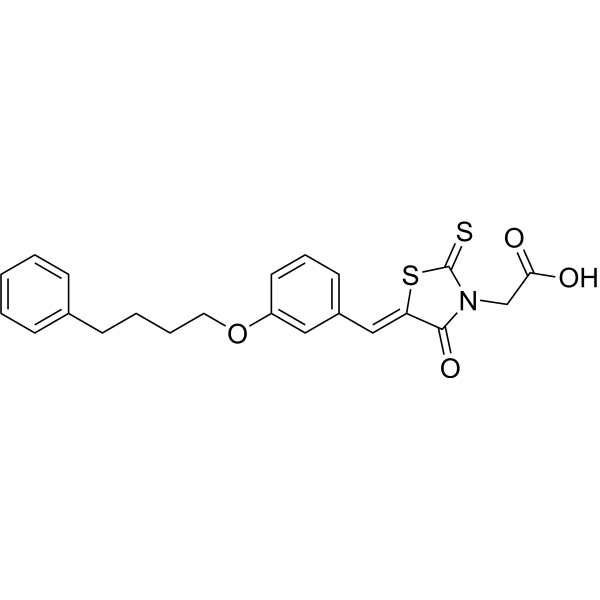
Cat. No.: HY-149254
Research Areas:  

Metabolic Disease

PTP1B/AKR1B1-IN-1 is a dual inhibitor of protein tyrosine phosphatase 1B (PTP1B) and aldose reductase (AKR1B1), with IC50s of 0.06 μM and 4.3 μM, respectively. PTP1B/AKR1B1-IN-1 also inhibits TC-PTP with an IC50 value of 9 μM. PTP1B/AKR1B1-IN-1 serves as an insulin-mimetic agent in murine myoblasts, and reduces AKR1B1-dependent sorbitol accumulation. PTP1B/AKR1B1-IN-1 inhibits development of type 2 diabetes mellitus (T2DM) to control blood glucose levels .
loading...
    loading...
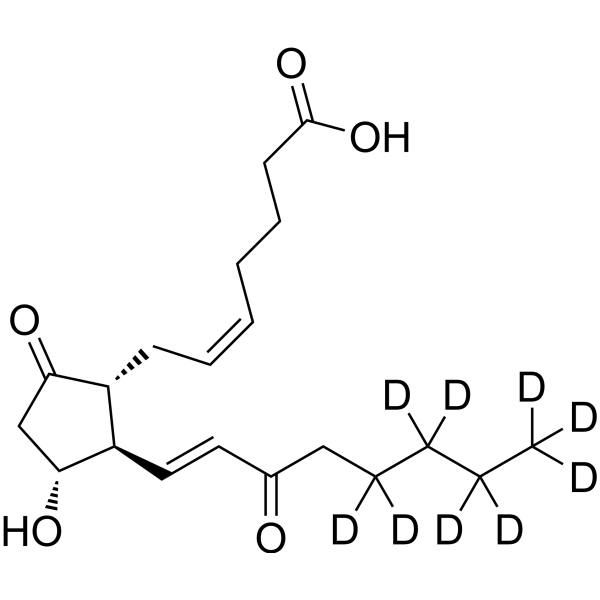
Cat. No.: HY-113205S
CAS No.: 2738376-66-2
15-Keto-prostaglandin E2-d9 is the d9 labeled 15-keto-Prostaglandin E2 (HY-113205). 15-keto-Prostaglandin E2 (15-keto-PGE2) is an endogenous PGE2 metabolite. 15-keto-Prostaglandin E2 inhibits STAT3 activation by binding to the Cys259 residue of STAT3. 15-keto-Prostaglandin E2 binds to and stabilizes EP2 and EP4 receptors. 15-keto-Prostaglandin E2 inhibits the growth and progression of breast cancer cells. 15-keto-Prostaglandin E2 activates PPAR-γ and promotes fungal growth. 15-keto-Prostaglandin E2 disrupts glomerular vascularization during zebrafish development and reduces the surface area of the glomerular filtration barrier .
loading...
    loading...
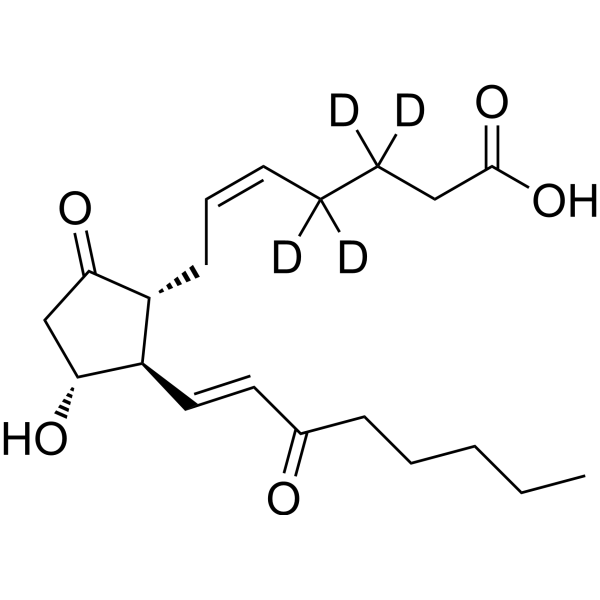
Cat. No.: HY-113205S1
CAS No.: 2738376-85-5
15-Keto-prostaglandin E2-d4 is the d4 labeled 15-keto-Prostaglandin E2 (HY-113205). 15-keto-Prostaglandin E2 (15-keto-PGE2) is an endogenous PGE2 metabolite. 15-keto-Prostaglandin E2 inhibits STAT3 activation by binding to the Cys259 residue of STAT3. 15-keto-Prostaglandin E2 binds to and stabilizes EP2 and EP4 receptors. 15-keto-Prostaglandin E2 inhibits the growth and progression of breast cancer cells. 15-keto-Prostaglandin E2 activates PPAR-γ and promotes fungal growth. 15-keto-Prostaglandin E2 disrupts glomerular vascularization during zebrafish development and reduces the surface area of the glomerular filtration barrier .
loading...
    loading...
Cat. No.: HY-B1120R
CAS No.: 3383-96-8
Synonyms: Temefos (Standard)
Temephos (Standard) is the analytical standard of Temephos. This product is intended for research and analytical applications. Temephos (Temefos) is an orally active, blood-brain barrier-permeable organophosphate insecticide and AChE inhibitor. By irreversibly inhibiting AChE to induce cholinergic overactivation, Temephos effectively blocks larval development of Aedes aegypti (yellow fever mosquito) and Aedes albopictus (Asian tiger mosquito), and is commonly used in studies related to Dengue Virus, Zika Virus and other relevant pathogens. Temephos exhibits genotoxicity and neurodevelopmental toxicity, and may also cause liver injury, reproductive system abnormalities and cholinergic poisoning symptoms in mammals. Temephos tends to accumulate in adipose tissues and aquatic organisms, and is excreted via feces after metabolism through oxidation and hydrolysis. Note that CYP-mediated metabolic detoxification may reduce the actual larvicidal efficacy of Temephos against some mosquito species. Temephos can be used in research related to dengue fever, Zika virus disease, chikungunya and dracunculiasis .
loading...
    loading...
Cat. No.: HY-B1120S
CAS No.: 1219795-39-7
Synonyms: Temefos-d12
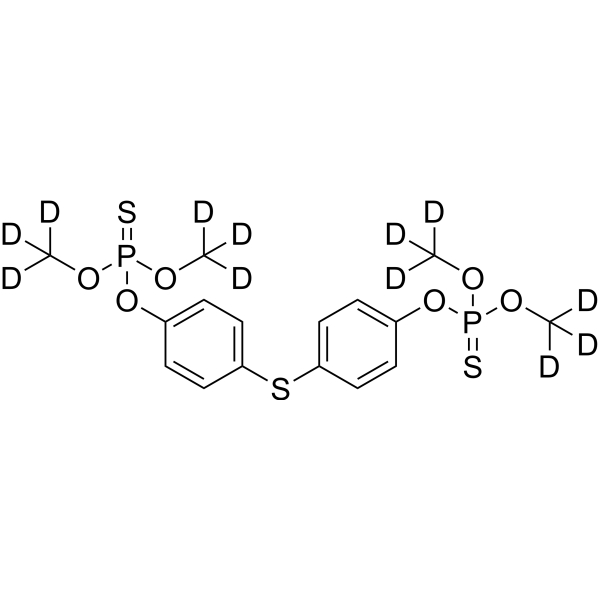
Temephos-d12 is the deuterium labeled Temephos. Temephos (Temefos) is an orally active, blood-brain barrier-permeable organophosphate insecticide and AChE inhibitor. By irreversibly inhibiting AChE to induce cholinergic overactivation, Temephos effectively blocks larval development of Aedes aegypti (yellow fever mosquito) and Aedes albopictus (Asian tiger mosquito), and is commonly used in studies related to Dengue Virus, Zika Virus and other relevant pathogens. Temephos exhibits genotoxicity and neurodevelopmental toxicity, and may also cause liver injury, reproductive system abnormalities and cholinergic poisoning symptoms in mammals. Temephos tends to accumulate in adipose tissues and aquatic organisms, and is excreted via feces after metabolism through oxidation and hydrolysis. Note that CYP-mediated metabolic detoxification may reduce the actual larvicidal efficacy of Temephos against some mosquito species. Temephos can be used in research related to dengue fever, Zika virus disease, chikungunya and dracunculiasis .
loading...
    loading...
Cat. No.: HY-L129
128 compounds

Proteolysis-targeting chimera (PROTAC) has been developed to be a useful technology for targeted protein degradation. PROTACs consist of a ligand for E3 ligase (E3 ligase binder), a linker and a ligand (mostly small-molecule inhibitor) for protein of interest(target binder). Upon binding to the target protein, the PROTACs can recruit E3 for target protein ubiquitination, which is subjected to proteasome-mediated degradation. Therefore, PROTACs execute their functions by degrading the target proteins rather than inhibiting them, which has a great superiority in overcoming resistance caused by target mutation or overexpression. To date, PROTAC technology has been applied to a variety of targets, including AR, ER, BTK, BET, and BCR-ABL to overcome resistance.

MCE carefully prepared a unique collection of 128 ligands for target proteins, which have been reported to be used in PROTAC design. MCE Target Protein Ligand Library is a useful tool for PROTAC development.

Cat. No.: HY-119618
CAS No.: 303196-31-8
Target:  

Endogenous Metabolite

Research Areas:  

Cancer

R1498 is a multi-target kinase inhibitor with anti-angiogenic and anti-proliferative activities. R1498 mainly targets targets such as Aurora kinase and VEGFR2, which are associated with tumor development. R1498 showed moderate in vitro growth inhibition in a variety of tumor cells, with IC50 values in the micromolar range. R1498 showed anti-tumor efficacy superior to sorafenib in a variety of gastric cancer and hepatocellular carcinoma xenograft models, with tumor growth inhibition rates exceeding 80%, and tumor shrinkage was observed in some models. R1498 showed a 10-30% tumor shrinkage rate in three xenograft models derived from human primary gastric cancer tumors, further demonstrating its inhibitory potential. R1498 effectively inhibited Aurora A activity in vivo and reduced tumor vascularization .
loading...
    loading...
Cat. No.: HY-121858
CAS No.: 34441-14-0
Nicotianamine is an orally active ACE inhibitor with an IC50 of 76 nM for rhACE2 and an IC50 of 59 nM for rhACE. Nicotianamine is also a metal chelator with high affinity for ferrous ions and other divalent metal cations. Nicotianamine is isolated from soybean. Nicotianamine reduces systolic blood pressure in spontaneously hypertensive rats. Nicotianamine chelates iron and zinc, promotes iron transport, enhances iron bioavailability through stable Fe 2+-NA complexes and intestinal Fe 2+ uptake, and promotes phloem-to-sink Fe mobilization, long-distance transport of Zn to leaves and flowers, and pollen development. Nicotianamine is a biosynthetic precursor of plant phytosiderophores, reverses chlorosis, and rescues sterility in NA-free mutants. Nicotianamine is used in research on hypertension, chlorosis, and iron deficiency anemia .
loading...
    loading...
Cat. No.: HY-179388
CAS No.: 3123329-68-7
Research Areas:  

Cancer

PROTAC Sirt2 Degrader-2 is a highly efficient and selective PROTAC degrader targeting SIRT2. PROTAC Sirt2 Degrader-2 demonstrates the most potent anti-proliferative activity both in vitro and in vivo. PROTAC Sirt2 Degrader-2 leads to a marked increase in H4K16Ac levels. PROTAC Sirt2 Degrader-2 significantly suppresses clonogenic formation and migration, induces cell cycle arrest, and promotes apoptosis. PROTAC Sirt2 Degrader-2 inhibits the AKT/mTOR signaling pathway by indirectly degrading SIRT2 and blocking downstream protein phosphorylation, thereby disrupting the signaling cascade and suppressing tumor development. PROTAC Sirt2 Degrader-2 can be used for the study of ovarian cancer .
loading...
    loading...
Cat. No.: HY-187618
CAS No.: 1508276-29-6
Target:  

TRP Channel

Research Areas:  

Metabolic Disease

GRC-17536 is a TRPA1 antagonist with selective inhibition of TRPA1-mediated calcium influx .GRC-17536 binds to TRPA1 binding site 2 to inhibit channel activity .GRC-17536 reduces irritant-induced cough responses and citric acid-induced cough responses .GRC-17536 exhibits antitussive activity .GRC-17536 has poor pharmacokinetic and bioavailability properties, leading to discontinued development after a Phase IIa study .GRC-17536 can be used for the research of painful diabetic polyneuropathy, peripheral diabetic neuropathy, asthma, and chronic cough .
loading...
    loading...
Cat. No.: HY-P6300
CAS No.: 169062-92-4
Target:  

Bacterial Parasite

Research Areas:  

Infection

Cyclomarin A is an antibacterial agent with a Kd of 2.3 nM against Mycobacterium tuberculosis ClpC1, a Kd of 2.2 nM against ClpC2, and an IC50 of 0.004 μM against Plasmodium falciparum PfAp3Aase. Cyclomarin A binds to the N-terminal domain of ClpC1, stimulates ATPase and proteolytic activities, dysregulates proteolysis, and induces proteome imbalance; it also binds to ClpC2 and upregulates its transcription level. Cyclomarin A binds to PfAp3Aase in dimeric form, blocks the substrate-binding pathway, inhibits the growth of Plasmodium falciparum in the erythrocytic stage, and shows no activity against human cells. Cyclomarin A exhibits moderate cytotoxicity against a variety of cancer cell lines. Cyclomarin A can serve as a lead compound for the development of Homo-BacPROTAC. Cyclomarin A is applicable to research related to tuberculosis and malaria .
loading...
    loading...
Cat. No.: HY-W105310A
CAS No.: 14379-00-1
Synonyms: Nacr
Research Areas:  

Others

Croconic acid disodium (Nacr) is a lysine crotonylation (Kcr) activator and electroactive material. Croconic acid disodium reduces the expression of HDAC2, HDAC3, SIRT1, and SIRT3, and increases the expression of EP300, CITED1, ACSS2, DPF2, CDYL, MLLT3, and YEATS2. Croconic acid disodium elevates intracellular crotonyl-CoA content and global histone lysine crotonylation levels. Croconic acid disodium promotes the growth of bovine fibroblasts, regulates cell cycle progression, and inhibits bovine fibroblast apoptosis (apoptosis). Croconic acid disodium improves the blastocyst development efficiency of bovine somatic cell nuclear transfer embryos. Croconic acid disodium undergoes reversible lithium intercalation/deintercalation reactions via sodium-lithium ion exchange. Croconic acid disodium is applicable to research related to cell growth promotion .
loading...
    loading...
Cat. No.: HY-W342092
CAS No.: 51592-06-4
1,3,4,6-Tetrachloro-3α,6α-diphenylglycouril is a chemical agent that has the property of inhibiting enzyme activity in organisms. 1,3,4,6-Tetrachloro-3α,6α-diphenylglycouril is used as a potential anti-tumor agent in compound development. 1,3,4,6-Tetrachloro-3α,6α-diphenylglycouril has the effect of regulating cell signaling pathways and can be used to study cell biology. 1,3,4,6-Tetrachloro-3α,6α-diphenylglycouril is considered to be a potent compound that can exert biological activity under specific conditions.
loading...
    loading...
Cat. No.: HY-L126
1,092 compounds

Nuclear receptors (NR) are proteins found in cells that sense androgen and thyroid hormones and certain other molecules. They are ligand-activated transcription factors that participate in many aspects of human physiology and pathology, and regulate the expression of various important genes.

Nuclear receptors have become one of the main targets in the development of new drug strategies, providing a unique type of receptors for studying a variety of human diseases, such as breast cancers, skin disorders and diabetes. 13% of U.S. Food and Drug Administration (FDA) approved drugs target nuclear receptors.

MCE supplies a unique collection of 1,092 nuclear receptor inhibitors and activators, all of which have the identified inhibitory or activated effect on nuclear receptor. MCE Nuclear Receptor Library is a useful tool for drugs research related to cancer, skin disease and diabetes.

Cat. No.: HY-L193
1,006 compounds

Since ancient times, promoting blood circulation for removing blood stasis (PBCRBS) has been one of the most popular research contents in the area of traditional Chinese medicine (TCM) and integrated medicine. Rhizoma, Persicae Semen, Carthami Flos, Curcumae Longae Rhizoma and so on are common TCM with PBCRBS characteristic. Studies have shown that the mechanism of action of PBCRBS TCM is to promote blood circulation (improving cardiovascular and cerebrovascular functions, physical and chemical properties of blood, platelet and coagulation system and other physiological functions) and remove blood stasis (anti-myocardial ischemia, cerebral ischemia, inhibition of platelet aggregation, anti-coagulation, anti-thrombosis, etc.). Not only that, PBCRBS TCM has anti-infection, inhibit inflammation, regulate immune function, inhibit immune response, inhibit abnormal tissue proliferation and other functions. Therefore, PBCRBS TCM has high research value in all- field disease research fields.

MCE can supply 1,006 monomer component from more than a hundred sources of PBCRBS TCM, which can be used in TCM studies, drug development and mechanism-based studies.