760 Results for "

Compound 4

" in MedChemExpress (MCE) Product Catalog:
Products (760)

760 Results for "Compound 4" in MCE Product Catalog:

Cat. No.: HY-123599
CAS No.: 1884209-98-6
Target:  

DNA/RNA Synthesis

Research Areas:  

Cancer

IACS-4619 (compound 4) is a highly selective 2-aminopyrimidine-based MTH1 (MutT homolog 1) inhibitor (IC50=0.2 nM). IACS-4619 inhibits MTH1 by blocking its hydrolysis of oxidized purine nucleotides such as 8-oxo-dGTP, thereby preventing MTH1 from inhibiting the incorporation of oxidized nucleotides into DNA. IACS-4619 significantly inhibits endogenous MTH1 activity in MTH1-overexpressing U2OS cells, but without antiproliferative or cytotoxic effects on various human cancer and normal cell lines. IACS-4619 can be used in oncology research related to the MTH1 target .
loading...
    loading...
Cat. No.: HY-153605
CAS No.: 2222930-49-4
Target:  

EGFR

Research Areas:  

Cancer

EGFR-IN-77 (Compound 4a) is a selective EGFR T790M/L858R inhibitor, with an IC50 of 0.101 μM against EGFR T790M/L858R, 0.477 μM against EGFR L858R, and 1.771 μM against wild-type EGFR. EGFR-IN-77 exerts selective antiproliferative effects on EGFR T790M/L858R non-small cell lung cancer. EGFR-IN-77 can be used for the research of EGFR L858R/T790M double-mutant non-small cell lung cancer .
loading...
    loading...
Cat. No.: HY-159577
CAS No.: 2896739-91-4
Target:  

PI3K mTOR Akt

Research Areas:  

Cancer

Nic-15 (compound 4n) is an anti-constrictive agent used to antagonize the hypovascularity of pancreatic tumors. The hypovascularity allows cancer cells to adapt to the nutrient-deficient tumor microenvironment and develop drug resistance. Nic-15 can regulate the PI3K/Akt/mTOR pathway and alleviate ER stress induced by Gemcitabine (HY-17026). Nic-15 can significantly inhibit the migration and colony formation of MIA PaCa-2 and PANC-1 pancreatic cancer cells. The combination of Nic-15 and Gemcitabine can effectively solve the problem of pancreatic tumor resistance. In an in vivo xenograft model, Nic-15 can significantly enhance the efficacy of Gemcitabine .
loading...
    loading...
Cat. No.: HY-170958
Target:  

Src Apoptosis

Research Areas:  

Cancer

Scr-IN-1 (Compound 4e) is a Tyrosine kinase inhibitor. Scr-IN-1 inhibits HCT-116 cells and MIA-PaCa-2 cells with IC50s of 0.16 μM and 1.16 μM, respectively. Scr-IN-1 displays selectivity profile on HCT-116 cells and MIA-PaCa-2 cells with SI > 625 and SI > 86, respectively. Scr-IN-1 induces Apoptosis in HCT-116 colon cancer cell and does not cause any change in the rate of necrotic cells. Scr-IN-1 is a novel SRC kinase inhibitor candidate for HCT-116 cells. Scr-IN-1 is potential for cancer research .
loading...
    loading...
Cat. No.: HY-170977
Target:  

JAK STAT

Research Areas:  

Inflammation/Immunology

JAK1/STAT3-IN-1 (compound 4f) is an anti-AD (atopic dermatitis) agent by inhibiting JAK1/STAT3 signaling pathway. JAK1/STAT3-IN-1 inhibits NO generation with an IC50 of 2.17 μM. JAK1/STAT3-IN-1 improves the skin condition of AD-like mice, reduces inflammatory infiltration, inhibits the expressions of p-JAK1/JAK1 and p-STAT3/STAT3, and mitigates the excessive immune response on Calcipotriol (HY-10001) (MC903)-induced AD-like mice .
loading...
    loading...
Cat. No.: HY-173163
CAS No.: 2811663-45-1
Target:  

Bacterial

Research Areas:  

Infection

(E)-2,6-Di-tert-butyl-4-(4-(diethylamino)styryl)pyrylium (trifluoromethanesulfonate) (Compound 4a) is a Gram-negative outer membrane permeabilizer with synergistic antibacterial activity through the blockage on LptA/LptC interaction via targeting Met47 in LptA. (E)-2,6-Di-tert-butyl-4-(4-(diethylamino)styryl)pyrylium (trifluoromethanesulfonate) potentiates pol B against both wild-typed and MDR A. baumannii and E. coli strains. (E)-2,6-Di-tert-butyl-4-(4-(diethylamino)styryl)pyrylium (trifluoromethanesulfonate) can be used as antibiotic adjuvants against MDR Gram-negative bacteria .
loading...
    loading...
Cat. No.: HY-179504
PDE4B-IN-6 (compound 4i) is a potent and selective PDE4B inhibitor with an IC50 of 7.42 nM. PDE4B-IN-6 shows ~195- and ~169-fold selectivity for PDE4B over PDE4A (IC50 = 1540 nM) and PDE4C (IC50 = 1260 nM), respectively. PDE4B-IN-6 increases cAMP level and suppresses TNF-α expression. PDE4B-IN-6 shows favorable antioxidant profiles and low cytotoxicity. PDE4B-IN-6 can be used for chronic obstructive pulmonary disease (COPD) research .
loading...
    loading...
Cat. No.: HY-180824
Target:  

p38 MAPK

Research Areas:  

Neurological Disease

P38-α MAPK-IN-11 (Compound 4C) is a selective inhibitor of P38α MAPK that can cross the blood-brain barrier with an IC50 value of 43 nM. P38-α MAPK-IN-11 has extremely low inhibitory activity against other MAPK subtypes, namely p38β, p38γ, and p38δ, with IC50 values of > 100 nM, > 100 nM, and 48.6 mM respectively. P38-α MAPK-IN-11 exhibits outstanding neuroprotective effects and anti-neuroinflammatory effects in Alzheimer's disease-like rat models. P38-α MAPK-IN-11 can be used for the study of Alzheimer's disease .
loading...
    loading...
Cat. No.: HY-182275
Research Areas:  

Cancer

PROTAC PRMT1 degrader-1 (compound 4) is a PRMT1 PROTAC degrader, with a DC50 of 0.77 μM (MCF-7 cells). PROTAC PRMT1 degrader-1 recruits the CRBN E3 ubiquitin ligase to induce proteasome-dependent degradation of PRMT1; it also forms a ternary complex with PRMT1 and CRBN, promoting ubiquitination and subsequent proteasomal degradation of PRMT1. PROTAC PRMT1 degrader-1 reduces the level of asymmetric dimethylarginine in cancer cells, as well as the level of asymmetric dimethylation of arginine 3 on histone H4, while inhibiting the growth of various cancer cells. PROTAC PRMT1 degrader-1 can be used in the research of breast cancer and melanoma .
loading...
    loading...
Cat. No.: HY-187390
BRD4 RIMTAC-1 is a BRD4 PROTAC degrader based on the RIPK1-mediated targeted chimera (RIMTAC) technology. It hijacks the endogenous RIPK1-VHL complex via the RIPK1 inhibitor moiety to indirectly recruit the VHL E3 ligase, forming a BRD4-Compound 10-RIPK1-VHL quaternary complex, and degrades BRD4 through the ubiquitin-proteasome system (UPS). BRD4 RIMTAC-1 exhibits selectivity over other BET proteins, induces concentration- and time-dependent, reversible post-translational degradation of BRD4 without altering the target mRNA level. BRD4 RIMTAC-1 potently induces endogenous BRD4 degradation in RAW264.7 and HEK-293T cells, with DC50 values of 179.1 nM and 54.12 nM, respectively. BRD4 RIMTAC-1 can be used for the research of cancer and inflammation-related diseases .
loading...
    loading...
Cat. No.: HY-156096
CAS No.: 3033039-28-7
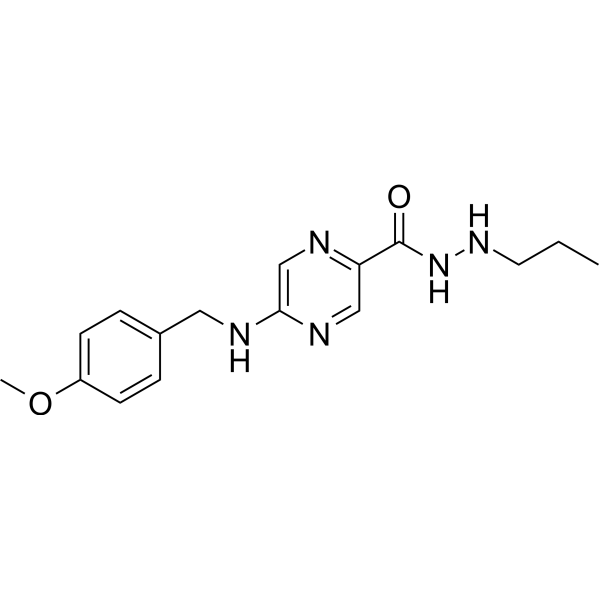
HDAC3-IN-2 (compound 4i) is a pyrazinyl hydrazide-based HDAC3 inhibitor (IC50: 14 nM) that efficiently targets triple-negative breast cancer cells. HDAC3-IN-2 is cytotoxic with an IC50 of 0.55 μM against 4T1 and an IC50 of 0.74 μM against MDA-MB-231. HDAC3-IN-2 has anti-tumor efficacy in vivo in tumor-bearing mouse models, selectively increasing the acetylation levels of H3K9, H3K27 and H4K12, increasing the contents of apoptosis-related caspase-3, caspase-7 and cytochrome c, and reducing Proliferation-related Bcl-2, CD44, EGFR, and Ki-67 levels .
loading...
    loading...
Cat. No.: HY-178119
Target:  

EGFR CDK PARP

Research Areas:  

Cancer

HER4/HER2-IN-1 (Compound 4b) is a HER4/HER2 inhibitor. HER4/HER2-IN-1 inhibits the proliferation of HER2-positive cells. HER4/HER2-IN-1 reduces the total expression level of HER2 in A431 cells, while the phosphorylated HER2 (p-HER2) does not decrease. HER4/HER2-IN-1 lowers the level of cell cycle protein D1 (cyclin D1) and stimulates the cleavage of PARP. HER4/HER2-IN-1 can be used for the study of cancer, such as breast cancer .
loading...
    loading...
Cat. No.: HY-W583350
CAS No.: 847616-84-6
Target:  

Apoptosis

Research Areas:  

Cancer

Chloro(triphenylphosphine)[2-(2'-amino-1,1'-biphenyl)]palladium(II) (Compound 4C) is a metal palladium (II) complex. Chloro(triphenylphosphine)[2-(2'-amino-1,1'-biphenyl)]palladium(II) exhibits potent anti-proliferative activity against cells such as MDA-MB-231 and HCT116, significantly inducing apoptosis. Chloro(triphenylphosphine)[2-(2'-amino-1,1'-biphenyl)]palladium(II) does not directly damage DNA or cause significant cell cycle arrest. Chloro(triphenylphosphine)[2-(2'-amino-1,1'-biphenyl)]palladium(II) can be used in studies on Cisplatin (HY-17394) resistance .
loading...
    loading...
Cat. No.: HY-171591
CAS No.: 2810810-00-3
SIK2-IN-4 (Compound 4) is a highly selective SIK1/2 inhibitor (IC50s 0.143 and 0.076 μM, respectively). SIK2-IN-4 reduces the phosphorylation of transcription coactivator 3 (CRTC3) by targeting SIK1/2, thereby regulating cAMP response element binding protein (CREB)-dependent transcriptional activity. SIK2-IN-4 inhibits the production of pro-inflammatory cytokines such as TNF (IC50: 0.11 µM), IL-12/23 p40 (IC50: 0.25 µM), and IL-23 (IC50: 0.47 µM), while inducing the expression of the anti-inflammatory cytokine IL-10. SIK2-IN-4 can be used to study intestinal inflammation and other chronic inflammatory diseases .
loading...
    loading...
Cat. No.: HY-174170
CAS No.: 2248444-14-4
Target:  

STING

Research Areas:  

Cancer

(S)-2-(1-Ethyl-3-methyl-1H-pyrazole-5-carboxamido)-1-(2-hydroxy-2-phenylethyl)-1H-benzo[d]imidazole-5-carboxamide (compound 4) is a STING agonist containing a key amide benzimidazole (ABZI) component and shows reproducible inhibition of 3H-cGAMP binding to STING with an apparent inhibition constant IC50 of 14 μM. (S)-2-(1-Ethyl-3-methyl-1H-pyrazole-5-carboxamido)-1-(2-hydroxy-2-phenylethyl)-1H-benzo[d]imidazole-5-carboxamide can be used for tumor research .
loading...
    loading...
Cat. No.: HY-179042
CAS No.: 3100351-69-4
TGF-β/Smad-IN-3 (Compound 4w) is an effective TGF-β/Smad inhibitor. TGF-β/Smad-IN-3 exerts anti-pulmonary fibrosis activity by simultaneously inhibiting the TGF-β/Smad and MAPK signaling pathways. TGF-β/Smad-IN-3 significantly inhibits collagen deposition induced by TGF-β1, with its IC50 value being 3.21 μM. TGF-β/Smad-IN-3 has an IC₅₀ of 46.77 nM for the autocrine motility factor (ATX). TGF-β/Smad-IN-3 significantly reduces the expression levels of α-SMA, COL1A1 and FN in TGF-β1-induced CCC-HPF-1 cells, and effectively inhibited TGF-β1-induced cell migration. TGF-β/Smad-IN-3 can be used for the study of pulmonary fibrosis .
loading...
    loading...
Cat. No.: HY-169412
CAS No.: 2848599-79-9
MAPK-IN-3 (Compound 4a) is an anti-proliferative agent that shows particularly strong inhibitory effects on KYSE 30, HCT 116, and HGC 27, with IC50 values of 0.57 μM, 3.27 μM, and 2.28 μM, respectively. MAPK-IN-3 blocks the cell cycle via a p53-dependent mechanism and induces cell apoptosis through a p53-independent mechanism. MAPK-IN-3 downregulates the expression of cell cycle-related proteins like Cyclin D1 and cyclin B1, upregulates pro-apoptotic proteins such as cleaved PARP, cleaved caspase-7, and cleaved caspase-9, and reduces the expression of anti-apoptotic proteins like Bcl-2. Additionally, MAPK-IN-3 increases the intracellular level of ROS in KYSE 30 cells and upregulates the expression of members of the MAPK signaling pathway associated with ROS, such as p-ERK, p-p38 and p-JNK .
loading...
    loading...
Cat. No.: HY-W015777
CAS No.: 105-13-5
Synonyms: P-Methoxy-benzyl alcoho; (4-Methoxyphenyl)methanol
4-Methoxybenzyl alcohol (P-Methoxy-benzyl alcoho; (4-Methoxyphenyl) methanol) is a naturally derived volatile aromatic compound. 4-Methoxybenzyl alcohol upregulates the phosphorylation level of PI3K/Akt pathway proteins, downregulates the expression of pro-inflammatory factors, increases the content of tight junction proteins occludin and claudin-5, and alleviates structural damage to the blood-brain barrier. 4-Methoxybenzyl alcohol improves the decrease in viability and NO level of cerebral microvascular endothelial cells induced by oxygen-glucose deprivation/reperfusion, and reduces the release of lactate dehydrogenase. 4-Methoxybenzyl alcohol serves as a substrate in the two-phase persulfate-mediated electro-oxidation system, where it is directionally oxidized to p-anisaldehyde. 4-Methoxybenzyl alcohol acts as a substrate for wild-type fungal aryl alcohol oxidase. 4-Methoxybenzyl alcohol can be used in studies related to ischemic stroke, as well as in research across various fields such as chemical synthesis, including the synthesis of fragrances and flavorings .
loading...
    loading...
Cat. No.: HY-W015777R
CAS No.: 105-13-5
Synonyms: P-Methoxy-benzyl alcoho (Standard); (4-Methoxyphenyl)methanol (Standard)
4-Methoxybenzyl alcohol (Standard) (P-Methoxy-benzyl alcoho (Standard); (4-Methoxyphenyl)methanol (Standard)) is the analytical standard of 4-Methoxybenzyl alcohol (HY-W015777). This product is intended for research and analytical applications. 4-Methoxybenzyl alcohol (P-Methoxy-benzyl alcoho; (4-Methoxyphenyl) methanol) is a naturally derived volatile aromatic compound. 4-Methoxybenzyl alcohol upregulates the phosphorylation level of PI3K/Akt pathway proteins, downregulates the expression of pro-inflammatory factors, increases the content of tight junction proteins occludin and claudin-5, and alleviates structural damage to the blood-brain barrier. 4-Methoxybenzyl alcohol improves the decrease in viability and NO level of cerebral microvascular endothelial cells induced by oxygen-glucose deprivation/reperfusion, and reduces the release of lactate dehydrogenase. 4-Methoxybenzyl alcohol serves as a substrate in the two-phase persulfate-mediated electro-oxidation system, where it is directionally oxidized to p-anisaldehyde. 4-Methoxybenzyl alcohol acts as a substrate for wild-type fungal aryl alcohol oxidase. 4-Methoxybenzyl alcohol can be used in studies related to ischemic stroke, as well as in research across various fields such as chemical synthesis, including the synthesis of fragrances and flavorings .
loading...
    loading...
Cat. No.: HY-N16980
CAS No.: 2292113-33-6
(7'E,8S)-2',4,8-Trihydroxy-3-methoxy-2,4'-epoxy-8,5'-neolign-7'-en-7-one (compound 4) is a novel neolignan anti-inflammatory agent. (7'E,8S)-2',4,8-Trihydroxy-3-methoxy-2,4'-epoxy-8,5'-neolign-7'-en-7-one has an IC50 of 25.2 μM against TGF-β-induced hepatic stellate cells (HSC-T6). (7'E,8S)-2',4,8-Trihydroxy-3-methoxy-2,4'-epoxy-8,5'-neolign-7'-en-7-one may be related to blocking excessive cell proliferation in the process of liver fibrosis and can be used in the study of liver fibrosis-related diseases. (7'E,8S)-2',4,8-Trihydroxy-3-methoxy-2,4'-epoxy-8,5'-neolign-7'-en-7-one can be naturally extracted from the dried aerial parts of Penthorum chinense Pursh .
loading...
    loading...

