111 Results for "

nausea

" in MedChemExpress (MCE) Product Catalog:
Products (111)

111 Results for "nausea" in MCE Product Catalog:

Cat. No.: HY-12751AR
CAS No.: 554-92-7
Synonyms: Ro 2-9578 (Standard)
Trimethobenzamide (hydrochloride) (Standard) is the analytical standard of Trimethobenzamide (hydrochloride). This product is intended for research and analytical applications. Trimethobenzamide hydrochloride is a blocker of the D2 receptor. Trimethobenzamide is an antiemetic used to prevent nausea and vomiting.
loading...
    loading...
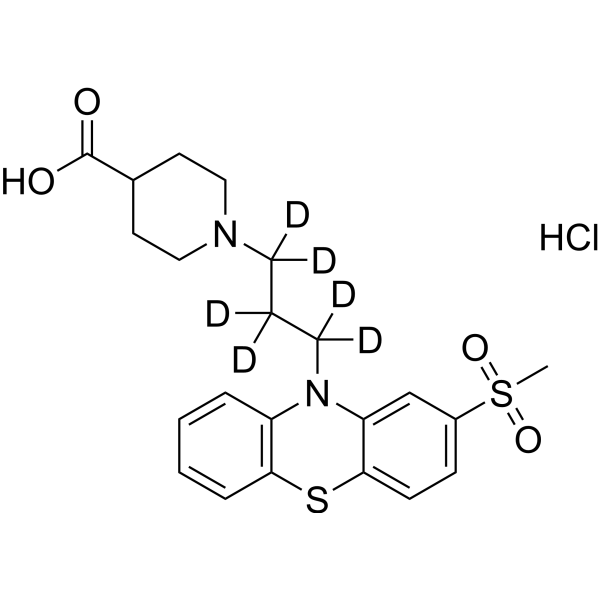
Cat. No.: HY-143994S
Metopimazine-d6 hydrochloride is the deuterium labeled Metopimazine (HY-116578). Metopimazine (EXP999; RP9965) is a phenothiazine, orally available, selective dopamine D2 receptor antagonist that does not penetrate the blood-brain barrier. Metopimazine blocks dopamine D2 receptors in the chemoreceptor trigger zone and the periphery, thereby inhibiting nausea and vomiting. Metopimazine is indicated for chemotherapy-induced nausea and vomiting, and has low central side effects due to its poor brain penetration. The use of metopimazine in acute gastroenteritis may have potential risks .
loading...
    loading...
Cat. No.: HY-W777959
CAS No.: 1329611-23-5
Azasetron Hydrochloride- 13C,d3 is the deuterium and 13C-labeled Azasetron (HY-B0019). Azasetron ((Rac)-SENS-401 free base) is an antiemetic drug with 5-HT3 receptor antagonist activity. Azasetron is often used as a preventive measure for postoperative nausea and vomiting or chemotherapy-induced nausea and vomiting. Azasetron does not impair neutrophil chemotaxis or phagocytosis and does not scavenge O(-)(2) or H(2)O(2) generated by cell-free systems .
loading...
    loading...
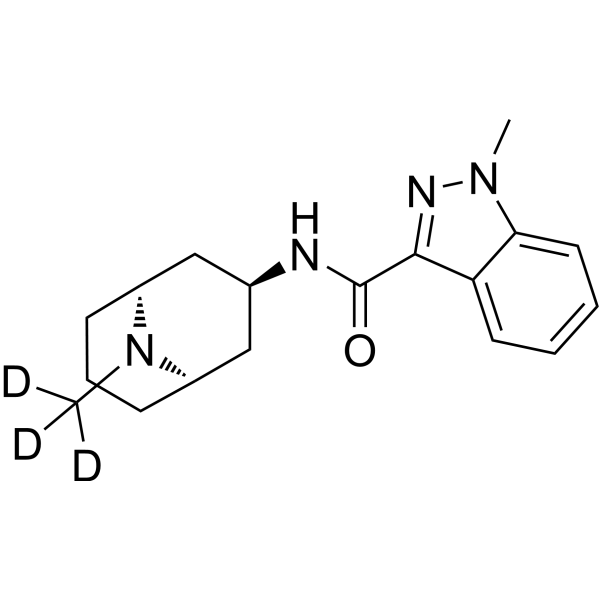
Cat. No.: HY-132348S
CAS No.: 1224925-64-7
Granisetron-d3 is the deuterium labeled Granisetron. Granisetron (BRL 43694) is a serotonin 5-HT3 receptor antagonist used as an antiemetic to treat nausea and vomiting following chemotherapy .
loading...
    loading...
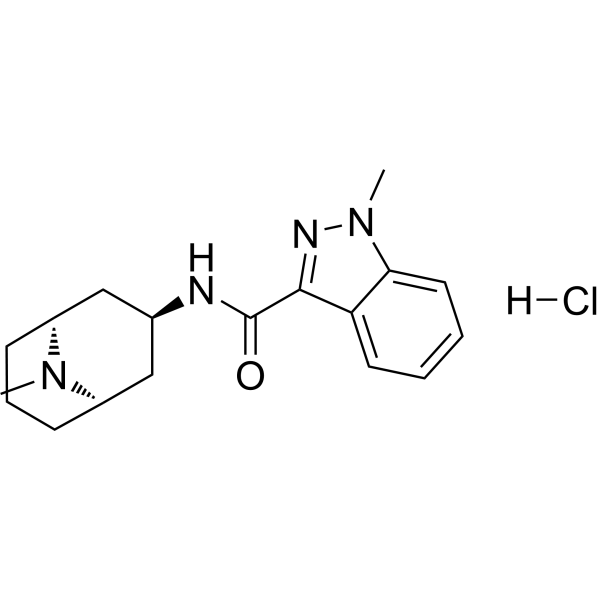
Cat. No.: HY-B0071AR
CAS No.: 107007-99-8
Synonyms: BRL 43694A (Standard)
Granisetron (Hydrochloride) (Standard) is the analytical standard of Granisetron (Hydrochloride). This product is intended for research and analytical applications. Granisetron (Hydrochloride) (BRL 43694A) is a serotonin 5-HT3 receptor antagonist used as an antiemetic to treat nausea and vomiting following chemotherapy.
loading...
    loading...
Cat. No.: HY-B0071R
CAS No.: 109889-09-0
Synonyms: BRL 43694 (Standard)
Granisetron (Standard) is the analytical standard of Granisetron. This product is intended for research and analytical applications. Granisetron (BRL 43694) is a serotonin 5-HT3 receptor antagonist used as an antiemetic to treat nausea and vomiting following chemotherapy.
loading...
    loading...
Cat. No.: HY-B1397S
CAS No.: 1170155-67-5
Cyclizine-d3 is deuterium labeled Cyclizine. Cyclizine, a piperazine-derivative, is a potent and selective histamine H1 receptor antagonist. Cyclizine can be used for the research of nausea, vomiting, and dizziness .
loading...
    loading...
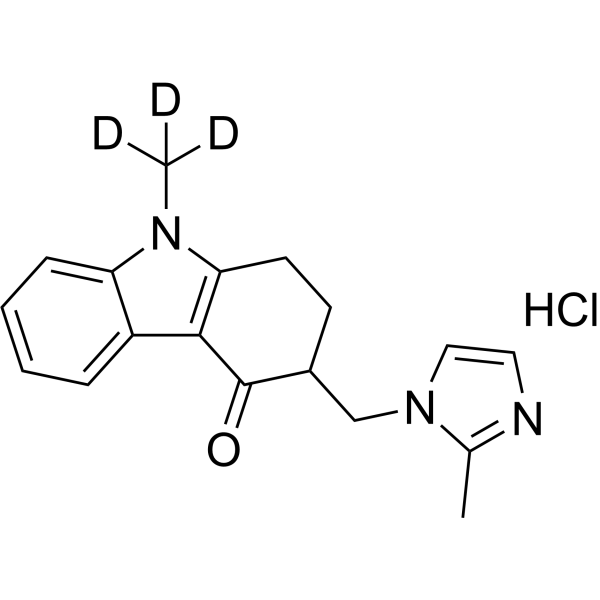
Cat. No.: HY-B0002S
CAS No.: 1346605-02-4
Ondansetron-d3 (hydrochloride) is the deuterium labeled Ondansetron hydrochloride. Ondansetron hydrochloride (GR 38032 hydrochloride) is a serotonin 5-HT3 receptor antagonist used mainly as anantiemetic (to treat nausea and vomiting), often following chemotherapy .
loading...
    loading...
Cat. No.: HY-B0071AS
Synonyms: BRL 43694A-d6
Granisetron-d6 (Hydrochloride) (BRL 43694A-d6) is deuterium labeled Granisetron (Hydrochloride). Granisetron (Hydrochloride) (BRL 43694A) is a serotonin 5-HT3 receptor antagonist used as an antiemetic to treat nausea and vomiting following chemotherapy.
loading...
    loading...
Cat. No.: HY-B0071S2
CAS No.: 1224925-80-7
Synonyms: BRL 43694-d6 (Standard)
Granisetron-d6 (BRL 43694-d6) is deuterium labeled Granisetron. Granisetron (BRL 43694) is a serotonin 5-HT3 receptor antagonist used as an antiemetic to treat nausea and vomiting following chemotherapy.
loading...
    loading...
Cat. No.: HY-118209
CAS No.: 89149-85-9
Research Areas:  

Neurological Disease

L-646462 is an antagonist of dopamine and 5-HT, with selectivity for the peripheral system (the central/peripheral activity ratio of L-646462 is 143). L-646462 can be used in research related to nausea, vomiting, and associated neurological disorders .
loading...
    loading...
Cat. No.: HY-167639
CAS No.: 132036-90-9
Synonyms: (S)-YM060 free base
Target:  

5-HT Receptor

Research Areas:  

Metabolic Disease

(S)-Ramosetron ((S)-YM060 free base) is an orally active antagonist of the 5-hydroxytryptamine 5-HT3 receptor. (S)-Ramosetron is promising for research of diseases related to nausea and vomiting, irritable bowel syndrome (IBS) .
loading...
    loading...
Cat. No.: HY-B0068R
CAS No.: 123040-16-4
Research Areas:  

Neurological Disease

Azasetron (hydrochloride) (Standard) is the analytical standard of Azasetron (hydrochloride). This product is intended for research and analytical applications. Azasetron (Y-25130) hydrochloride, a benzamide derivative, is a potent and selective 5-HT3 receptor antagonist. Azasetron is used in the study for Chemotherapy-induced nausea and vomiting (CINV) .
loading...
    loading...
Cat. No.: HY-B0349S
CAS No.: 1246816-06-7
Synonyms: Meclozine-d8
Meclizine-d8 is a deuterium labeled Meclizine. Meclizine is a histamine H1 receptor antagonist and has the potential to treat nausea and motion sickness. Meclizine is an agonist ligand for mouse constitutive androstane receptor (CAR) and an inverse agonist for Human CAR .
loading...
    loading...
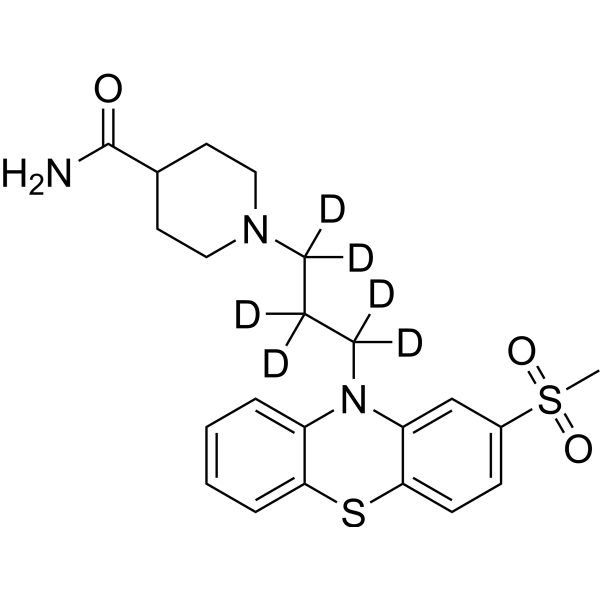
Cat. No.: HY-116578S
CAS No.: 1215315-86-8
Synonyms: EXP999-d6; RP9965-d6
Metopimazine-d6 (EXP999-d6; RP9965-d6) is the deuterium labeled Metopimazine (HY-116578). Metopimazine (EXP999; RP9965) is a phenothiazine, orally available, selective dopamine D2 receptor antagonist that does not penetrate the blood-brain barrier. Metopimazine blocks dopamine D2 receptors in the chemoreceptor trigger zone and the periphery, thereby inhibiting nausea and vomiting. Metopimazine is indicated for chemotherapy-induced nausea and vomiting, and has low central side effects due to its poor brain penetration. The use of metopimazine in acute gastroenteritis may have potential risks .
loading...
    loading...
Cat. No.: HY-12141
CAS No.: 334476-64-1
Synonyms: GW597599 mesylate; GW597599B
Target:  

Neurokinin Receptor

Research Areas:  

Neurological Disease

Vestipitant (GW597599) mesylate is a selective, orally active, and blood-brain barrier penetrant NK1 receptor antagonist. Vestipitant mesylate exhibits high affinity for the human NK1 receptor (pKi: 9.65). Vestipitant mesylate can be used in the research of diseases such as depression, anxiety disorders, and nausea and vomiting .
loading...
    loading...
Cat. No.: HY-17382S
CAS No.: 1216522-89-2
Metoclopramide-d3 is deuterium labeled Metoclopramide. Metoclopramide is a potent antagonist of 5-HT3 and dopamine D2 receptor, with IC50s of 308 nM and 483 nM, respectively. Metoclopramide can be used for the research of nausea and vomiting, gastro-oesophageal reflux, and gastroparesis .
loading...
    loading...
Cat. No.: HY-B0750BR
CAS No.: 878143-33-0
Synonyms: MDL-73147EF hydrate (Standard)
Research Areas:  

Cancer

Dolasetron Mesylate hydrate (MDL-73147EF hydrate) (Standard) is the analytical standard of Dolasetron Mesylate hydrate (HY-B0750B). This product is intended for research and analytical applications. Dolasetron Mesylate hydrate is a serotonin 5-HT3 receptor antagonist used to treat nausea and vomiting following chemotherapy .
loading...
    loading...
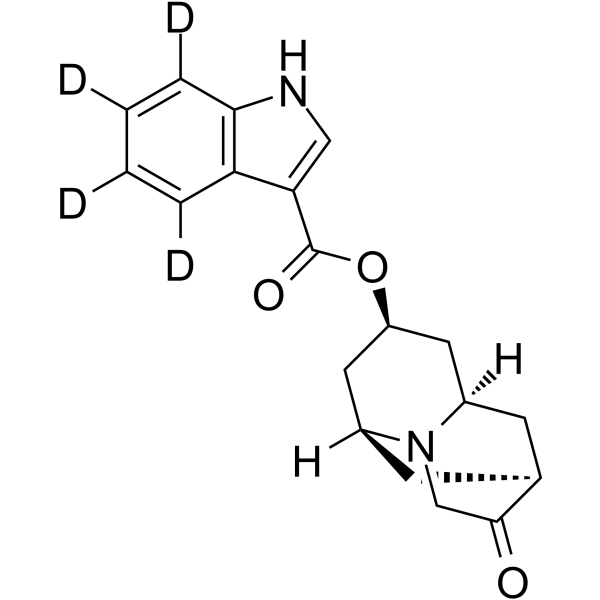
Cat. No.: HY-B0750S
Synonyms: MDL-73147-d4
Dolasetron (MDL-73147)-d4 is deuterium labeled Dolasetron (HY-B0750). Dolasetron is a serotonin 5-HT3 receptor antagonist. Dolasetron acts as an antiemetics agent and can be used for the research of chemotherapy-induced nausea and vomiting in cancer .
loading...
    loading...
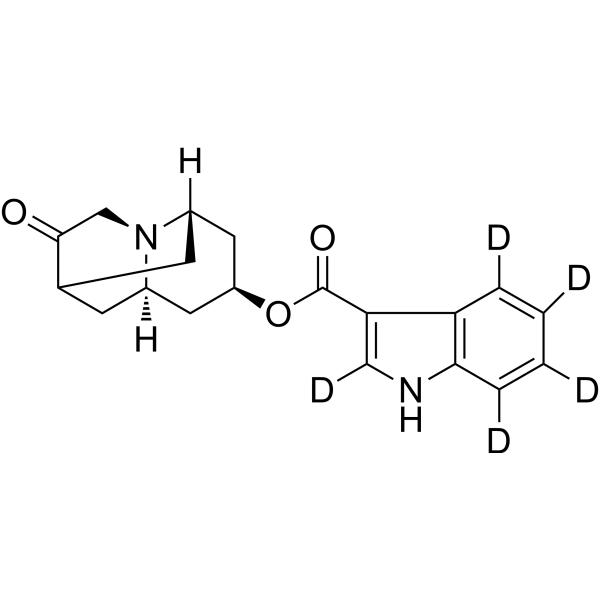
Cat. No.: HY-B0750S1
Synonyms: MDL-73147-d5
Research Areas:  

Cancer

Dolasetron (MDL-73147)-d5 is deuterated labeled Dolasetron (HY-B0750). Dolasetron is a serotonin 5-HT3 receptor antagonist. Dolasetron acts as an antiemetics agent and can be used for the research of chemotherapy-induced nausea and vomiting in cancer .
loading...
    loading...

